The Things We Did Last Summer Sheet Music Preview

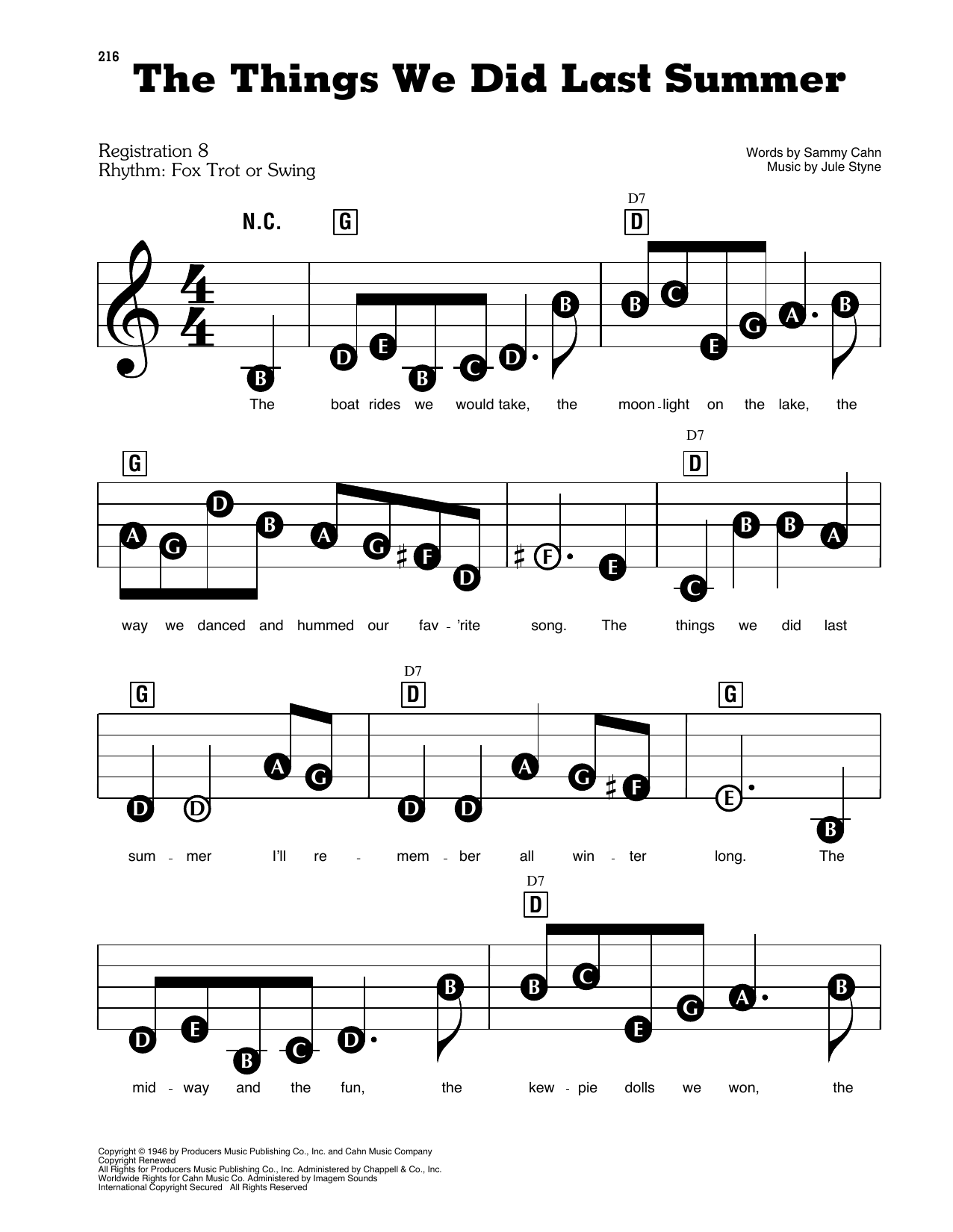
The Things We Did Last Summer: E-Z Play Today

Item: 35-DS00451274

Digital Download
$4.99
Description

The Things We Did Last Summer: E-Z Play Today isn't in MakeMusic Cloud just yet...but it could be. Let us know you'd like to see it, and you'll help shape what comes next. In the meantime, start a free trial and dive into thousands of interactive titles your students can play along with today.

Sample Audio
No sample audio found.
Sample Video
Additional Details
Publisher: Hal Leonard
Page Count: 3
SKU: 35-DS00451274

More about this title

Why we love this

The E-Z Play format strips away unnecessary complexity without sacrificing the jazz idiom, making this standard genuinely accessible for pianists still building their vocabulary. The three-page length keeps students engaged without overwhelming them, and the simplified voicings let the melody and harmonic motion breathe naturally.

What to expect

Warmly nostalgic, like flipping through old photographs. The melody floats over gentle harmonic support, evoking late summer evenings and the bittersweet tug of memories beginning to fade.

Who it's for

Intermediate pianists exploring jazz standards for the first time, or students who read treble clef fluently but haven't yet tackled dense chromatic reharmonization. This arrangement works equally well for independent practice and light jazz ensemble contexts where a comping musician is needed.

How to get the most out of it

  • Lean into the rubato; jazz standards live in the spaces between the beat. Don't lock rigidly to a metronome until the form feels organic.
  • Voice the left hand sparsely at first. The urge to fill every moment with accompaniment figures will muddy the nostalgic character this tune deserves.
  • Let the melody sit slightly ahead of the beat in the A section to capture that wistful quality the lyric suggests.

How to use it

Pair this with vocal jazz standards or solo singer repertoire for recitals and informal performance events. It also serves as a bridge piece for classical pianists discovering the jazz tradition, requiring minimal historical context before sightreading.

Skills your students will build

  • Reading lead sheet symbols and jazz chord notation
  • Translating simplified voicings into left-hand comping patterns
  • Controlling tempo flexibility within a jazz context
  • Balancing melody prominence with harmonic accompaniment

You May Also Like