
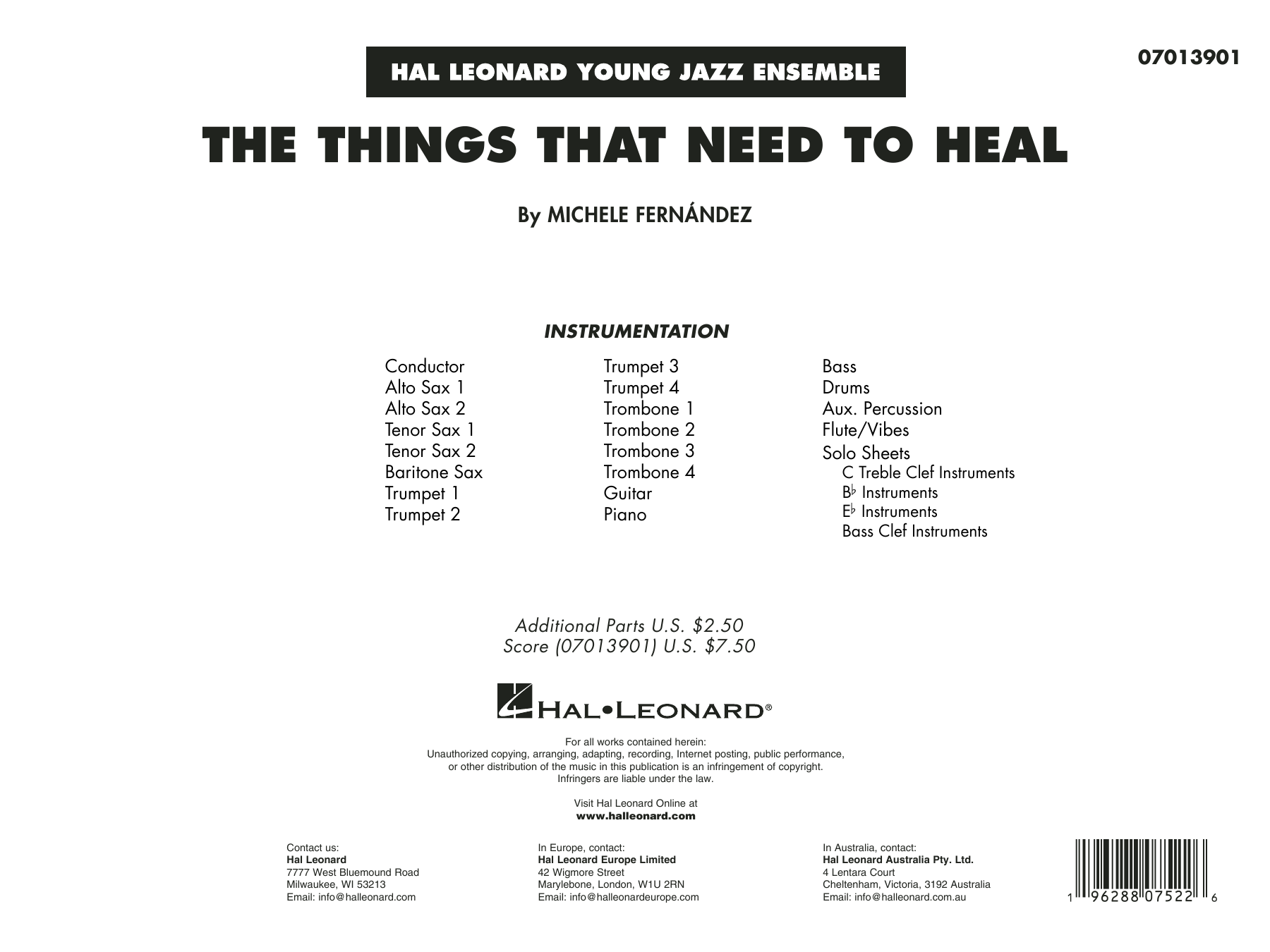

The Things That Need to Heal: Jazz Ensemble Conductor Score & Parts
By Michele Fernández
Grade: 3
Item: 35-PK01119708
$50.00
Pickup currently not available
Buy Extra Parts (Digital PDF Download)
Parts Added to Cart!
Description
Conveying a sentiment that we can all relate to, this masterful and poignant Bossa Nova features a sensitive, fully notated piano solo, richly scored horns, and solo options for both the novice player and also a more intermediate level. As with all of Michele's writing, the rhythm section parts are carefully notated to help take the guesswork out of attaining the correct Latin style.


The Things That Need to Heal: Jazz Ensemble Conductor Score & Parts isn't in MakeMusic Cloud just yet...but it could be. Let us know you'd like to see it, and you'll help shape what comes next. In the meantime, start a free trial and dive into thousands of interactive titles your students can play along with today.
Request This Title
Tell us you want it.
Start Your Free Trial
Explore everything that's ready to play right now.
Sample Audio
No sample audio found.
Sample Video
No sample videos found.
Additional Details
Publisher:
Hal Leonard
SKU:
35-PK01119708
More about this title
About the Composer: Michele Fernández
Michele Fernández has built a reputation as a composer who understands the practical realities of school jazz programs. Her writing consistently balances artistic ambition with pedagogical clarity, refusing to sacrifice one for the other. Known for meticulous attention to rhythm section notation, Fernández creates parts that help students internalize authentic Latin and jazz styles rather than simply read through them.
Why we love this
Fernández writes with genuine restraint here, letting emotional weight emerge through careful orchestration rather than complexity. The fully notated piano solo gives students a genuine model to study and eventually interpret, while the flexible solo options mean your lead trumpet player and your developing saxophonist can both find meaningful moments. The rhythm section parts transform what could be a generic bossa nova into a convincing Latin groove that actually teaches the style.
What to expect
There's a quiet dignity to this piece. The bossa nova rhythm unfolds with the kind of unhurried grace that makes space for reflection, while the horn writing frames the piano solo with warmth and care. The overall effect is contemplative rather than showy, inviting listeners into a moment of collective vulnerability.
Who it's for
Jazz ensembles at the Grade 3 level who are ready for genuine Latin jazz writing but benefit from clear pedagogical scaffolding. Directors seeking accessible material that still demands musicality and stylistic understanding from their students.
How to get the most out of it
- Study the recorded accompaniment as a reference for how the rhythm section locks together, then work backward to understand why each voice sits where it does in the arrangement.
- Have your pianist practice the solo passage separate from the ensemble first. The interaction between piano and horns requires precision, and a confident soloist elevates the whole ensemble sound.
- Shape the horn voicings with attention to the space between them. Richly scored doesn't mean dense; Fernández leaves air in these chords, and respecting that makes the arrangement breathe.
- Let your bass and drums establish the bossa nova pocket before bringing in the full ensemble. Five minutes of rhythm section work upfront saves rehearsal time later.
How to use it
This works beautifully as a centerpiece for a concert exploring healing, resilience, or social themes. It also serves as a natural stepping stone in a curriculum that moves students from basic swing and funk into authentic Latin jazz vocabulary. The piece has enough substance to stand alone yet enough accessibility to not overshadow lighter material in a mixed program.
Skills your students will build
- Bossa nova rhythmic vocabulary and clave awareness
- Reading and performing fully notated jazz piano solos
- Voicing balance in richly scored horn sections
- Stylistic differentiation between novice and intermediate solo approaches
- Ensemble lock and precision with Latin rhythm sections