
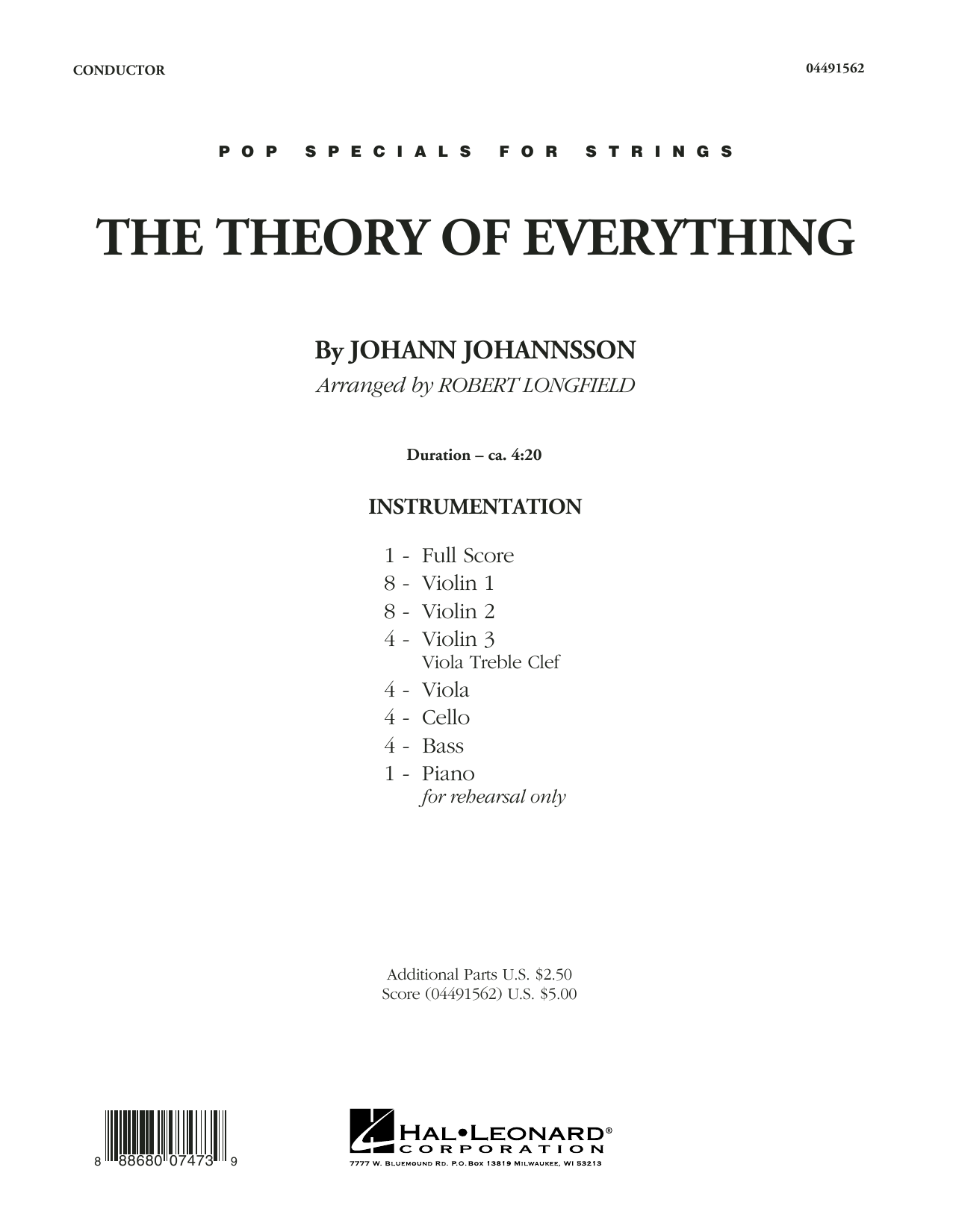

The Theory of Everything: String Orchestra Conductor Score & Parts
Arranged by Robert Longfield
Grade: 3-4
Item: 35-PK00331850
$55.00
Pickup currently not available
Buy Extra Parts (Digital PDF Download)
| Product | Price | Quantity |
|---|---|---|
| The Theory of Everything - Conductor Score (Full Score) | $7.50 | |
| The Theory of Everything - Violin 1 | $7.00 | |
| The Theory of Everything - Violin 2 | $7.00 | |
| The Theory of Everything - Violin 3 (Viola Treble Clef) | $7.00 | |
| The Theory of Everything - Viola | $7.00 | |
| The Theory of Everything - Cello | $7.00 | |
| The Theory of Everything - Bass | $7.00 | |
| The Theory of Everything - Piano | $7.00 |
Parts Added to Cart!
Description
Dur: 4:20


Discover MakeMusic Cloud: thousands of interactive titles your students can play along with today.
Sample Audio
No sample audio found.
Sample Video
Additional Details
Publisher:
Hal Leonard
SKU:
35-PK00331850
More about this title
Why we love this
Longfield captures the emotional sweep of this orchestral theme with elegant string writing that sits perfectly for Grade 3-4 ensembles. The arrangement respects the original's cinematic architecture while giving every section meaningful material, making it feel like a complete artistic statement rather than a stripped-down adaptation.
What to expect
Contemplative and soaring by turns, with the kind of melodic clarity that reminds you why string writing endures. The piece unfolds without rush, letting long lines breathe while the arrangement deepens harmonic color beneath.
Who it's for
String orchestras at the intermediate level who want substantial concert repertoire with immediate audience appeal. This works equally well for programs that prioritize classical orchestration or for those exploring how great film composers construct musical narratives.
How to get the most out of it
- Shape the opening phrase with a gentle swell in the first violins; the melody breathes better when you avoid a rigid dynamic and let the line build naturally toward the first climax.
- Balance the inner voices carefully in measures where viola and cello support the first violin melody. These lines aren't accompaniment; they anchor the harmonic depth that makes the arrangement sing.
- Take time to establish the tempo in your first rehearsal without the parts. Walking through the 4:20 arc as a conductor helps you internalize where the piece naturally builds and releases tension.
- Mark all section transitions clearly in the parts. The shift between musical ideas needs ensemble awareness, especially when lower strings trade the momentum to upper voices.
How to use it
Open a concert with this to establish an elegant tone, or pair it with lighter contemporary works to showcase the range of your ensemble. Its four-minute frame fits naturally into chamber concert formats or as a anchor piece in a mixed repertoire concert.
Skills your students will build
- Sustained tone production across extended phrases
- Dynamic shaping and phrasing at the ensemble level
- Inner voice independence and balance
- Sectional coordination during transitions and key structural moments
- Vibrato control to match the lyrical character of the melodic material