The Temple of Ka Uka: 1st Trombone Sheet Music Preview

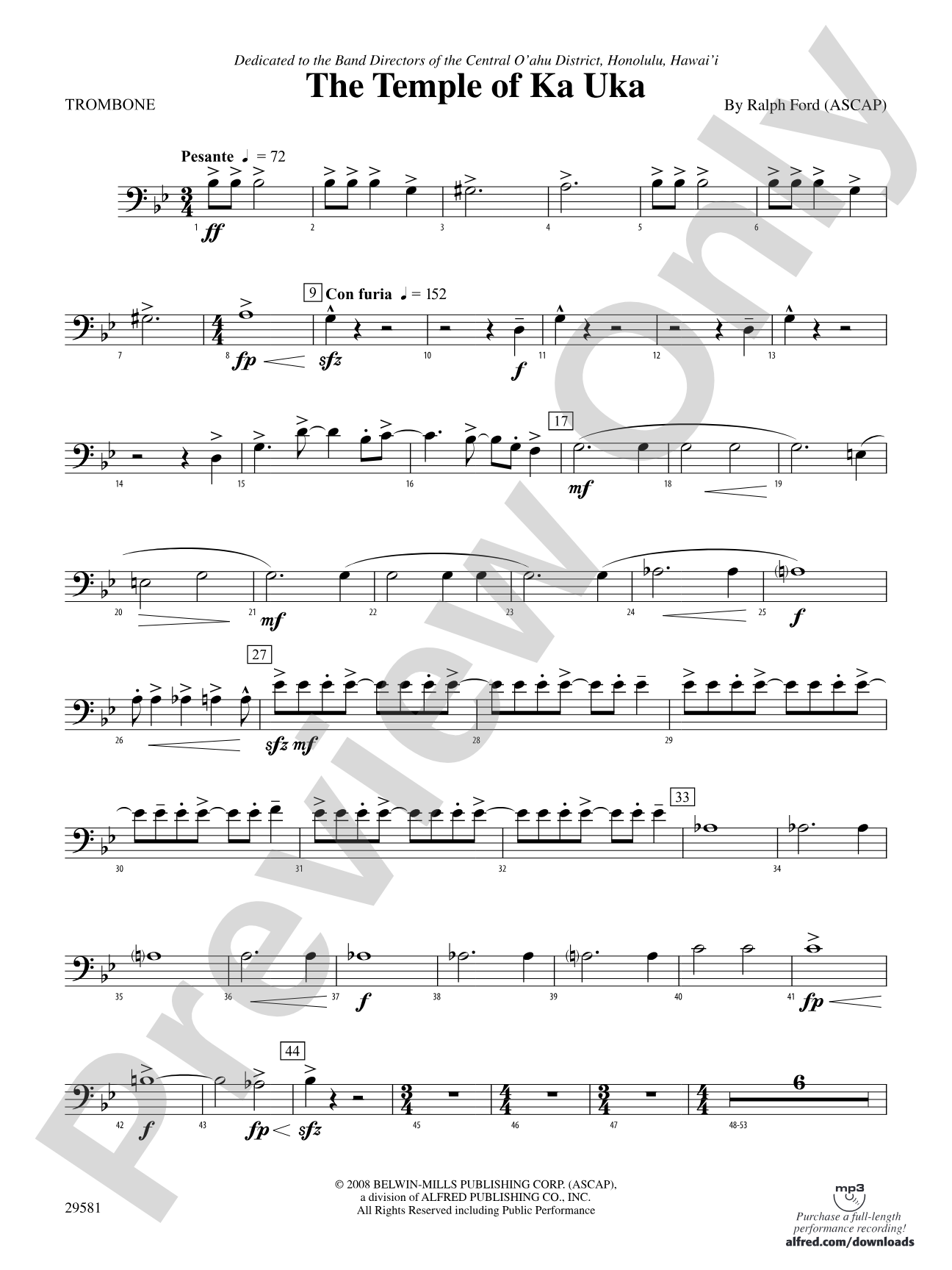
The Temple of Ka Uka: 1st Trombone

By Ralph Ford

Grade: 2 (Easy)

Item: 00-PC-0001478_TN1

Digital Download
$3.00
Description
Reminiscent of the varied landscape in the central portions of O'hau, this vibrant work musically depicts the rich heritage and tradition of this area. Complete with forceful tribal sounds, the words "Ka Uka" loosely translate to "the mountainside." A lively choice! (3:06) This title is available in MakeMusic Cloud.

Don't just read it, hear it, play along with it, and watch your students grow with it. In MakeMusic Cloud, The Temple of Ka Uka: 1st Trombone comes alive with professional accompaniment, adjustable tempo, and built-in practice tools that turn solo practice into real progress.

Sample Audio
0:00
0:00
Sample Video
Additional Details
Series: Belwin Young Band
Publisher: Alfred Music
Page Count: 264
SKU: 00-PC-0001478_TN1

More about this title

About the Composer: Ralph Ford

Ralph Ford

Ralph Ford brings three decades of university teaching alongside a prolific career as a composer and arranger across multiple media. His work spans concert band, orchestra, jazz ensemble, and marching band; he has created over 250 titles for the Belwin division of Alfred Music and received commissions from ensembles ranging from school groups to professional orchestras worldwide.

Beyond the concert hall, Ford has built a parallel career in broadcast and media production, composing news packages for national affiliates, creating commercial jingles, and conducting live musical productions. His trajectory began at age fifteen as a student arranger in Panama City, Florida, and accelerated during his undergraduate years at Troy State University, where he directed the jazz ensemble while still a sophomore and later served as staff arranger for the university band program.

Why we love this

The Temple of Ka Uka delivers Grade 2 accessibility without sacrificing character; the tribal percussion and bold melodic gestures give young bands genuine musical substance to sink their teeth into. Ford's evocative scoring captures the spirit of Hawaiian landscape and culture in a way that feels respectful and engaging, making this an ideal vehicle for introducing students to multicultural repertoire that actually sounds like something worth learning.

What to expect

The Temple of Ka Uka evokes a landscape of dramatic elevation and natural beauty through vibrant orchestration and forceful rhythmic drive. The tribal percussion elements ground the piece in authentic cultural expression, while melodic passages soar with lyrical warmth and energy.

Who it's for

This work suits developing concert bands that are ready to tackle Grade 2 repertoire with personality and cultural substance. Directors seeking to program pieces that engage students musically while honoring Hawaiian heritage will find this title authentic and rewarding.

How to get the most out of it

  • Balance the tribal percussion textures against the melodic sections so the drums enhance rather than overwhelm the band's primary voices.
  • Emphasize the lively character throughout; maintain forward momentum even in the fuller, more forceful passages to keep the energy vibrant.
  • Shape the melodic lines with intention, treating them as conversations between sections rather than isolated parts.
  • Use the recorded accompaniment (available separately) to lock ensemble timing and build confidence in younger players before removing the track.

How to use it

Program this as a concert opener or mid-set energizer to spark audience interest and showcase your band's rhythmic precision and tonal color. Its Grade 2 accessibility makes it an excellent choice for spring or early fall concerts when the ensemble is building confidence, or pair it with other world music selections to create a thematic program exploring global musical traditions.

Skills your students will build

  • Balancing homophonic and polyphonic textures
  • Responding to culturally informed compositional idioms
  • Executing precise rhythmic patterns with tribal percussion integration
  • Shaping melodic lines across sections with unified phrasing

You May Also Like