The Tempest: Bassoon Sheet Music Preview

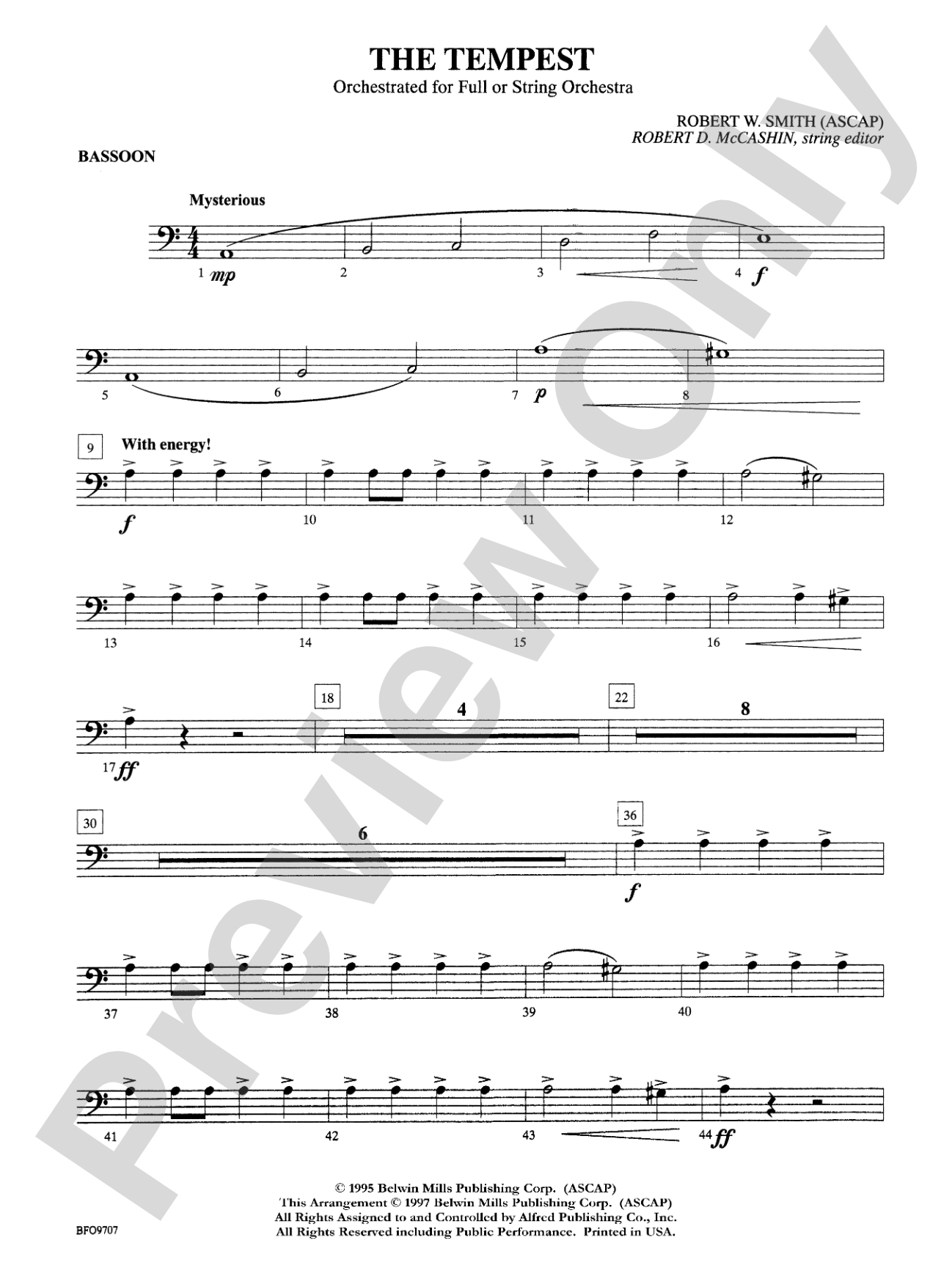
The Tempest: Bassoon

By Robert W. Smith

Grade: 2.5

Item: 00-PC-0002210_B1

Digital Download
$3.00
Description
The dictionary tells us that a tempest is "a violent windstorm, frequently accompanied by rain, snow or hail." In the hands of Robert W. Smith, the scoring supplies all of the fury and rage within the instruments of your string or full orchestra. This work takes us "by the bootstraps" right into the raw power of Mother Nature. (2:02)

Don't just read it, hear it, play along with it, and watch your students grow with it. In MakeMusic Cloud, The Tempest: Bassoon comes alive with professional accompaniment, adjustable tempo, and built-in practice tools that turn solo practice into real progress.

Sample Audio
No sample audio found.
Sample Video
Additional Details
Series: Belwin Intermediate String/Full Orchestra
Publisher: Alfred Music
Page Count: 242
SKU: 00-PC-0002210_B1

More about this title

About the Composer: Robert W. Smith

Robert W. Smith

Robert W. Smith stands among the most widely performed orchestral composers of his generation, with over 400 works published primarily through Alfred Music. His education at Troy State University and the University of Miami provided the foundation for a compositional voice that balances accessibility with genuine musical substance, making his work a staple in developing ensembles across North America, Europe, Australia, and Asia.

Beyond the concert hall, Smith's music has reached audiences through unexpected channels: presidential ceremonies in Japan, the Olympic Games, network television broadcasts, and iconic events like the Macy's Thanksgiving Day Parade. His symphonic works The Divine Comedy and The Odyssey demonstrate his ability to sustain large-scale musical narratives, while pieces like The Tempest have become foundational repertoire for intermediate orchestras seeking music that combines technical growth with genuine dramatic impact.

Why we love this

Smith captures the visceral energy of a storm without sacrificing clarity or balance across the ensemble. At Grade 2.5, the orchestration demands engagement from every section while remaining accessible, making it equally effective as a learning tool and a showpiece that audiences recognize as genuine concert music.

What to expect

Immediate and visceral. From the opening gestures, the orchestra becomes a weather system; wind and percussion swirl with raw energy while strings provide the dark undercurrent. The piece never lets listeners settle comfortably, maintaining forward propulsion and dramatic tension that mirrors the unforgiving force of nature.

Who it's for

Intermediate orchestras seeking substantial programmatic music that engages all sections equally. Directors preparing contest or festival entries will find The Tempest sits perfectly in the Grade 2.5 sweet spot, offering enough complexity to challenge developing musicians without excessive technical hurdles.

How to get the most out of it

  • Build dynamic contrast gradually through the opening measures. Resist the urge to jump to fortissimo immediately; let the tension accumulate so the climax hits with earned impact.
  • Balance the string section carefully during sustained passages. Young players tend to squeeze the tone when holding power; encourage a relaxed, supported approach that projects without strain.
  • Use the exposed brass entrances as rehearsal landmarks. These moments are natural points to lock the ensemble together and establish rhythmic precision across the full orchestra.
  • Shape phrases through subtle tempo flexibility rather than drastic changes. A breath before major climaxes and light forward motion through transition sections keep the piece driving without losing cohesion.

How to use it

Position this as a dramatic centerpiece on a concert featuring contrasting styles and moods. Pair it with a lighter opener to establish variety, or use it to close a concert with unmistakable energy. Festival seasons benefit especially from this work; it demonstrates ensemble maturity while remaining within reach of most intermediate programs.

Skills your students will build

  • Sustaining dynamic intensity across extended passages
  • Balancing sectional parts during complex vertical harmony
  • Responding to exposed entrances and coordinating across the full orchestra
  • Shaping programmatic narrative through tempo and dynamic architecture
  • Managing rapid articulation changes in wind and string parts

You May Also Like