

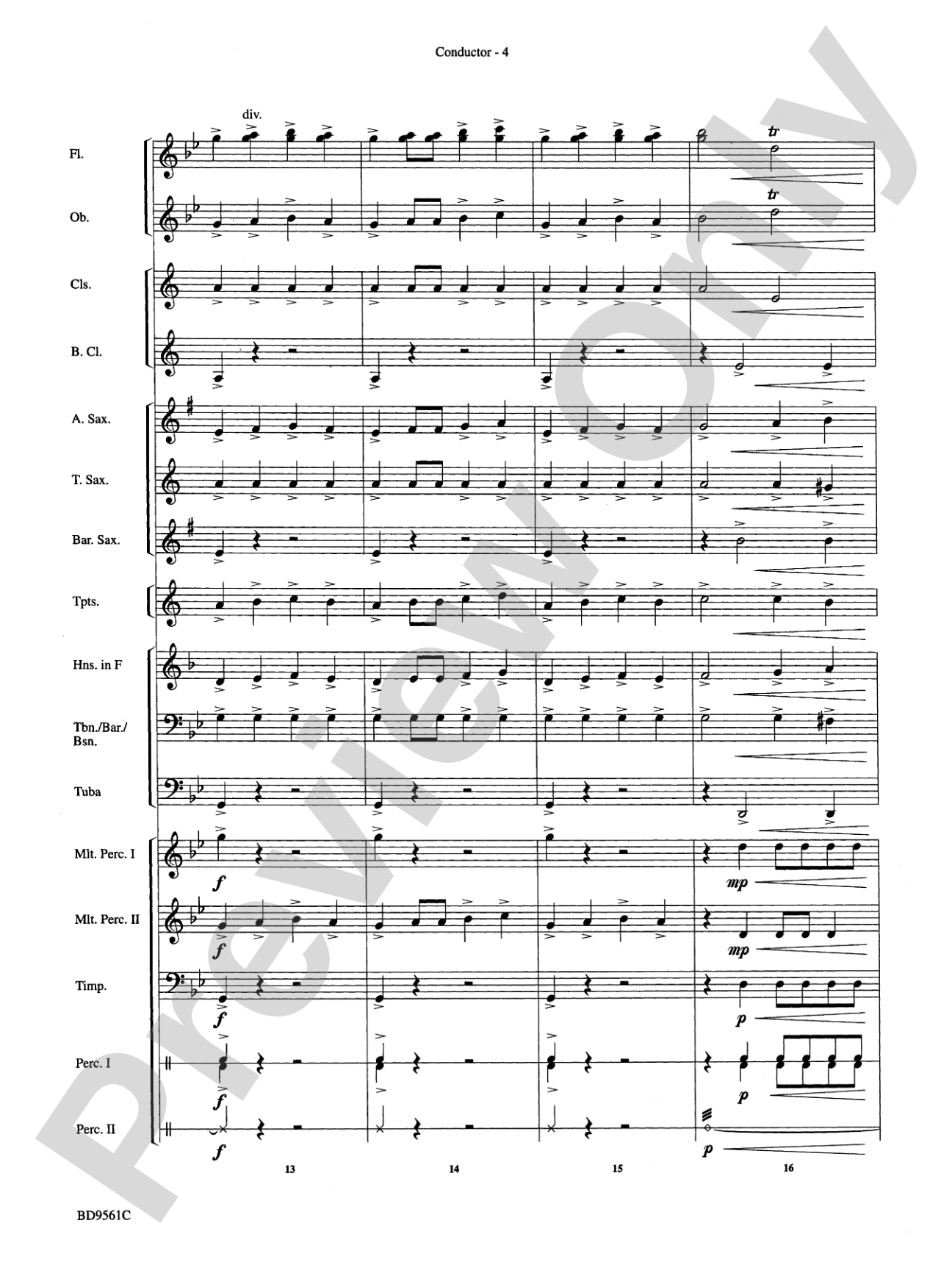
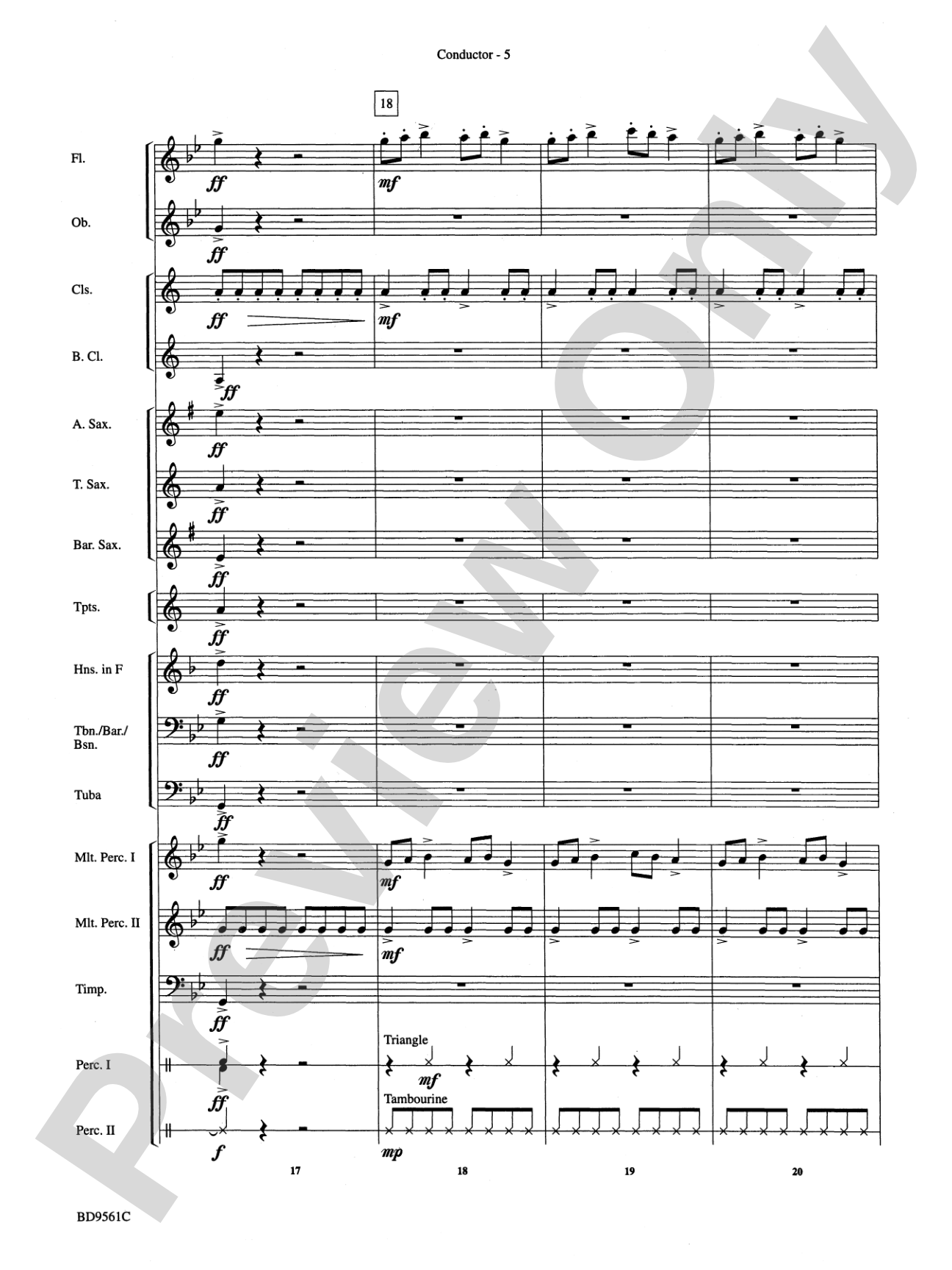
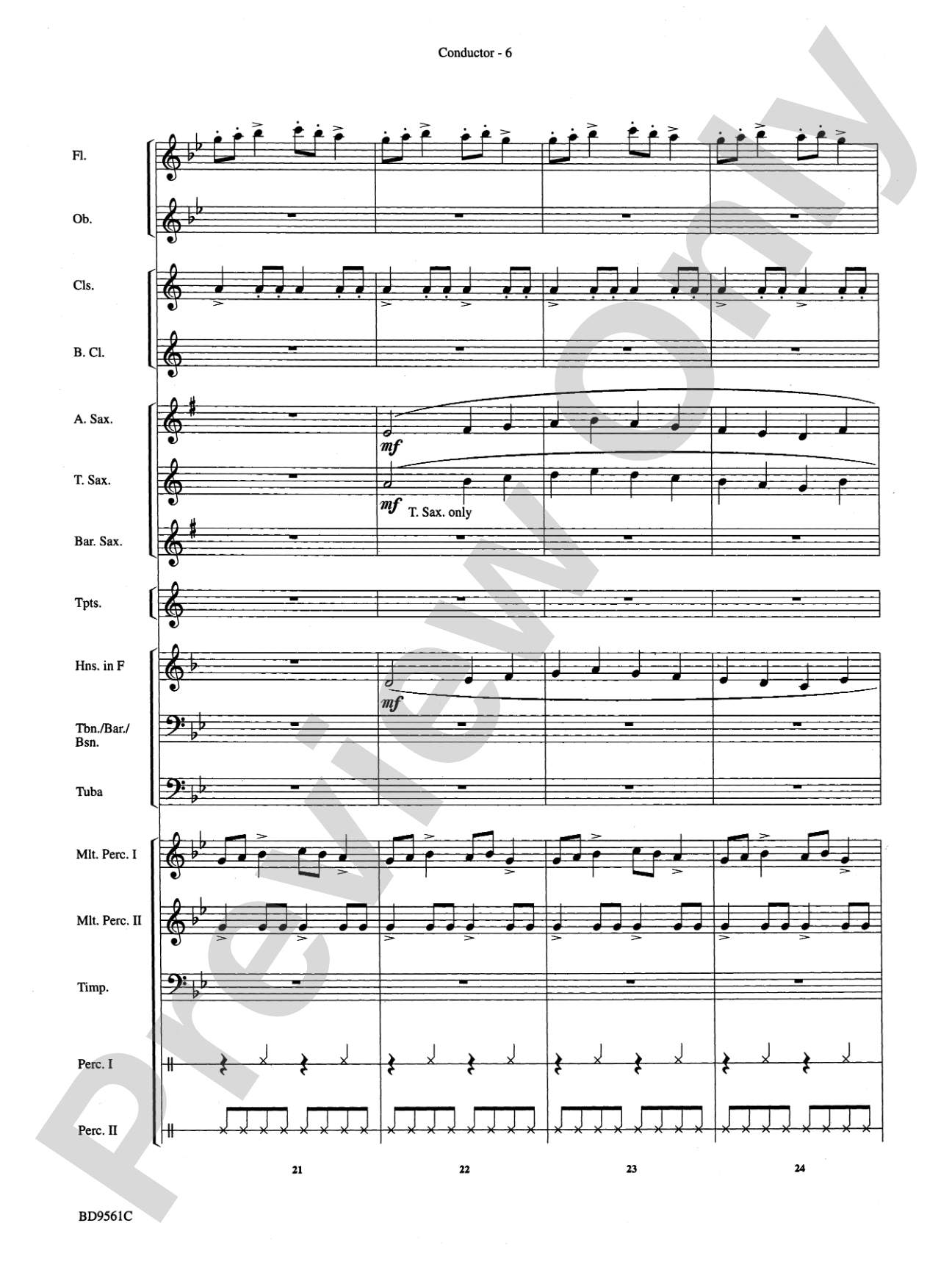
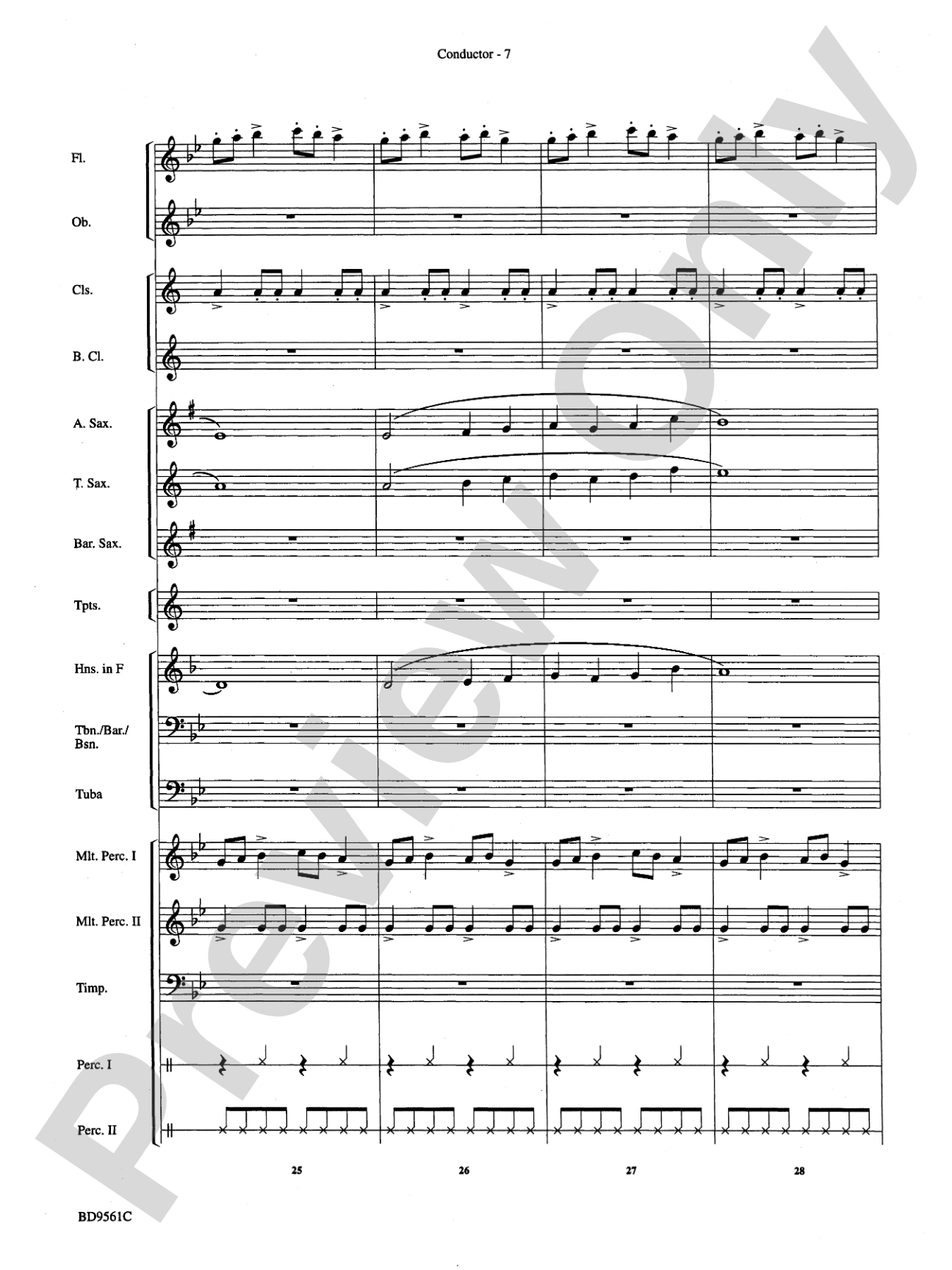
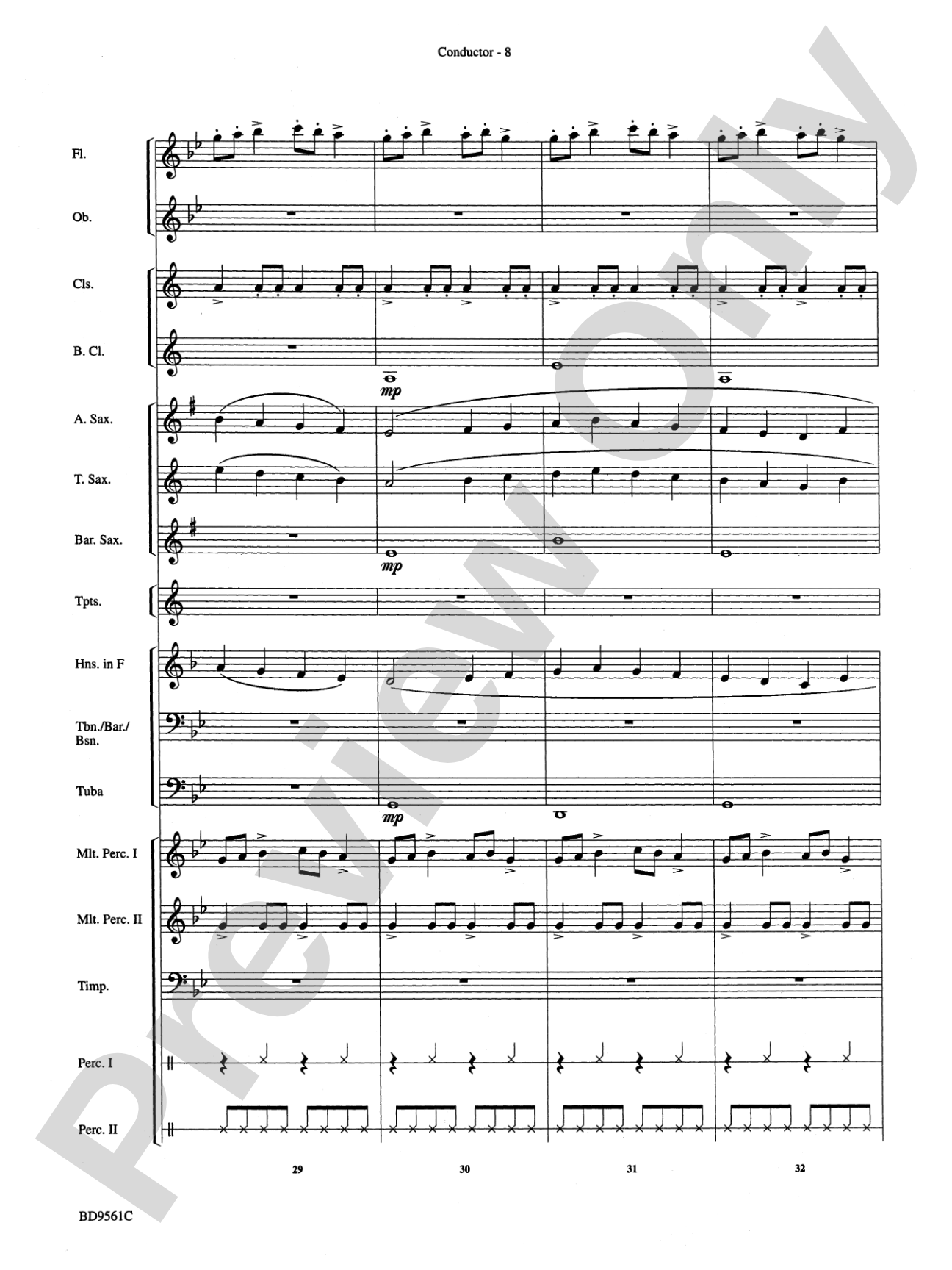
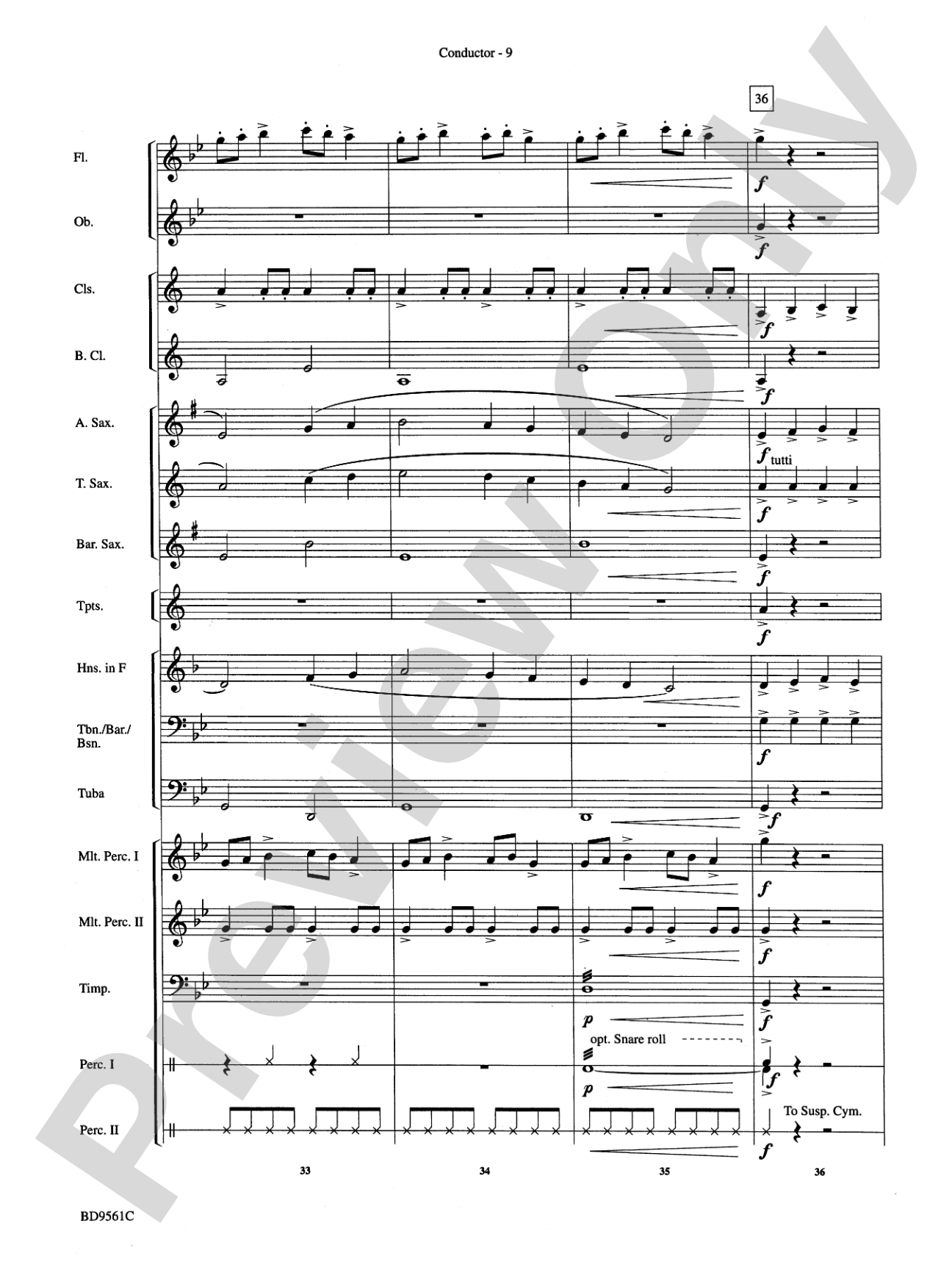
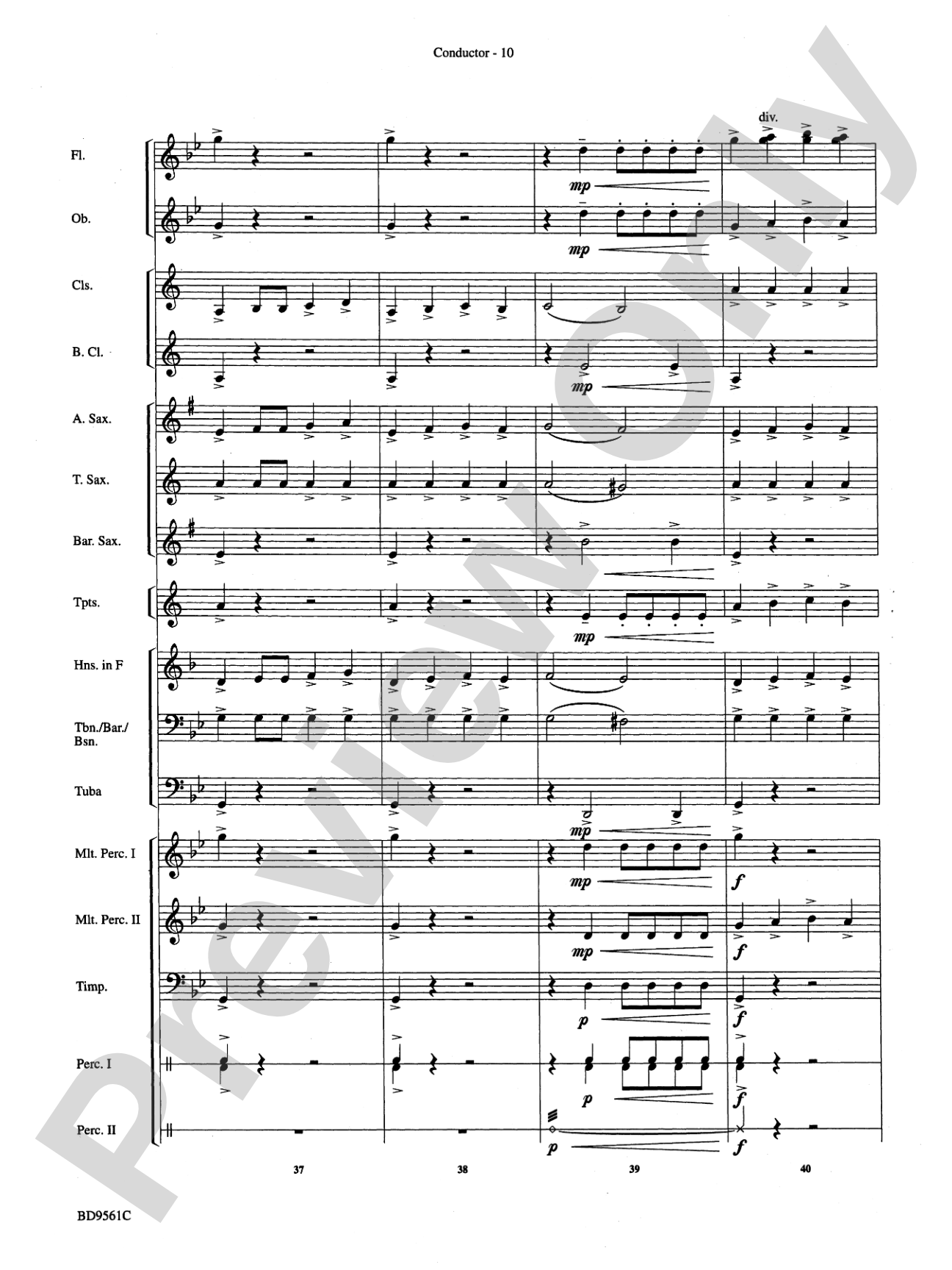
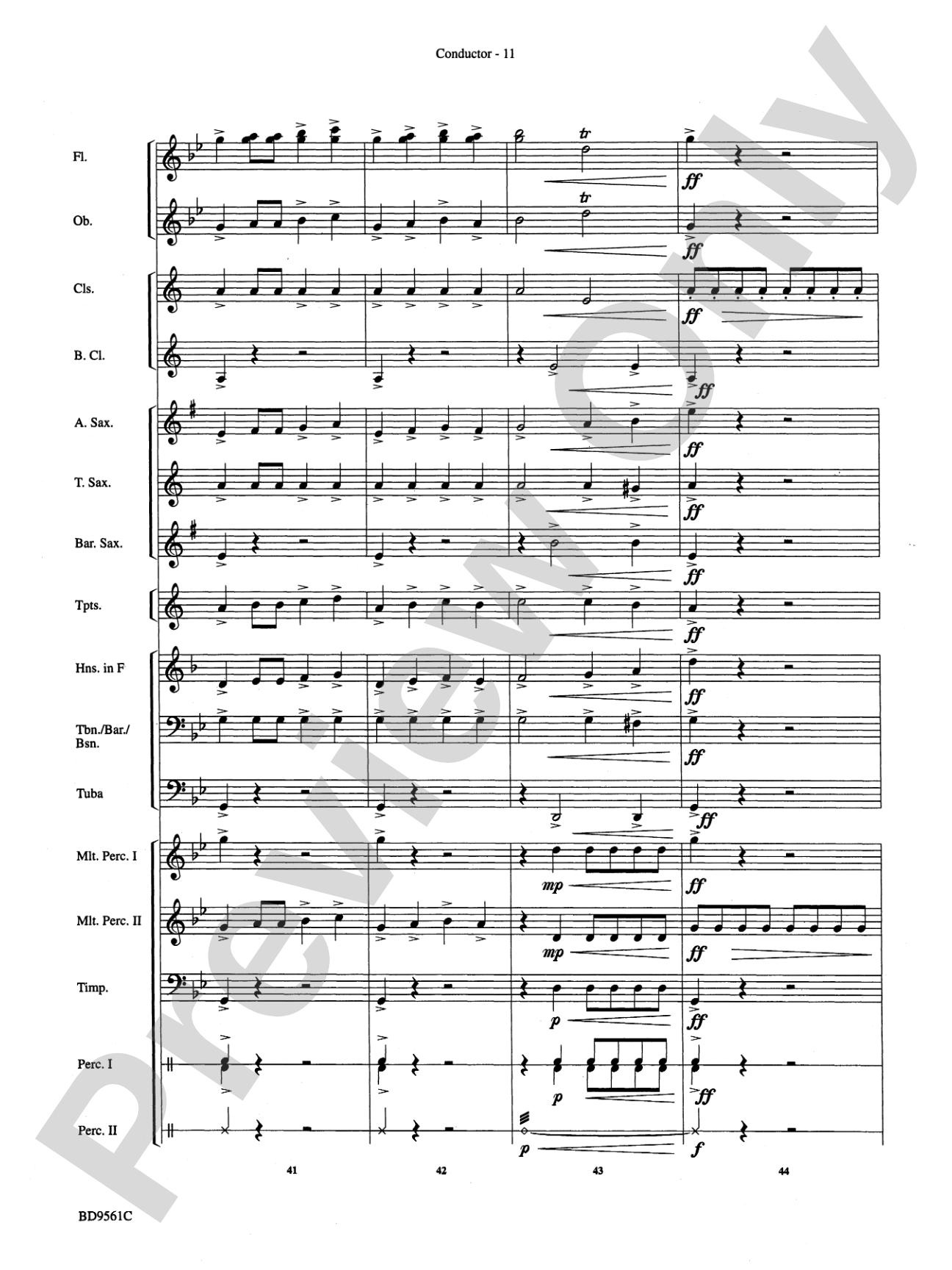
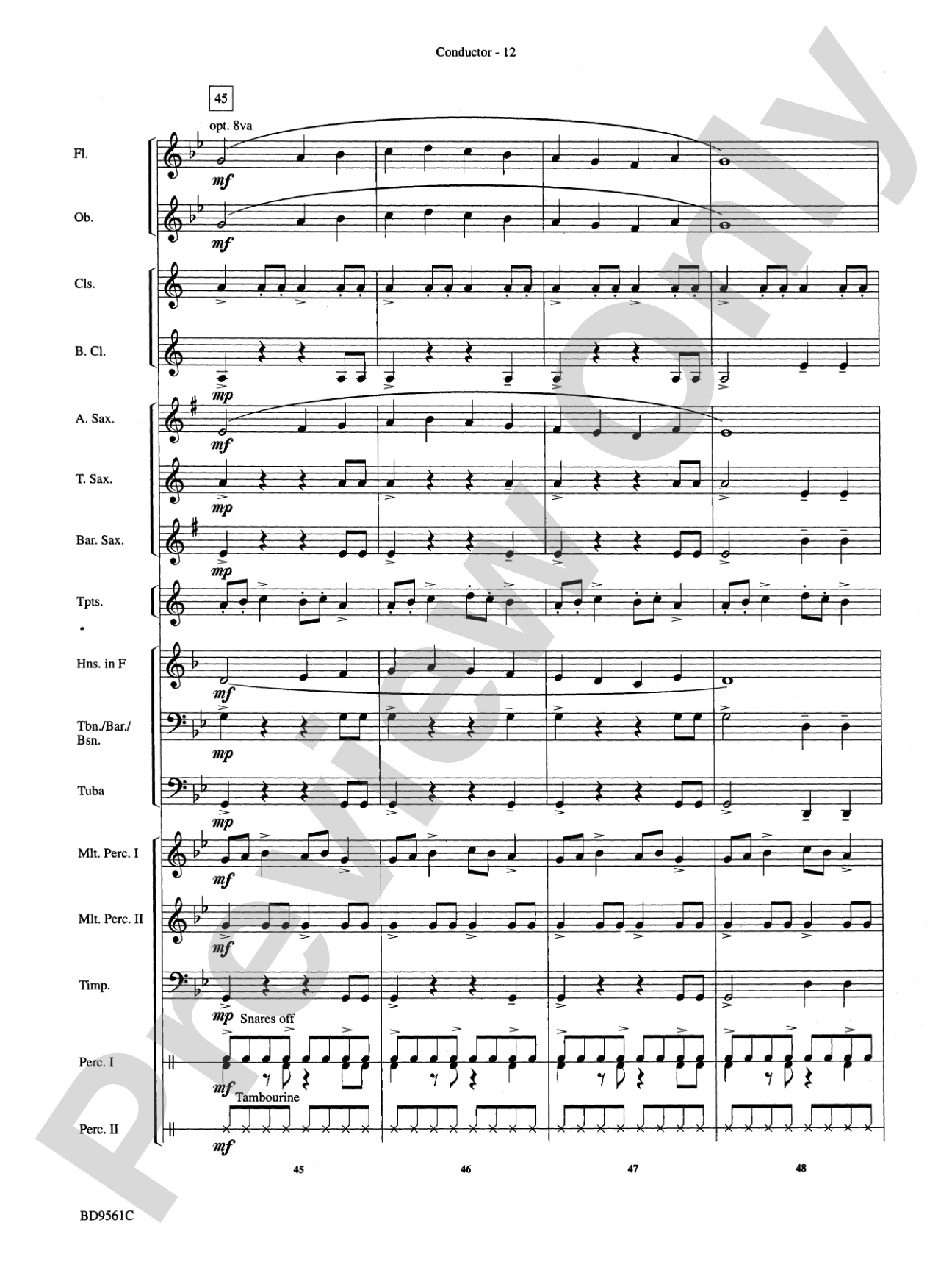
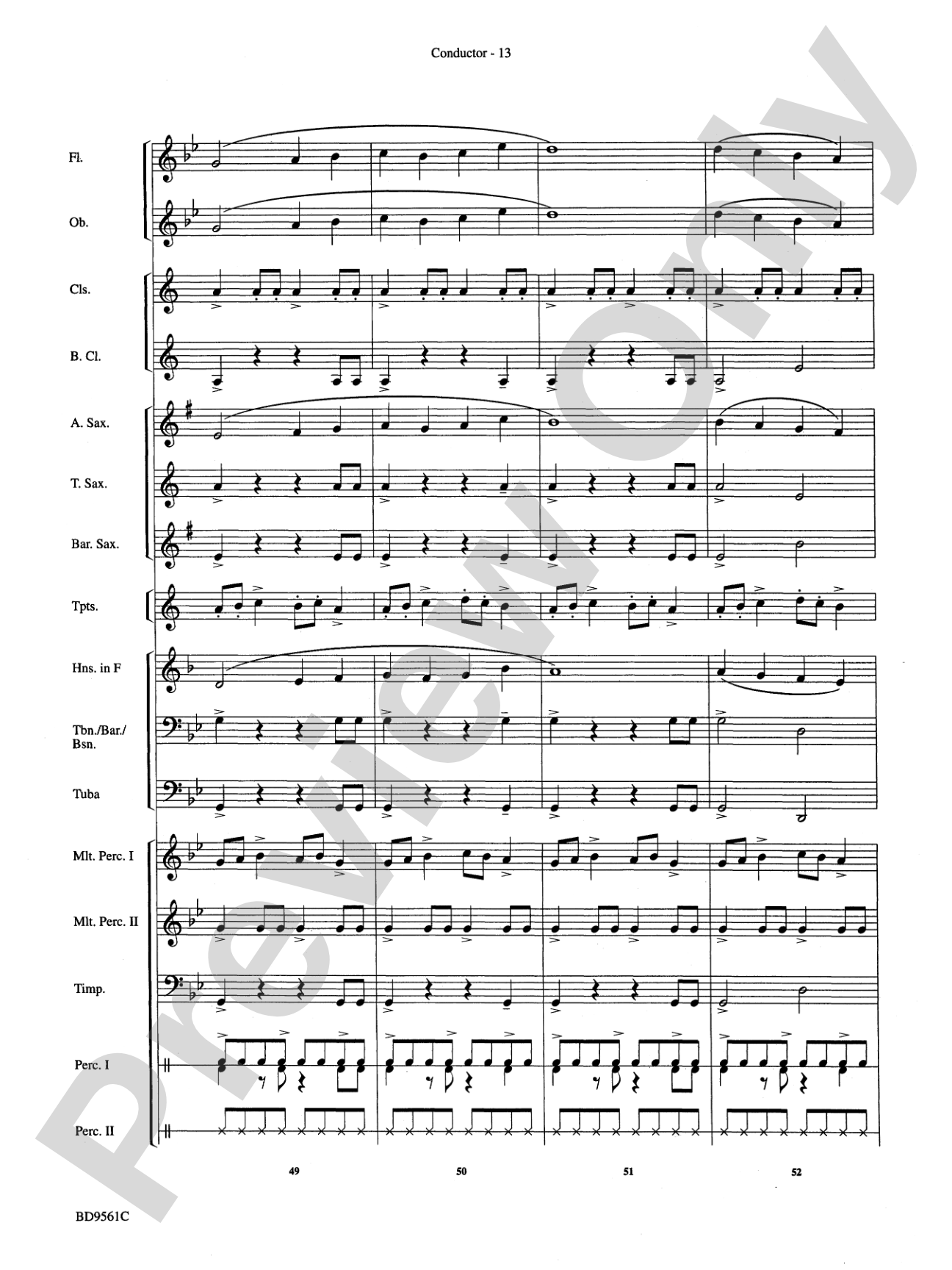
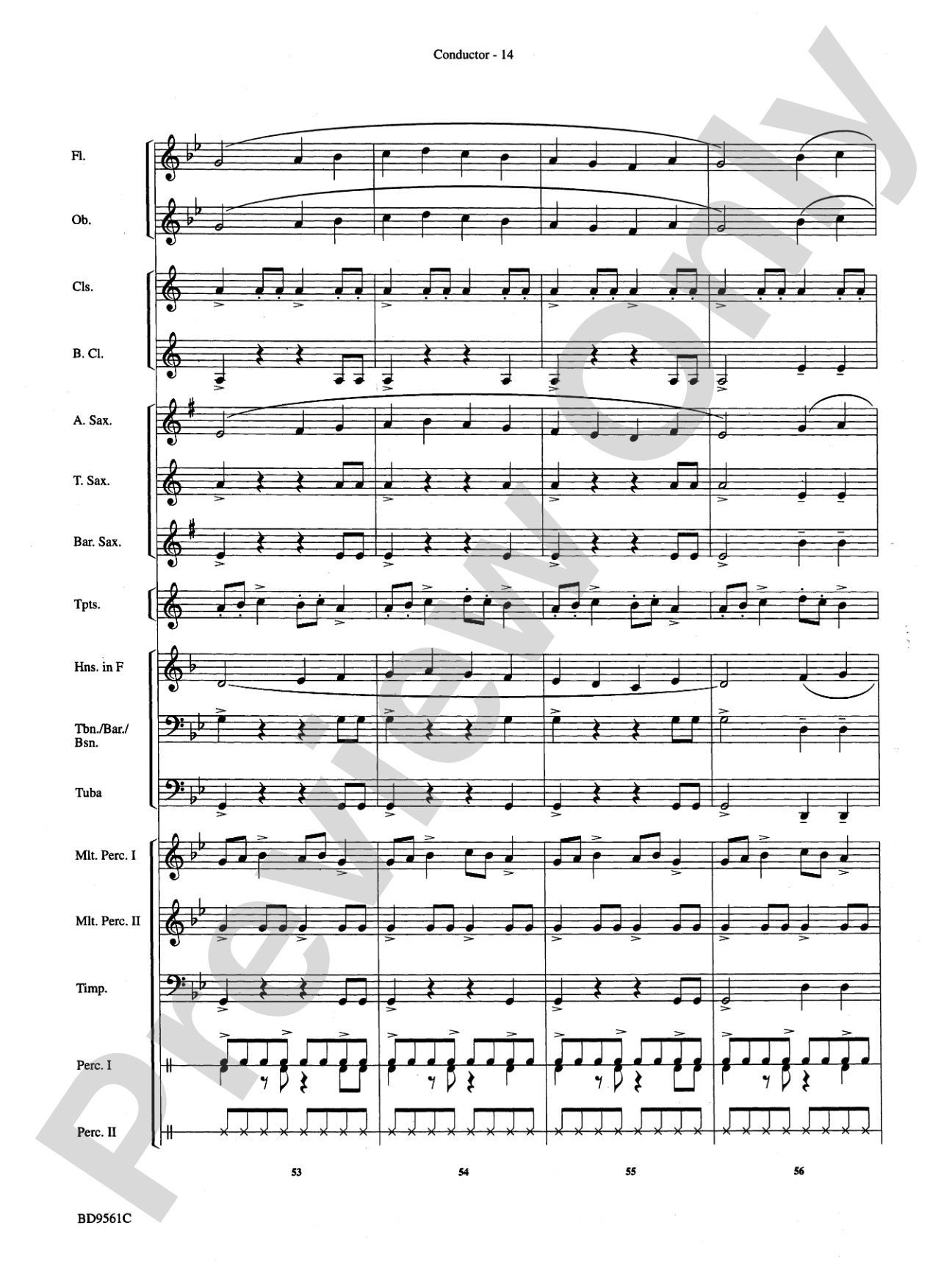
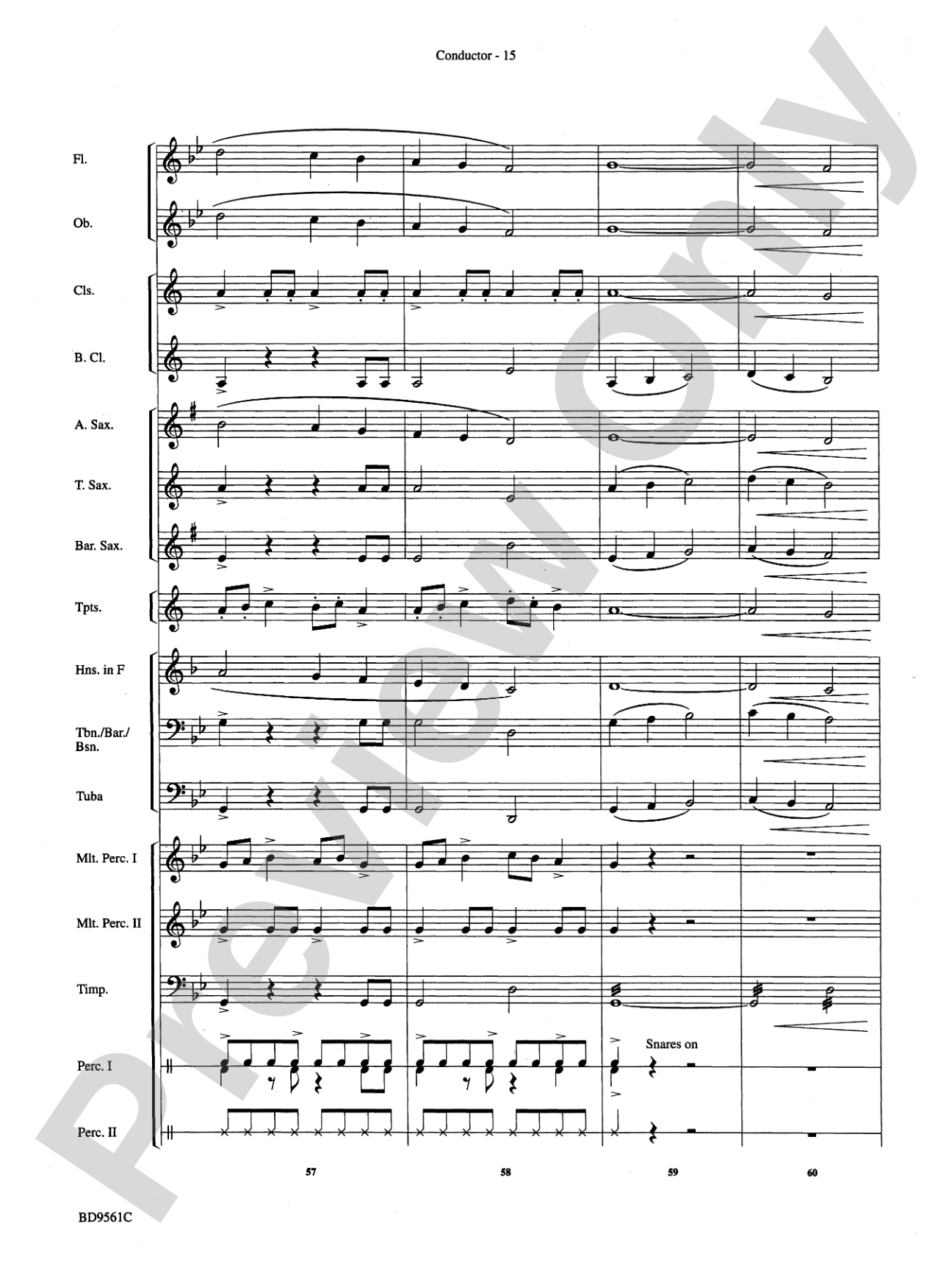
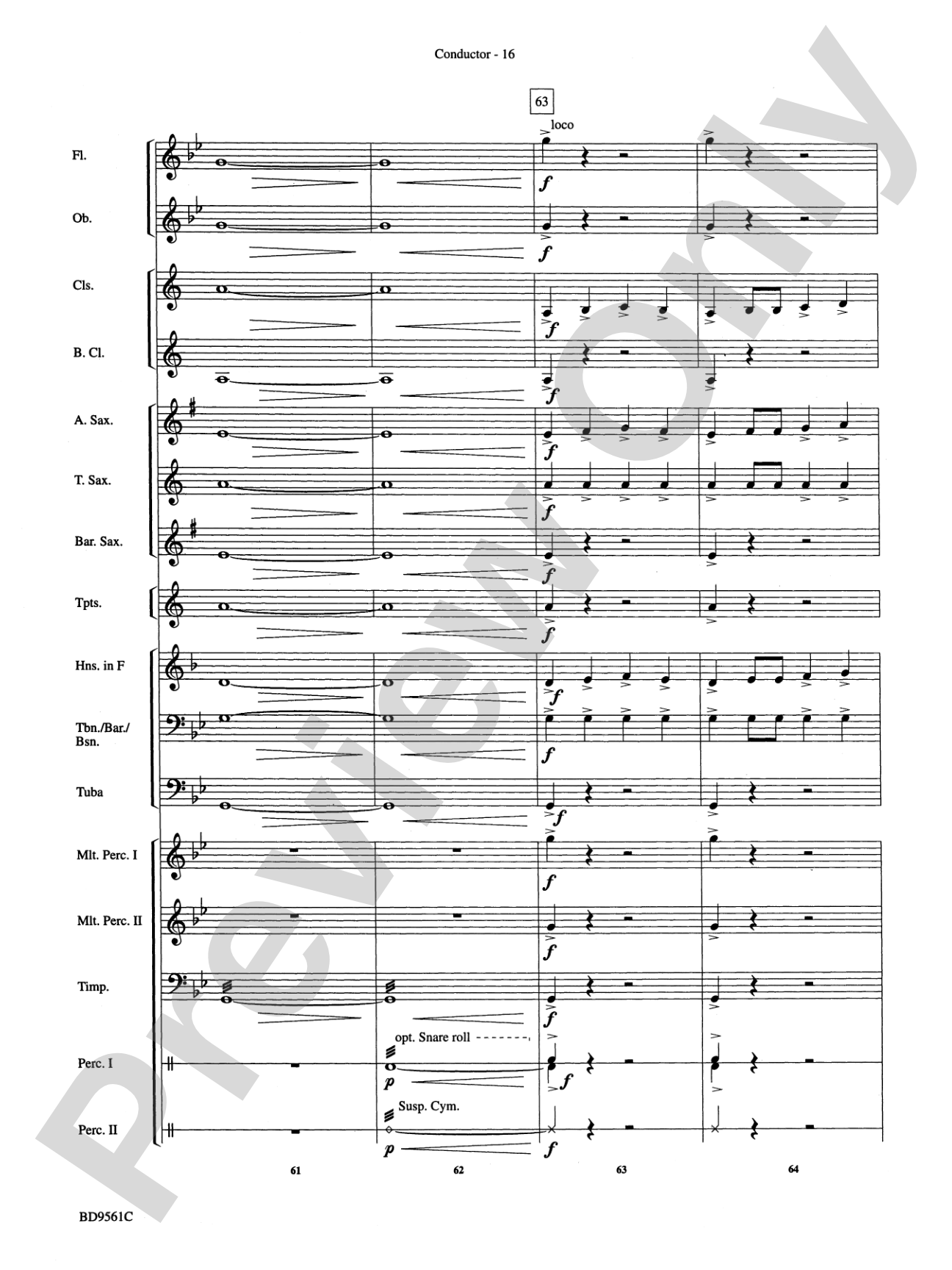
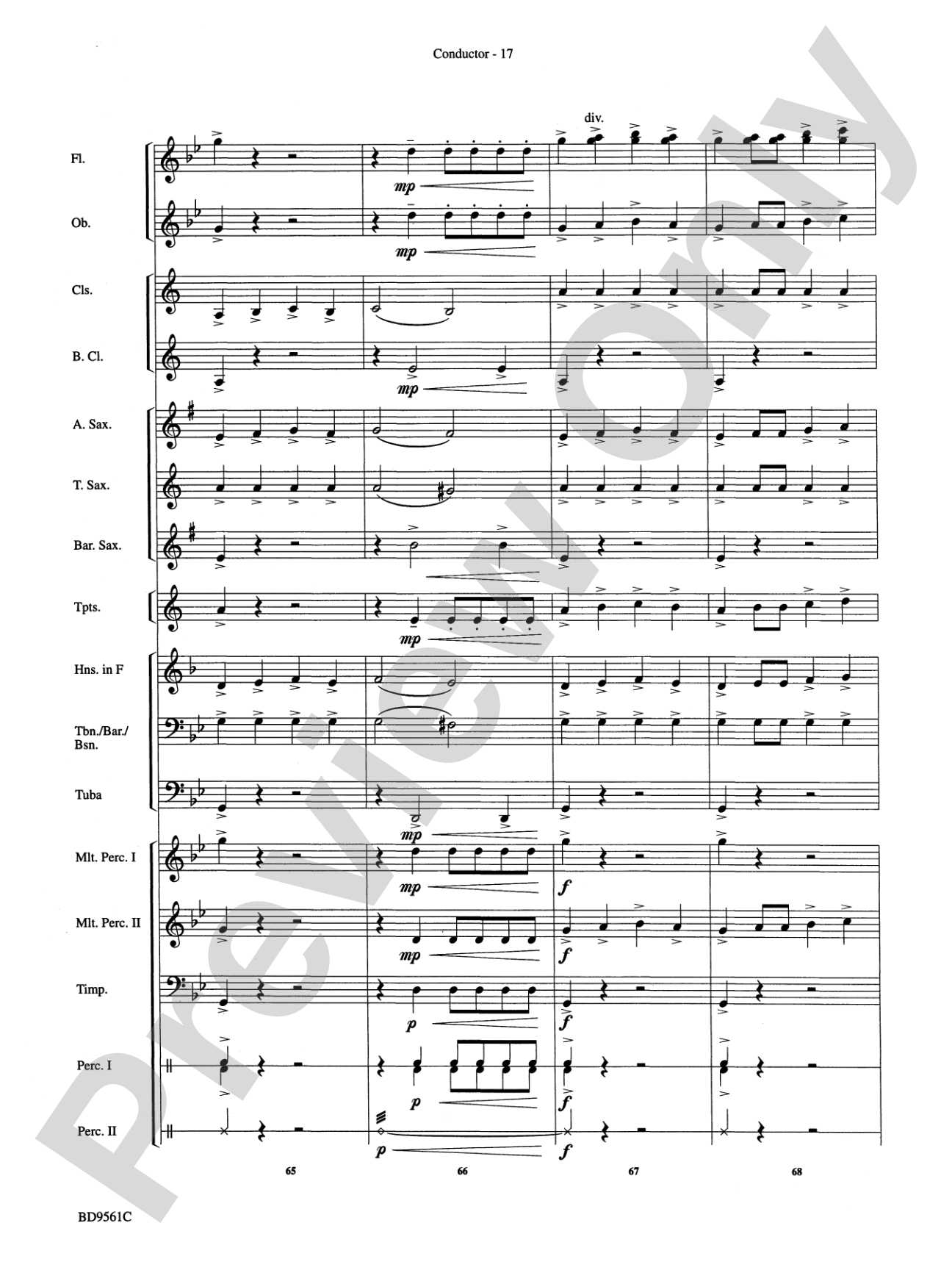
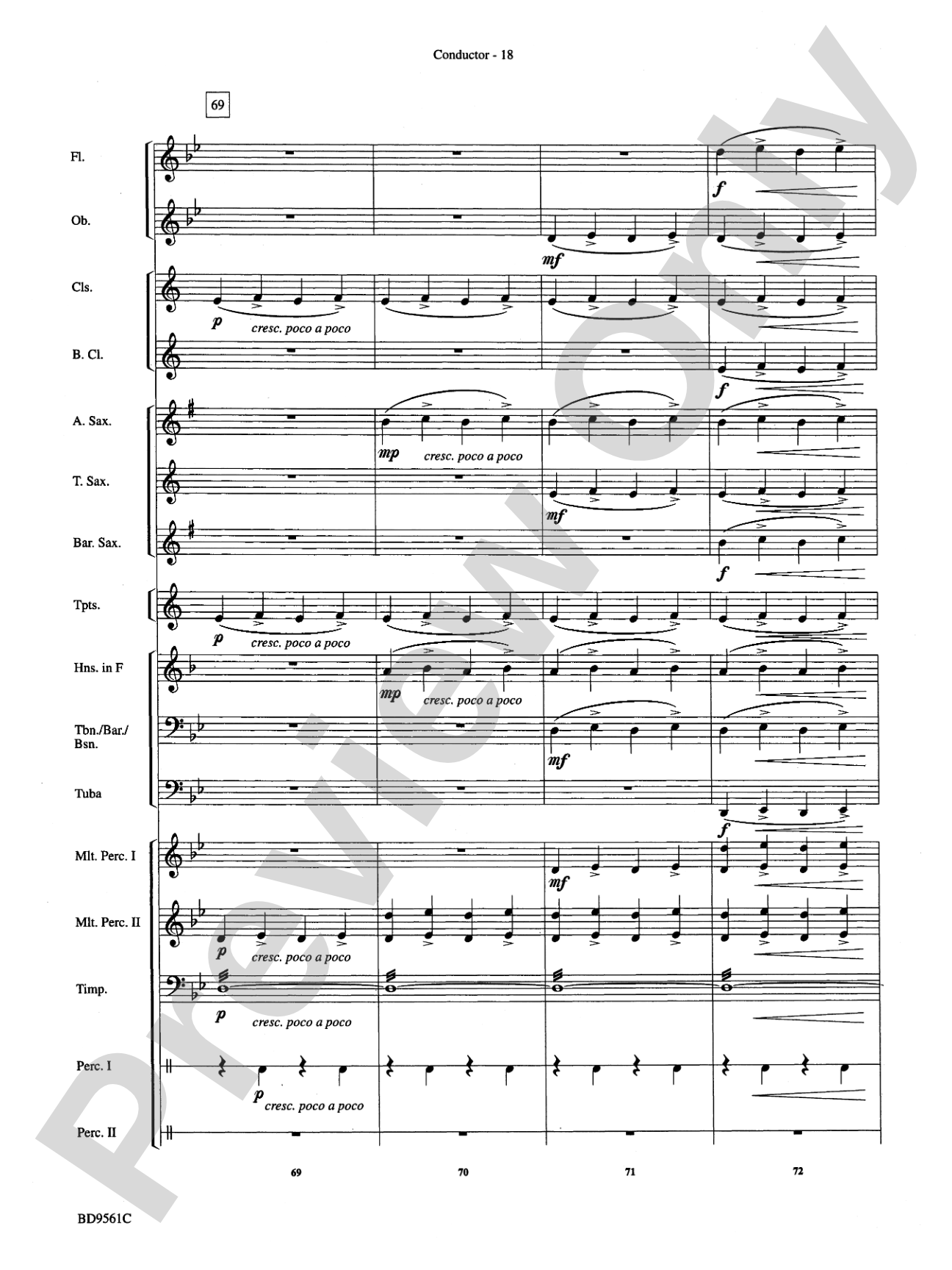
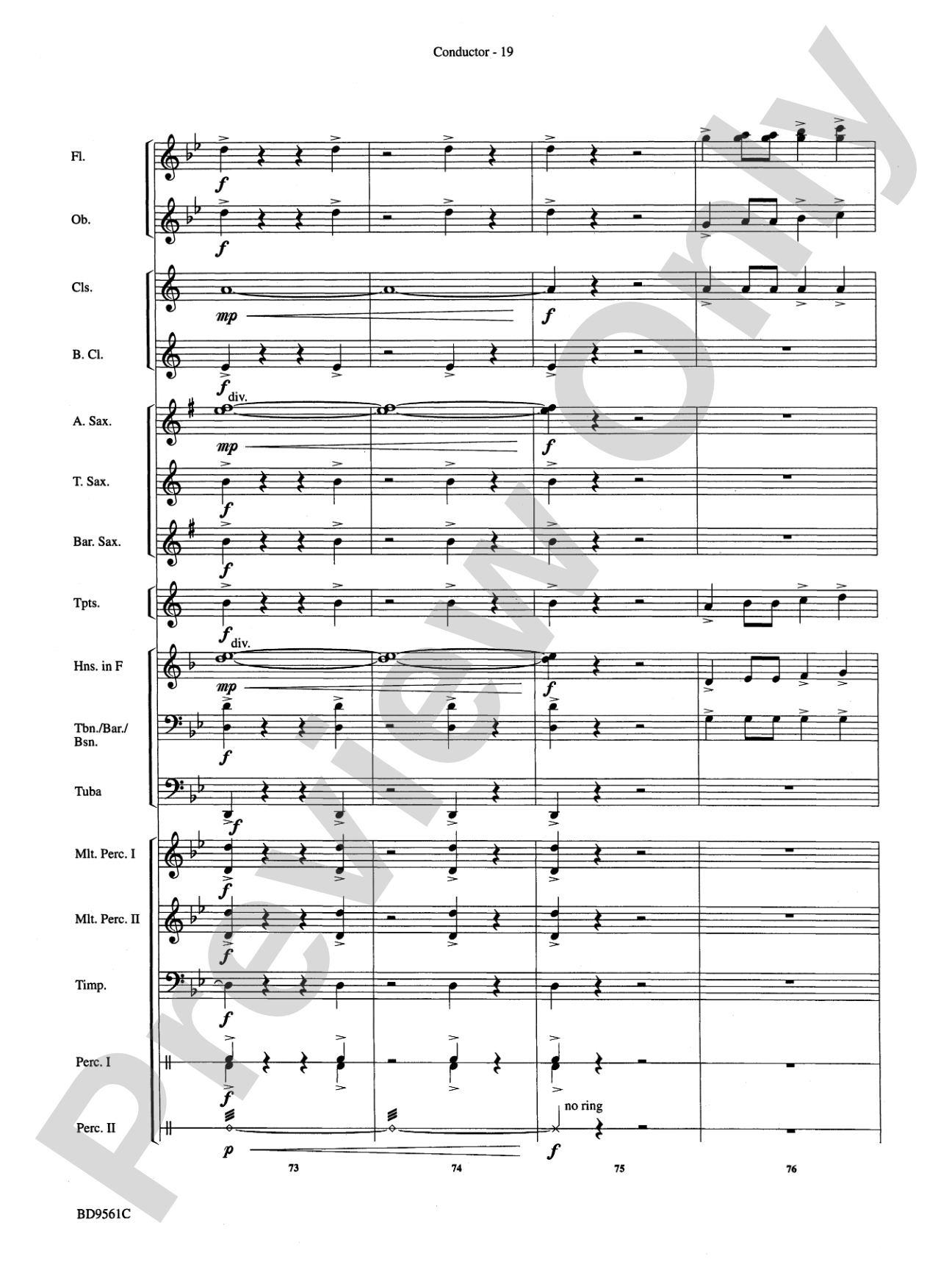
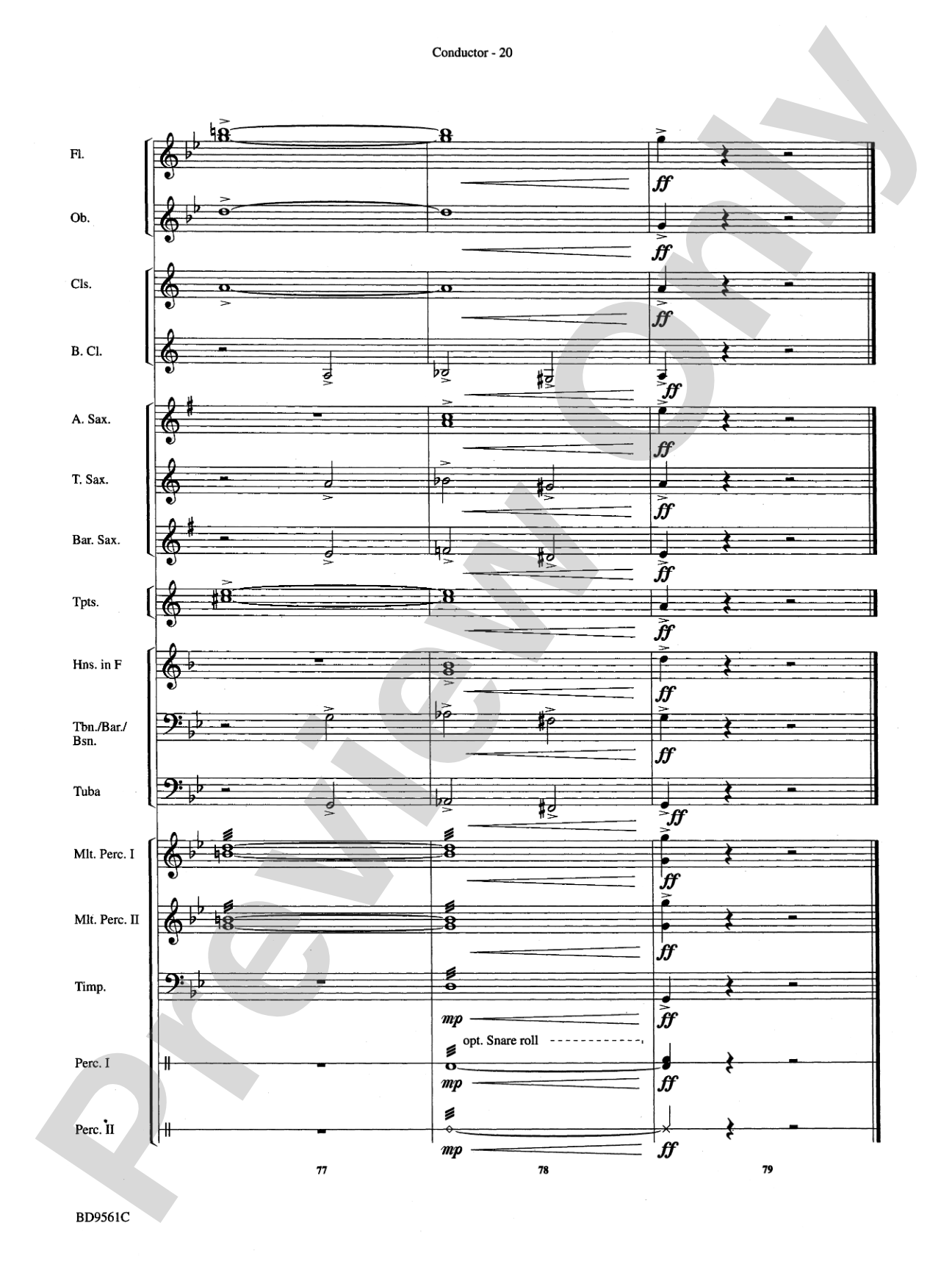



The Tempest: Concert Band Conductor Score & Parts
By Robert W. Smith
Grade: 1 (Very Easy)
Item: 00-PK-0004355

$57.00
Pickup currently not available
Buy Extra Parts (Digital PDF Download)
| Product | Price | Quantity |
|---|---|---|
| The Tempest: Score | $12.00 | |
| The Tempest: Flute | $5.99 | |
| The Tempest: Oboe | $5.99 | |
| The Tempest: 1st B-flat Clarinet | $5.99 | |
| The Tempest: B-flat Bass Clarinet | $5.99 | |
| The Tempest: E-flat Alto Saxophone | $5.99 | |
| The Tempest: B-flat Tenor Saxophone | $5.99 | |
| The Tempest: E-flat Baritone Saxophone | $5.99 | |
| The Tempest: 1st B-flat Trumpet | $5.99 | |
| The Tempest: 1st F Horn | $5.99 | |
| The Tempest: 1st Trombone | $5.99 | |
| The Tempest: Tuba | $5.99 | |
| The Tempest: Mallets | $5.99 | |
| The Tempest: 2nd Mallet Percussion | $5.99 | |
| The Tempest: Timpani | $5.99 | |
| The Tempest: 1st Percussion | $5.99 | |
| The Tempest: 2nd Percussion | $5.99 |
Parts Added to Cart!
Related Items
The Tempest: Concert Band Conductor Score |
$12.00
|
View | |
The Tempest: Full Orchestra Conductor Score & Parts |
$65.00
|
View | |
The Tempest: Concert Band Conductor Score & Parts |
$57.00
|
View | |
The Tempest: Concert Band Conductor Score |
$12.00
|
View | |
The Tempest: Full Orchestra Conductor Score & Parts |
$65.00
|
View | |
The Tempest: Full Orchestra Conductor Score |
$10.00
|
View |
Description
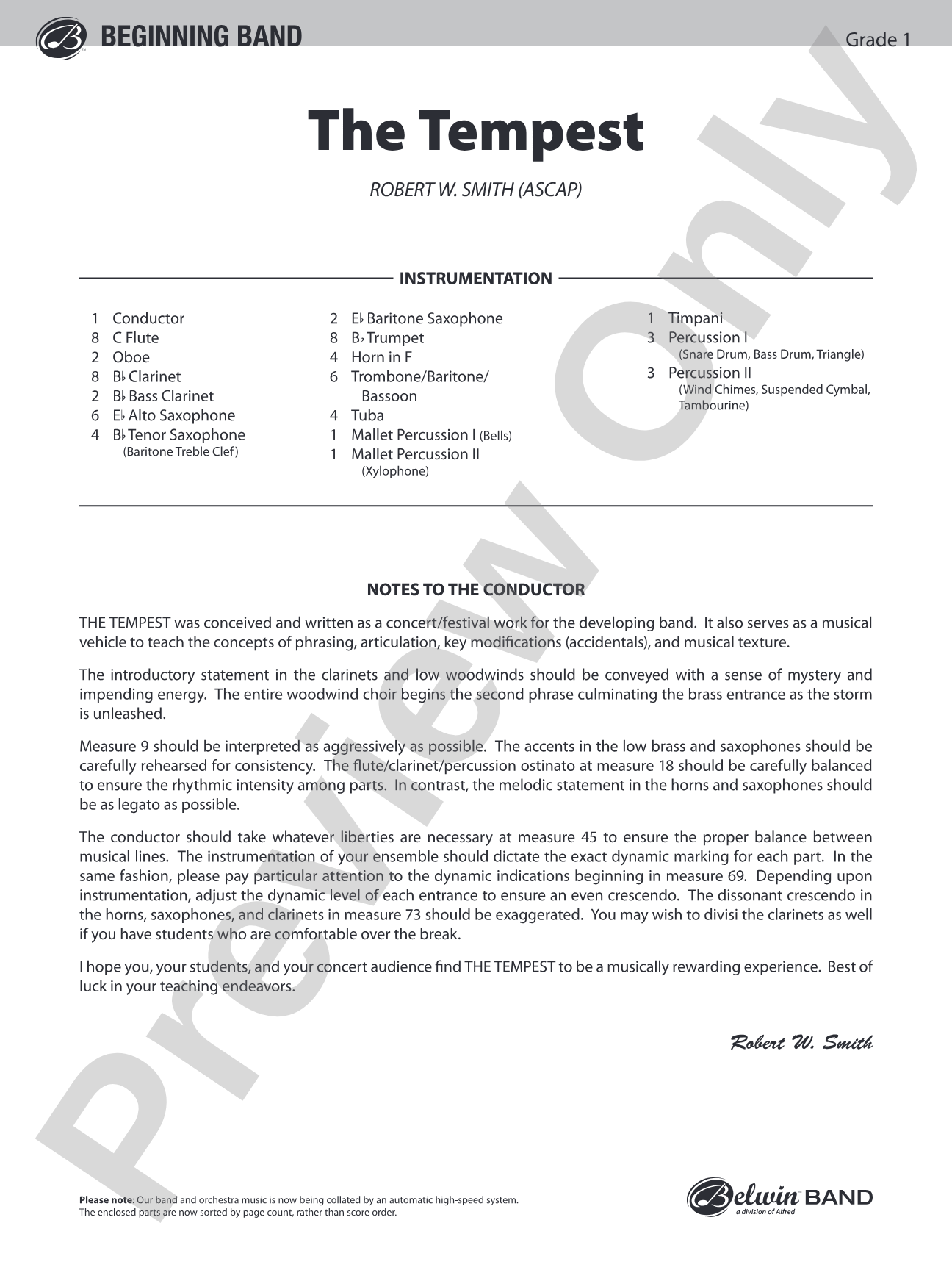
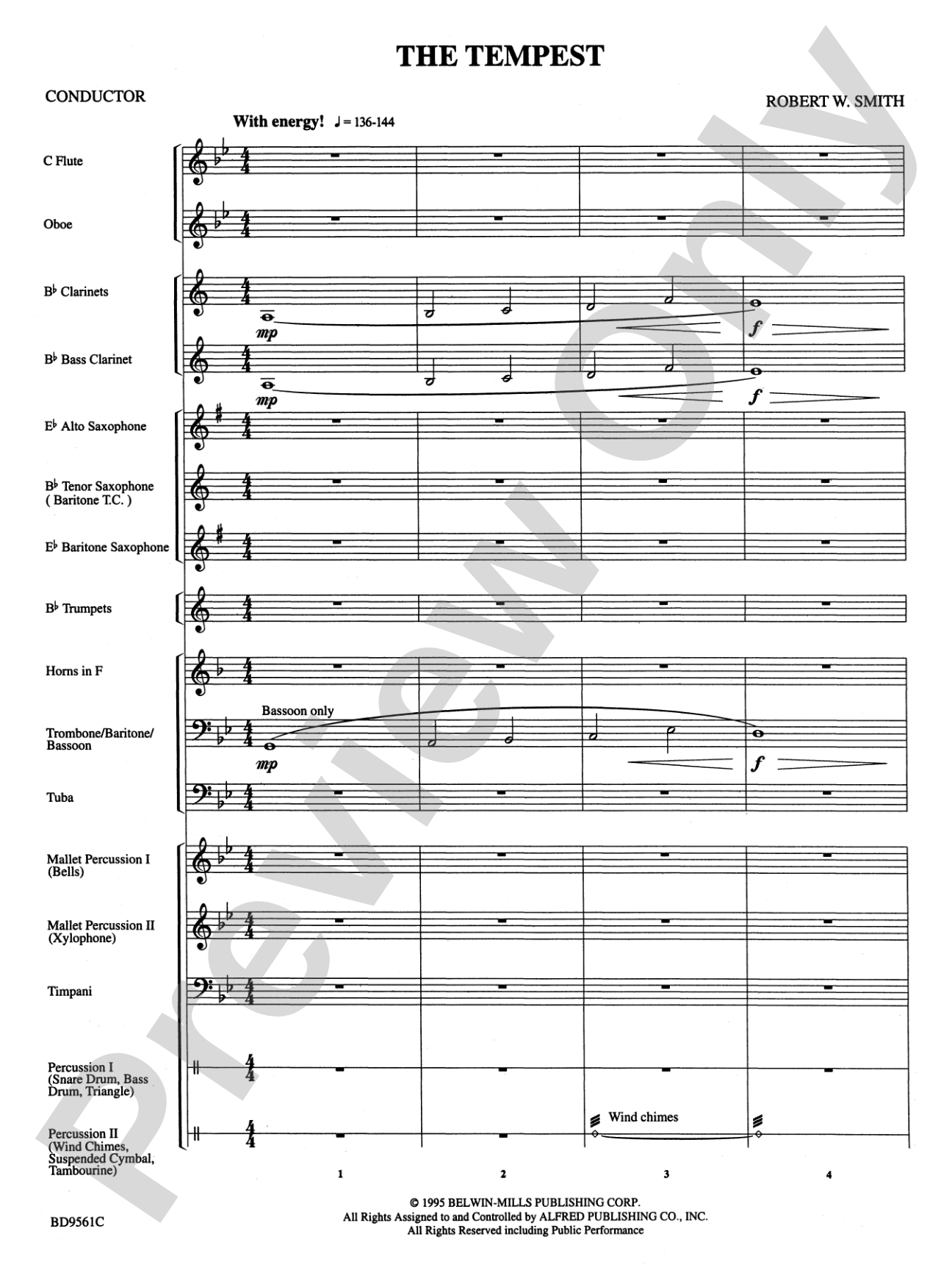
The dictionary tells us that a tempest is "a violent windstorm, frequently accompanied by rain, snow or hail." In the hands of Robert W. Smith, the scoring supplies all of the fury and rage within the instruments of your band. This work takes us "by the bootstraps" right into the raw power of Mother Nature. This title is available in MakeMusic Cloud.


Don't just read it, hear it, play along with it, and watch your students grow with it. In MakeMusic Cloud, The Tempest: Concert Band Conductor Score & Parts comes alive with professional accompaniment, adjustable tempo, and built-in practice tools that turn solo practice into real progress.
Open in the Player
Jump straight in and assign it today.
Start Your Free Trial
Open this title and explore the full library in minutes.
Sample Audio
1
Audio File
--:--
0:00
0:00
Sample Video
Additional Details
Series:
Belwin Beginning Band
Publisher:
Alfred Music
Page Count:
126
SKU:
00-PK-0004355
More about this title
About the Composer: Robert W. Smith

Robert W. Smith stands among America's most performed composers for concert band and orchestra, with over 400 published works to his credit. He earned his Bachelor of Music Education from Troy State University and his Master of Music from the University of Miami, establishing himself as both a composer and educator whose works span concert halls, television broadcasts, and major public events from the Olympic Games to the Macy's Thanksgiving Day Parade.
Smith's symphonic works, particularly The Divine Comedy and The Odyssey, have resonated with musicians across North America, Europe, Australia, and Asia. His compositions for developing ensembles have become foundational repertoire in band programs worldwide, and his conducting and clinician work has taken him across the United States and internationally to Japan, Canada, Italy, Austria, and the United Kingdom.
Why we love this
Smith writes for beginning bands with genuine compositional substance, not condescension. The Tempest harnesses the raw energy and drama of nature into music that sounds impressive without requiring advanced technique, making early rehearsals feel consequential rather than remedial. Your students will experience real conducting moments and genuine musical storytelling from day one.
What to expect
Visceral and driving. The piece channels the fury of a storm through accessible harmonic language and driving rhythms, creating moments of real power and moments of tension that release into bright resolution. It captures the energy of nature without requiring advanced musicianship to perform convincingly.
Who it's for
Beginning and developing concert band programs seeking a piece that delivers genuine dramatic impact without excessive technical demands. Young musicians benefit from playing music that feels substantial and adult, and this work gives them that experience while respecting their current abilities.
How to get the most out of it
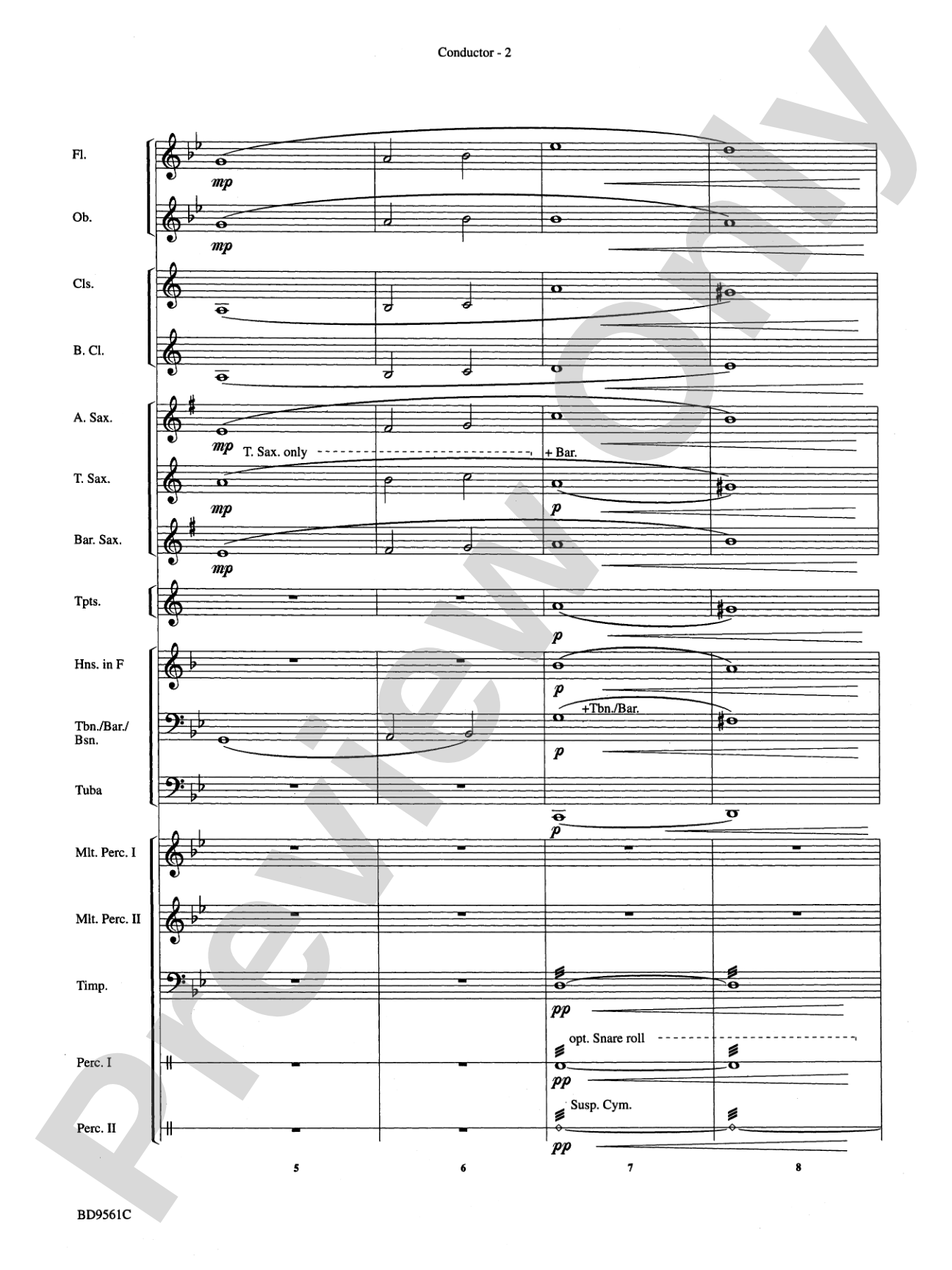
- Balance the dynamic shifts carefully; the Grade 1 orchestration can overwhelm quickly if all sections push simultaneously. Establish clear crescendos and decrescendos so younger players understand pacing rather than simply playing louder.
- Use staggered releases on fermatas and held notes to create cleaner cutoffs. This detail elevates the ensemble sound significantly at this level.
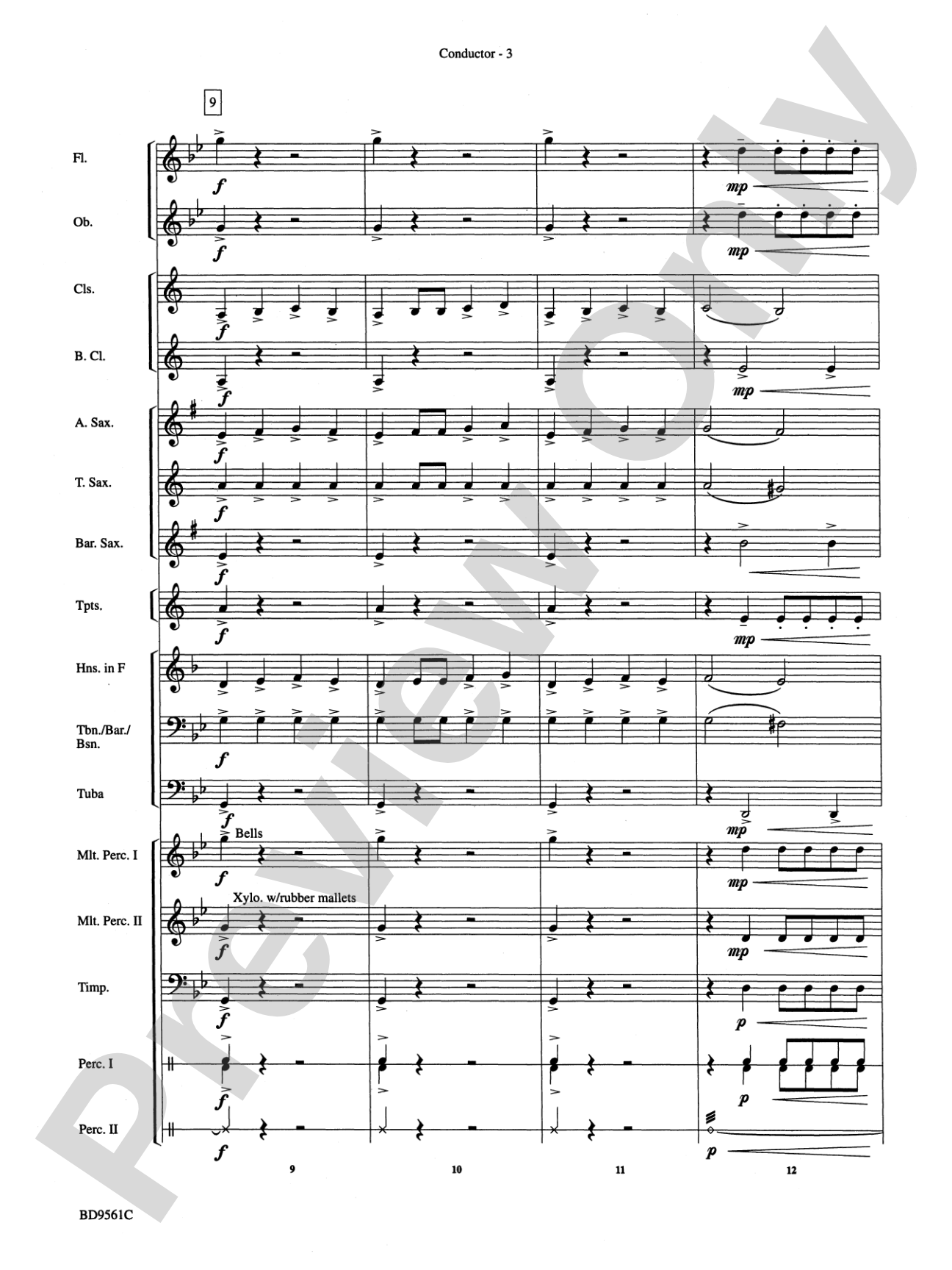
- Emphasize rhythmic clarity in the accompaniment figures. They anchor the dramatic moments, so articulation and precision matter more than volume.
How to use it
Position this as a dynamic opener or closer on a concert where you want to establish that your young ensemble plays real music with real stakes. It pairs well with lyrical Grade 1 selections and gives audiences an immediate sense of your program's vitality and your students' commitment to the craft.
Skills your students will build
- Dynamic control and ensemble balance across sections
- Sustaining tone and phrase management in longer lines
- Rhythmic precision in repeated figure patterns
- Responding to conducting cues for entrances and releases
- Musical interpretation of descriptive/programmatic content