
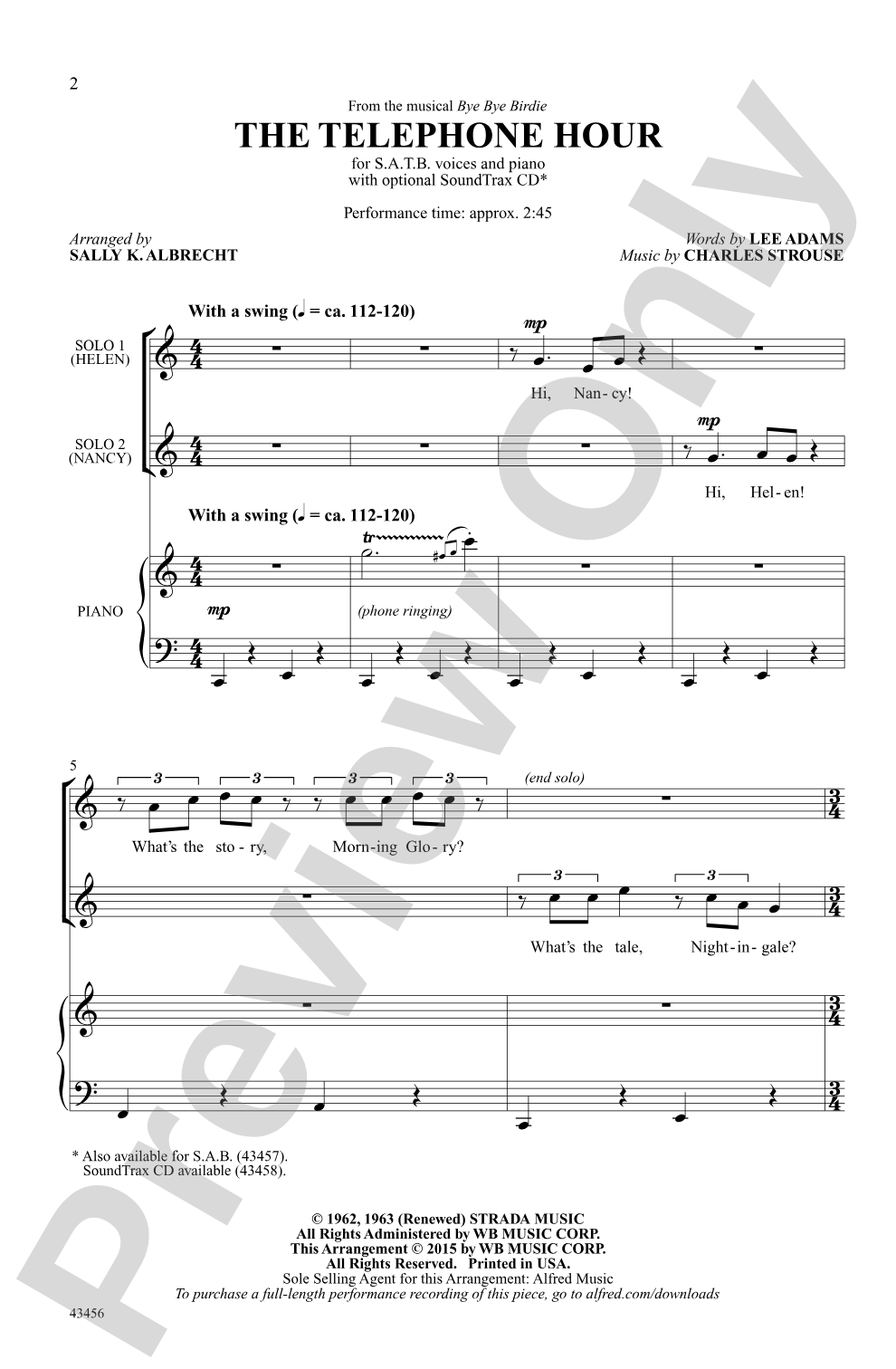

The Telephone Hour (from the musical Bye, Bye, Birdie): SATB Choral Octavo
From the Musical Bye, Bye, Birdie
Music by Charles Strouse, lyric by Lee Adams / arr. Sally K. Albrecht
Item: 00-PO-0003375
$2.10
Minimum order quantity: 20 copies
One moment…
Related Items
The Telephone Hour: SoundTrax Digital Audio Download |
$27.99
|
View | |
The Telephone Hour (from the musical Bye, Bye, Birdie): SAB Choral Octavo |
$2.10
|
View | |
The Telephone Hour: SATB Choral Octavo |
$2.10
|
View | |
The Telephone Hour: SAB Choral Octavo |
$2.10
|
View | |
The Telephone Hour: Choral Octavo SoundTrax CD |
$27.99
|
View |
Description
"Hi, Nancy! Hi, Helen! What's the story, morning glory?" Who can forget the fun interplay as the teenagers from Sweet Apple, Ohio catch up on the latest gossip? It's time to bust out the cell phones and bring this classic into the 21st century!


The Telephone Hour (from the musical Bye, Bye, Birdie): SATB Choral Octavo isn't in MakeMusic Cloud just yet...but it could be. Let us know you'd like to see it, and you'll help shape what comes next. In the meantime, start a free trial and dive into thousands of interactive titles your students can play along with today.
Request This Title
Tell us you want it.
Start Your Free Trial
Explore everything that's ready to play right now.
Sample Audio
1
Audio File
--:--
0:00
0:00
Sample Video
No sample videos found.
Additional Details
Series:
Alfred Pop Choral Series
Publisher:
Alfred Music
Page Count:
16
SKU:
00-PO-0003375
More about this title
About the Composer: Charles Strouse
Charles Strouse composed the music for some of Broadway's most enduring comedies, including Bye, Bye, Birdie (1960), Annie (1977), and Applause (1970). His gift for melody and his ability to capture the humor and heart of a script made him a sought-after collaborator with lyricist Lee Adams. Strouse's theatrical scores are marked by infectious rhythms, singable lines, and an instinctive understanding of how music serves storytelling on stage.
For music educators, Strouse's work offers accessible yet musically substantial material. His melodies sit naturally in the voice, and his arrangements reward clear diction and ensemble blend without requiring advanced vocal technique. The Telephone Hour exemplifies his skill at musical comedy, where rhythm and rhythmic clarity become tools for both humor and theatrical communication.
Why we love this
This arrangement captures every ounce of the original's comedic timing and teenage energy while remaining fully singable for high school and community choirs. Sally K. Albrecht has preserved the rapid-fire dialogue and overlapping lines that make the number hilarious, forcing your singers to lock into tight rhythmic unison while maintaining character and clarity of text. It's the rare piece that serves as both a genuine crowd-pleaser and a solid musical-theater rehearsal challenge.
What to expect
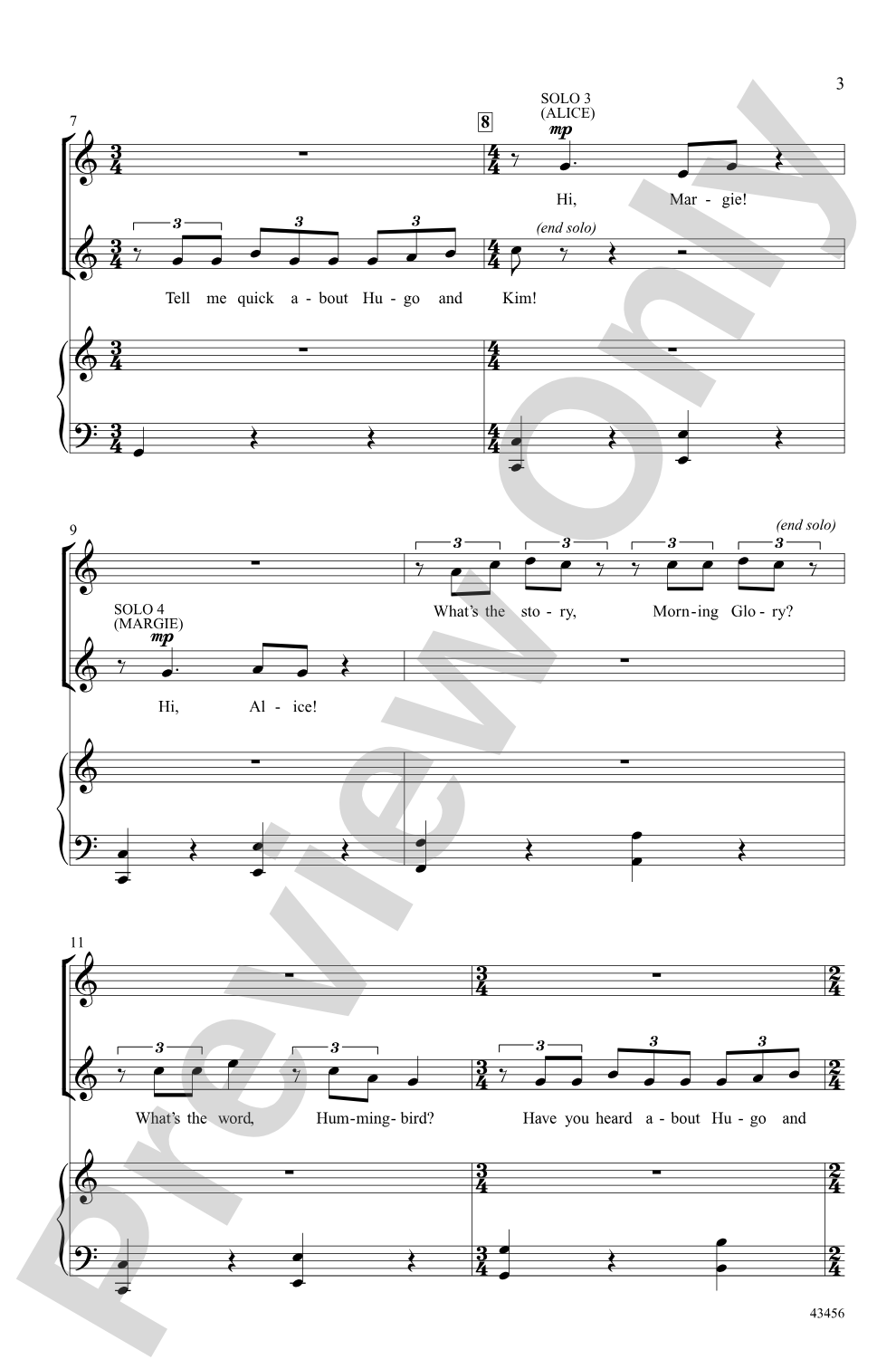
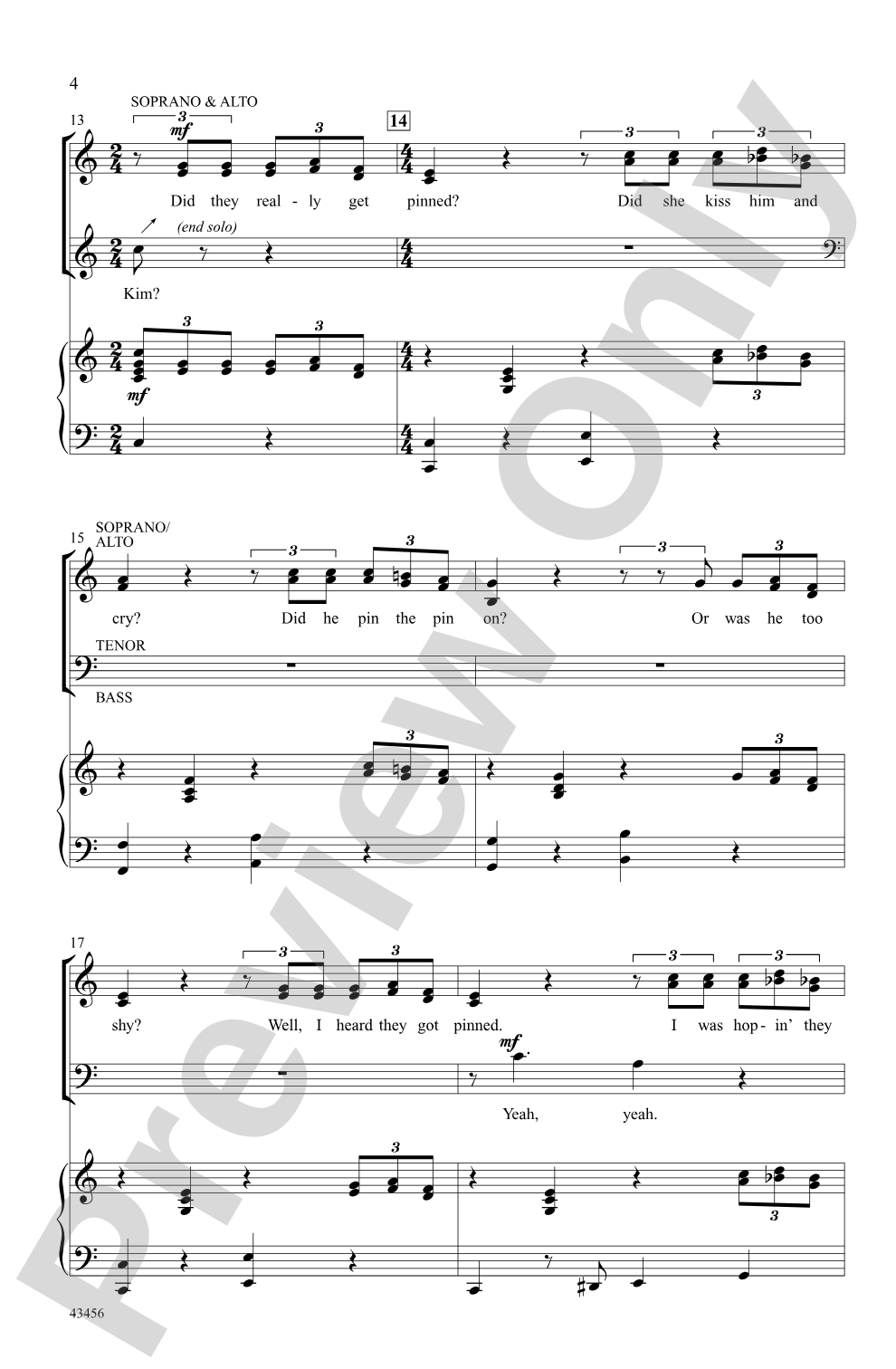
The Telephone Hour snaps with the energy of a 1960s teen party, full of excitement, interruptions, and barely contained chaos. There's an infectious lightness to the overlapping vocal lines, each soprano and alto (or tenor and bass) tumbling over the others as they trade bits of news and innuendo. The music captures the breathless urgency of teenagers who simply cannot wait their turn to share the gossip.
Who it's for
High school, community, and college choirs looking for a crowd-pleasing pop-choral arrangement with genuine musical substance. The SATB voicing works well for mixed ensembles of intermediate skill; singers need secure rhythmic reading and the ability to balance rapid text delivery with musical line. This piece shines as a concert opener or a lighter moment in a show that includes more serious repertoire.
How to get the most out of it
- Treat the overlapping vocal lines like rapid-fire dialogue rather than traditional choral writing. Each section should feel like interrupting the others, not blending into a unified chord.
- Anchor the rhythm section (if using the recorded accompaniment) and rely on a steady conductor beat. The piece moves quickly, and any rhythmic drift will compound through the overlapping passages.
- Emphasize clear, crisp diction throughout, especially on the opening phrase and repeated phrases. The humor depends entirely on the audience hearing every word of the gossip.
- Shape phrases with comic timing. Find the natural pauses where characters would catch their breath, and use slight breath releases to create separation between sections rather than one long vocal line.
How to use it
Open a concert with this piece to set a fun, approachable tone and draw the audience in immediately. It pairs naturally with other Broadway pop arrangements or with a concert themed around musical comedy. Consider programming it early in the season as a morale booster during rehearsals; the theatrical playfulness makes it as enjoyable to rehearse as it is to perform.
Skills your students will build
- Managing overlapping vocal lines and rhythmic independence within a homophonic texture
- Rapid text delivery while maintaining musical line and vowel placement
- Responding to comic timing and theatrical interpretation in a choral setting
- Balancing rhythm-section entrances with ensemble cutoffs and breath releases