The Syncopated Clock: String Bass Sheet Music Preview

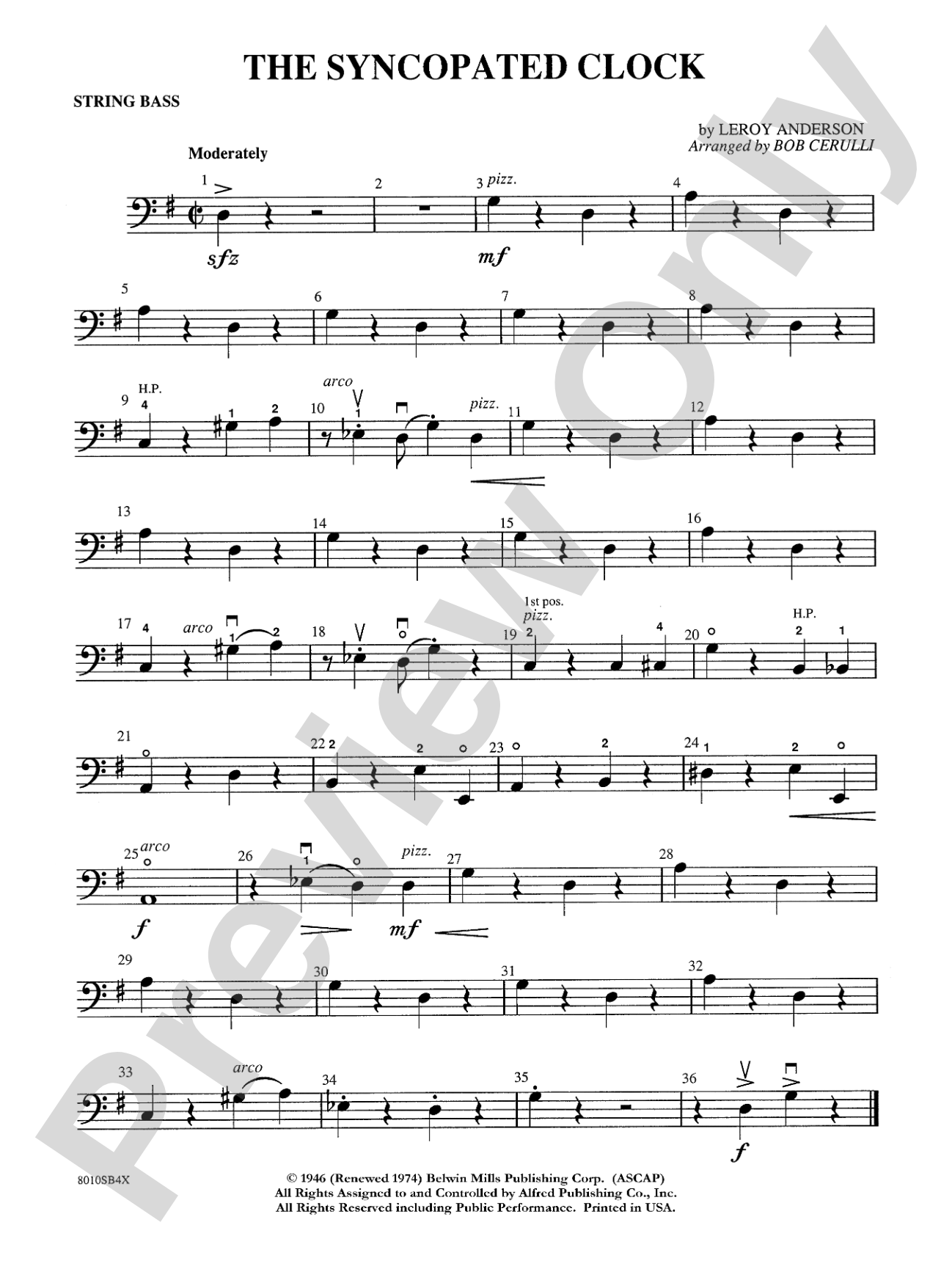
The Syncopated Clock: String Bass

By Leroy Anderson / arr. Bob Cerulli

Grade: 1

Item: 00-PC-0001931_SB

Digital Download
$5.99
Description
Leroy Anderson created some of America's best loved music, especially during his tenure with the Boston Pops Orchestra. Here is a very easy arrangement of his beloved The Syncopated Clock written by Bob Cerulli for very young string players. Great program material! (1:11)

Don't just read it, hear it, play along with it, and watch your students grow with it. In MakeMusic Cloud, The Syncopated Clock: String Bass comes alive with professional accompaniment, adjustable tempo, and built-in practice tools that turn solo practice into real progress.

Sample Audio
0:00
0:00
Sample Video
Additional Details
Series: Pop Beginning String Orchestra
Publisher: Alfred Music
Page Count: 200
SKU: 00-PC-0001931_SB

More about this title

About the Composer: Leroy Anderson

Leroy Anderson (1908-1975) was a composer and conductor who became synonymous with American light music during the twentieth century. His decades with the Boston Pops Orchestra established him as a master of accessible, tuneful orchestration that delighted concert audiences without demanding virtuosity from performers. Anderson's gift for memorable melodies and clever orchestral colors made him one of the most performed composers in pops repertoire, with works like "Plink, Plank, Plunk!" and "Fiddle Faddle" remaining staples of music education.

Why we love this

This Grade 1 arrangement captures everything that makes Anderson's music irresistible: playful energy, an unforgettable melody, and orchestration that works beautifully even when every section is still building fundamental skills. Bob Cerulli's adaptation keeps the character and charm intact while making it genuinely achievable for beginners, which means your ensemble gets to experience the satisfaction of sounding polished on real concert material from day one.

What to expect

The piece ticks and tocks with irrepressible charm, evoking a clock that's slightly amused with itself. There's lightness and humor woven through bright melodies and a rhythmic vitality that captures Anderson's signature wit without any heaviness.

Who it's for

Young string orchestras at the earliest stages of reading and ensemble playing will thrive on this material. Conductors working with absolute beginners or rebuilding a program need literature that sounds like real music while staying within genuine Grade 1 technical demands.

How to get the most out of it

  • Shape the opening melody with gentle dynamic swells to establish the character before the rhythmic elements kick in. Young players often play straight through; help them hear where the line breathes.
  • Lock the rhythmic pulse in the lower strings and maintain it consistently. This piece relies on rhythmic clarity to land its programmatic charm, so steady eighth notes matter.
  • Balance the ticking accompaniment figure so it supports rather than overwhelms the melody. The accompaniment should feel like the clock mechanism ticking in the background.
  • Bring out the playful quality in articulation choices. Short, light bowing on the rhythmic figures keeps the piece bouncy rather than heavy.

How to use it

This works perfectly as a concert opener or closer on a pops-themed program where you want to establish a fun, approachable tone. It's also ideal festival material that shows off ensemble cohesion and musical communication without requiring advanced technique, making it a confidence builder for young orchestras early in the season.

Skills your students will build

  • Reading and sustaining rhythmic figures under a melodic line
  • Dynamic control and phrase shaping on simple material
  • Maintaining consistent pulse while tracking another section's melody
  • Basic articulation choices (short vs. sustained bowing) for character
  • Listening for balance between accompaniment and melody

You May Also Like