
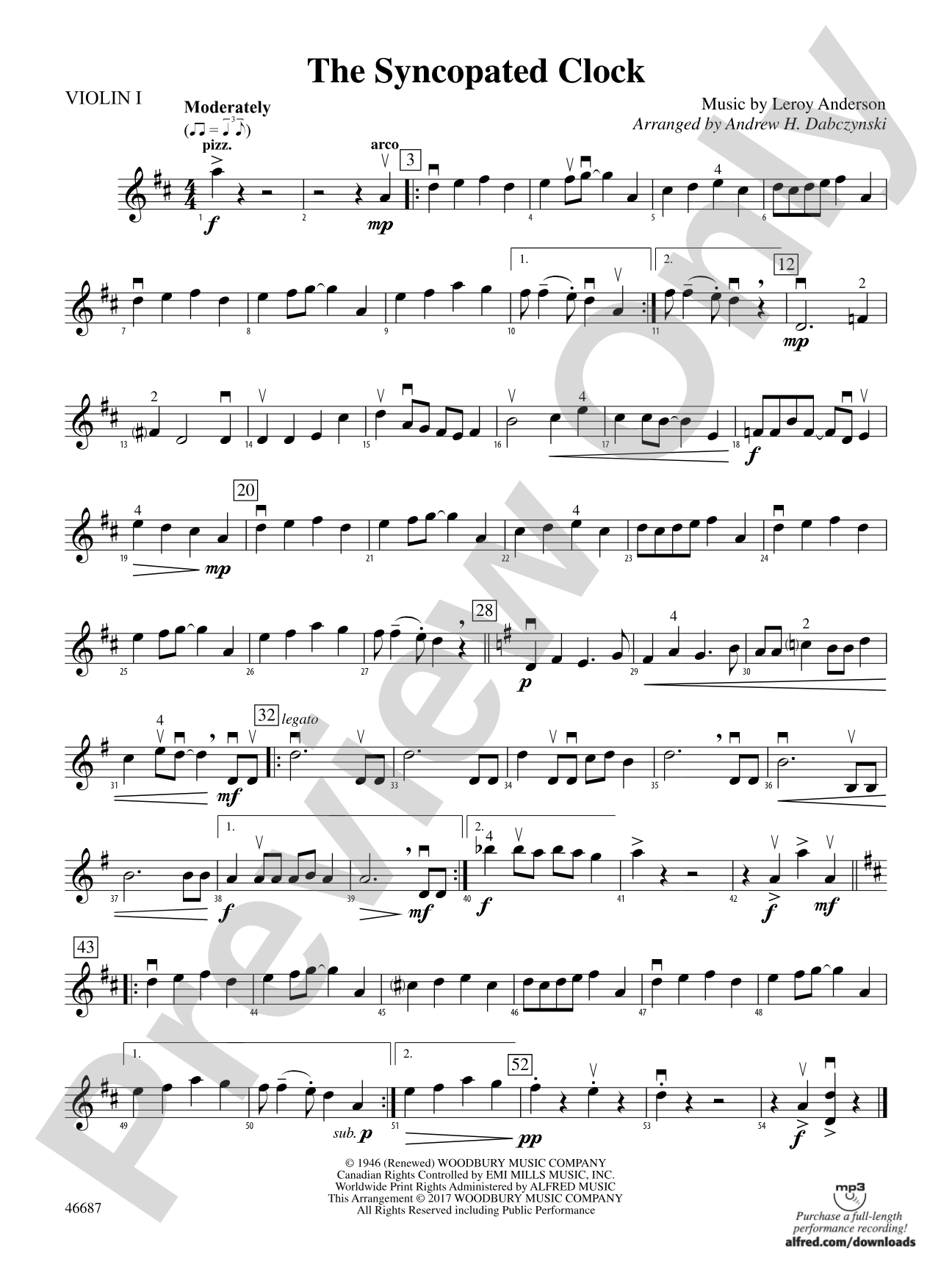

The Syncopated Clock: 1st Violin
Music by Leroy Anderson / arr. Andrew H. Dabczynski
Grade: 2
Item: 00-PC-0017825_VN1
$5.99
Pickup currently not available
Description
Here's one of the most familiar "pops" orchestra pieces ever written, now slightly simplified by Andrew H. Dabczynski to be thoroughly playable by young string students. All the string sections have opportunities to shine while practicing basic syncopation and bowing skills. All the pieces of "The Syncopated Clock" are here---including the familiar optional percussion and piano parts. This is an arrangement that will remain popular with students and audiences year after year!


Don't just read it, hear it, play along with it, and watch your students grow with it. In MakeMusic Cloud, The Syncopated Clock: 1st Violin comes alive with professional accompaniment, adjustable tempo, and built-in practice tools that turn solo practice into real progress.
Open in the Player
Jump straight in and assign it today.
Start Your Free Trial
Open this title and explore the full library in minutes.
Sample Audio
1
Audio File
--:--
0:00
0:00
Sample Video
Additional Details
Series:
Pop Intermediate String Orchestra
Publisher:
Alfred Music
Page Count:
80
SKU:
00-PC-0017825_VN1
More about this title
About the Composer: Leroy Anderson
Leroy Anderson (1908-1975) composed some of the twentieth century's most instantly recognizable light orchestral works. His gift for melody, rhythmic wit, and orchestral color made him a staple of American pops concerts and a favorite among student musicians learning to engage with orchestration beyond the classical canon.
Anderson's pieces work because they're genuinely fun to play and hear. They demand musicianship—attention to balance, precise rhythms, clean articulation—without requiring virtuosity. For string students especially, his writing opens doors to understanding how orchestration creates character and how rhythm can carry narrative.
Why we love this
This arrangement strips away nothing essential. Dabczynski has kept Anderson's unmistakable melodic voice and comedic timing intact while making the syncopation rhythmically accessible to young players. Audiences light up the moment they hear it, and your students will feel immediately competent and accomplished.
What to expect
Delightfully mechanical and whimsical. Anderson's clock ticks with perfect precision, but the syncopated rhythms give it a slightly off-kilter personality, as if the mechanism is both reliably wound and pleasantly sly. The orchestration sparkles with character—the piece sounds like a musical illustration come to life, which is exactly what it is.
Who it's for
String orchestras at the intermediate level, roughly Grades 2-3, who are ready to tackle syncopation and want a piece that delivers audience appeal without compromising pedagogical value. This works equally well for middle school orchestras, youth symphonies, and community string programs looking to program something genuinely entertaining.
How to get the most out of it
- Anchor the syncopated figures by having the rhythm section (cello and bass) stay metronomically steady. Young players often rush through syncopation if the foundation wavers. Lock it in first, then layer the upper-voice rhythms on top.
- Treat the percussion parts as essential color, not optional accompaniment. The wood block and triangle articulate Anderson's sense of humor. If you're including them, rehearse them with the strings from day one.
- Shape the major melodic statements with a conductor's clarity about phrase direction. Anderson's melodies are memorable partly because they breathe. Help your first violins find the arc in each phrase rather than playing note-to-note.
- Balance your sections so the secondary melodies (violas, second violins) aren't buried under the first violin line. This piece gives everyone something to play that matters.
How to use it
Perfect for a family concert, spring pops show, or any program that needs a bridge between traditional repertoire and contemporary audience expectations. It pairs well with other light orchestral works or as the closer to a concert that includes more serious material. This piece also works beautifully as a confidence builder mid-season, when students have enough technique to execute the syncopation cleanly but need a morale boost from playing something immediately satisfying.
Skills your students will build
- Syncopated rhythm reading and execution across all string parts
- Coordinated bowing between sections to maintain ensemble precision
- Balance and blend in multi-layered textures
- Articulation control (staccato and legato) to serve musical character
- Attention to orchestral voice leading and secondary melodic lines