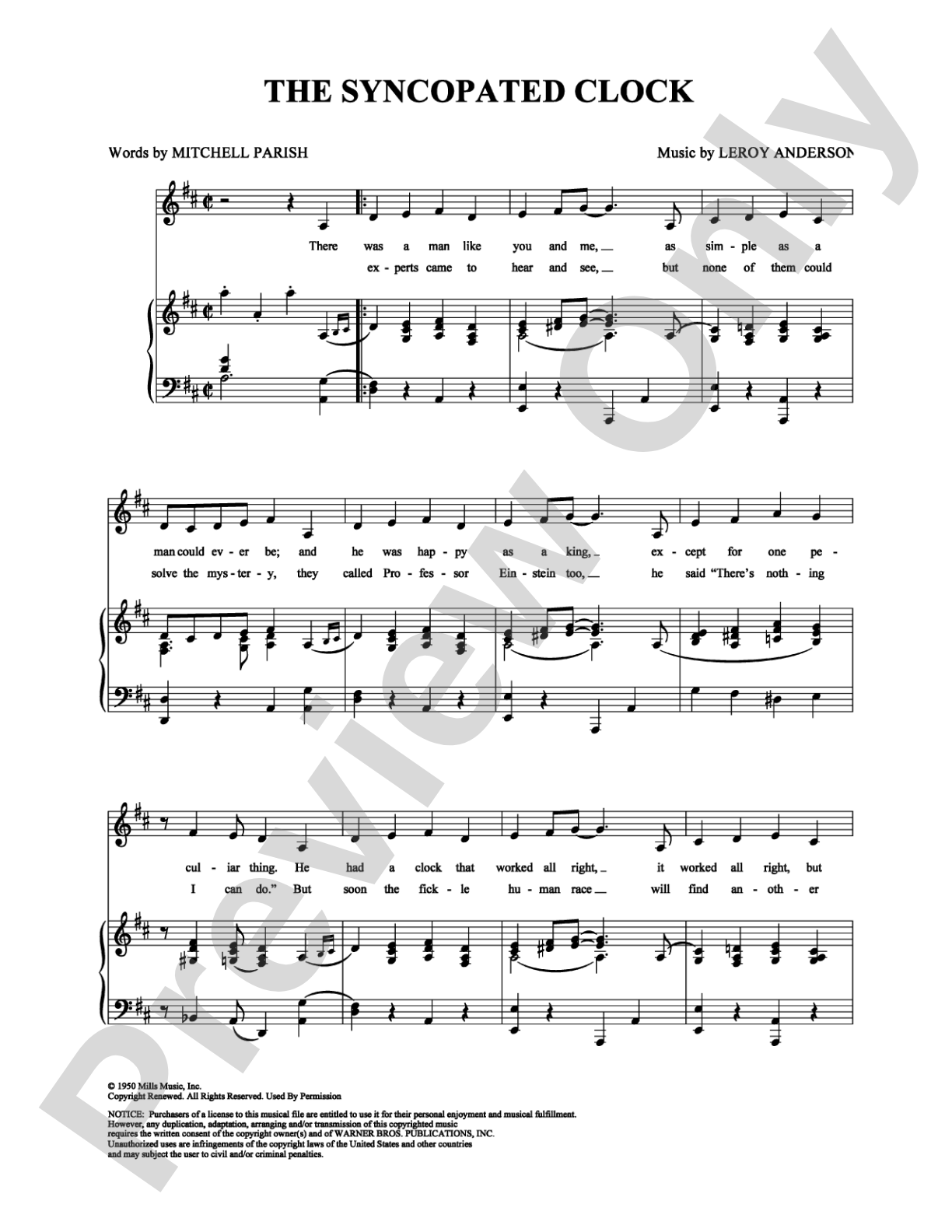
The Syncopated Clock: Piano/Vocal/Chords Digital Sheet Music

The Syncopated Clock: Piano/Vocal/Chords Digital Sheet Music

Leroy Anderson

Item: 00-PS-0000860

Digital Download
$3.99
Description

The Syncopated Clock: Piano/Vocal/Chords Digital Sheet Music isn't in MakeMusic Cloud just yet...but it could be. Let us know you'd like to see it, and you'll help shape what comes next. In the meantime, start a free trial and dive into thousands of interactive titles your students can play along with today.

Sample Audio
No sample audio found.
Sample Video
Additional Details
SKU: 00-PS-0000860

More about this title

About the Creator: Leroy Anderson

Leroy Anderson composed "The Syncopated Clock" in 1945, and it became one of his signature works, instantly recognizable for its playful timekeeping device and infectious rhythmic drive. Anderson was a master of American light orchestral music, crafting pieces that balanced sophistication with genuine accessibility, making him a cornerstone of mid-century popular classical repertoire.

Why we love this

The syncopated rhythms and playful character make this a crowd-pleaser that doesn't require orchestral forces or complex ensemble coordination. It's a genuine audience favorite that works equally well as a solo piano feature or a vocal performance with accompaniment, giving you real flexibility in how you cast it.

What to expect

Whimsical and warm, with a mechanical precision that feels almost comical. The syncopation creates a playful tension between what your ear expects and what actually happens, giving the piece a mischievous energy wrapped in nostalgic affection.

Who it's for

Pianists and singers looking for a charming solo or duet that works well in recital settings, classroom performances, or concert programming. The accessible melody and manageable keyboard part make it suitable for intermediate musicians who want something with personality and immediate appeal.

How to get the most out of it

  • Keep the syncopated rhythms crisp and deliberate; the humor lands when the timing is tight, not rushed. Let the audience hear the clever rhythmic displacement.
  • Balance the vocal line so it sits clearly over the accompaniment without drowning out the rhythmic vitality in the piano part.
  • Lean into the nostalgic character without overselling the sentimentality. The piece works best when played with genuine warmth and a touch of wit.

How to use it

Program this as a lighter moment between heavier works, or use it to open a recital on an upbeat note. It pairs well in a concert exploring American popular song or light classical crossover repertoire, and works particularly well when your audience needs something that's simply enjoyable.

Skills your students will build

  • Reading and performing syncopated rhythms with precision
  • Coordinating vocal line with syncopated piano accompaniment
  • Interpreting tempo nuance and character in lighter art song literature
  • Balancing melodic expression with rhythmic accuracy

You May Also Like