
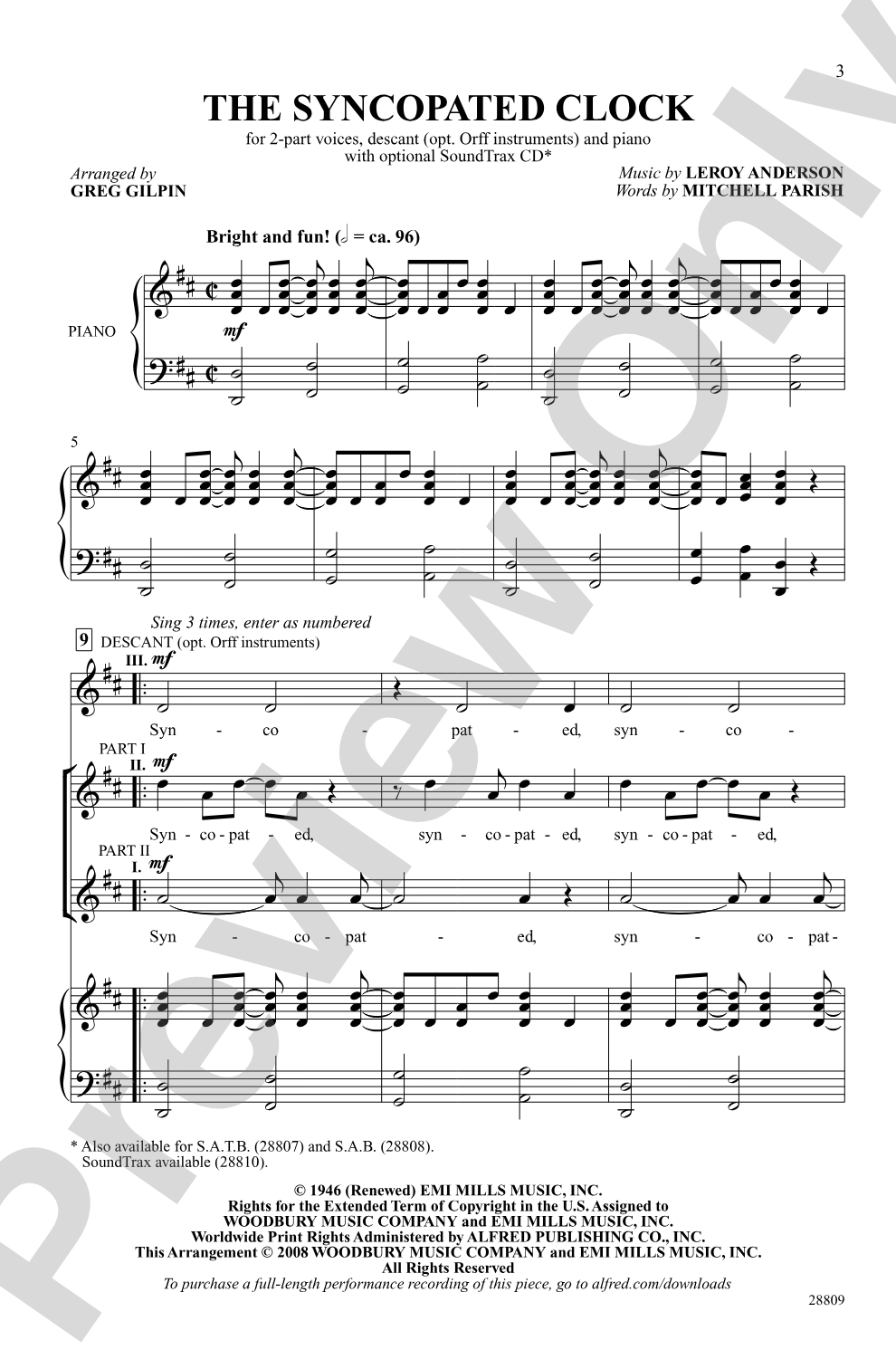
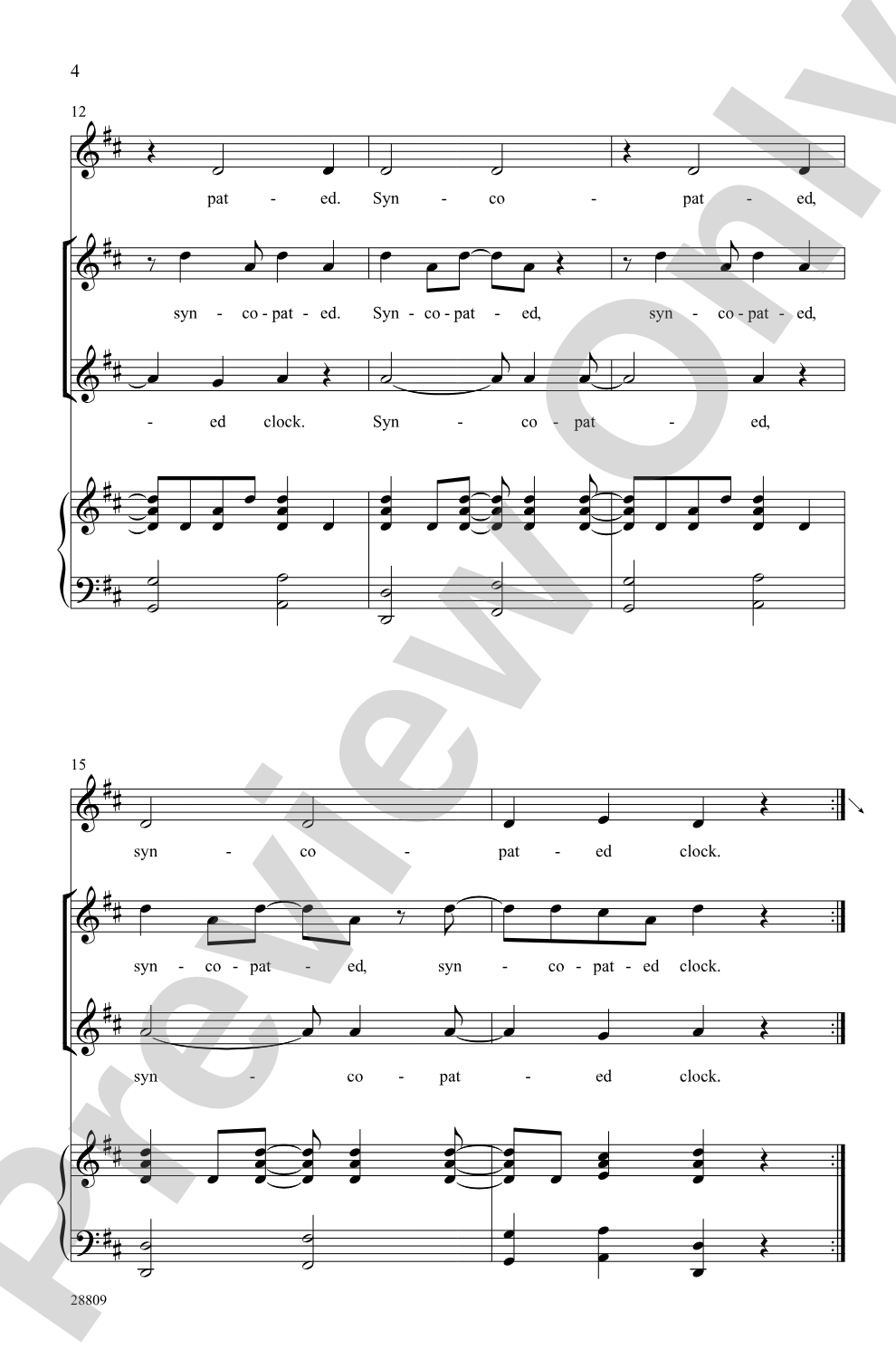
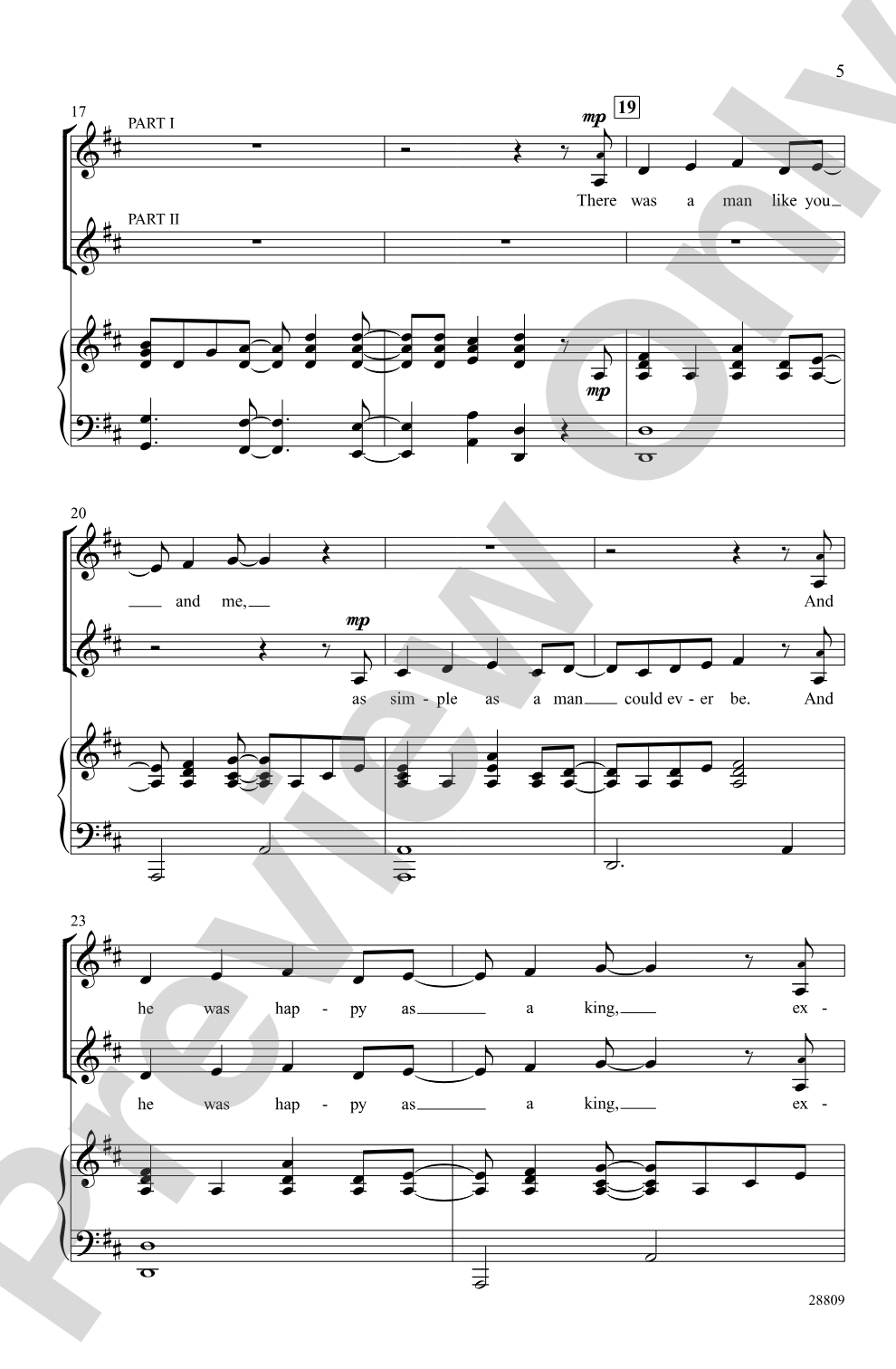

The Syncopated Clock: 2-Part Choral Octavo
Music by Leroy Anderson, words by Mitchell Parish / arr. Greg Gilpin
Item: 00-PO-0007987
$1.95
Minimum order quantity: 20 copies
Pickup currently not available
Related Items
The Syncopated Clock: SoundTrax Digital Audio Download |
$24.95
|
View | |
The Syncopated Clock: SAB Choral Octavo |
$1.95
|
View | |
The Syncopated Clock: SATB Choral Octavo |
$1.95
|
View | |
The Syncopated Clock: SAB Choral Octavo |
$1.95
|
View | |
The Syncopated Clock: 2-Part Choral Octavo |
$1.95
|
View | |
The Syncopated Clock: Choral Octavo SoundTrax CD |
$24.95
|
View |
Description
This crazy syncopated "tick-tock" clock choral is the perfect novelty number for any concert. What a fantastic change of pace, and a great way to celebrate Leroy Anderson's 100th birthday (born June 29, 1908). Greg Gilpin's arrangement is witty and wonderful from one rhythmic tick to the next.


Discover MakeMusic Cloud: thousands of interactive titles your students can play along with today.
Sample Audio
1
Audio File
--:--
0:00
0:00
Sample Video
No sample videos found.
Additional Details
Series:
Alfred Pop Choral Series
Publisher:
Alfred Music
Page Count:
16
SKU:
00-PO-0007987
More about this title
About the Composer: Leroy Anderson
Leroy Anderson (1908-1975) was an American composer and conductor who mastered the art of the light orchestral piece. His gift for memorable melodies combined with clever orchestration made him one of the most recorded composers of his era, with works that remain staples of pops concerts and community music-making today.
Anderson's genius lay in his ability to translate everyday sounds and situations into music that listeners instantly recognize and enjoy. The Syncopated Clock exemplifies this approach: a simple concept rendered unforgettable through rhythmic ingenuity and orchestral color. For music educators, his catalog offers accessible, engaging repertoire that builds audience connection while developing student musicianship.
Why we love this
Greg Gilpin's arrangement captures Anderson's rhythmic wit with remarkable clarity in just two parts, making this accessible to developing ensembles without sacrificing the original's charm. The piece delivers immediate audience engagement and genuine humor, which means students experience the payoff of solid preparation on stage. It's a crowd-pleaser that earns its place through superior songwriting, not gimmickry.
What to expect
Delightful and clever, like watching gears turn in slow motion. The syncopated rhythms create forward momentum while the "tick-tock" imagery keeps everything grounded in concrete, visual fun. It's the kind of piece that makes audiences smile before the singers finish the first phrase.
Who it's for
Two-part choirs at the middle school level through community and adult ensembles will find this both performable and rewarding. It works especially well for groups seeking accessible novelty numbers that don't sacrifice musical quality or require unison singing throughout.
How to get the most out of it
- Lock the rhythmic relationships between the two parts in early rehearsals; the syncopation only works when both lines feel secure and independent.
- Emphasize the mechanical quality of the "tick-tock" sections through articulation clarity and rhythmic precision rather than expressive phrasing.
- The recorded accompaniment works best when rehearsals have already established the choral parts confidently; use it to check tuning and balance rather than as a learning tool.
- Shape the melodic phrases with subtle dynamic contour to prevent the piece from sounding robotic, even as you maintain crisp rhythmic definition.
How to use it
Position this as a second-half opener or closer to reset audience energy and lighten the mood after more serious selections. It pairs naturally with other Anderson arrangements or works by composers who write accessible pops repertoire, and it's particularly well-suited for spring concerts, birthday celebrations, or themed programs focused on American light music.
Skills your students will build
- Independent part-singing in syncopated rhythmic contexts
- Rhythmic precision and articulation control
- Phrase shaping within a humorous, character-driven framework
- Coordination of melodic and rhythmic elements across two distinct lines