
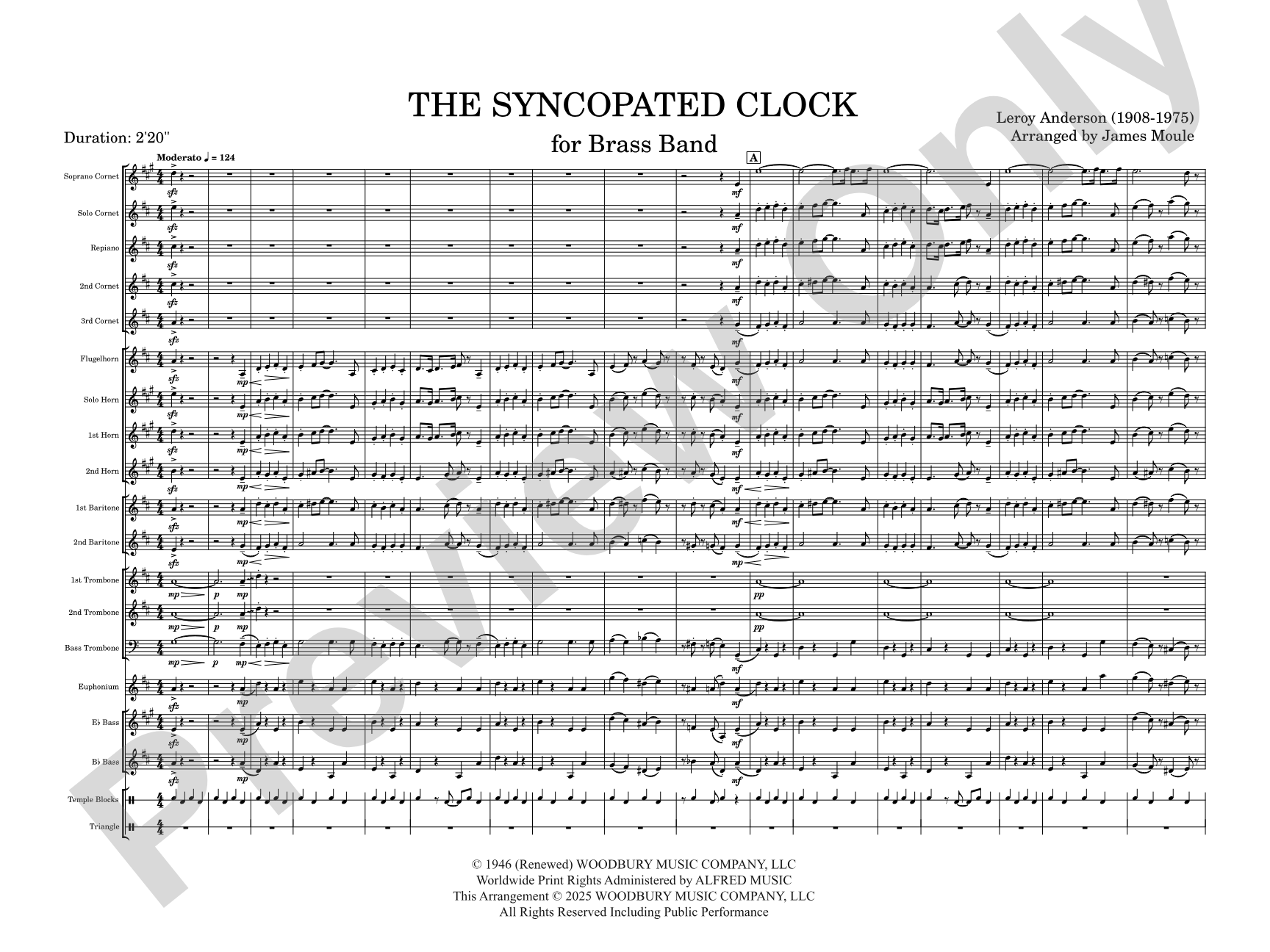
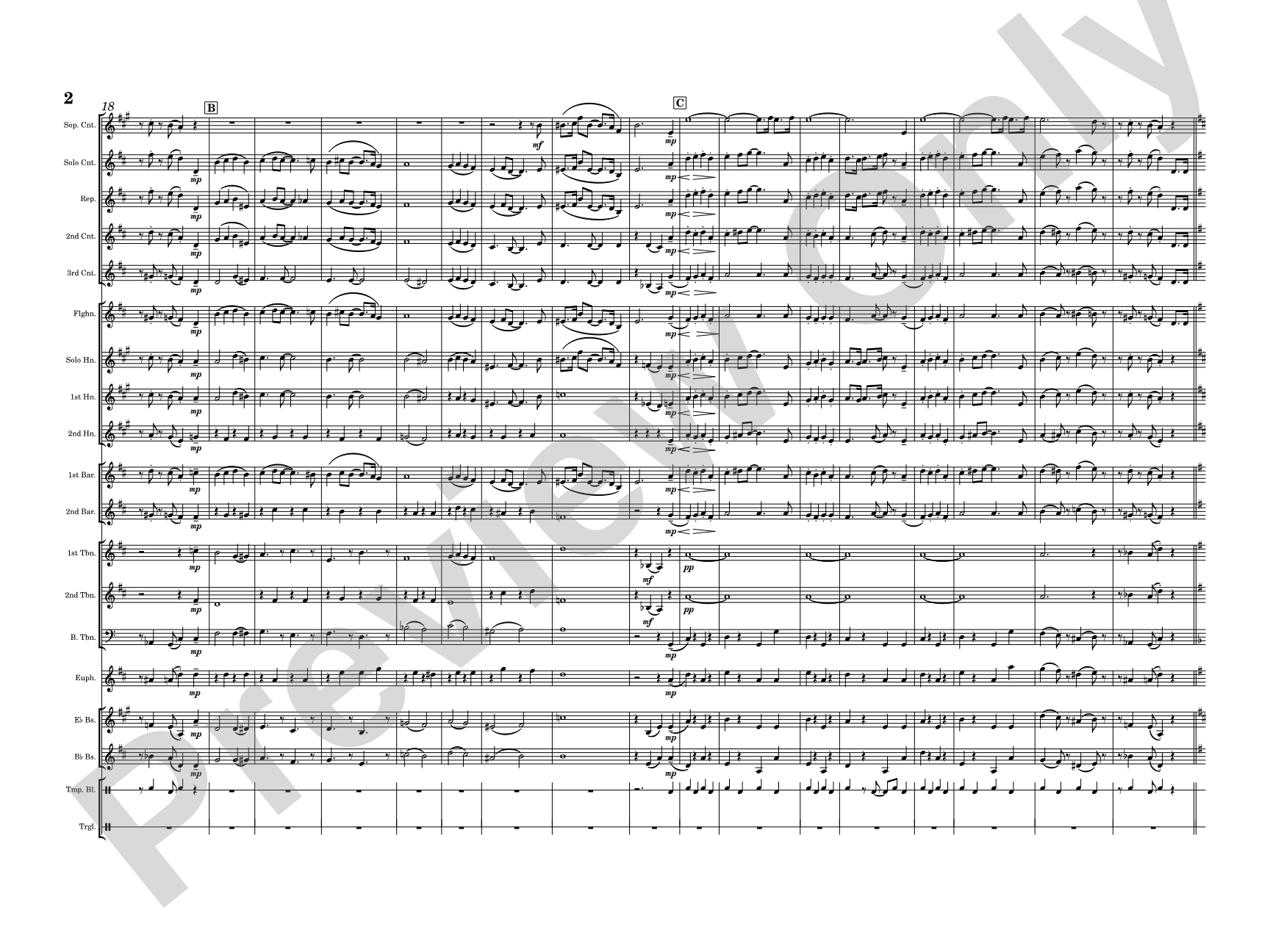
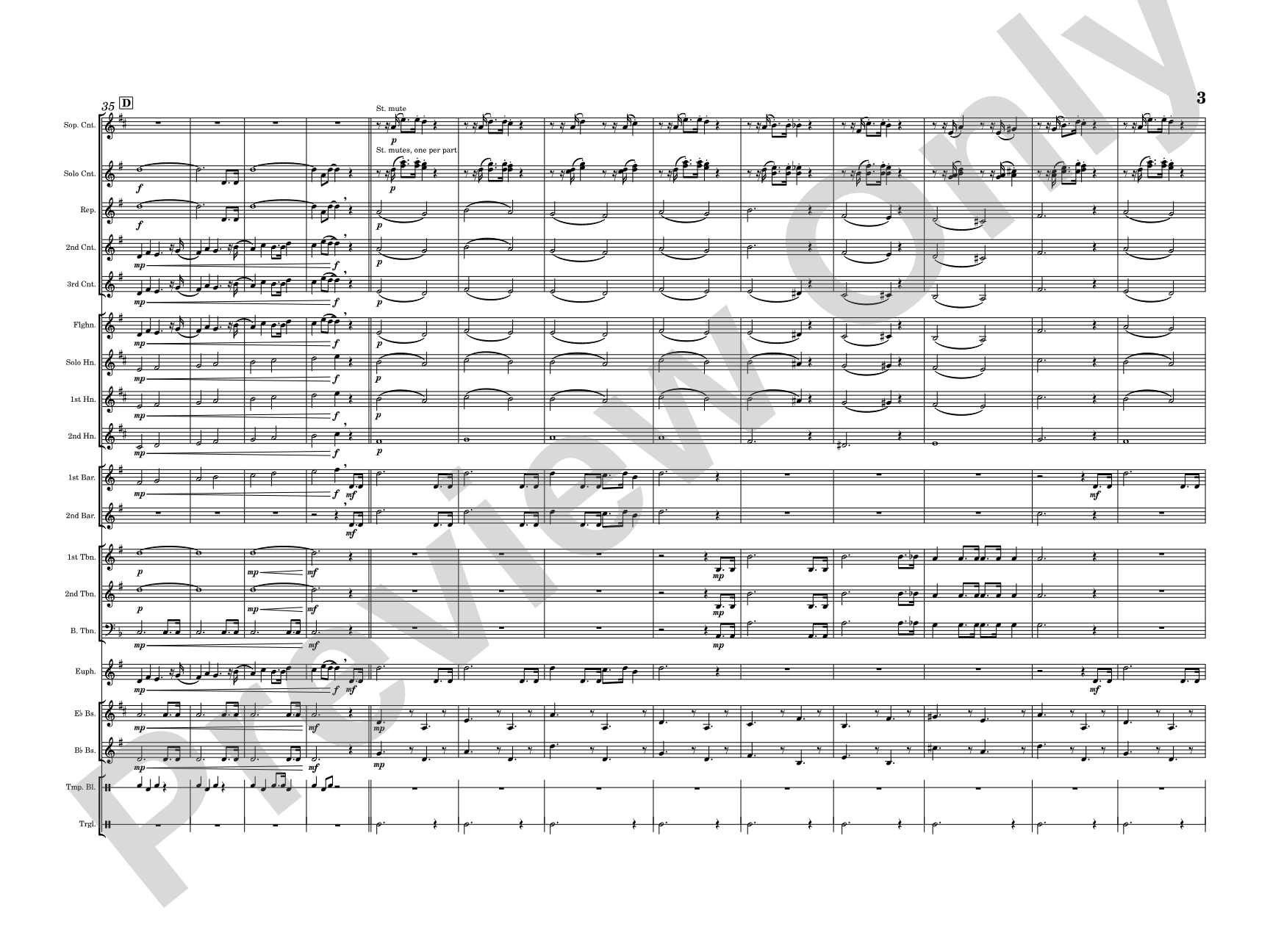
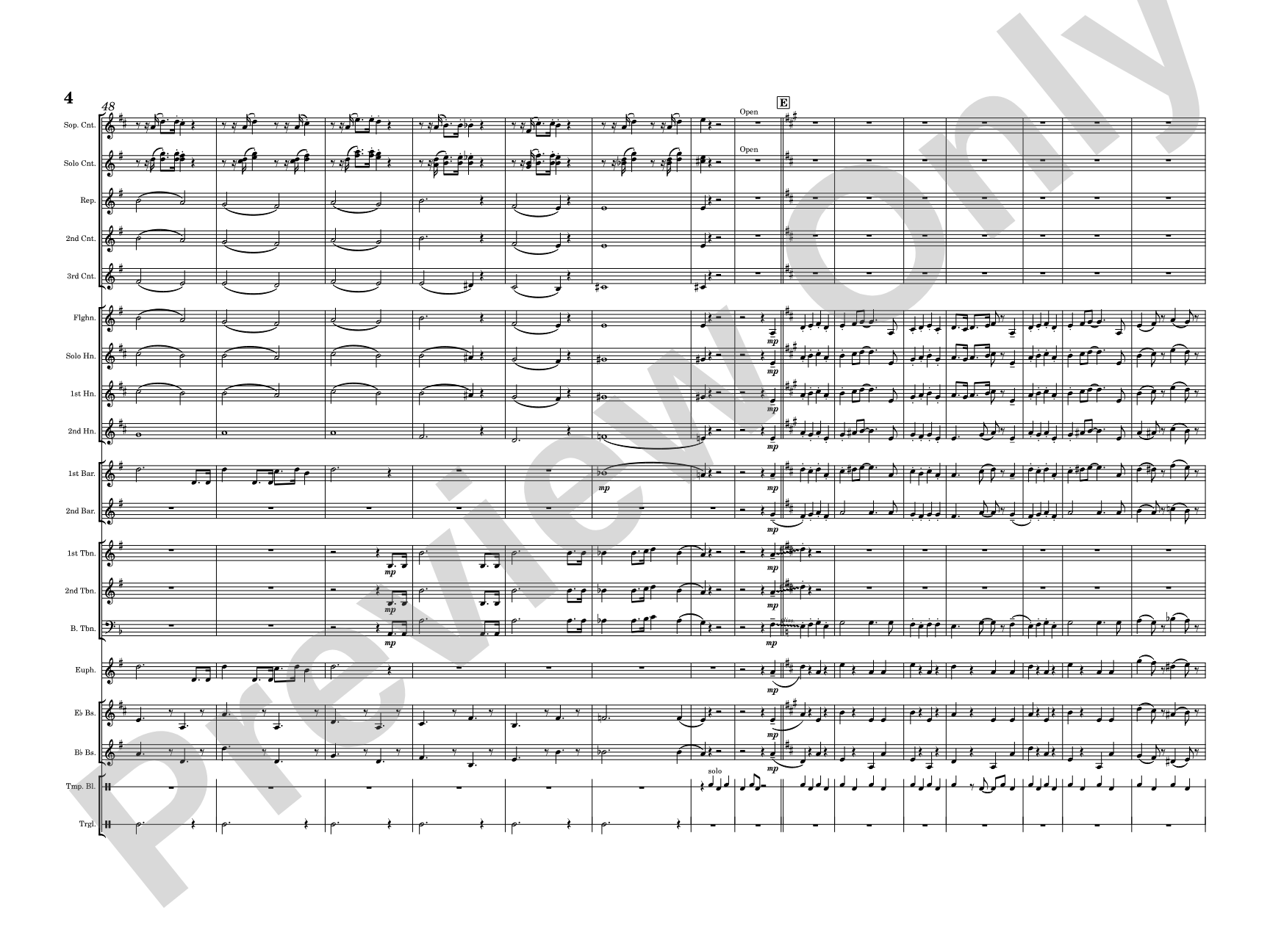
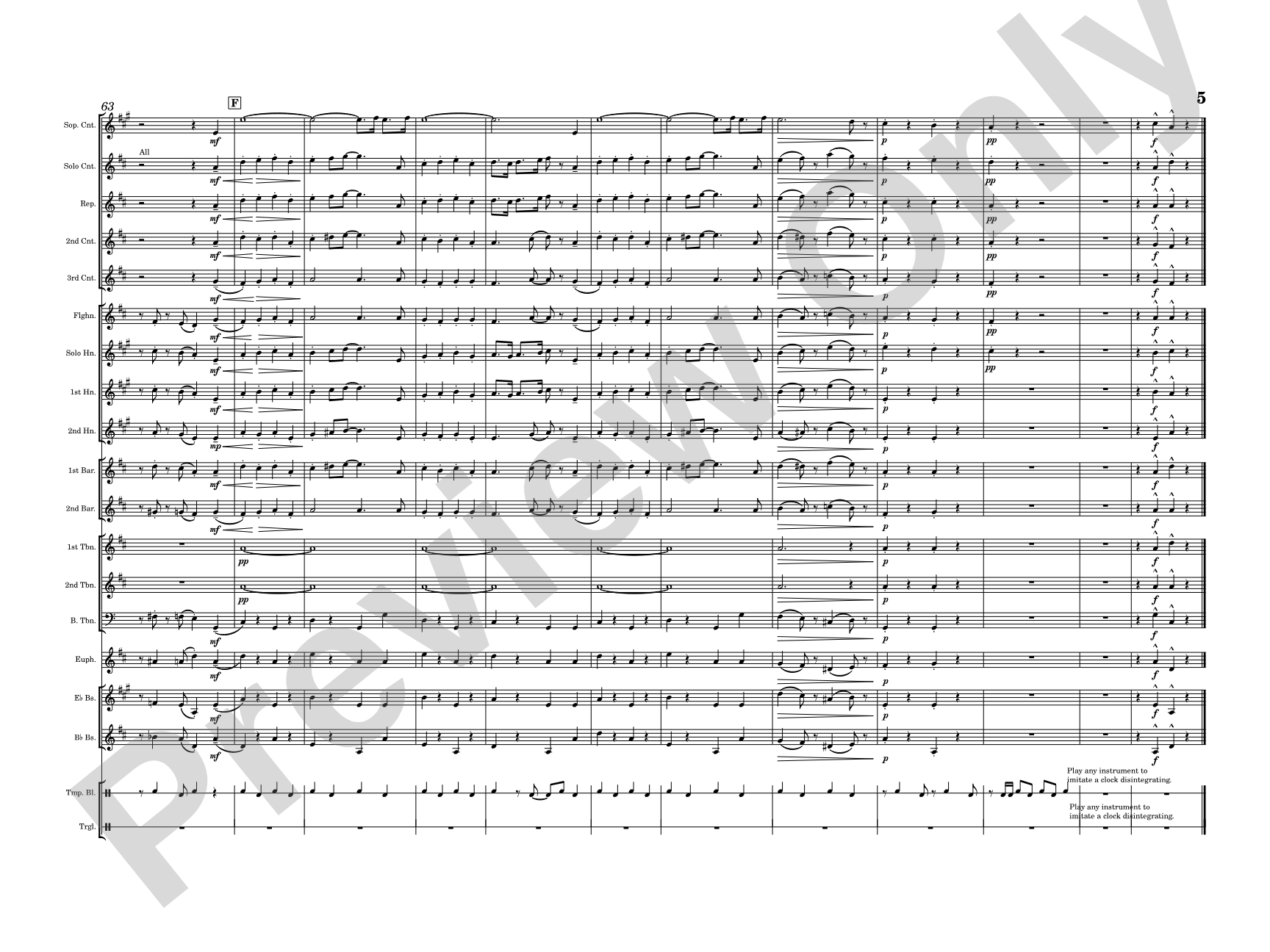

The Syncopated Clock: Brass Band Score & Parts
For Brass Band
By Leroy Anderson / arr. James Moule
Item: 00-PK-0009252
$50.00
Pickup currently not available
Buy Extra Parts (Digital PDF Download)
Parts Added to Cart!
Description
Leroy Anderson's orchestral classic arranged for brass band.


The Syncopated Clock: Brass Band Score & Parts isn't in MakeMusic Cloud just yet...but it could be. Let us know you'd like to see it, and you'll help shape what comes next. In the meantime, start a free trial and dive into thousands of interactive titles your students can play along with today.
Request This Title
Tell us you want it.
Start Your Free Trial
Explore everything that's ready to play right now.
Sample Audio
No sample audio found.
Sample Video
No sample videos found.
Additional Details
SKU:
00-PK-0009252
More about this title
About the Composer: Leroy Anderson
Leroy Anderson (1908, 1975) was an American composer and conductor who transformed light orchestral music into an art form. His gift for memorable melodies, clever orchestration, and rhythmic wit made him one of the most performed composers in concert bands and brass bands worldwide. Anderson studied composition at Harvard and later became a pivotal figure in American popular concert music, composing over 150 works that bridge classical sophistication and accessible charm.
Anderson's catalog includes beloved standards like Plink, Plank, Plunk! and Sleigh Ride. His music has been arranged countless times across ensembles because the melodic and harmonic content translates so naturally to different instrumentations. For brass bands especially, his work provides sophisticated yet approachable concert material that audiences recognize and musicians enjoy performing.
Why we love this
The Syncopated Clock transfers Anderson's signature playfulness and metric ingenuity to the brass band idiom perfectly. James Moule's arrangement captures the piece's mechanical ticking and syncopated melodic twists while letting brass choirs shine with their natural warmth and weight. You get a crowd-pleaser that doesn't feel lightweight, it's genuinely well-crafted concert music that holds up to serious musicianship.
What to expect
A mechanical world made musical. The piece ticks and tocks with playful precision while a sunny, syncopated melody weaves overhead, always slightly ahead of or behind the beat in Anderson's clever way. It's witty without being silly, familiar without being tired.
Who it's for
Brass bands at intermediate to advanced levels looking for repertoire that entertains without condescending. Directors seeking concert openers or closer numbers that build audience goodwill while maintaining musical substance. Musicians who enjoy rhythmic ensemble work and the character-driven charm that Anderson specializes in.
How to get the most out of it
- Lock in the rhythmic precision of the main syncopated theme from the opening; any looseness in the ensemble will blur Anderson's rhythmic wit. This is where tight articulation and consistent pulse pay immediate dividends.
- Balance the ticking ostinato (likely handled by mid-range brass or percussion) so it sits underneath the melodic line rather than competing with it. The accompaniment should feel mechanical but never intrusive.
- Shape the melodic phrases with gentle rubato and dynamic shaping; Anderson's themes sing despite their comic character. Avoid playing it too literally or mechanically throughout.
- Manage the key transitions and harmonic movement with clean voice leading in the middle voices. Moule's arrangement likely requires blend and intonation care in what might be unexpected harmonic colors for a light piece.
How to use it
Pair this as a warmup concert opener to establish the ensemble's rhythmic control and personality before moving into weightier repertoire. Its six-to-eight minute duration slots perfectly into mixed concert programs, offering a palate cleanser between serious works or a charming finale to a program of American light classics.
Skills your students will build
- Syncopated rhythmic reading and ensemble precision
- Stylistic interpretation of humorous/character-driven music
- Balanced accompaniment writing and voice leading clarity
- Dynamic control and phrasing within a light concert idiom