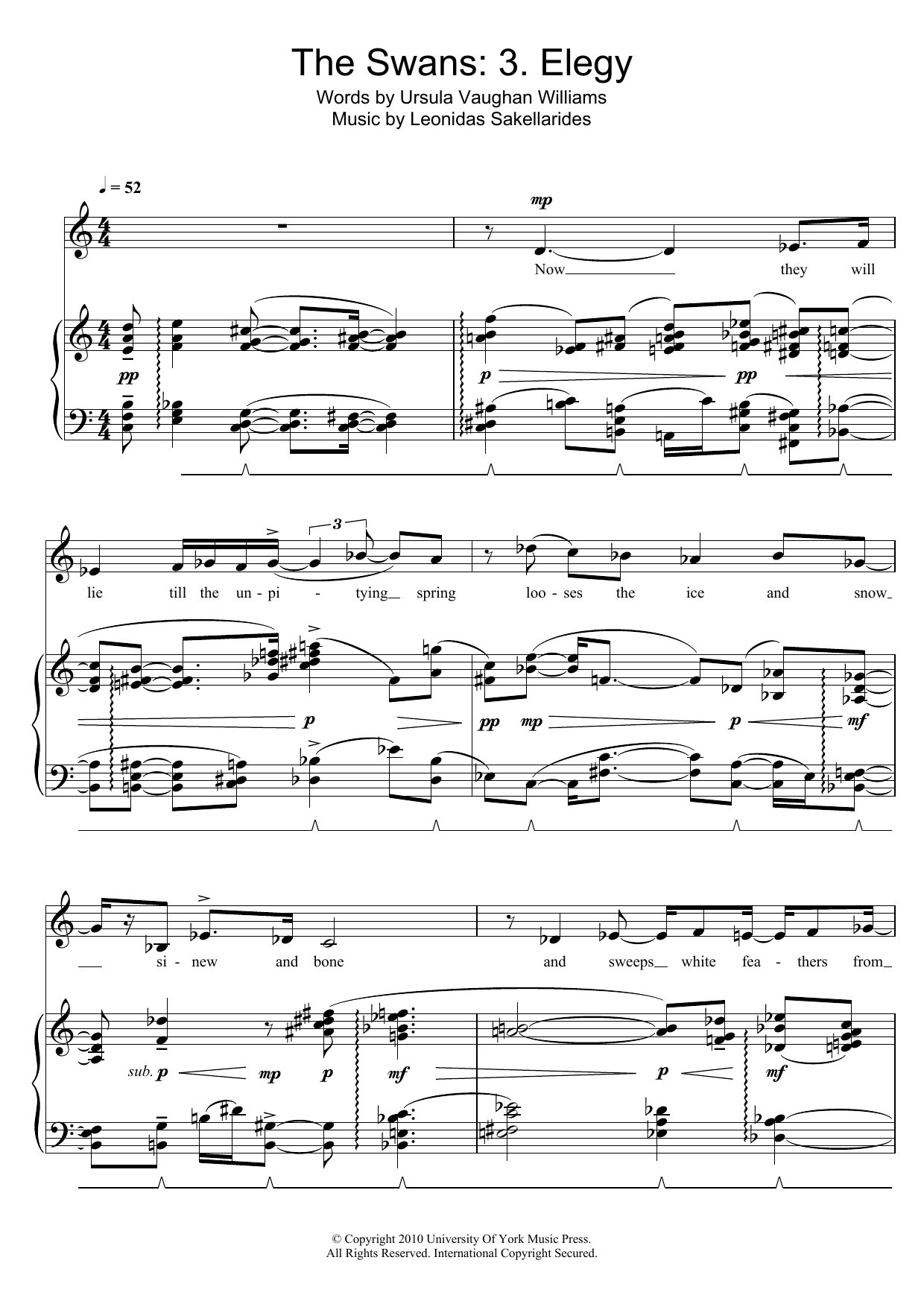
The Swans: 3. Elegy Sheet Music Preview

The Swans: 3. Elegy: Piano Vocal

As performed by Leonidas Sakellarides

Item: 35-DS00366421

Digital Download
$5.99
Description

The Swans: 3. Elegy: Piano Vocal isn't in MakeMusic Cloud just yet...but it could be. Let us know you'd like to see it, and you'll help shape what comes next. In the meantime, start a free trial and dive into thousands of interactive titles your students can play along with today.

Sample Audio
No sample audio found.
Sample Video
Additional Details
Publisher: Hal Leonard
Page Count: 5
SKU: 35-DS00366421

More about this title

About the Artist: Leonidas Sakellarides

Leonidas Sakellarides was a Greek composer and pianist active in the late 19th and early 20th centuries, known for his lyrical vocal writing and sophisticated harmonic language. His songs and chamber works reflect the Romantic sensibility of his era while incorporating elements of Greek musical tradition, making him an important voice in the development of modern Greek art music.

Why we love this

This setting of 'Elegy' demonstrates the restrained beauty of Sakellarides' compositional voice. The piece balances instrumental color with vocal simplicity, allowing singers to focus on emotional transparency rather than technical display. It's the kind of work that sits naturally in recital programs and teaches young singers how meaningful music emerges from careful attention to text and harmonic subtlety.

What to expect

A moment of quiet reflection. The piece unfolds with introspective calm, its harmonic language suggesting depths beneath a simple surface. There is sorrow here, but never dramatic; instead, a private emotional landscape that draws the listener in rather than announcing itself.

Who it's for

Intermediate to advanced vocalists (soprano or tenor range) and pianists looking for art song repertoire that doesn't require extensive technical virtuosity but demands artistic maturity. This works well for students preparing for recitals, competitions, or classical voice auditions.

How to get the most out of it

  • Shape the vocal line with minimal vibrato in the opening phrases to let the piano's harmonic movement support the melody without competing.
  • Find the emotional architecture of the text first; let the pianist follow your pacing rather than rigidly locking to a metronomic beat.
  • Balance the piano's accompanying figures so they remain transparent enough that listeners hear both the voice and the harmonic progression clearly.
  • Mark the dynamic contours across entire phrases rather than hitting individual notes; this style of writing rewards long-line thinking.

How to use it

Pair this with other art songs or elegiac works to create a cohesive recital section that explores restraint and lyricism. It works particularly well on programs that emphasize 20th century or non-Germanic vocal repertoire, offering a change of pace from more frequently programmed Romantic fare.

Skills your students will build

  • Sustaining longer melodic phrases on a single breath
  • Reading and interpreting Romantic-era harmonic language
  • Coordinating vocal phrasing with piano accompaniment without losing independence
  • Managing dynamic control in intimate, non-climactic writing

You May Also Like