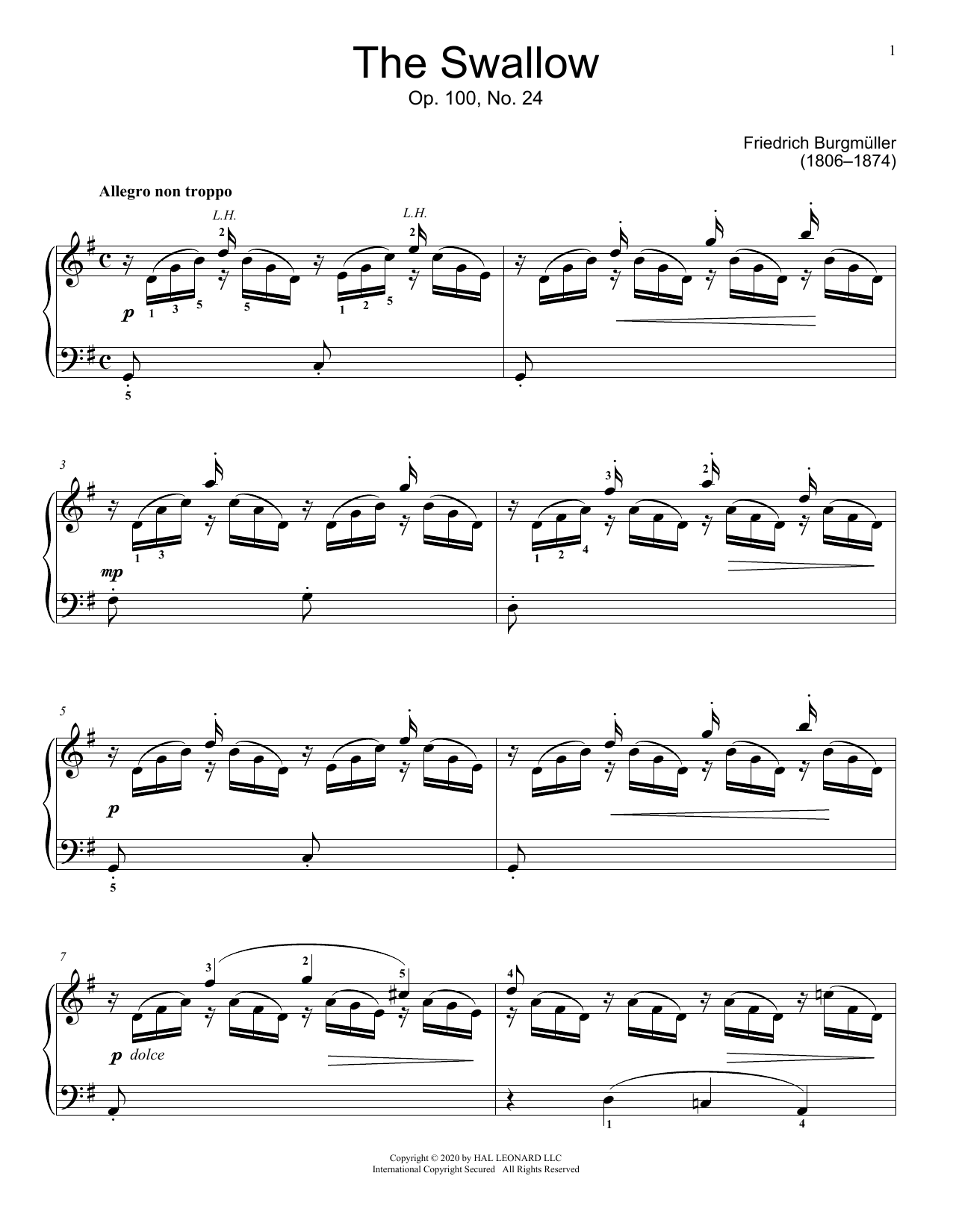
The Swallow, Op. 100, No. 24 Sheet Music Preview

The Swallow, Op. 100, No. 24: Educational Piano

Edited by Jennifer Linn

Item: 35-DS00457875

Digital Download
$4.99
Description

Discover MakeMusic Cloud: thousands of interactive titles your students can play along with today.

Sample Audio
No sample audio found.
Sample Video
Additional Details
Publisher: Hal Leonard
Page Count: 3
SKU: 35-DS00457875

More about this title

About the Composer: Pyotr Ilyich Tchaikovsky

Pyotr Ilyich Tchaikovsky (1840–1893) was a Russian composer whose gift for melody and orchestration made him one of the most performed composers in the world. His prolific output spans symphonies, ballets, concertos, and chamber works that reveal an almost inexhaustible capacity for tunefulness and emotional directness.

Op. 100 is a collection of 24 character pieces for piano that showcase Tchaikovsky's ability to craft memorable, singable themes within miniature forms. These pieces were designed to be accessible to students and amateurs while maintaining the harmonic sophistication and structural clarity that made his larger works so compelling.

Why we love this

This piece distills Tchaikovsky's gift for memorable melody into a compact, three-page study that sits comfortably in early-to-intermediate repertoire. The lyrical character and moderate technical demands make it an ideal choice for students ready to move beyond basic Romantic material without being overwhelmed by virtuosic display.

What to expect

The piece evokes the lightness and grace of its avian subject through graceful melodic contours and a texture that remains buoyant despite its Romantic harmonic language. There is a sense of movement without frenetic energy, a quality of observation rather than dramatic action.

Who it's for

Students in their second or third year of serious piano study will find this piece both rewarding and achievable. It works especially well for those developing sensitivity to Romantic melody and learning to balance accompaniment texture.

How to get the most out of it

  • Shape the opening melody with a warm, singing tone; think of it as a vocal line that must carry through to its phrase endings without drooping.
  • Balance accompaniment texture carefully in the left hand so it supports without obscuring the right-hand voice.
  • Observe all articulation markings faithfully; they define the character and prevent the piece from becoming merely sentimental.
  • Take the tempo at a pace that allows clarity in any passage work while preserving the graceful, unhurried character suggested by the title.

How to use it

Pair this with other character pieces from the Romantic era in a student recital to showcase melodic sophistication at an early-intermediate level. It also works well in a thematic program exploring animal or nature imagery in classical music.

Skills your students will build

  • Phrasing and shaping of lyrical melody
  • Balance between melody and accompaniment
  • Romantic harmonic language and voice leading
  • Interpretation of articulation within a flowing tempo
  • Sustaining musical line across shorter phrase units

You May Also Like