The Surprise Symphony Sheet Music Preview

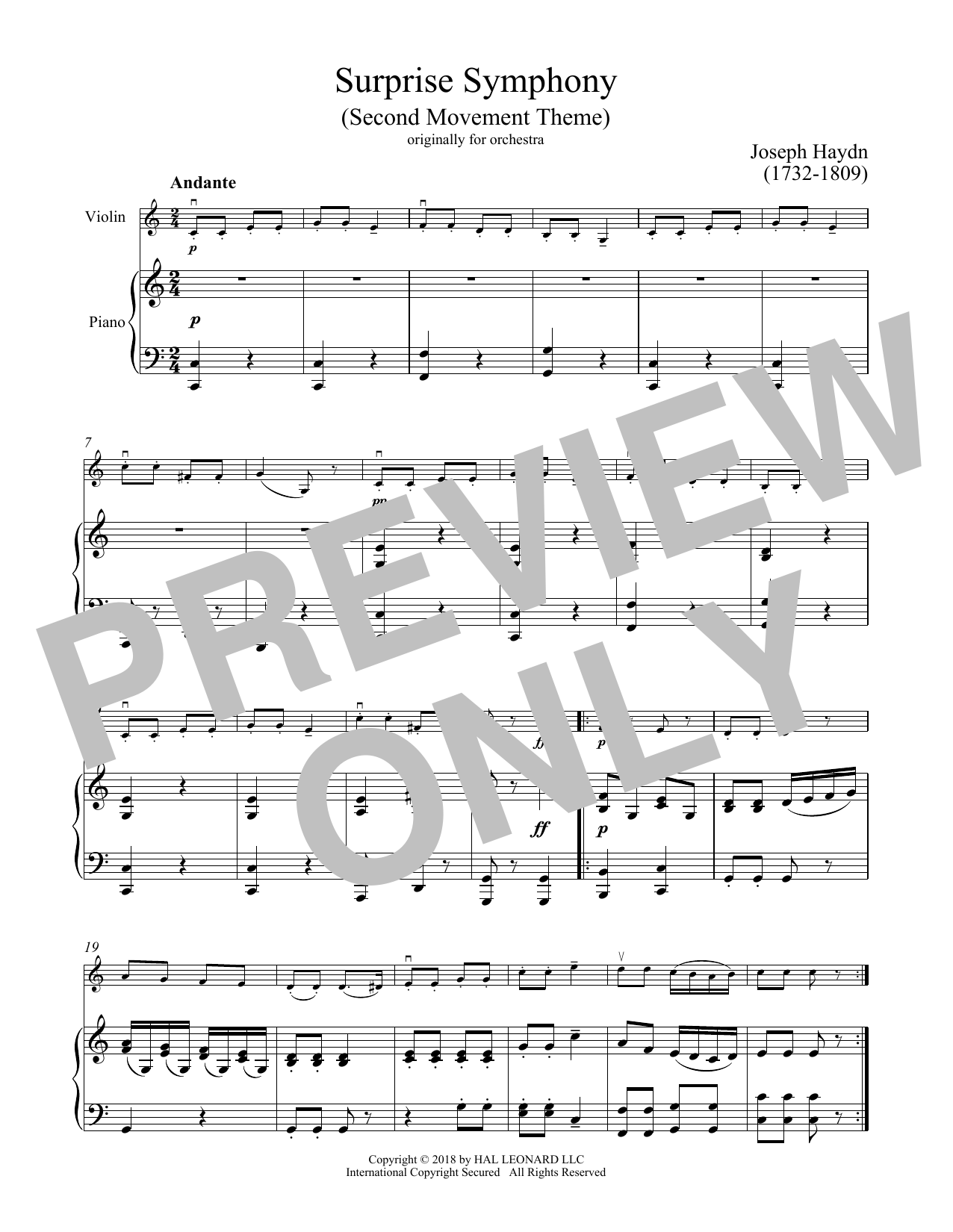
The Surprise Symphony: Violin and Piano

By Franz Joseph Haydn

Item: 35-DS00428011

Digital Download
$5.99
Description

Discover MakeMusic Cloud: thousands of interactive titles your students can play along with today.

Sample Audio
No sample audio found.
Sample Video
Additional Details
Publisher: Hal Leonard
Page Count: 1
SKU: 35-DS00428011

More about this title

About the Composer: Franz Joseph Haydn

Franz Joseph Haydn shaped the Classical symphony into the form we know today. His prolific output across all genres, combined with his relentless experimentation and wit, made him the most influential composer of the late 18th century. His works remain foundational teaching repertoire because they balance structural clarity with genuine musical personality.

Haydn spent most of his career in the service of the Esterházy family, a context that sharpened his ability to write music that was both intellectually rigorous and immediately engaging. His approach to form, orchestration, and thematic development became the template for Mozart and Beethoven. For students, his music teaches how to build large structures from small melodic ideas and how to maintain audience interest through surprise and contrast.

Why we love this

This arrangement strips the symphony down to its melodic and harmonic essence without losing the charm that makes Haydn irresistible. Violin and piano students get to experience one of music's most famous moments of orchestral surprise in an intimate setting where every note matters. It's the kind of piece that reminds students why they fell in love with classical music.

What to expect

Elegant, spirited, and disarming. Haydn's gift for melody shines immediately in the opening theme, charming and almost childlike in its simplicity. Then comes the famous sudden loud chord that jerks everyone awake, followed by a return to grace and good humor that feels both surprising and inevitable.

Who it's for

Intermediate to advanced high school or college violin students paired with capable piano accompanists. Teachers looking to introduce Haydn's symphonic language without the demands of full orchestra parts will find this arrangement accessible and musically complete.

How to get the most out of it

  • Shape the opening theme with clear phrase contours; the four-bar segments should breathe naturally despite their simplicity, and the piano's role as accompanist requires restraint and precision so the violin can sing.
  • Prepare the famous fortissimo shock in the Andante by discussing it beforehand so the surprise doesn't derail ensemble security; both players should lock in before the moment arrives so the impact lands together.
  • Balance the minuet section's dance character by keeping the tempo steady and letting articulation (rather than rushing) carry the lightness.
  • Listen to recordings by string quartets or chamber orchestras to hear how professional ensembles voice this material, especially in the accompaniment figures.

How to use it

Use this in a recital dedicated to chamber works from the Classical era, where it sits naturally alongside Mozart or Beethoven violin sonatas. It also works well as a teaching concert piece where the historical context and the famous moment of surprise can frame a discussion about compositional craft. The single-page format makes it an excellent standalone encore.

Skills your students will build

  • Sustaining long melodic lines with consistent tone and phrasing
  • Balancing ensemble sound between melodic and accompanying voices
  • Navigating contrasting textures within a single movement
  • Responding to sudden dynamic shifts while maintaining rhythmic security
  • Understanding Haydn's approach to theme, variation, and structural form

You May Also Like