The Story of Mumble Happy Feet: 3rd Trombone Sheet Music Preview

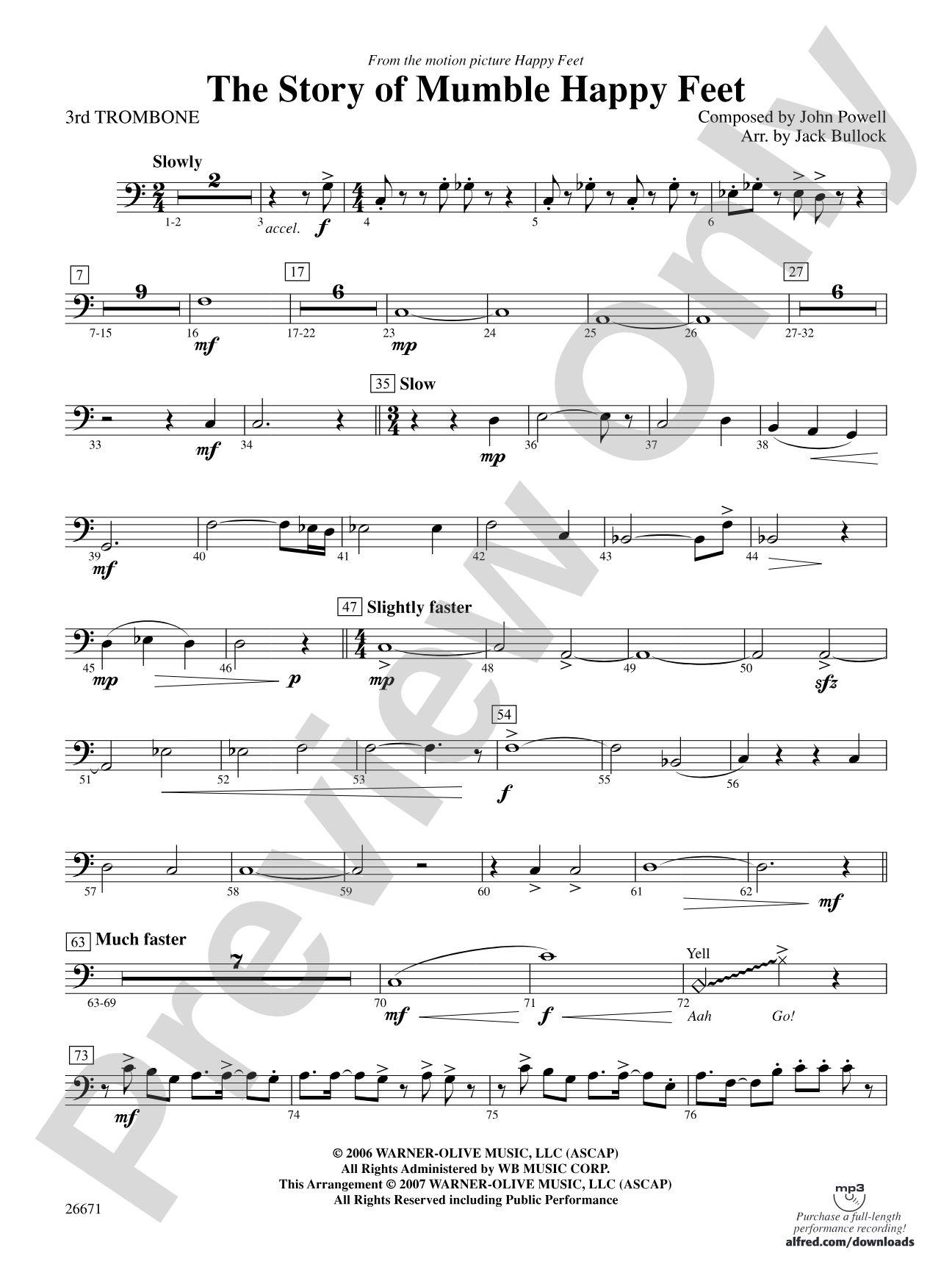
The Story of Mumble Happy Feet: 3rd Trombone

Music by John Powell / arr. Jack Bullock

Grade: 3.5

Item: 00-PC-0001162_TN3

Digital Download
$3.00
Description
Happy Feet, that loveable motion picture, has a downright happy feeling throughout and the musical score is downright happy, too. It's light, it's rhythmical and it keeps your toes tappin'! You'll have tap dancing sounds, bold harmonies, beautiful melodies and rhythmic percussion effects in this medley for full orchestra. This title is available in MakeMusic Cloud.

Don't just read it, hear it, play along with it, and watch your students grow with it. In MakeMusic Cloud, The Story of Mumble Happy Feet: 3rd Trombone comes alive with professional accompaniment, adjustable tempo, and built-in practice tools that turn solo practice into real progress.

Sample Audio
0:00
0:00
Sample Video
Additional Details
Series: Pop Concert Full Orchestra
Publisher: Alfred Music
Page Count: 109
SKU: 00-PC-0001162_TN3

More about this title

About the Composer: John Powell

John Powell is a film composer whose work spans animated features, live-action blockbusters, and concert music. His ability to craft accessible, energetic scores that appeal equally to audiences and musicians has made him a fixture in contemporary film music. Powell's orchestrations balance harmonic sophistication with immediate appeal, qualities that translate particularly well to educational concert settings.

Why we love this

This medley captures the infectious joy of the film while giving your orchestra a chance to play music that feels genuinely contemporary and fun. The arrangement layers tap dancing sounds and rhythmic percussion effects over bold harmonies and singable melodies, so every section has something engaging to play rather than simply supporting a melody line. At Grade 3.5, it's substantial enough to challenge growing orchestras but remains playable within a realistic rehearsal timeline.

What to expect

Joyful and propulsive, with a contemporary pop sensibility grafted onto orchestral color. The piece bounces between infectious rhythmic grooves, soaring melodic moments, and clever percussion effects that evoke the film's playful spirit. It's the kind of music that makes audiences smile and gives players genuine satisfaction.

Who it's for

Conductors looking for contemporary film music that connects with student musicians and audiences alike. This work suits orchestras that have developed secure intonation and rhythmic independence but are still building facility with complex textures and layered scoring.

How to get the most out of it

  • Balance the rhythmic percussion effects so they articulate clearly without overwhelming the melodic lines. These elements should feel like they're part of the orchestration, not sitting on top of it.
  • Coordinate with your rhythm section on the tap dancing sounds. Clarity and precision here create the character of the piece; rushing or dragging these effects will flatten the energy.
  • Shape the beautiful melodic passages with generous phrasing so the lyrical moments contrast distinctly with the driving rhythmic sections.
  • Let the light, happy character come through the articulation and tempo. This music wants to move forward; excessive legato will remove its vitality.

How to use it

This works beautifully as a concert centerpiece or closer on a pops program, especially if you're pairing film music with other light classical selections. At 109 pages, it's substantial enough to anchor a concert half, and its contemporary idiom appeals to younger audiences and families. Program it where you want the energy level high and the mood unambiguously celebratory.

Skills your students will build

  • Reading and executing rhythmic layering across multiple instrumental sections simultaneously
  • Balance and blend in passages with competing melodic and rhythmic material
  • Articulation clarity in stylized rhythmic figures and tap-dance effects
  • Phrase shaping in both lyrical and energetic sections
  • Coordination between melodic and percussion-driven accompaniment patterns

You May Also Like