
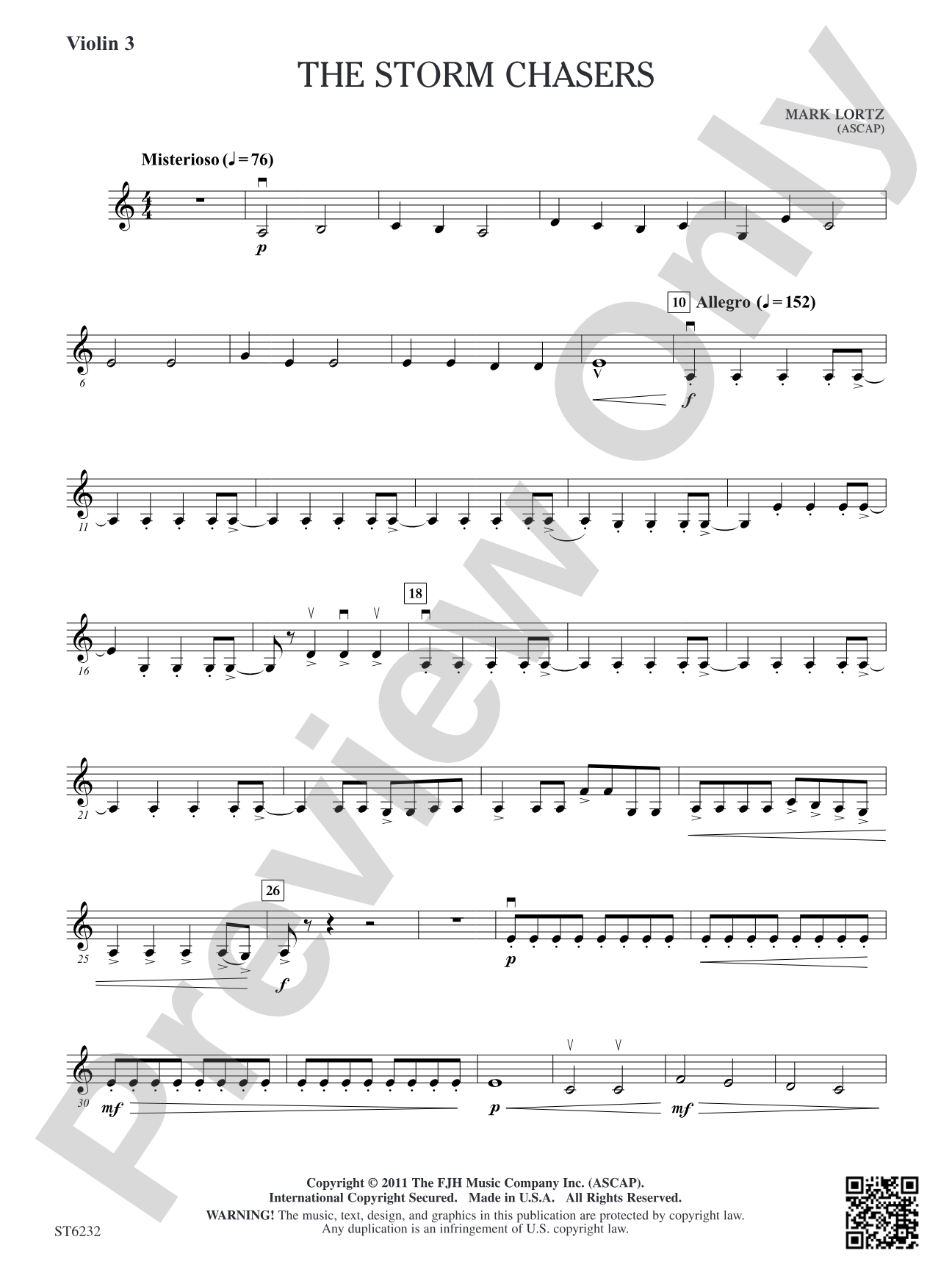

The Storm Chaser: Violin 3 (Viola. T.C.)
By Mark Lortz
Grade: 3
Item: 98-PC-DST6232_VN3
$7.00
Pickup currently not available
Description
Immerse yourself in the world of storm chasers, following the planet's deadliest and most violent weather outbreaks. This high-energy piece uses ostinatos and dynamic rhythms to capture the power and awe of these massive storms. A soft opening portrays the calm before the storm, followed by a driving chase motive that includes an optional percussion section. An explosive work!


Don't just read it, hear it, play along with it, and watch your students grow with it. In MakeMusic Cloud, The Storm Chaser: Violin 3 (Viola. T.C.) comes alive with professional accompaniment, adjustable tempo, and built-in practice tools that turn solo practice into real progress.
Open in the Player
Jump straight in and assign it today.
Start Your Free Trial
Open this title and explore the full library in minutes.
Sample Audio
1
Audio File
--:--
0:00
0:00
Sample Video
No sample videos found.
Additional Details
Series:
FJH String Orchestra
Publisher:
The FJH Music Company, Inc.
SKU:
98-PC-DST6232_VN3
More about this title
About the Composer: Mark Lortz

Mark Lortz directs the music department at Stevenson University and serves as a music editor for RWS Music Company. His compositional work has earned ASCAP recognition and has been performed at major conferences including The Midwest Clinic, the College Band Directors National Association, and the Bands of America National Percussion Festival. His pieces have appeared on Bandworld's Top 100 and J.W. Pepper's Editor's Choice lists, with reviews published in Gramophone and The Instrumentalist.
Beyond his work as a composer and educator, Lortz has conducted ensembles across Europe and adjudicated at regional and state conferences. He holds a Ph.D. in Music Education from Temple University and studied percussion performance, composition, and education at the Peabody Institute of Johns Hopkins University. The Maryland Music Educators' Association named him an Outstanding Educator in 2024 in recognition of his sustained contributions to the field.
Why we love this
Lortz captures the visceral drama of storm chasing with compositional craft that matches the grade level without sacrificing musical substance. The architecture of this piece—quiet tension building into a relentless driving motive—teaches orchestras how to execute dramatic contrast and rhythmic precision simultaneously, making it as rewarding to conduct as it is to perform. The optional percussion section gives you flexibility for your instrumentation while keeping the core string work firmly at Grade 3.
What to expect
The Storm Chaser opens with an unsettling stillness, the air thick with anticipation. Then the energy breaks loose into a propulsive, restless hunt, rhythms colliding and building until the piece reaches an explosive fury that captures both the danger and the awe of nature's most violent moments.
Who it's for
String orchestras at Grade 3 seeking a programmatic work that combines sophisticated musical ideas with accessible string writing. This piece works for groups preparing for contests and festivals, as well as ensembles looking to develop control of dynamics and rhythmic coordination.
How to get the most out of it
- Begin the soft opening with genuine silence and space; let the calm feel truly grounded so the transition into the chase motive lands with maximum impact.
- Lock the rhythmic ostinatos in the ensemble before adding the driving chase motive. Precision here matters more than tempo; once the foundation is solid, energy follows naturally.
- Shape the dynamic curve throughout the piece as a single arc rather than separate climaxes. Each section should feel like it's building toward something larger.
- If using the optional percussion section, balance it so it punctuates and propels the strings without overwhelming the melodic material in the upper voices.
How to use it
Program this as a high-energy centerpiece in a concert focused on nature or narrative themes. The dramatic arc and festival appeal make it ideal for mid-season performances where your orchestra has built the technical foundation to handle the dynamic control and rhythmic precision the work demands. It pairs well alongside more lyrical or classical pieces as a contrast.
Skills your students will build
- Dynamic contrast and shaping across extended passages
- Executing rhythmic ostinatos with precision and independence
- Building and sustaining ensemble energy through driving motives
- Balancing optional percussion voices while maintaining string articulation
- Executing rapid transitions between contrasting musical ideas