
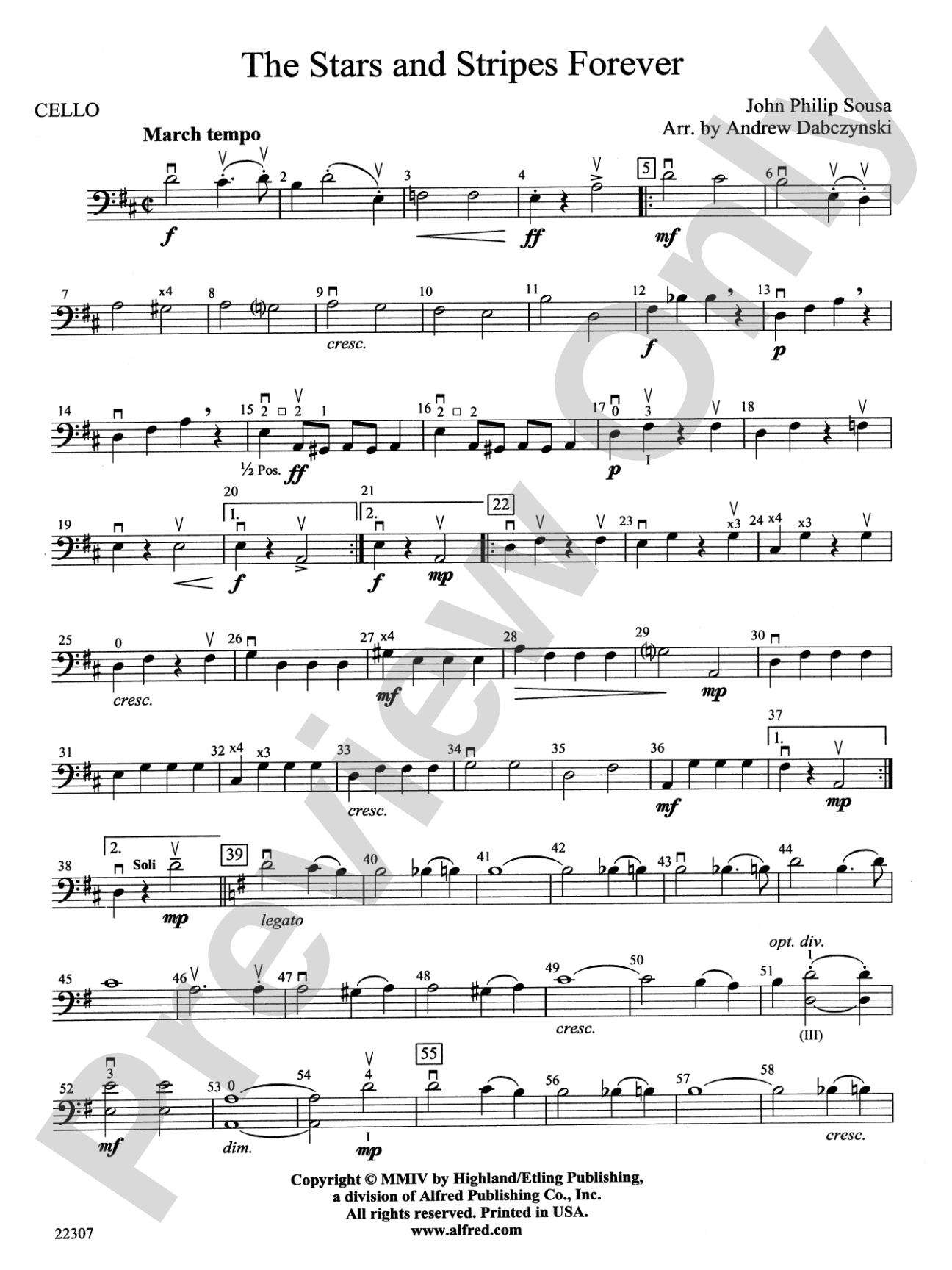

The Stars and Stripes Forever: Cello
By John Philip Sousa / arr. Andrew H. Dabczynski
Grade: 2.5
Item: 00-PC-0000556_VC1
$5.99
Pickup currently not available
Description
Few American melodies stir the soul of patriotism like John Philip Sousa's master march, The Stars and Stripes Forever. In this faithful arrangement, the entire intermediate string orchestra can literally "strike up the band" with Sousa's rousing melodies and well-known counter-melodies. A modified version of the famous piccolo solo is easily playable by an optional violin solo or section (extending just to third position, with harmonics). This arrangement is guaranteed to bring the audience to their feet, and leave your students feeling tall and proud.


Don't just read it, hear it, play along with it, and watch your students grow with it. In MakeMusic Cloud, The Stars and Stripes Forever: Cello comes alive with professional accompaniment, adjustable tempo, and built-in practice tools that turn solo practice into real progress.
Open in the Player
Jump straight in and assign it today.
Start Your Free Trial
Open this title and explore the full library in minutes.
Sample Audio
1
Audio File
--:--
0:00
0:00
Sample Video
No sample videos found.
Additional Details
Series:
Highland/Etling String Explorer
Publisher:
Alfred Music
Page Count:
140
SKU:
00-PC-0000556_VC1
More about this title
About the Composer: John Philip Sousa
John Philip Sousa (1854-1932) stands as one of America's most prolific and celebrated composers of band and orchestral music. His gift for crafting unforgettable melodies and his mastery of countermelody made him a household name during his lifetime; his marches remain standards in concert halls, parades, and patriotic celebrations across the nation. Sousa's works are essential repertoire for developing musicians because they demonstrate how clarity of line, rhythmic drive, and harmonic sophistication can work together without complexity.
As an educator and bandmaster, Sousa understood what makes music resonate with both players and audiences. His marches are constructed to build confidence in young musicians while maintaining musical substance. The Stars and Stripes Forever exemplifies his genius for creating moments of triumph that feel earned rather than imposed, making it a perennial choice for string orchestras seeking to inspire their ensemble and move their listeners.
Why we love this
Sousa's melodies are instantly recognizable and genuinely stirring without requiring advanced technical facility. Andrew Dabczynski's arrangement respects the original while making the piccolo solo accessible to intermediate string players, which means your entire ensemble stays engaged in the most memorable moment rather than watching a handful of soloists carry it. Programming this piece guarantees an emotional peak in any concert.
What to expect
A parade that steps into a concert hall with pride still in its spine. The main theme announces itself with warmth and dignity, then layers of counter-melody add texture without confusion. There's a sense of growth throughout, each phrase building on the last, culminating in the kind of moment where you can hear your audience lean forward in their seats.
Who it's for
Intermediate string orchestras (Grade 2.5) looking for a statement piece that builds morale and delivers audience impact. This works equally well for developing ensembles that need a confidence-building success and for more experienced groups exploring the classic American march tradition.
How to get the most out of it
- Shape the main theme with subtle dynamic swells rather than sudden changes; let the melody breathe naturally as if it were being sung by a single voice across the ensemble.
- Balance the counter-melody carefully when it enters alongside the primary theme. It should bloom clearly but never overshadow the top line, which carries the narrative.
- If you use the optional violin solo for the famous piccolo passage, rehearse it separately with that player first so they can nail the rhythmic drive and harmonic placement before sectional rehearsals.
- Keep the march tempo steady and energetic without rushing. The arrangement's power comes from precision and clarity, not speed.
How to use it
Save this for your finale or for a concert that needs a patriotic anchor. It pairs beautifully with other Americana in a summer pops program or sits powerfully as the centerpiece of a 4th of July celebration. The arrangement's clarity also makes it an excellent programming choice when you want to showcase how far your ensemble has come in a single season.
Skills your students will build
- Sustaining long melodic lines across multiple measures without losing tone quality
- Playing balanced countermelody alongside a primary theme
- Reading optional harmonics in the optional violin solo part
- Maintaining rhythmic precision in a march idiom without rushing
- Shaping a familiar melody freshly rather than relying on muscle memory