The Stars and Stripes Forever (arr. David Wright) Sheet Music Preview

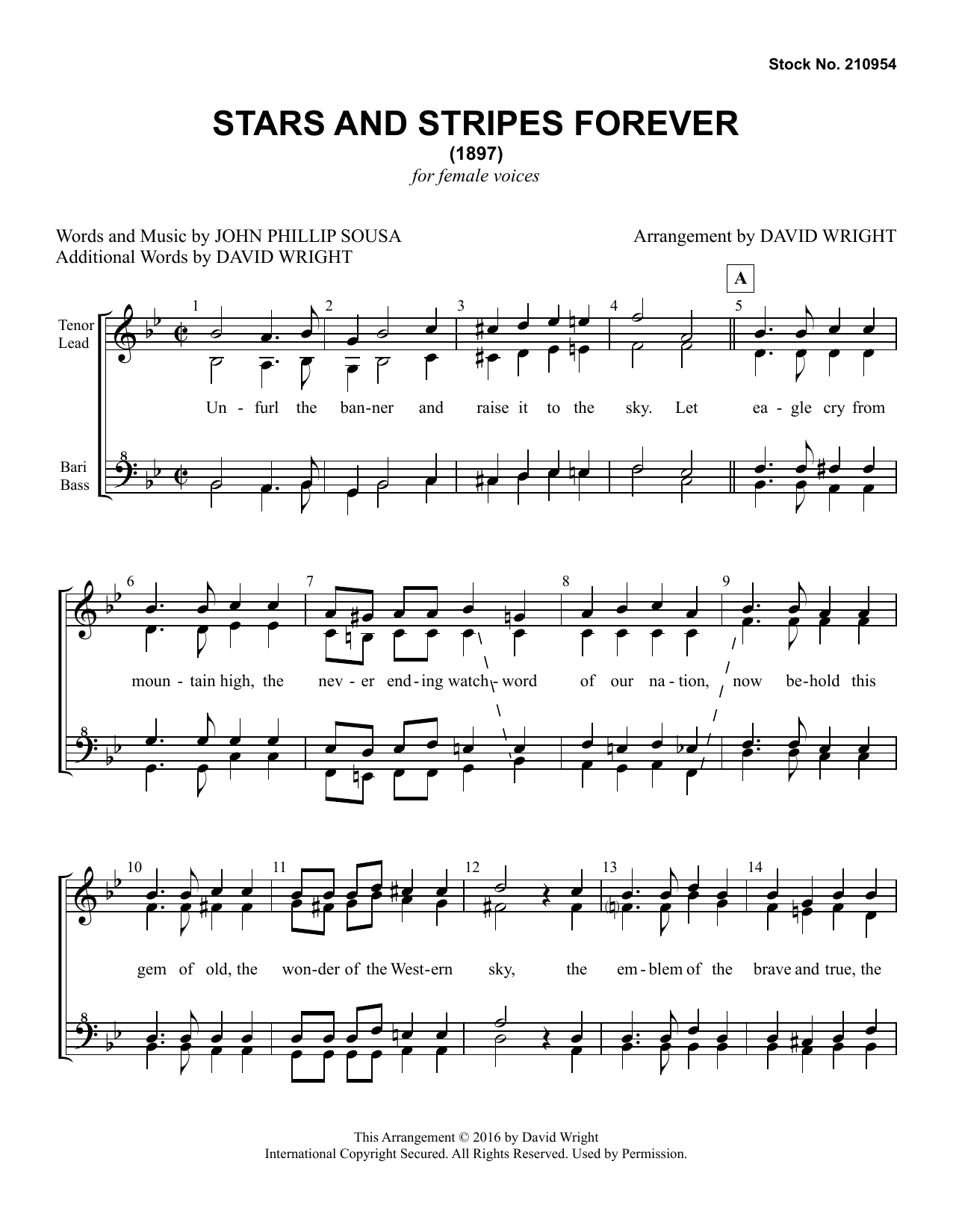
The Stars and Stripes Forever (arr. David Wright): SSAA Choral Octavo

By John Philip Sousa / Arranged by David Wright

Item: 35-DS00426817

Digital Download
$3.20
Description

The Stars and Stripes Forever (arr. David Wright): SSAA Choral Octavo isn't in MakeMusic Cloud just yet...but it could be. Let us know you'd like to see it, and you'll help shape what comes next. In the meantime, start a free trial and dive into thousands of interactive titles your students can play along with today.

Sample Audio
No sample audio found.
Sample Video
Additional Details
Publisher: Hal Leonard
Page Count: 12
SKU: 35-DS00426817

More about this title

About the Composer: John Philip Sousa

John Philip Sousa (1854-1932) stands as America's most celebrated composer of wind band music and marches. His mastery of orchestration and gift for melody shaped the sound of American patriotic music for generations, earning him the title "The March King." In the classroom and rehearsal hall, Sousa's works remain essential teaching tools, offering students immediate access to sophisticated compositional craft and the historical roots of American musical identity.

Beyond his concert marches, Sousa composed operettas, songs, and chamber works that reveal a composer of genuine harmonic invention and dramatic sensibility. His influence on music education runs deep; directors return to his marches repeatedly because they balance accessibility with musical substance, allowing students at various levels to experience genuine artistry while building core ensemble skills.

Why we love this

Wright's arrangement captures the infectious energy and structural brilliance of Sousa's original without losing the melodic clarity that makes this march instantly recognizable. The four-part writing sits perfectly for mixed voices, distributing the famous melody across different voice combinations so that every section gets a moment to shine. Programming this alongside patriotic concert fare or as a concert closer delivers the kind of crowd-pleasing finale that reminds both singers and audiences why Sousa remains in the repertoire a century later.

What to expect

Bright, energetic, and unmistakably American. The famous melody bounces forward with military precision while the supportive voices create a full harmonic cushion that feels both classical and distinctly barbershop in flavor. Singers experience the joy of performing one of the nation's most recognizable themes within a warm, singable arrangement.

Who it's for

Singers in community choirs, high school choral programs, and collegiate groups looking for a crowd-pleasing, patriotic selection that requires solid ensemble singing but remains accessible without extended vocal ranges. Barbershop and jazz-influenced choral ensembles will appreciate how the voicing sits naturally for mixed voices and allows for expressive interpretation.

How to get the most out of it

  • Keep the march tempo steady and forward-moving; resist the temptation to drag, which dulls the rhythmic snap that gives this arrangement its character.
  • Balance the melodic voice against the supportive parts beneath it. Use the recorded accompaniment to dial in where the lead melody needs to sit in the mix.
  • Shape the familiar main theme with subtle dynamic contours rather than keeping it uniformly loud; this maintains listener engagement across the familiar tune.
  • Articulate the rhythmic figures crisply, particularly in the inner voices and accompaniment patterns, to keep the march's military precision intact.

How to use it

Open a patriotic concert or Independence Day celebration with this arrangement, or save it as the finales that sends audiences home humming. It pairs well with other Sousa selections or with ragtime and early jazz arrangements, creating a program that traces American popular music from the march era forward.

Skills your students will build

  • Singing in four-part mixed voicing (SSAA) with awareness of harmonic function
  • Maintaining rhythmic precision in march form with consistent tempo
  • Voice independence and blend when supporting a central melodic line
  • Stylistic interpretation of early American patriotic music
  • Sight-reading of straightforward melodic and harmonic material

You May Also Like