The Star Spangled Banner: Oboe Sheet Music Preview

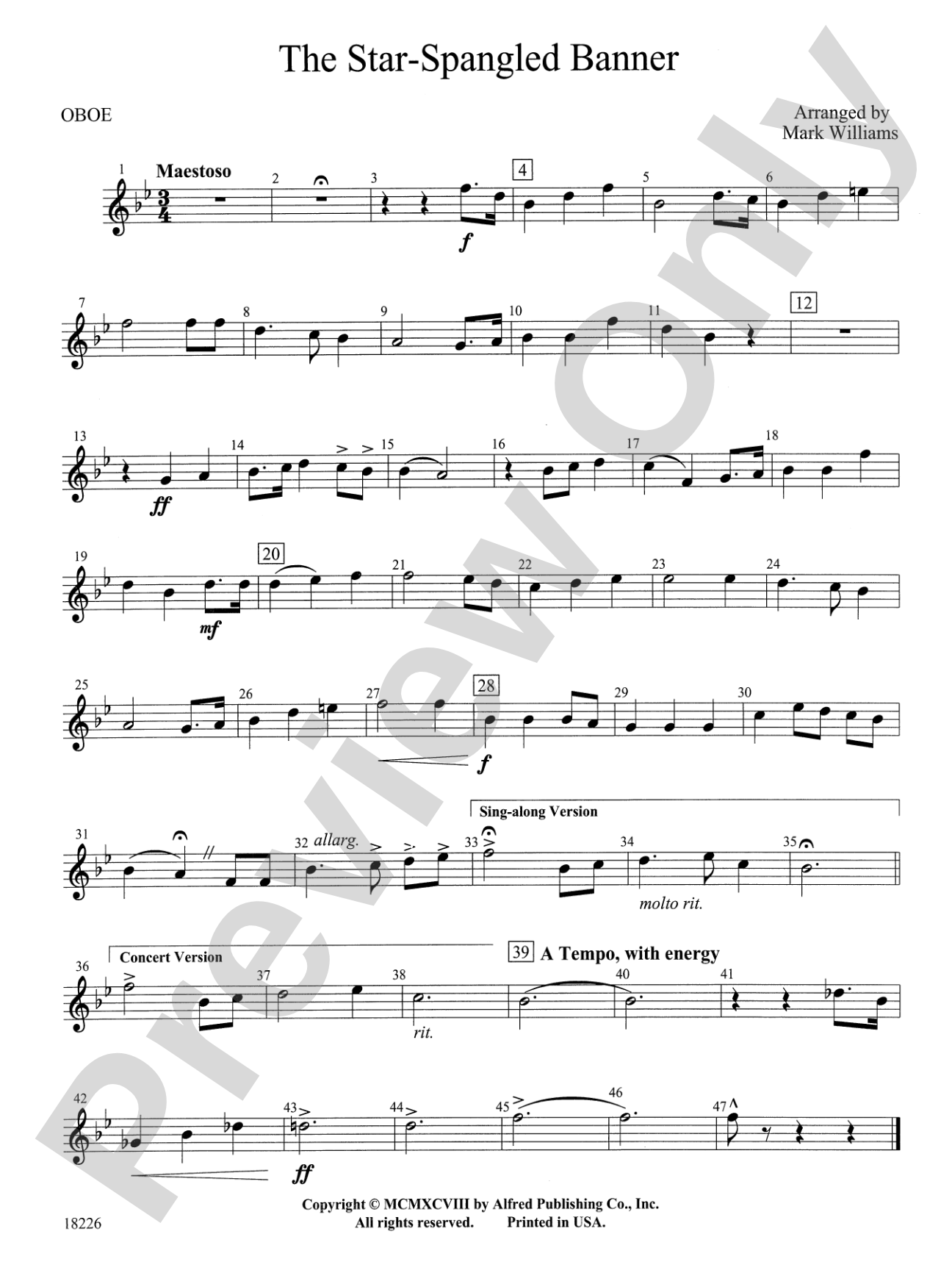
The Star Spangled Banner: Oboe

Arr. Mark Williams

Grade: 1.5 (Easy)

Item: 00-PC-0000252_O1

Digital Download
$3.00
Description
Your band will enjoy this fresh new treatment of the U.S. national anthem. Rich and inventive, this arrangement includes a short ending for audience sing-alongs, as well as a dramatic, extended ending for concert performances. You can't miss with this one! This title is available in MakeMusic Cloud.

Don't just read it, hear it, play along with it, and watch your students grow with it. In MakeMusic Cloud, The Star Spangled Banner: Oboe comes alive with professional accompaniment, adjustable tempo, and built-in practice tools that turn solo practice into real progress.

Sample Audio
0:00
0:00
Sample Video
Additional Details
Series: Challenger Band Series
Publisher: Alfred Music
Page Count: 118
SKU: 00-PC-0000252_O1

More about this title

About the Arranger: Mark Williams

Mark Williams

Mark Williams built his career on understanding what works in the school band room. With over 200 published compositions and arrangements to his name, he became known for writing music that was both accessible and musically substantive. His work as co-author of the Accent on Achievement Band Method shaped how thousands of young musicians learned to read and play together.

Williams brought his expertise to the podium as well, serving as guest conductor and clinician across North America and Australia. A accomplished bassoon player and arranger who worked with the 560th Air Force Band, he grounded his compositional voice in the practical realities of school music programs, particularly elementary band instruction. His contributions earned recognition including the Gralia Competition award and multiple ASCAP Special Awards, cementing his legacy as one of the most prolific voices in educational band music.

Why we love this

Williams transforms a beloved national symbol into music that serves multiple concert needs without sacrificing musicality. The dual ending structure, giving directors both an intimate audience participation moment and a fully realized concert conclusion, reflects the kind of practical intelligence that made Williams such a trusted voice in the school band repertoire.

What to expect

This arrangement honors the anthem's dignity while giving the band genuine responsibility. Rich harmonic support and inventive orchestration make it feel like a concert piece rather than an obligatory performance, yet the melody remains unmistakable and the piece never feels overwrought.

Who it's for

Concert band directors programming patriotic repertoire for Fourth of July performances, pep band events, or any occasion requiring the national anthem in a full band arrangement. The Grade 1.5 level makes it accessible to high school bands of all ability levels and strong middle school programs.

How to get the most out of it

  • Balance the band so that the melody sings clearly through whatever harmonic texture surrounds it. This piece depends on the audience recognizing the tune instantly.
  • Rehearse the short ending and extended ending separately to ensure clean transitions. Mark the score clearly so sections know which ending you're taking in performance.
  • Shape the phrasing in four-bar phrases rather than note-to-note. The national anthem benefits from architecture and breath, not constant motion.
  • If you choose the audience sing-along ending, conduct with clear, confident gestures that invite participation. A slight ritard into the final cadence gives singers time to join without rushing.

How to use it

Open a summer concert or Fourth of July performance with this. The flexibility between endings also makes it useful as a concert opener where audience participation adds energy, or as a processional or closing number for a more formal patriotic program.

Skills your students will build

  • Balancing melody and harmony in a four-part chorale texture
  • Sustaining long phrases and managing breath across extended melodic lines
  • Executing clean section transitions between contrasting arrangements of the same material
  • Reading a concert band score that includes divisi passages and alternating instrumental doublings

You May Also Like