
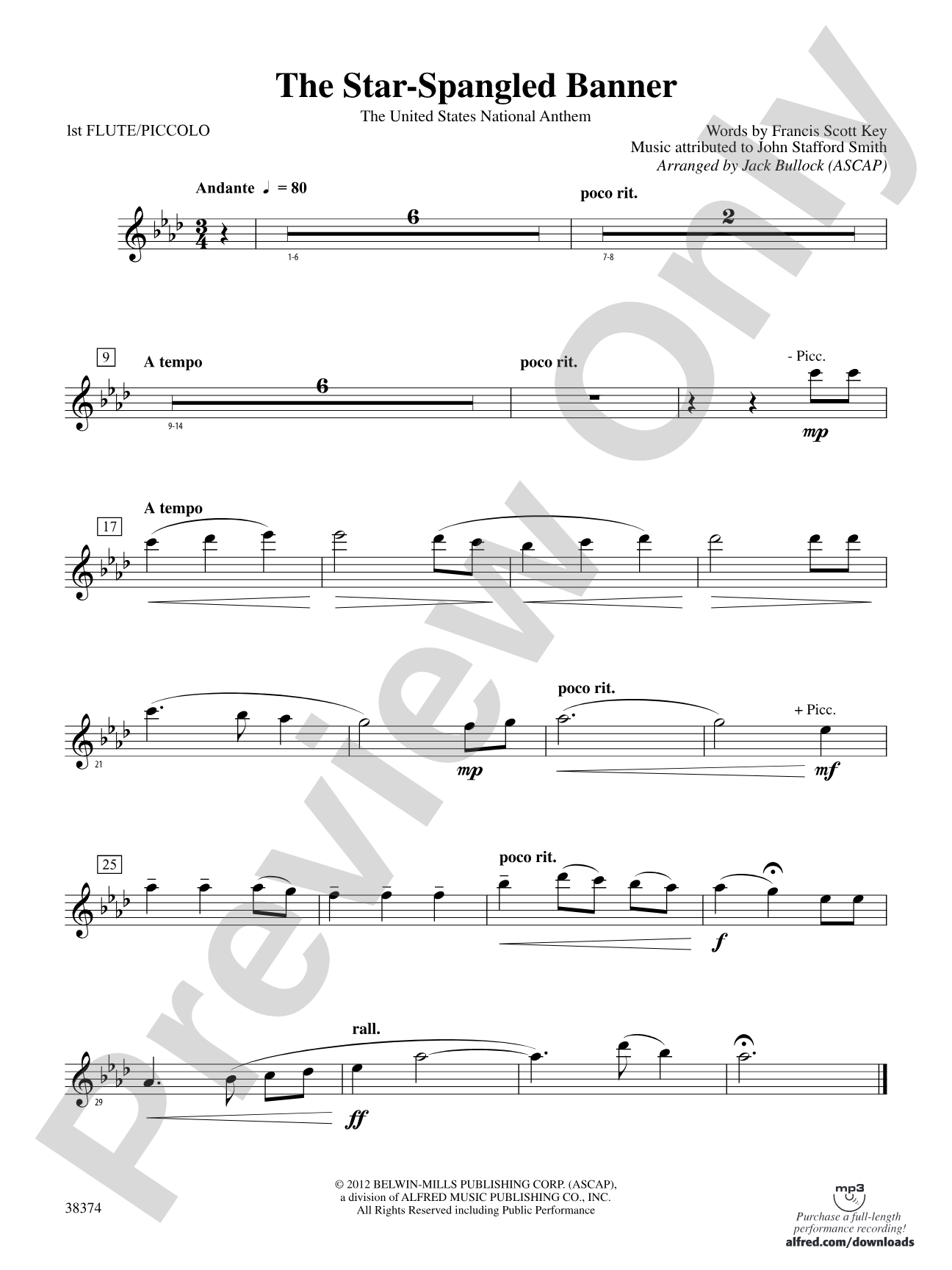

The Star-Spangled Banner: Flute
The United States National Anthem
Words by Francis Scott Key, music attributed to John Stafford Smith / arr. Jack Bullock
Grade: 2.5 (Easy to Medium Easy)
Item: 00-PC-0015455_F1
$3.00
Pickup currently not available
Description
Why another arrangement of "The Star-Spangled Banner?" While watching a TV sports show, Dr. Bullock was dismayed after hearing a particularly poor performance flawed with wrong lyrics and the incorporation of personal musical phrases intertwined with the traditional melody. So, don't just play your marching band version in a concert setting, but rather program this tasteful reverent rendition which is certain to be moving in your concert environment. (1:30)


Don't just read it, hear it, play along with it, and watch your students grow with it. In MakeMusic Cloud, The Star-Spangled Banner: Flute comes alive with professional accompaniment, adjustable tempo, and built-in practice tools that turn solo practice into real progress.
Open in the Player
Jump straight in and assign it today.
Start Your Free Trial
Open this title and explore the full library in minutes.
Sample Audio
1
Audio File
--:--
0:00
0:00
Sample Video
No sample videos found.
Additional Details
Series:
Belwin Concert Band
Publisher:
Alfred Music
Page Count:
114
SKU:
00-PC-0015455_F1
More about this title
About the Composer: John Stafford Smith
John Stafford Smith (1750-1819) was an English composer and organist whose gift for melody secured his place in music history through a single song. Though he composed numerous works across sacred and secular genres, his tune "Anacreon in Heaven" became immortal when it was paired with Francis Scott Key's lyrics during the War of 1812, creating what would become the United States national anthem.
Smith's original melody, written as the theme song for the Anacreontic Society in London, demonstrates the clarity and singability that made it perfect for adoption into American culture. His contribution to music education persists today through countless arrangements and performances of this iconic melody.
Why we love this
Jack Bullock's arrangement solves a real problem that too many bands face: the difference between how this anthem works in a stadium marching context versus in a concert hall. The deliberate, reverent approach here strips away the urgency of sports performance and reveals the dignity of the melody itself. Directors tired of hearing rushed tempos and added flourishes will find this version restores the piece to something genuinely moving.
What to expect
Reverent and processional, with space around the melody that lets it speak clearly. The arrangement avoids bombast in favor of straightforward orchestration that keeps the familiar tune at the center while letting each instrumental line support rather than compete. This is an anthem that remembers what the words mean.
Who it's for
Concert bands at the Grade 2.5 level who want an arrangement appropriate for formal concert settings, patriotic ceremonies, and graduation events. This works for bands that need material accessible enough for summer rehearsals but musical enough to represent the ensemble with dignity.
How to get the most out of it
- Establish a measured, processional tempo that allows the melody to breathe. The 1:30 duration suggests a moderate pace that avoids rushing through either the lyrics or instrumental statements.
- Balance your brass and woodwind voicing so the melody remains prominent regardless of which section carries it. In a reverent setting, transparency matters more than power.
- Give your ensemble time to listen to themselves during the fermatas and longer note values. These moments define the emotional character of this version.
- Conduct with stillness and clarity. A smaller, more economical gesture helps the band focus on intonation and blend rather than energy or volume.
How to use it
Open a patriotic concert or ceremony with this arrangement to set a reflective tone. It also works effectively at the conclusion of a program as a unifying closer. Position it where you want the audience to listen rather than react, making it ideal for formal occasions like memorial services or community dedication events.
Skills your students will build
- Sustained tone production and breath control over longer phrases
- Intonation balance across the full ensemble texture
- Responding to a conductor's gesture for precision and ensemble unity
- Understanding the difference between concert hall and stadium performance contexts
- Reading a simple, transparent harmonic arrangement that emphasizes clarity