
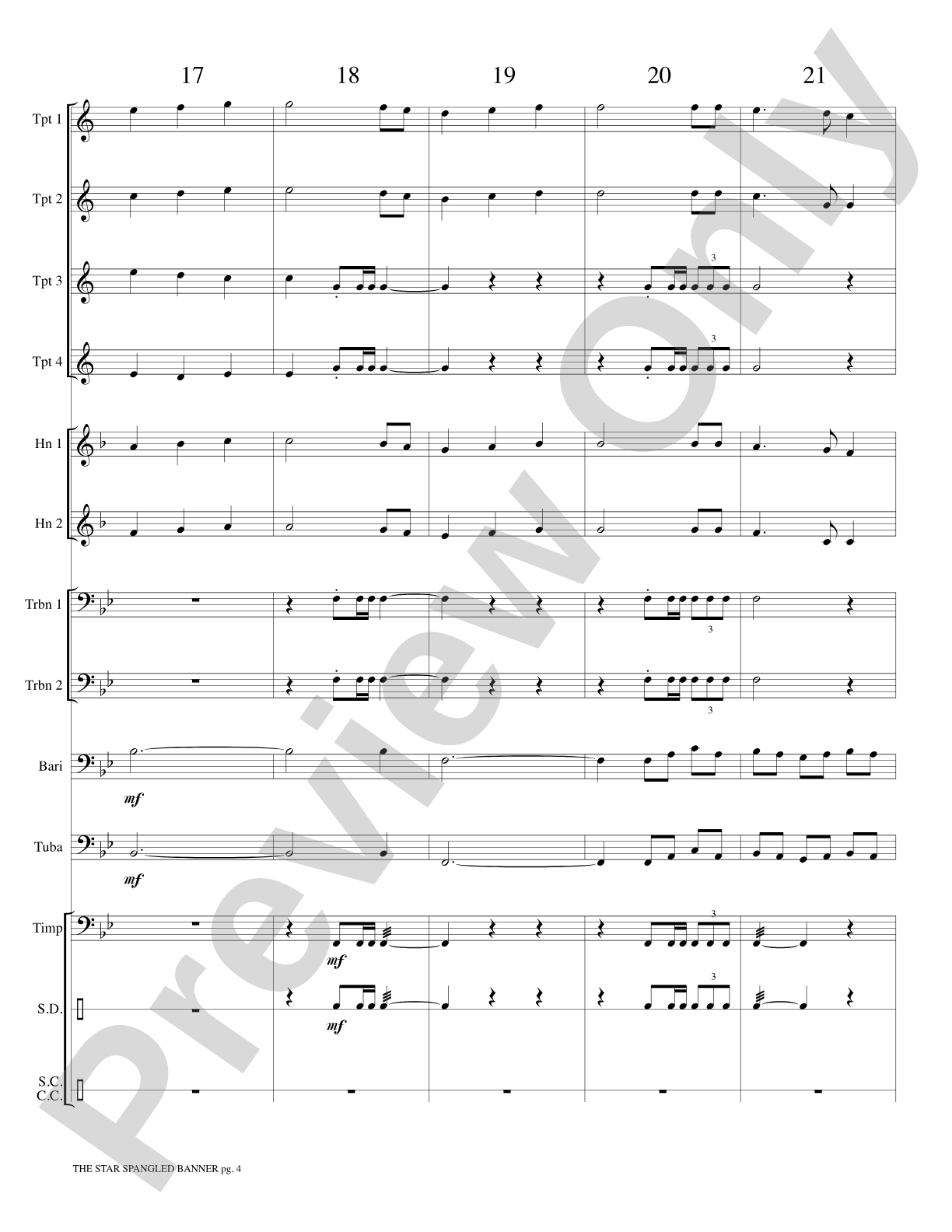
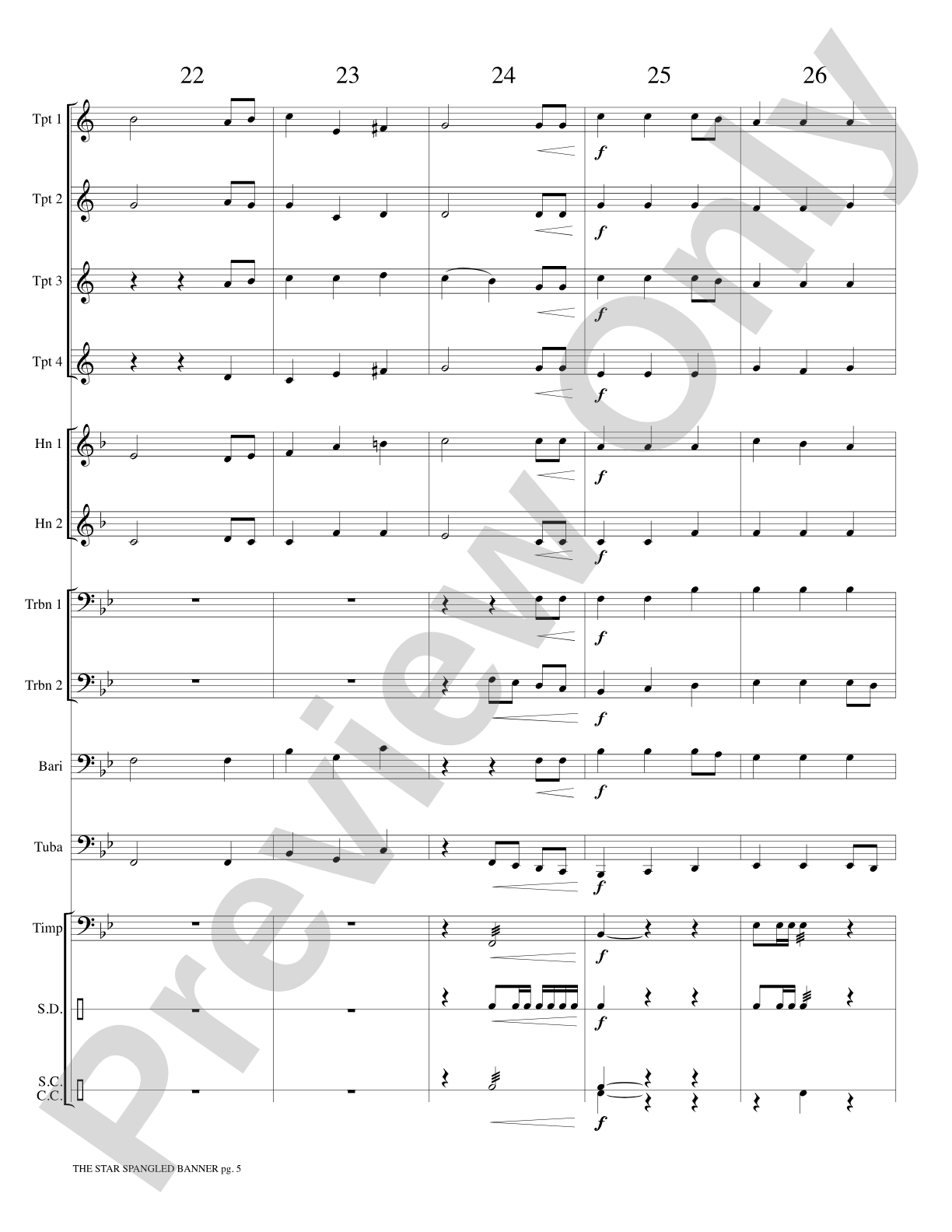
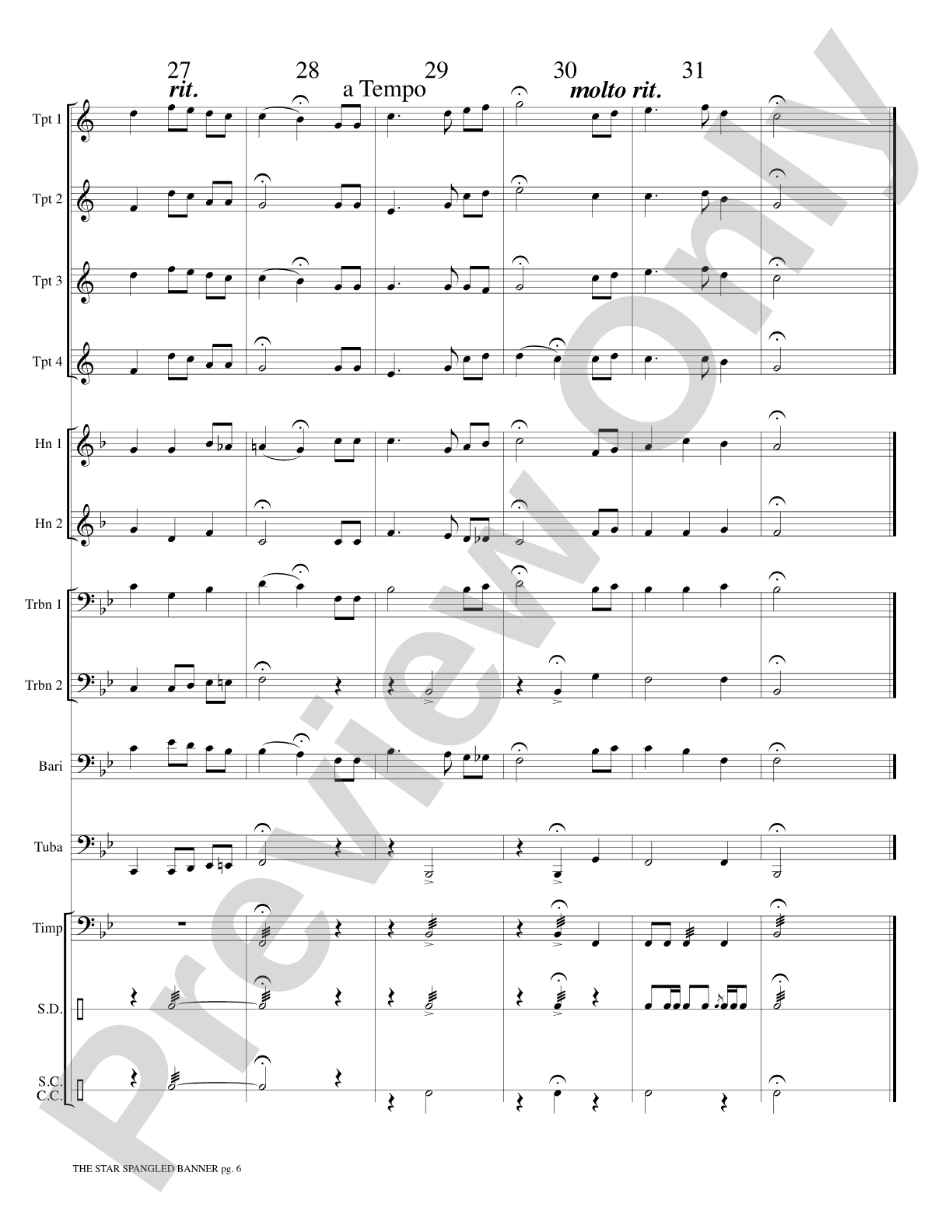


The Star Spangled Banner: Brass Choir Score & Parts
By Francis Scott Key / arr. David Marlatt
Item: 81-PK-0000000
$20.00
One moment…
Related Items
The Star-Spangled Banner: Brass Choir Score & Parts |
$20.00
|
View |
Description
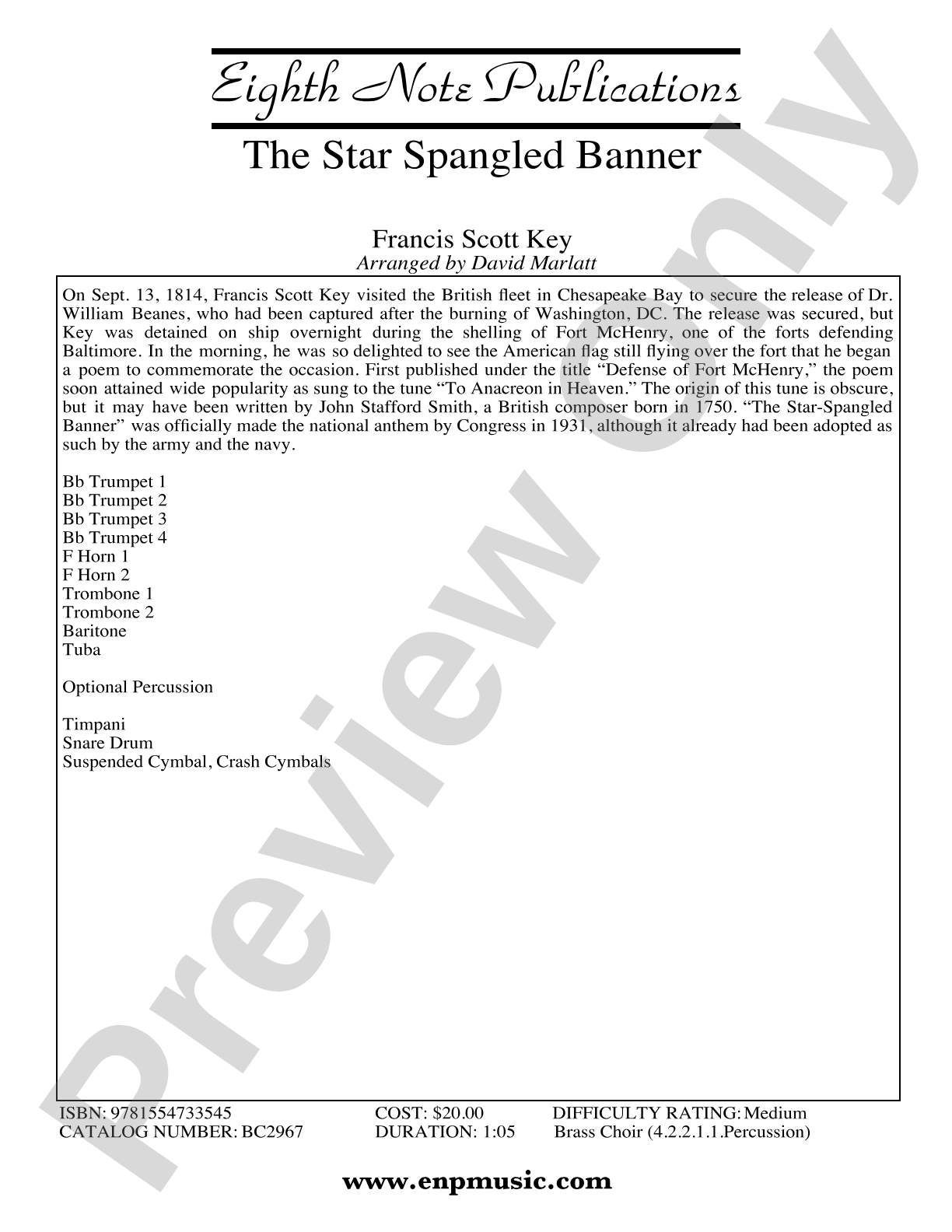
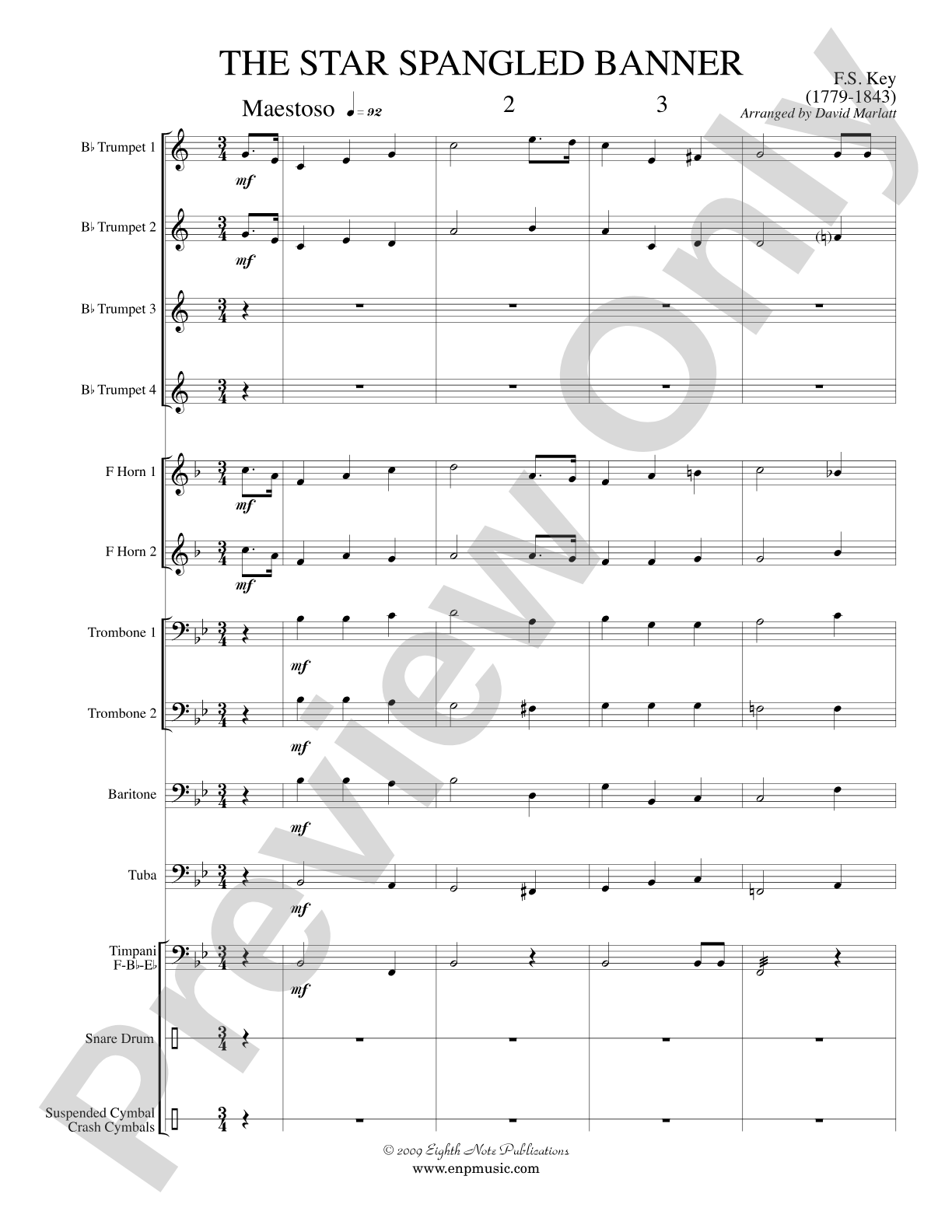
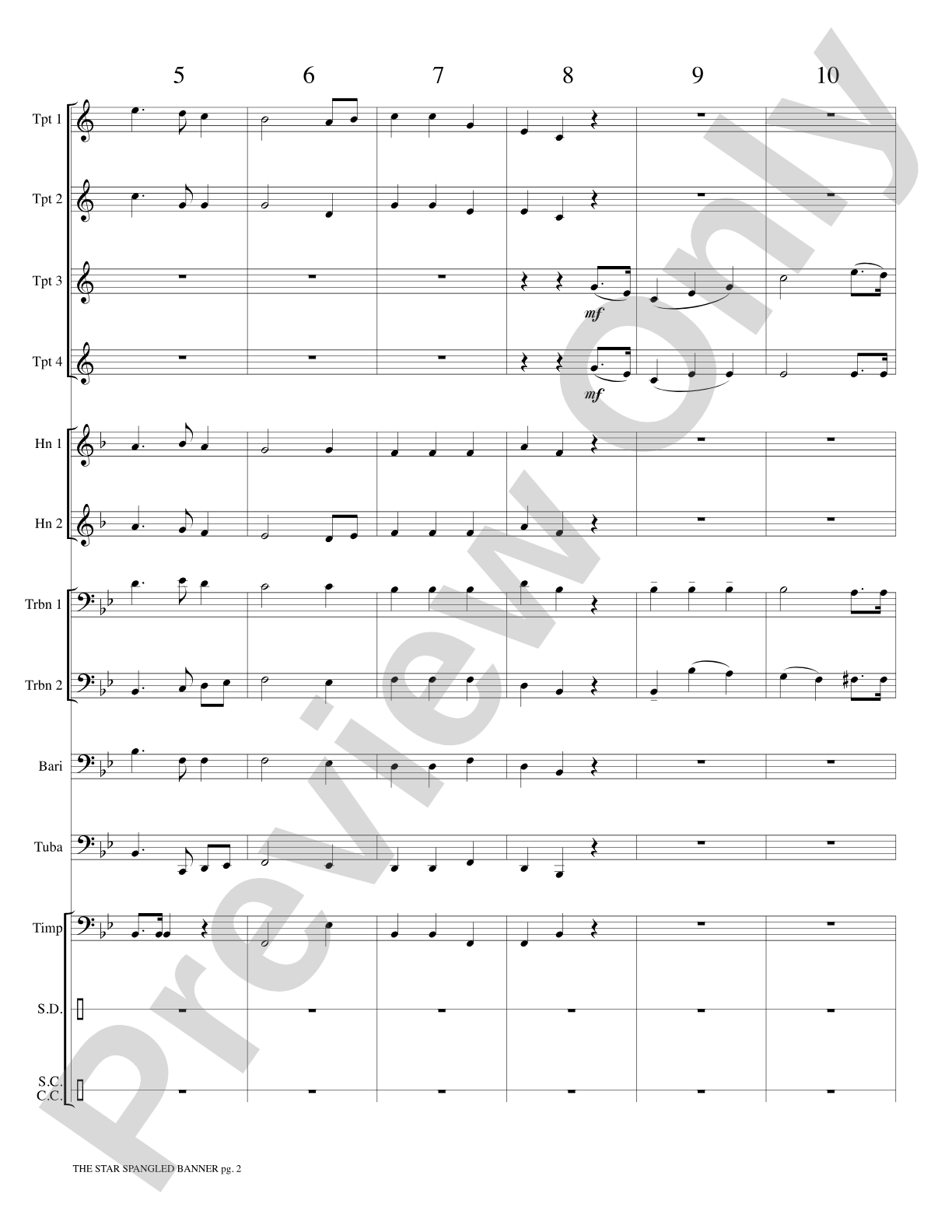
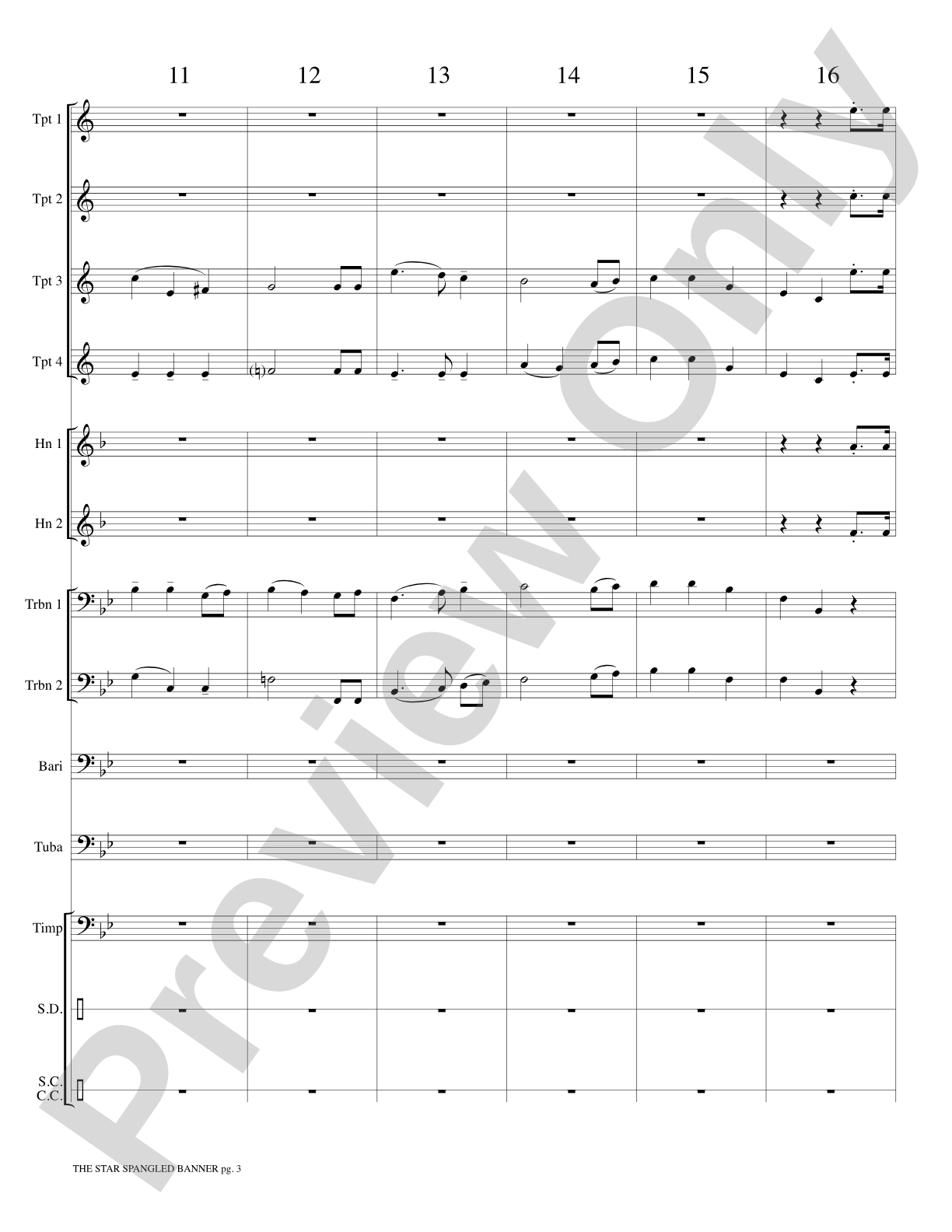
The American National Anthem is one of the most famous national songs in the world. The power and majesty of this work has been captured in arrangements for such ensembles as trumpet ensemble, brass quintet, countless vocal renditions and military band. This arrangement is for 4 trumpets, 2 horns, 2 trombones, baritone, tuba and optional percussion.


The Star Spangled Banner: Brass Choir Score & Parts isn't in MakeMusic Cloud just yet...but it could be. Let us know you'd like to see it, and you'll help shape what comes next. In the meantime, start a free trial and dive into thousands of interactive titles your students can play along with today.
Request This Title
Tell us you want it.
Start Your Free Trial
Explore everything that's ready to play right now.
Sample Audio
1
Audio File
--:--
0:00
0:00
Sample Video
No sample videos found.
Additional Details
Series:
Eighth Note Publications
Publisher:
Eighth Note Publications
Page Count:
26
SKU:
81-PK-0000000
Instrumentation:
4 trumpets, 2 horns, 2 trombones, baritone, tuba and optional percussion
More about this title
About the Composer: Francis Scott Key
Francis Scott Key composed "The Star-Spangled Banner" in September 1814, after witnessing the British bombardment of Fort McHenry in Baltimore Harbor during the War of 1812. Key, a lawyer and amateur poet, wrote the lyrics to the tune of a popular English song, and the anthem was first published in newspapers within weeks. The text captured the resilience and determination of a young nation under fire, and it gradually became the symbol of American identity that endures today.
Key's role in American history transcends music. His words gave voice to a pivotal moment of national struggle, and the anthem has become central to American civic life, performed at sporting events, military ceremonies, and public gatherings nationwide. For music educators, the anthem represents both a historical document and a vehicle for teaching brass ensemble balance, intonation, and the weight of musical meaning.
Why we love this
This Marlatt arrangement preserves the anthem's heroic character while making it accessible to brass choirs of intermediate ability. The full score and individual parts provide clear independence for each section without sacrificing the unified, celebratory sound that makes this piece so effective in concert and ceremonial settings. Brass directors consistently choose this version because it delivers impact and dignity without excessive technical demands.
What to expect
Stately and triumphant, with the broad, sustained character the anthem demands. The brass choir sonority is full and resonant, evoking both the military history from which the text emerged and the civic pride that surrounds this music in American culture. Even at moderate tempos, the piece conveys authority and dignity.
Who it's for
Intermediate to advanced brass choirs, military ensembles, ceremonial brass groups, and college brass programs looking for patriotic repertoire that sounds substantial without requiring virtuosic soloists. This arrangement works well for groups with solid fundamentals in blend and intonation.
How to get the most out of it
- Balance the four trumpet parts carefully in the opening; they should blend as one voice rather than compete. The harmony is most effective when intonation is absolutely locked.
- Shape the phrase with attention to the text's emotional arc, even though this is an instrumental arrangement. The climax should feel earned, not rushed.
- If using optional percussion, keep it restrained and rhythmically precise. The brass choir is powerful enough to carry the piece without reinforcement; percussion should enhance texture, not dominate.
- Give the baritone and tuba parts room to anchor the harmonic foundation. These voices carry the weight of the arrangement and deserve clarity in the ensemble balance.
How to use it
Open a patriotic or military-themed concert with this arrangement to set an aspirational tone. It also serves beautifully as the closing statement of a program, particularly effective for events with civic or ceremonial significance. Consider pairing it with other American brass repertoire or concert marches to build a thematic program around American music.
Skills your students will build
- Ensemble blend and balance across four trumpet parts
- Intonation precision in sustained harmonies
- Stylistic control of patriotic and ceremonial music
- Reading and executing independent brass choir parts
- Dynamic shaping and phrasing at moderate to slow tempos