

The Star-Spangled Banner: String Orchestra Conductor Score & Parts
By John Stafford Smith / arr. Bob Phillips
Grade: 2
Item: 00-PK-0006666

$46.00
Pickup currently not available
Buy Extra Parts (Digital PDF Download)
Parts Added to Cart!
Related Items
The Star-Spangled Banner: String Orchestra Conductor Score |
$8.00
|
View |
Description
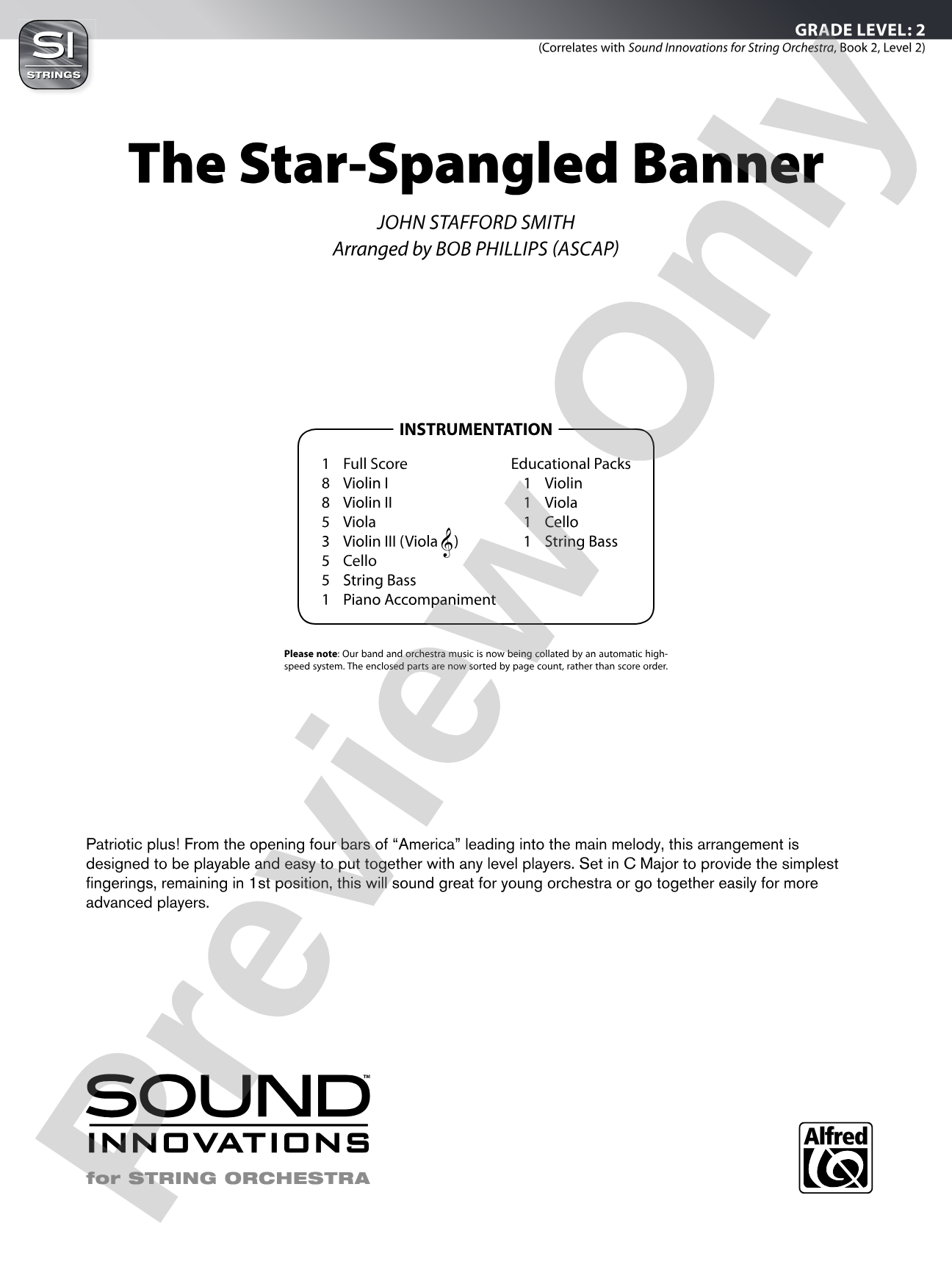
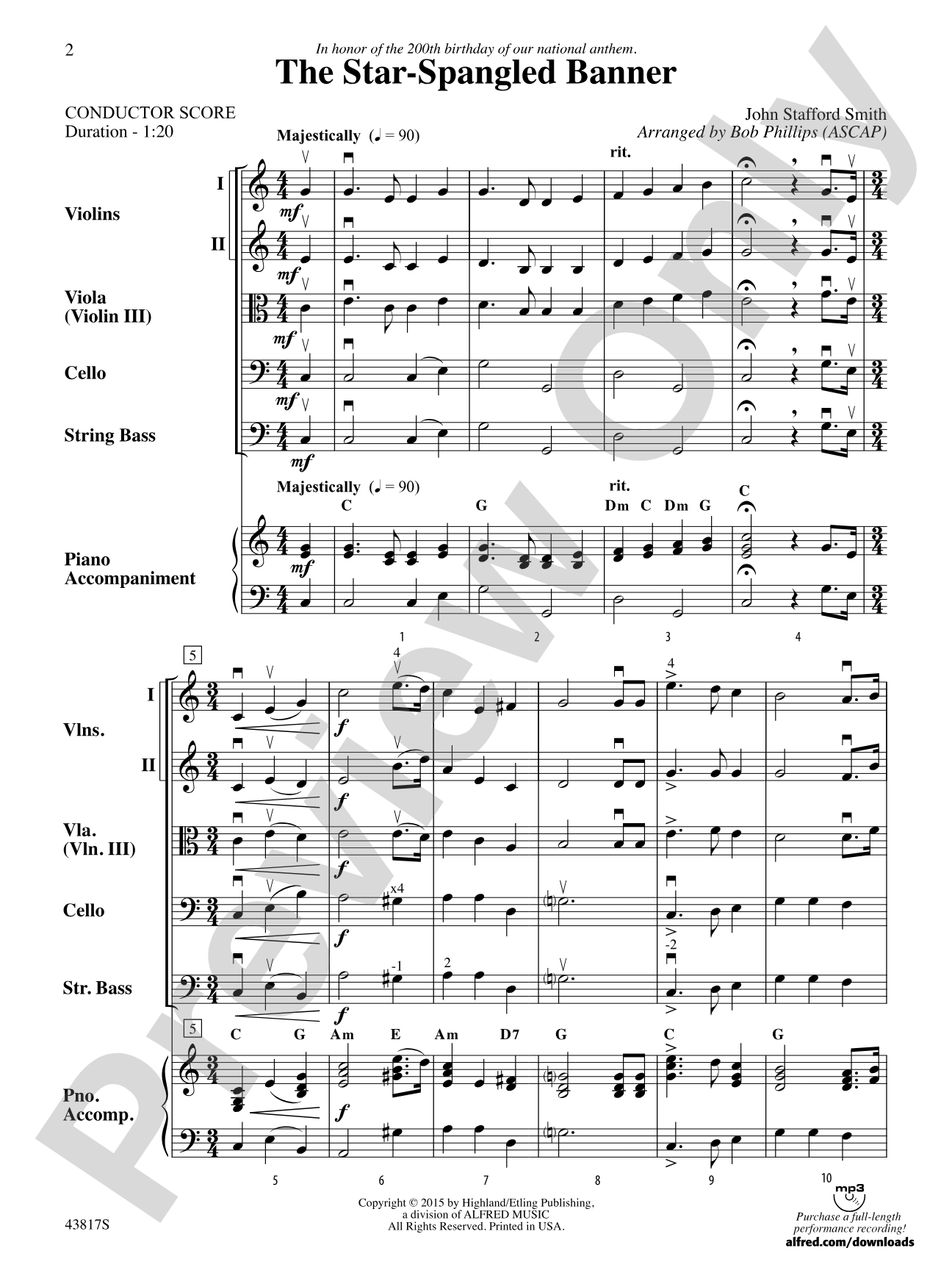
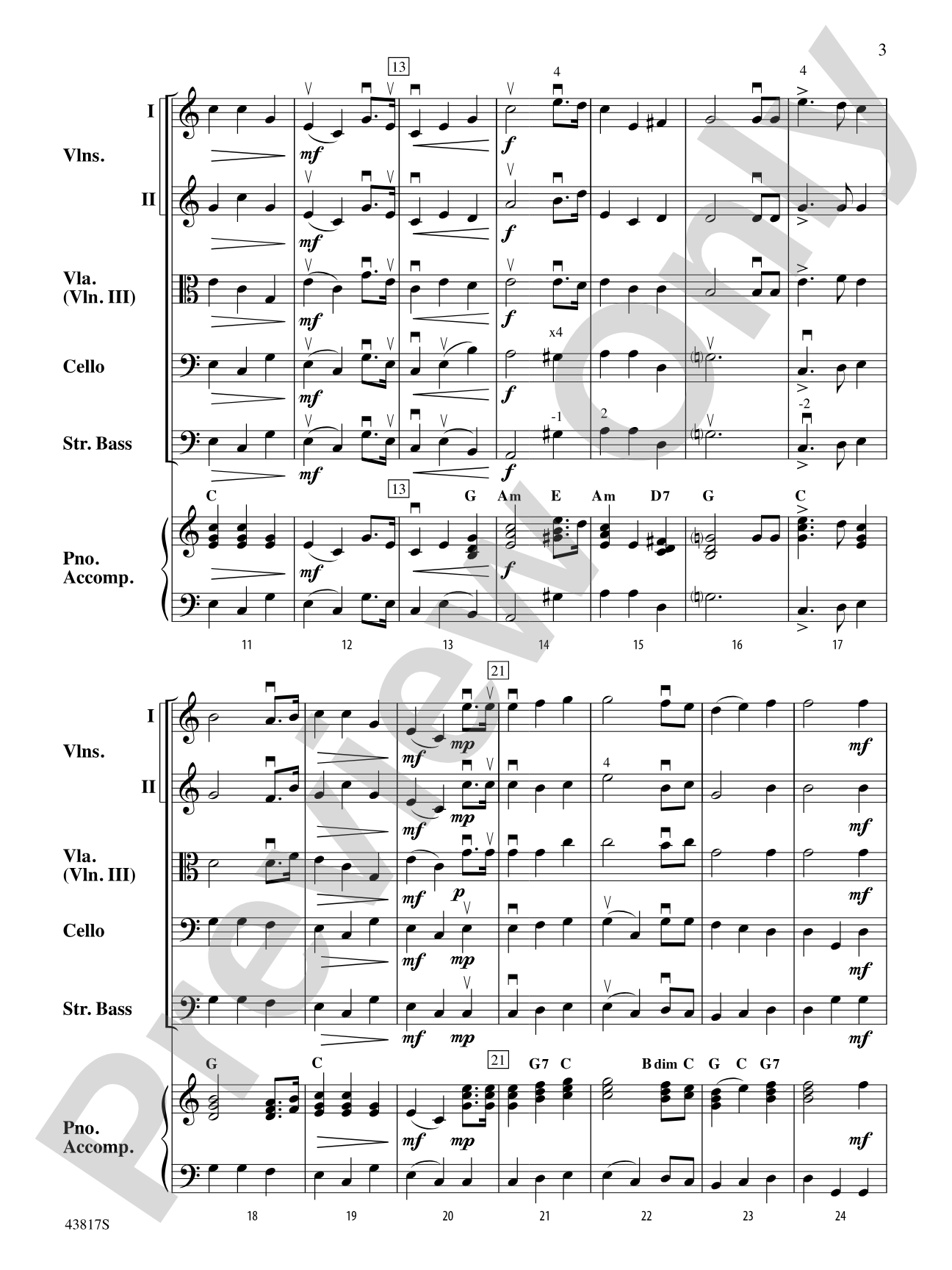
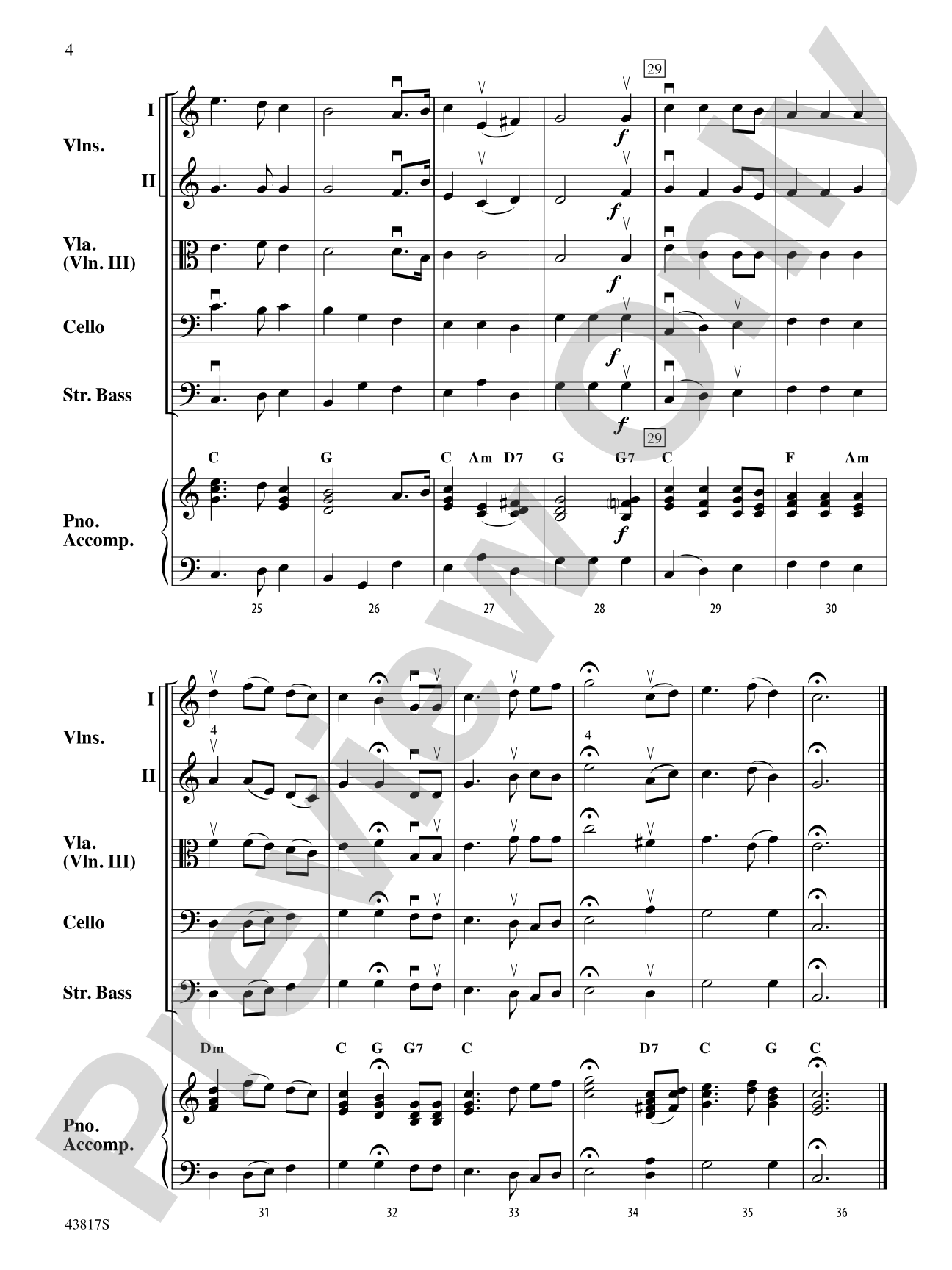
Opening with "America," this arrangement is designed to be playable and easy to put together with any level of players. Set in C major for the simplest fingerings and to remain in 1st position, this will sound great for young orchestra or go together easily for more advanced players. (1:20)


Don't just read it, hear it, play along with it, and watch your students grow with it. In MakeMusic Cloud, The Star-Spangled Banner: String Orchestra Conductor Score & Parts comes alive with professional accompaniment, adjustable tempo, and built-in practice tools that turn solo practice into real progress.
Open in the Player
Jump straight in and assign it today.
Start Your Free Trial
Open this title and explore the full library in minutes.
Sample Audio
1
Audio File
--:--
0:00
0:00
Sample Video
No sample videos found.
Additional Details
Series:
Sound Innovations for String Orchestra
Publisher:
Alfred Music
Page Count:
80
SKU:
00-PK-0006666
More about this title
About the Composer: John Stafford Smith
John Stafford Smith (1750-1819) was an English composer and organist whose gift for melody secured his music a place in concert halls and classrooms more than two centuries after his death. Though he composed numerous hymns, glees, and instrumental works, Smith is remembered primarily for the tune now known as "The Star-Spangled Banner," originally titled "To Anacreon in Heaven." He served as organist at the Chapel Royal and composed steadily throughout his career, but it was this single melody that gave his name enduring recognition in American musical life.
Why we love this
Bob Phillips's Grade 2 arrangement captures everything that makes this melody singable and familiar while removing the technical barriers that can trip up young orchestras. By centering the piece in C major and keeping students in first position, he lets players focus on intonation, ensemble balance, and the patriotic character of the music rather than wrestling with key signatures or extended positions. It's the kind of practical, thoughtful arranging that gets performed because it actually works.
What to expect
The melody unfolds with the dignity and directness it deserves, neither overshadowed by complexity nor stripped of accompaniment. The arrangement breathes with an open, hymn-like quality, letting the familiar tune shine while strings provide warm, uncomplicated support.
Who it's for
This arrangement serves young string orchestras in Grades 2-4 who are ready to tackle familiar music with confidence and maturity. It also works for more advanced ensembles looking for a straightforward, crowd-pleasing patriotic piece that rehearses quickly without sacrificing musicality.
How to get the most out of it
- Bring out the opening statement in the first violins while keeping second violins and lower voices subordinate; the melody carries the emotional weight, and clarity from the top line will anchor the whole group.
- Breathe together at phrase endings even in a piece without lyrics; treating the arrangement like a song rather than a technical exercise will shape the phrasing naturally.
- Balance the tutti sections by checking that inner voices (violas and cellos) sit just below the dynamic level of violins and basses; this prevents the sound from becoming muddy as players pile on.
- Use the rehearsal marks liberally to isolate trouble spots, especially where parts cross or where rhythm changes; identifying problem measures early prevents last-minute scrambling.
How to use it
Program this for Independence Day celebrations, patriotic concerts, or as an opening number that establishes a ceremonial tone without requiring extensive rehearsal time. Its modest technical demands make it ideal for early-summer performances when full ensemble attendance and extended rehearsal schedules may be uncertain.
Skills your students will build
- Playing melodies in first position across the string family
- Reading and balancing parts at the Grade 2 level
- Sustaining open, resonant tone in hymn-style writing
- Responding to clear phrase structure and ensemble cues
- Matching intonation across divided parts