The Sound of Silence (arr. Mac Huff) Sheet Music Preview

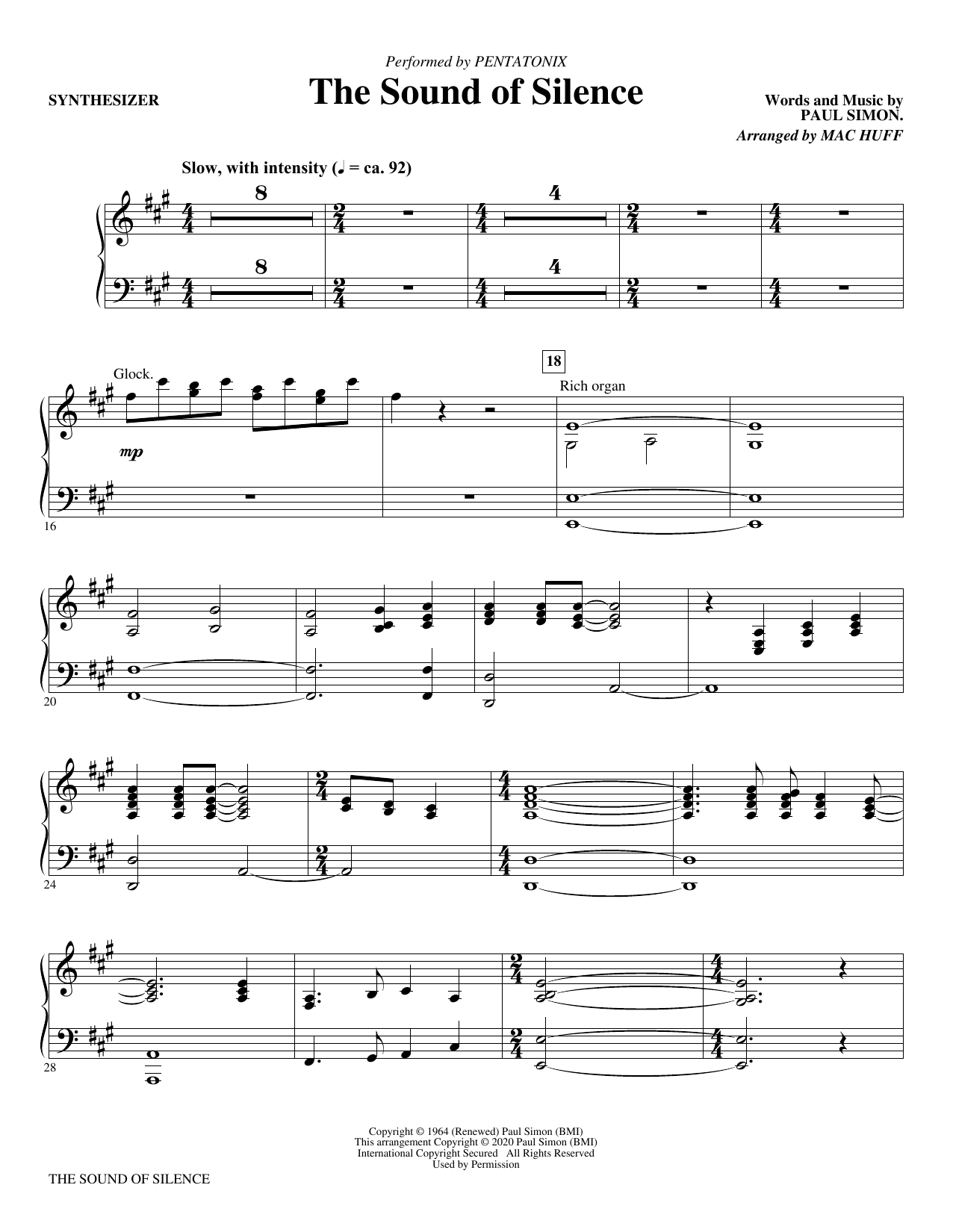
The Sound of Silence (arr. Mac Huff): Choral Instrumental Pak

As performed by Pentatonix / As performed by Simon Garfunkel / Arranged by Mac Huff

Item: 35-PK00457812

Digital Download
$20.00

One moment…

Description
The excitement for a brand new Pentatonix arrangement of a beloved pop or rock tune has become something of an achievement in an of itself. This time, Simon Garfunkel's chart topper from '65 gets a fully vocal musical tribute, wonderfully adapted by Mac Huff.

The Sound of Silence (arr. Mac Huff): Choral Instrumental Pak isn't in MakeMusic Cloud just yet...but it could be. Let us know you'd like to see it, and you'll help shape what comes next. In the meantime, start a free trial and dive into thousands of interactive titles your students can play along with today.

Sample Audio
No sample audio found.
Sample Video
Additional Details
Publisher: Hal Leonard
SKU: 35-PK00457812

More about this title

About the Artist: Pentatonix

Pentatonix is a five-voice acapella group that emerged from the reality competition The Sing-Off in 2011 and has since become a cultural phenomenon in contemporary vocal music. Their innovative arrangements span pop standards, rock classics, and original compositions, each meticulously crafted to showcase the technical and expressive possibilities of the human voice across multiple registers and textures.

In the music education world, Pentatonix serves as both inspiration and practical resource. Their arrangements, including this Mac Huff adaptation, demonstrate how contemporary groups solve real arranging challenges: creating rich harmonic textures without instrumental support, maintaining rhythmic precision at various tempos, and balancing accessibility with vocal sophistication. Teachers and directors regularly reference their work when introducing students to contemporary vocal writing and recording techniques.

Why we love this

Mac Huff's arrangement captures what makes Pentatonix's sound distinctive while honoring the emotional core of this 1965 masterpiece. The fully vocal treatment means your singers become every voice in the arrangement, creating an intimate yet densely layered performance that audiences find mesmerizing. Programming this alongside traditional choral repertoire signals to your singers that vocal music spans centuries and genres with equal artistry.

What to expect

Intimate and contemplative, with moments of rhythmic precision that feel almost like machinery underneath a vulnerable vocal line. The arrangement creates surprising fullness from pure voices, as if four people became a complete soundscape through careful layering and lush harmony.

Who it's for

Choirs with four to five distinct voice parts who want to perform contemporary music that acknowledges their pop culture literacy without sacrificing vocal technique. This works equally well for high school chamber ensembles and college groups seeking to expand into acapella styles.

How to get the most out of it

  • Study the recorded performance for phrasing choices and rhythmic flexibility, but establish your own interpretive approach early. These vocal lines can sustain different tempos based on your ensemble's strengths.
  • Balance the soprano and alto lines in the sustained vocal pads; they anchor the harmonic foundation while the middle voices carry rhythmic and melodic shape.
  • Lock the rhythm section parts (bass and percussion sounds created vocally) before layering in soloists and moving parts. Precision here removes the need for an instrumental track to feel complete.
  • Shape the dynamics gradually across the entire piece rather than making sudden shifts. This arrangement benefits from organic swell and release that mirrors the original's quiet intensity.

How to use it

This pairs beautifully in a program exploring how beloved songs move across decades and genres. Consider using it as a bridge between a traditional standard and an original contemporary work, or as the finale to a concert section celebrating arrangements of familiar material.

Skills your students will build

  • Balancing independent melodic lines within dense harmonic textures
  • Sustaining pitch and tone while other voices move rhythmically around them
  • Creating rhythmic precision in vocal percussion and bass sounds
  • Navigating contemporary acapella arranging conventions and text delivery
  • Shaping long phrases with intentional dynamic arc

You May Also Like