The Sound Of Silence (arr. Carol Canning) Sheet Music Preview

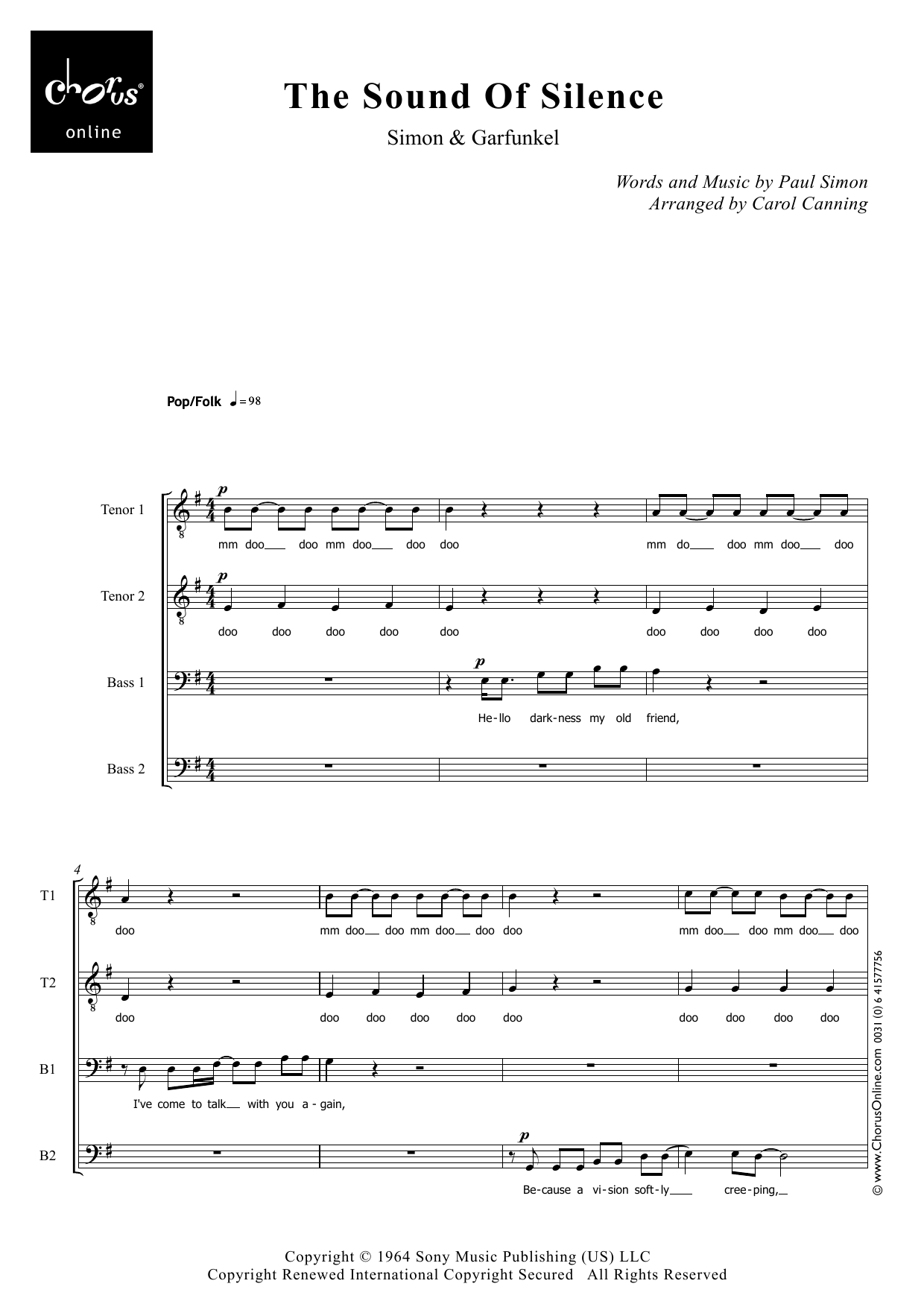
The Sound Of Silence (arr. Carol Canning): TTBB Choral Octavo

As performed by Simon Garfunkel / Arranged by Carol Canning

Item: 35-DS01208626

Digital Download
$2.99

One moment…

Description

The Sound Of Silence (arr. Carol Canning): TTBB Choral Octavo isn't in MakeMusic Cloud just yet...but it could be. Let us know you'd like to see it, and you'll help shape what comes next. In the meantime, start a free trial and dive into thousands of interactive titles your students can play along with today.

Sample Audio
No sample audio found.
Sample Video
Additional Details
Publisher: Hal Leonard
Page Count: 7
SKU: 35-DS01208626

More about this title

About the Artist: Simon Garfunkel

Simon and Garfunkel emerged from the folk revival of the 1960s to become one of the most influential vocal duos in American popular music. Their carefully crafted harmonies and introspective songwriting brought literary depth to the pop charts, influencing generations of singers and arrangers to follow. Their catalog remains a staple in choral programs because the melodies are memorable, the lyrics are substantive, and the harmonic structures reward ensemble singing.

Why we love this

Carol Canning's TTBB setting preserves the song's haunting simplicity while giving male voices genuine independence. The arrangement respects the original's power to resonate with audiences, yet the four-part texture creates new opportunities for blend work and dynamic control that make rehearsal time feel focused and purposeful.

What to expect

Introspective and meditative, the piece invites stillness without sacrificing engagement. The text cuts to something universal about communication and disconnection, and the a cappella setting amplifies that vulnerability, leaving nowhere for the singers to hide and no accompaniment to lean on.

Who it's for

This arrangement works for male choirs at intermediate and advanced levels who want to tackle a song with cultural weight and emotional nuance. Directors seeking repertoire that resonates with audiences beyond traditional choral circles will find this piece opens conversations about what belongs in a concert program.

How to get the most out of it

  • Treat silence as a character in the piece. The spaces between phrases deserve as much attention as the sung passages; encourage singers to breathe together and listen to the resonance fading.
  • Balance the top two voices against the lower parts; the tenors should never overshadow the baritones' foundational work, even when the melody sits in their range.
  • Approach this as an intimate conversation rather than a performance event. A cappella singing demands that each section lock into the harmonic center without apology, so invest rehearsal time in sustained unison passages first.

How to use it

Position this as a standalone moment between more energetic works to give your audience permission to exhale and reflect. A concert themed around contemporary songwriting or social commentary finds natural resonance here; alternatively, it pairs effectively with other folk-influenced pop standards in a program exploring how popular songs become art songs.

Skills your students will build

  • A cappella intonation and collective tuning
  • Harmonic independence within four-part texture
  • Phrase shaping without instrumental support
  • Dynamic control in intimate settings
  • Text expression and emotional vulnerability in performance

You May Also Like