The Sound Of Silence (arr. Carol Canning) Sheet Music Preview

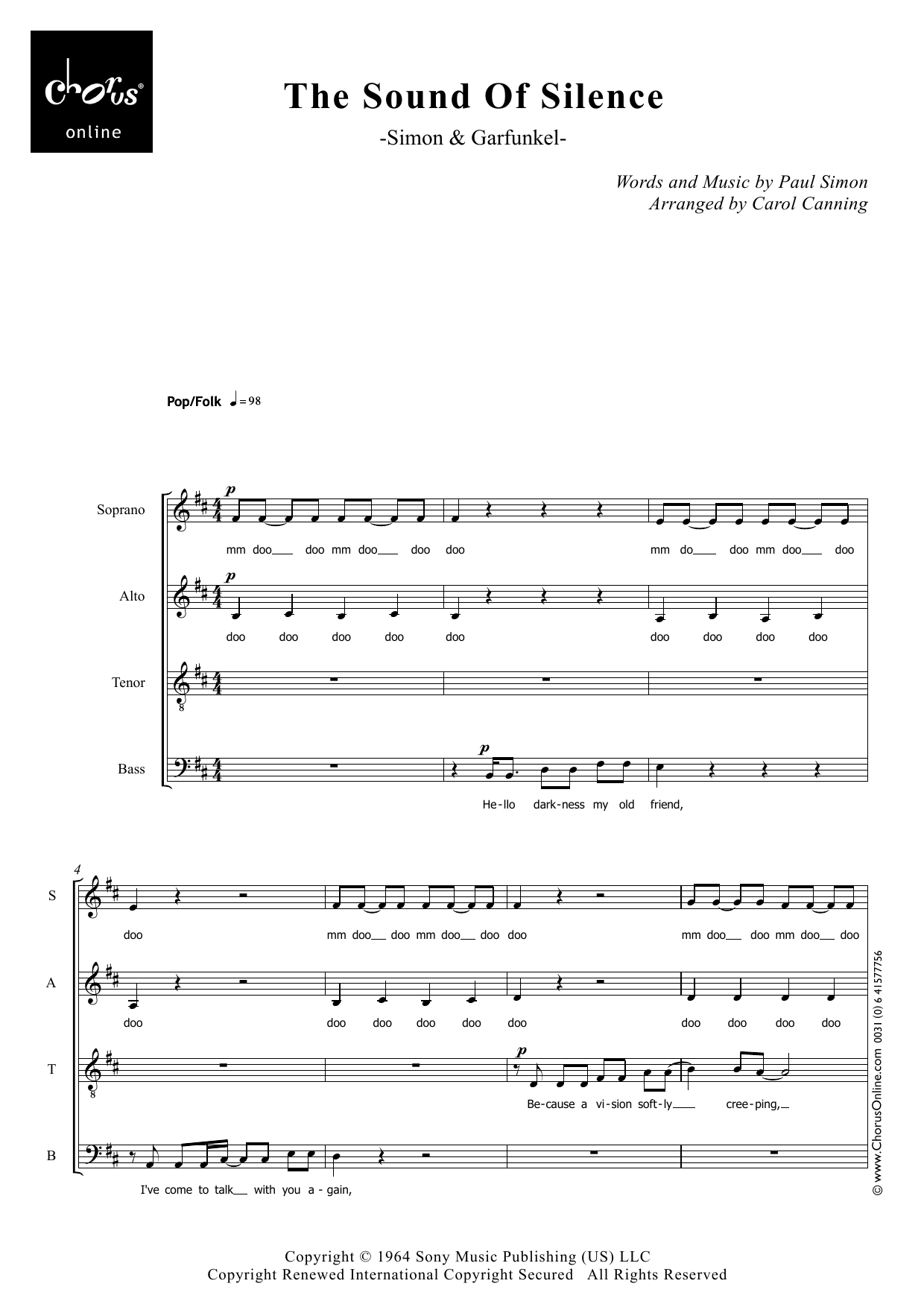
The Sound Of Silence (arr. Carol Canning): SATB Choral Octavo

As performed by Simon Garfunkel / Arranged by Carol Canning

Item: 35-DS01208622

Digital Download
$2.99

One moment…

Description

The Sound Of Silence (arr. Carol Canning): SATB Choral Octavo isn't in MakeMusic Cloud just yet...but it could be. Let us know you'd like to see it, and you'll help shape what comes next. In the meantime, start a free trial and dive into thousands of interactive titles your students can play along with today.

Sample Audio
No sample audio found.
Sample Video
Additional Details
Publisher: Hal Leonard
Page Count: 7
SKU: 35-DS01208622

More about this title

About the Artist: Simon Garfunkel

Simon and Garfunkel emerged from the folk-rock landscape of the 1960s to become one of the most influential vocal duos in popular music. Paul Simon's intricate songwriting and Art Garfunkel's soaring tenor defined an era, creating compositions that balanced literary sophistication with immediate emotional resonance. Their work remains a staple in choral arrangements precisely because their melodies sit naturally in the voice and their lyrics reward careful interpretation.

Their 1964 debut album introduced "The Sound of Silence," which grew from a folk ballad into a watershed moment when it was released as a rock single in 1965. The song's meditation on urban isolation and failed communication struck a chord that hasn't diminished in nearly 60 years. For choral programs, their catalog offers songs that challenge singers to move beyond standard repertoire while remaining accessible to student musicians and audiences alike.

Why we love this

Carol Canning's arrangement captures the introspective beauty of this iconic composition while preserving the vulnerability that makes it so powerful. The SATB voicing allows you to feature strong individual voices while maintaining the song's essential simplicity, and choosing it signals to audiences that contemporary music belongs on concert programs alongside traditional work.

What to expect

The arrangement preserves the original's haunting quality, creating moments where harmony feels like it's emerging from silence rather than dominating it. Singing this piece leaves you suspended in reflection, caught between the urge to communicate and the barriers that prevent it.

Who it's for

Choirs seeking contemporary repertoire that engages audiences without sacrificing musical substance will find solid ground here. This arrangement suits intermediate to advanced high school choirs and collegiate groups comfortable with popular song styling and capable of sustaining legit vocal technique across a pop idiom.

How to get the most out of it

  • Shape each phrase with the text in mind. The quiet, almost confessional tone demands control and focus rather than volume; your singers should feel the weight of silence within the music itself.
  • Balance soprano and alto lines against tenor and bass so the harmony enriches rather than obscures the melody. This arrangement works best when every voice contributes to the overall transparency.
  • Consider the rhythm section carefully. While marked a cappella, having a pianist underscore rehearsals helps singers internalize the harmonic progression before you pull the accompaniment away.
  • Build emotional stakes gradually across the piece. Start with restraint in the early sections, allowing the final statements to land with earned intensity.

How to use it

Position this as a centerpiece for concerts exploring themes of connection, isolation, or modern life. It pairs thoughtfully with both contemporary songwriting and selected classical work, offering choirs a chance to demonstrate range while giving audiences a moment of genuine stillness before intermission.

Skills your students will build

  • Phrasing across a pop-song melody without losing legit vocal production
  • Balancing SATB texture where harmony serves rather than dominates
  • Interpreting text with specificity and emotional authenticity
  • Managing harmonic density in sparse, a cappella voicing
  • Understanding how to arrange familiar material for voices

You May Also Like