
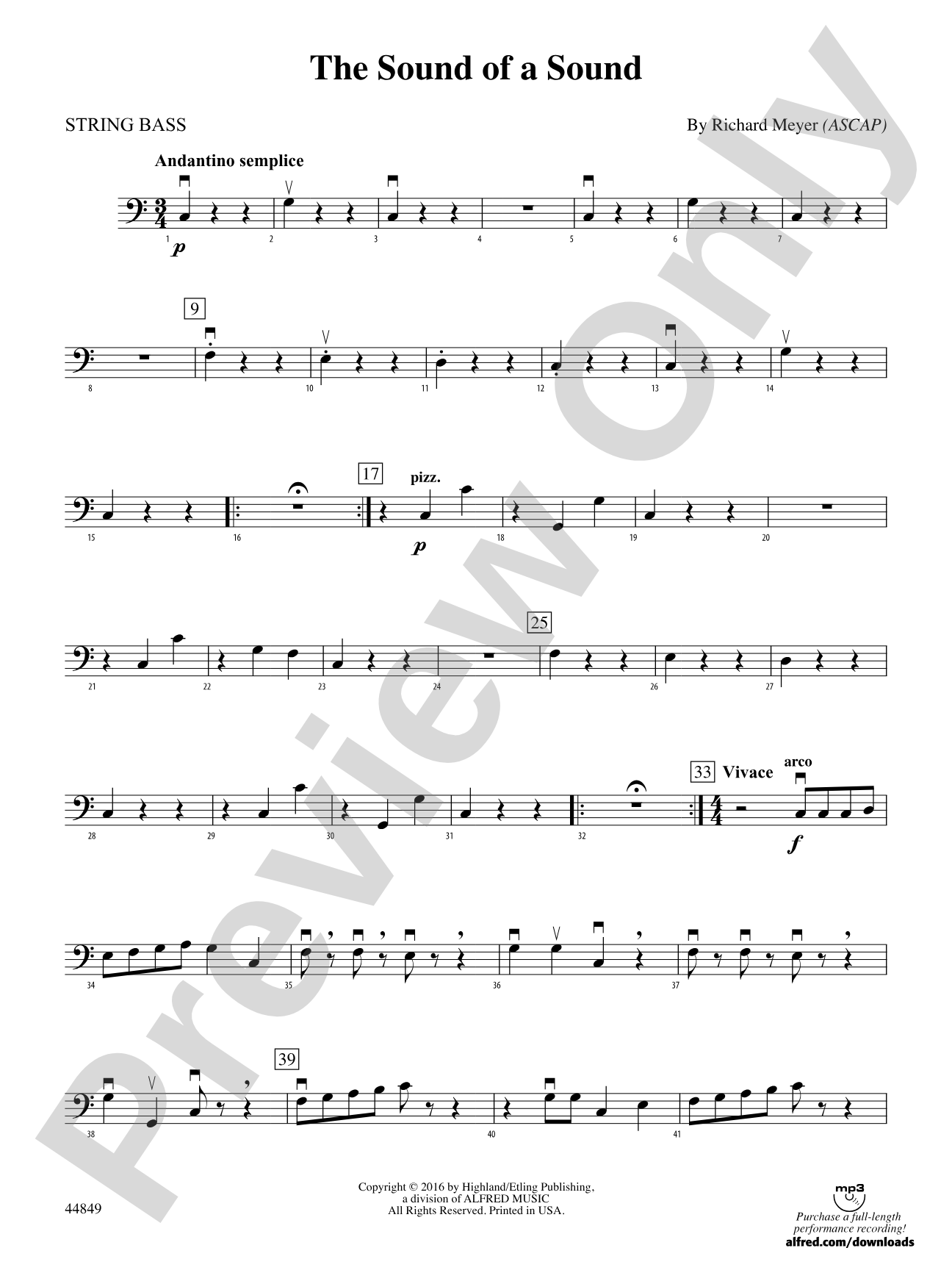

The Sound of a Sound: String Bass
By Richard Meyer
Grade: 3
Item: 00-PC-0017366_SB
$5.99
Pickup currently not available
Description
Put all those "extra-curricular" sounds your students like to make on their instruments to good use in this fun and entertaining novelty selection. Your audience will laugh out loud as each section takes a turn adding an unusual sound to a simple dance in 3/4 time. As the piece progresses the counting gets more and more challenging, keeping all of your students on their toes. There's even a part for a solo "vocalist" to show off their screaming and gargling skills! (3:45)


Don't just read it, hear it, play along with it, and watch your students grow with it. In MakeMusic Cloud, The Sound of a Sound: String Bass comes alive with professional accompaniment, adjustable tempo, and built-in practice tools that turn solo practice into real progress.
Open in the Player
Jump straight in and assign it today.
Start Your Free Trial
Open this title and explore the full library in minutes.
Sample Audio
1
Audio File
--:--
0:00
0:00
Sample Video
Additional Details
Series:
Highland/Etling String Orchestra
Publisher:
Alfred Music
Page Count:
126
SKU:
00-PC-0017366_SB
More about this title
About the Composer: Richard Meyer

Richard Meyer spent 35 years teaching strings in public schools, building the Oak Avenue Intermediate School orchestra from 29 students to 200 during his 22 years directing there. He also shaped the Pasadena Youth Symphony Orchestra for 16 years, taking the ensemble to performances across the United States, Europe, and Australia.
Beyond the classroom, Meyer has established himself as a prolific composer with nearly 200 published works and arrangements. He served as string editor for Alfred Publishing Company for 16 years and co-authored widely used method materials including the String Explorer Series and Sight-read It for Strings. His "Giving Bach" program, launched in 2009, uses interactive concerts to serve special needs and underserved student populations throughout Southern California and has earned national recognition for its innovative approach.
Why we love this
Meyer writes pieces that genuinely engage young musicians while building real musicianship. Here he turns the sounds students naturally make into the fabric of the piece itself, which validates their creativity while keeping them musically engaged throughout a surprisingly complex rhythmic journey.
What to expect
A playful romp where the familiar shapes of a simple dance gradually become more intricate and surprising. As each section contributes its own unusual sound (squeaks, scrapes, whistles, and more), the piece builds an infectious energy that makes the audience lean in and smile, all while your students stay sharp through increasingly tricky metric challenges.
Who it's for
String orchestras in grades 3 and up, especially those ready to explore music that celebrates creative sound-making without sacrificing solid musicianship. Directors looking for a high-engagement piece that works equally well in concert or educational settings will find this particularly valuable.
How to get the most out of it
- Assign section leaders to model each sound crisply; since the audience will hear them featured, clarity in the demonstration matters as much as the musicality of the melody.
- Work the rhythmic shifts in isolation during rehearsal, particularly as the counting becomes less predictable. Have each section drill their entrances independently before layering them together.
- Choose your solo vocalist early and give them rehearsal time to practice their screaming and gargling sounds. They should be confident enough to commit fully to the humor without self-consciousness.
- Run the piece at performance tempo regularly so students feel the steady 3/4 dance pulse underneath the sound effects. The foundation has to be rock solid for the novelty elements to land.
How to use it
This works wonderfully as a concert opener or closer, giving audiences an immediate sense of your program's range and personality. It also lands well in educational concerts or school assemblies where you want to highlight both the humor and the musicianship of your ensemble.
Skills your students will build
- Rhythmic precision in shifting meter and increasingly complex counting patterns
- Extended techniques and unconventional sound production on strings
- Section balance and awareness when layering multiple sounds simultaneously
- Entrances and releases with clear articulation
- Maintaining steady pulse in the 3/4 dance while managing rhythmic complexity above it