The Sound and the Fury: E-flat Baritone Saxophone Sheet Music Preview

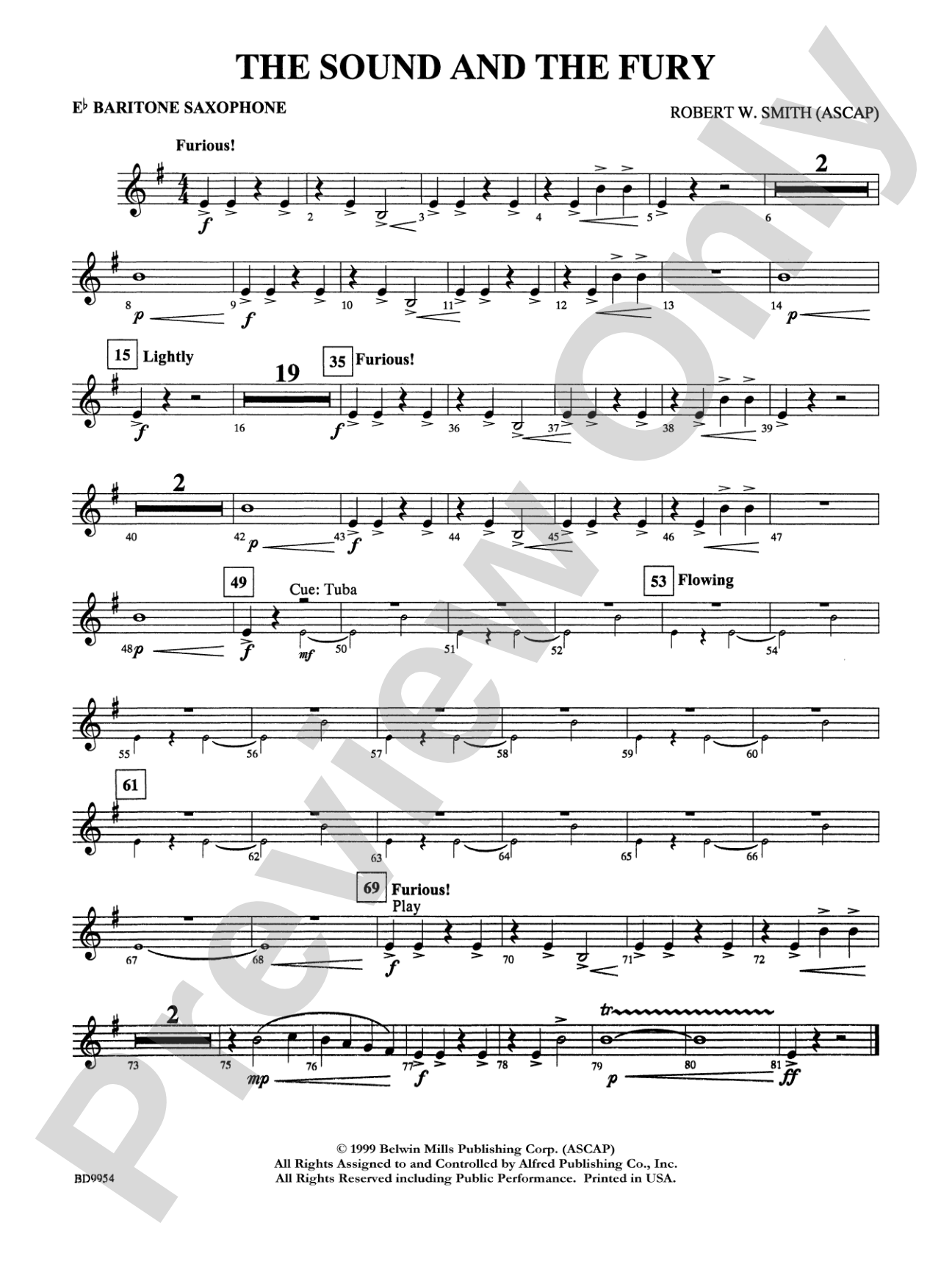
The Sound and the Fury: E-flat Baritone Saxophone

By Robert W. Smith

Grade: 1 (Very Easy)

Item: 00-PC-0002110_BTX

Digital Download
$3.00
Description
The Sound and the Fury was inspired by the literary work of the same name by William Faulkner, known for his epic portrayal of the conflicts between the old and new South. Opening with a vibrant drama of punctuating thrusts in strings, winds, and percussion, the mood only shifts when we move to a lyrical and ambient section of contrasting sounds. Powerful strokes return, moving to a dramatic conclusion. A superior choice for concert or contest with guaranteed stunning audience appeal. (1:58)

Don't just read it, hear it, play along with it, and watch your students grow with it. In MakeMusic Cloud, The Sound and the Fury: E-flat Baritone Saxophone comes alive with professional accompaniment, adjustable tempo, and built-in practice tools that turn solo practice into real progress.

Sample Audio
No sample audio found.
Sample Video
Additional Details
Series: Belwin Beginning Band
Publisher: Alfred Music
Page Count: 180
SKU: 00-PC-0002110_BTX

More about this title

About the Composer: Robert W. Smith

Robert W. Smith

Robert W. Smith stands among America's most recorded and performed composers for concert band and orchestra, with over 400 published works spanning five decades. His education at Troy State University and the University of Miami shaped a compositional voice equally at home with developing ensembles and professional orchestras, leading to performances across North America, Europe, Asia, and Australia.

Beyond the concert hall, Smith's music has reached millions through television broadcasts, Olympic ceremonies, and iconic American events from the Macy's Thanksgiving Day Parade to Opening Day at Dodger Stadium. His orchestral works, particularly his symphonies The Divine Comedy and The Odyssey, have become repertoire staples, while his compositions for younger bands like The Tempest define accessible excellence in music education.

Why we love this

Smith captures the turbulent emotional arc of Faulkner's novel without requiring your band to navigate technical complexity. The opening percussion thrusts and wind punctuation are immediately engaging for developing players, while the contrasting lyrical section offers genuine musical substance that audiences recognize as serious composition, not pedagogy dressed up as concert repertoire.

What to expect

The piece opens with visceral energy, percussion and winds cutting sharp lines against each other like conflict itself made audible. The shift into lyrical ambience brings genuine repose, almost meditative, before the dramatic return reasserts control and pushes toward an inevitable, powerful conclusion.

Who it's for

First-year and developing concert bands seeking substantial, musically coherent repertoire that works equally well in concert and contest settings. Conductors value the programmatic structure because it gives young players a narrative anchor while managing technical demands.

How to get the most out of it

  • Balance the opening dramatic gestures so the punctuating thrusts in winds and percussion define the soundscape without overwhelming the ensemble's foundation.
  • Shape the lyrical section with sustained warmth; treat it as genuine contrast rather than a tempo break, letting the ambient quality breathe naturally.
  • Prepare the return to powerful strokes as a calculated acceleration, building momentum through the final dramatic section without rushing.

How to use it

Open a concert with this to establish energy and focus audience attention immediately, or place it midprogram as a dramatic pivot point between lighter and weightier works. The two-minute runtime makes it an ideal centerpiece for a contest program where impact and clear form matter.

Skills your students will build

  • Responding to dynamic shifts and textural changes with ensemble precision
  • Maintaining rhythmic clarity in punctuated attacks across multiple instrument families
  • Sustaining tone quality and intonation during lyrical, exposed passages
  • Understanding programmatic structure and how musical gestures can convey narrative tension

You May Also Like