
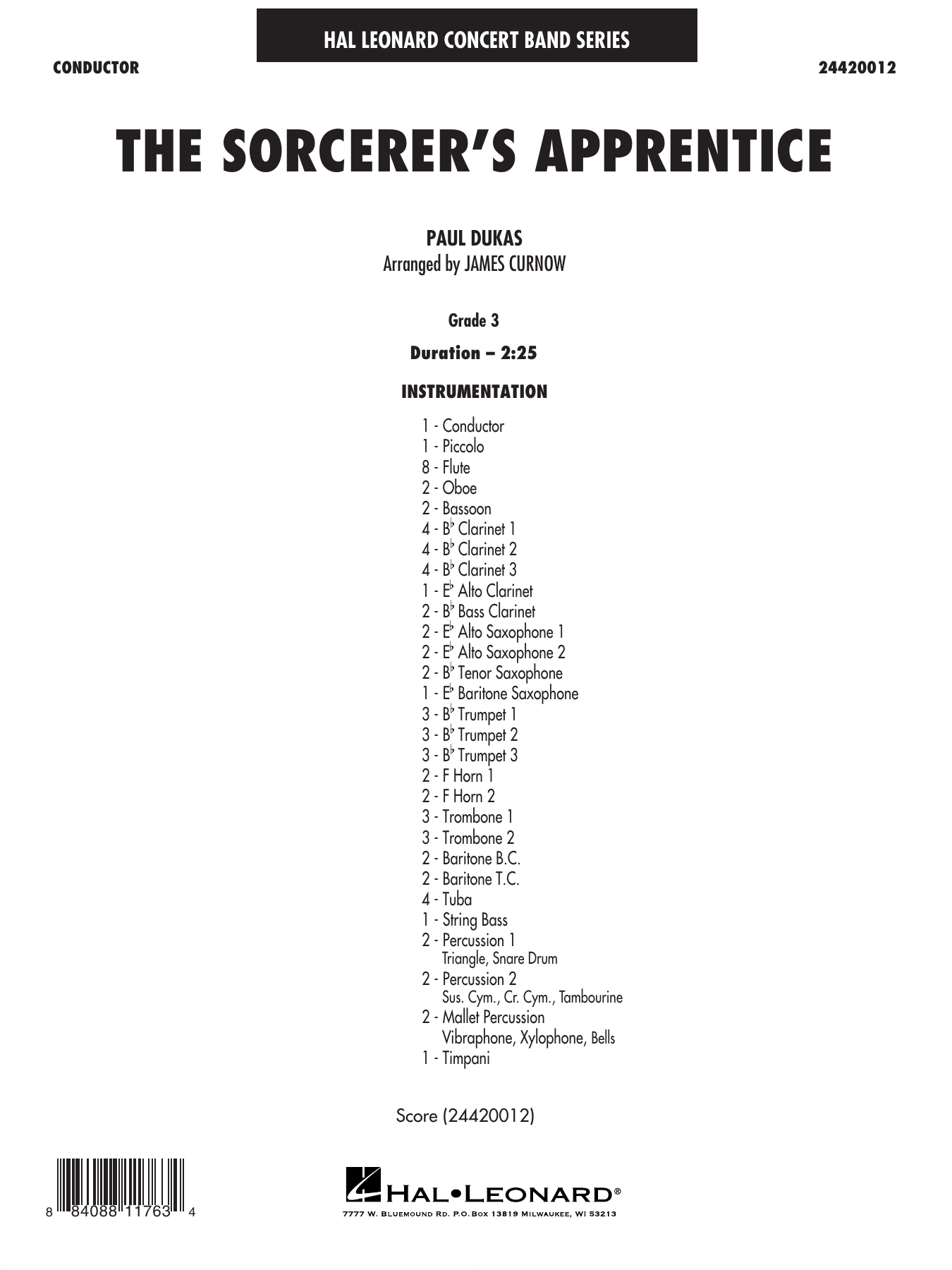

The Sorcerer's Apprentice (arr. James Curnow): Concert Band Conductor Score & Parts
By Paul Dukas / Arranged by James Curnow
Grade: 3
Item: 35-PK01911154
$70.00
Pickup currently not available
Buy Extra Parts (Digital PDF Download)
Parts Added to Cart!
Description
Here's an excellent, playable arrangement of the symphonic tone poem made famous in the motion picture 'Fantasia.' Fine programming for developing bands.


Discover MakeMusic Cloud: thousands of interactive titles your students can play along with today.
Sample Audio
No sample audio found.
Sample Video
No sample videos found.
Additional Details
Publisher:
Hal Leonard
SKU:
35-PK01911154
More about this title
About the Composer: Paul Dukas
Paul Dukas (1865–1935) composed relatively few works during his lifetime, but those he did write earned him a permanent place in the concert repertoire. A French composer of meticulous craftsmanship, Dukas was deeply influenced by the symphonic traditions of Franck and Saint-Saëns, yet he developed his own distinct harmonic language rooted in late-Romantic idiom. His orchestration was legendary for its clarity and brilliance, qualities that make his music particularly rewarding for student ensembles to perform.
Dukas served as director of the Paris Conservatoire and was a demanding teacher who expected precision and artistry in equal measure. Though he wrote an opera, ballet, and chamber works, "The Sorcerer's Apprentice" became his most celebrated composition, especially after its appearance in Disney's "Fantasia." For music educators, Dukas represents the gold standard of orchestral writing: every line matters, every color serves the larger design, and there are no shortcuts.
Why we love this
Curnow's arrangement captures the brilliance of Dukas's original orchestration while making it accessible to developing bands. The pacing of musical ideas and the clear hierarchy of parts allow students at this level to experience genuine symphonic writing without overwhelming sectional difficulty. Programming this piece signals to students that they're ready for legitimate concert music, not just band transcriptions.
What to expect
Buoyant energy mixed with creeping menace. The opening sparkles with magical mischief before escalating into musical pandemonium, complete with swirling crescendos and chaotic orchestration that mirrors the tale perfectly. The famous climax hits hard and resolves with satisfying finality.
Who it's for
Grade 3 concert bands with solid fundamentals in section balance and rhythmic accuracy will thrive with this arrangement. The piece works equally well for intermediate ensembles seeking repertoire that sounds polished in performance and teaches genuine conducting concepts.
How to get the most out of it
- Establish the relentless 8th-note pulse in the opening before adding any textural layers. This foundation keeps the magical chaos from becoming muddy as complexity builds.
- Balance the melodic line through multiple sections as it passes between instruments. What feels like the 'tune' shifts frequently, and clarity depends on each section understanding its moment to project.
- Shape the dynamic swells without losing rhythmic precision. The music's power comes from forward momentum, not from dragging through crescendos.
- Let the climactic moments breathe slightly. Dukas writes tremendous drama here, and it deserves room to land rather than rushing toward the next phrase.
How to use it
Schedule this for a Halloween concert or October community performance, where the thematic connection gives context to the musical drama. It also serves beautifully on spring concert programs as a palate-cleansing showpiece between heavier classical works or as a program finale that leaves audiences smiling.
Skills your students will build
- Maintaining rhythmic precision across changing metric subdivisions
- Balancing melodic lines as they migrate through the ensemble
- Executing controlled dynamic swells without losing tempo
- Blending rapid passagework between sections
- Interpreting program music through orchestral color and phrasing