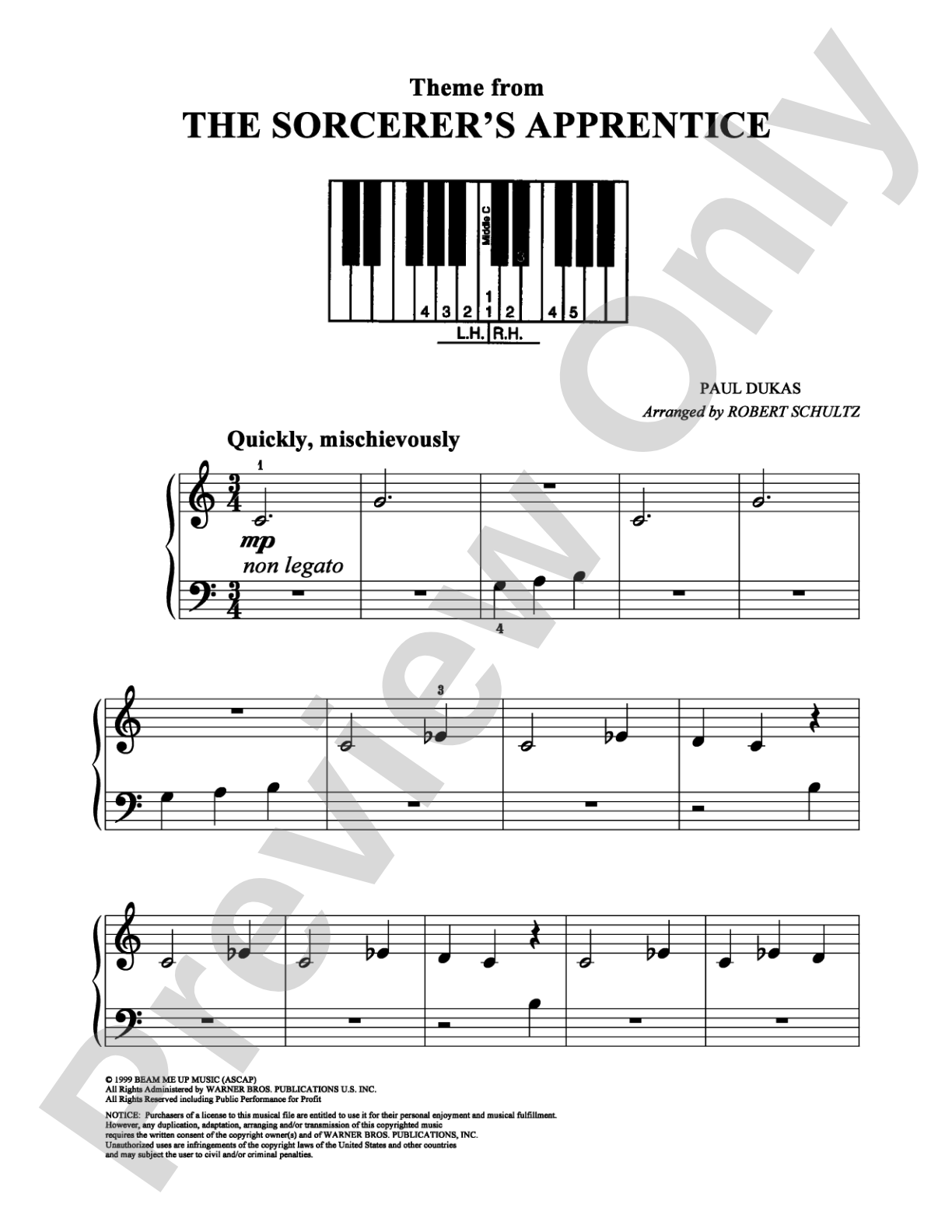
The Sorcerer's Apprentice: Easy Piano Digital Sheet Music

The Sorcerer's Apprentice: Easy Piano Digital Sheet Music

Paul Dukas

Item: 00-PS-0009721

Digital Download
$3.99
Description

The Sorcerer's Apprentice: Easy Piano Digital Sheet Music isn't in MakeMusic Cloud just yet...but it could be. Let us know you'd like to see it, and you'll help shape what comes next. In the meantime, start a free trial and dive into thousands of interactive titles your students can play along with today.

Sample Audio
No sample audio found.
Sample Video
Additional Details
SKU: 00-PS-0009721

More about this title

About the Creator: Paul Dukas

Paul Dukas composed The Sorcerer's Apprentice in 1897 as a symphonic scherzo based on Goethe's 1797 ballad. The work became one of classical music's most recognizable pieces, entering popular culture through Disney's Fantasia and remaining a concert staple for over a century. Dukas was a French composer and teacher whose orchestral works showcased brilliant orchestration and narrative clarity, qualities that translate beautifully to this keyboard arrangement.

Why we love this

This arrangement captures the mischievous energy and narrative arc of the original without overwhelming students with technical demands. Young pianists get to experience genuine orchestral drama in a form they can actually master, which makes them feel like accomplished musicians rather than frustrated ones.

What to expect

Playful magic gone delightfully wrong. The opening draws you into a world of careful enchantment, then the floor drops out from under you as things spiral into gleeful chaos. By the end, you're breathless and laughing, having survived a musical adventure.

Who it's for

Students in their early-to-intermediate years who want to tackle a recognized classical showpiece without years of technical preparation. It works equally well for young pianists preparing for a recital and for teachers seeking repertoire that builds confidence through recognizable, engaging material.

How to get the most out of it

  • Establish a steady, almost mechanical pulse in the opening sections to set the tone of controlled magic before chaos erupts. This foundation makes the accelerations later feel genuinely out of control.
  • Shape the dynamic contrasts with intention. The quiet, mysterious passages need real restraint so that the busier sections read as genuine crescendos rather than just faster playing.
  • Let the repeated figures breathe slightly rather than becoming metronomic. A tiny bit of give-and-take in the tempo during the frantic sections actually makes the panic feel more organic.

How to use it

Program this alongside other character pieces or program music in a young artist recital to show range beyond classical sonatas and etudes. It also works as a memorable finale to a winter or spring showcase where audiences appreciate both the familiar melody and the creative interpretation.

Skills your students will build

  • Hand independence and coordination between melody and accompaniment patterns
  • Dynamic control and contrast within a single piece
  • Tempo control and acceleration techniques
  • Reading and executing rapid scalar and arpeggiated passages at moderate speeds
  • Musical storytelling through selective pedaling and phrasing

You May Also Like