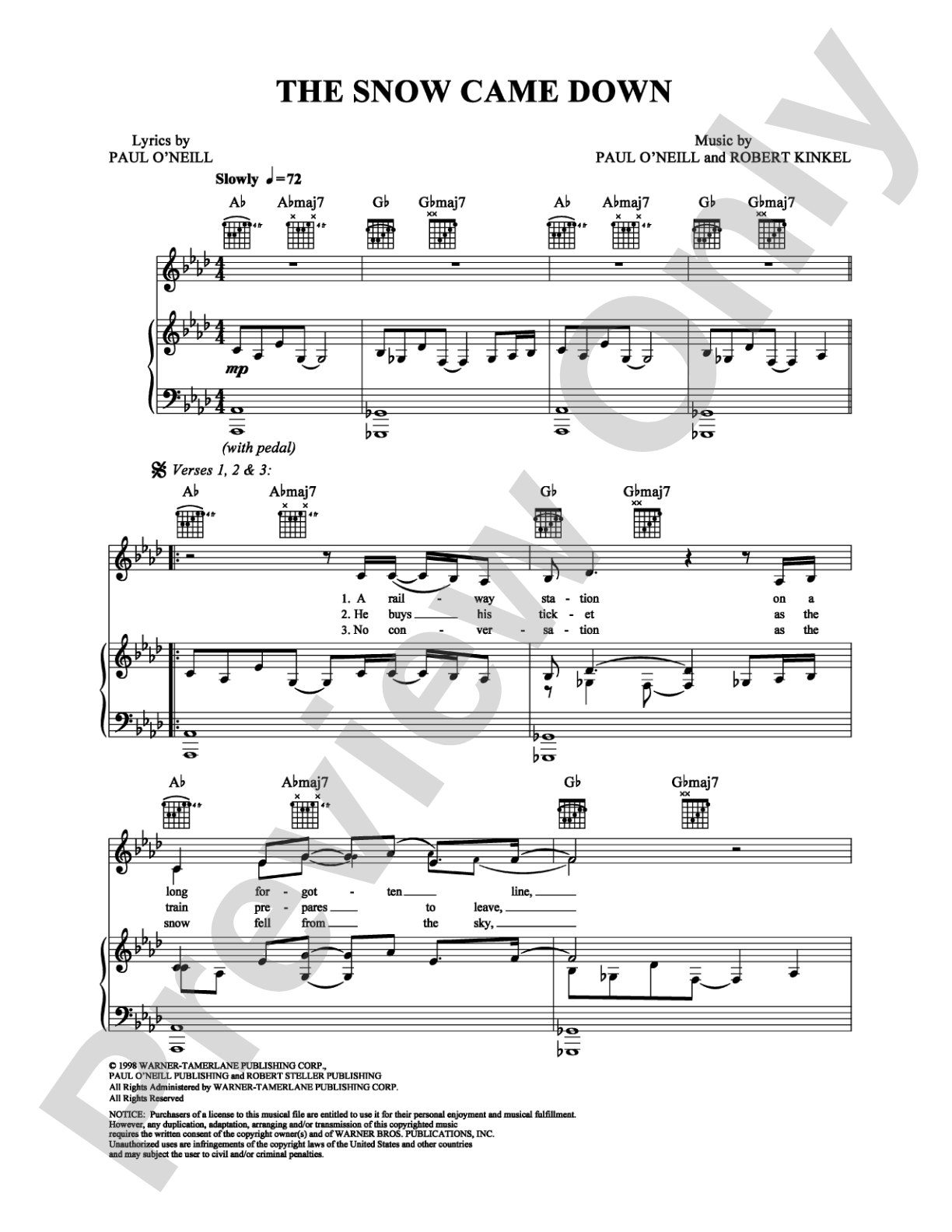
The Snow Came Down: Piano/Vocal/Chords Digital Sheet Music

The Snow Came Down: Piano/Vocal/Chords Digital Sheet Music

Paul O'Neill, Trans-Siberian Orchestra, Robert Kinkel

Item: 00-PS-0001482

Digital Download
$3.99
Description

The Snow Came Down: Piano/Vocal/Chords Digital Sheet Music isn't in MakeMusic Cloud just yet...but it could be. Let us know you'd like to see it, and you'll help shape what comes next. In the meantime, start a free trial and dive into thousands of interactive titles your students can play along with today.

Sample Audio
No sample audio found.
Sample Video
Additional Details
SKU: 00-PS-0001482

More about this title

About the Artist: Trans-Siberian Orchestra

Trans-Siberian Orchestra emerged in the 1990s as a theatrical rock ensemble known for blending classical instrumentation with progressive rock arrangements. The group built its reputation on elaborate concept albums and live spectacles that integrate orchestral strings, choir, and rock instrumentation into a cohesive sonic experience. Their work spans original compositions and reinterpretations of classical pieces, often anchored by holiday and seasonal themes that appeal to both rock and classical audiences.

In the classroom and rehearsal studio, TSO's catalog offers a bridge between genres. Students encounter arrangements that demand precision in the interaction between rock rhythm sections and orchestral textures, making their material particularly valuable for groups exploring how contemporary ensemble writing can honor both classical and popular traditions.

Why we love this

TSO's approach to seasonal material avoids treacly sentimentality in favor of architectural arrangements that give singers and accompanists genuine work to do. The rock sensibility keeps the material engaging for contemporary ensembles while the harmonic language offers enough sophistication to hold singers' attention across multiple verses.

What to expect

The piece carries a cinematic quality typical of TSO's work, with atmospheric piano textures that set a reflective mood before the vocal melody enters. There's a sense of quiet wonder in the harmonic movement, supported by the rock-inflected accompaniment that prevents the material from drifting into pure ballad territory.

Who it's for

Solo pianists and singers preparing audition material, recital programming, or ensemble accompaniment work will find this piece accessible and rewarding. Choral directors might use it as a featured solo or small ensemble piece within a larger concert, and piano students comfortable with contemporary harmonic language can build confidence navigating rock-influenced accompaniment patterns.

How to get the most out of it

  • Anchor the rhythmic integrity of the accompaniment by locking the left-hand groove patterns with a metronome during initial run-throughs; the piece depends on consistent pulse support more than expressive rubato.
  • Balance the vocal line against the piano part by establishing which sections need the melody to sit forward and where the accompaniment texture should bloom, particularly in key changes or build sections.
  • Explore the emotional arc of the lyrics within the harmonic movement rather than imposing excessive interpretive choices; let the chord progression and melody contour do much of the expressive work.
  • Address any vocal register transitions smoothly by identifying where the melody sits highest and planning breath support accordingly well before the phrase ends.

How to use it

This works effectively as a solo or small ensemble feature in winter concerts, particularly when paired with instrumental selections that share TSO's orchestral rock aesthetic. The digital format allows flexible arrangement, making it suitable for informal performance contexts such as school assemblies or holiday events where a polished yet contemporary vocal selection is needed.

Skills your students will build

  • Reading chord symbols and realizing accompaniment patterns in a contemporary rock idiom
  • Sustaining a vocal line over a rhythmically independent piano part
  • Maintaining steady tempo against syncopated left-hand figures in the piano accompaniment
  • Interpreting melodic phrasing within a harmonic structure that uses extended and altered chords

You May Also Like