

The Snow Begins to Fall: SATB Choral Octavo
Words and music by Andy Beck
Item: 00-PO-0007634
$2.05
Minimum order quantity: 20 copies
Pickup currently not available
Related Items
The Snow Begins to Fall: SAB Choral Octavo |
$2.25
|
View | |
The Snow Begins to Fall: SSA Choral Octavo |
$1.75
|
View | |
The Snow Begins to Fall: 2-Part Choral Octavo |
$2.25
|
View | |
The Snow Begins to Fall: Choral SoundPax |
$15.00
|
View | |
The Snow Begins to Fall: SoundTrax Digital Audio Download |
$27.99
|
View | |
The Snow Begins to Fall: SATB Choral Octavo |
$2.05
|
View | |
The Snow Begins to Fall: SAB Choral Octavo |
$2.25
|
View | |
The Snow Begins to Fall: SSA Choral Octavo |
$1.75
|
View | |
The Snow Begins to Fall: 2-Part Choral Octavo |
$2.25
|
View | |
The Snow Begins to Fall: Choral Octavo SoundTrax CD |
$27.99
|
View | |
The Snow Begins to Fall: Choral SoundPax |
$15.00
|
View |
Description
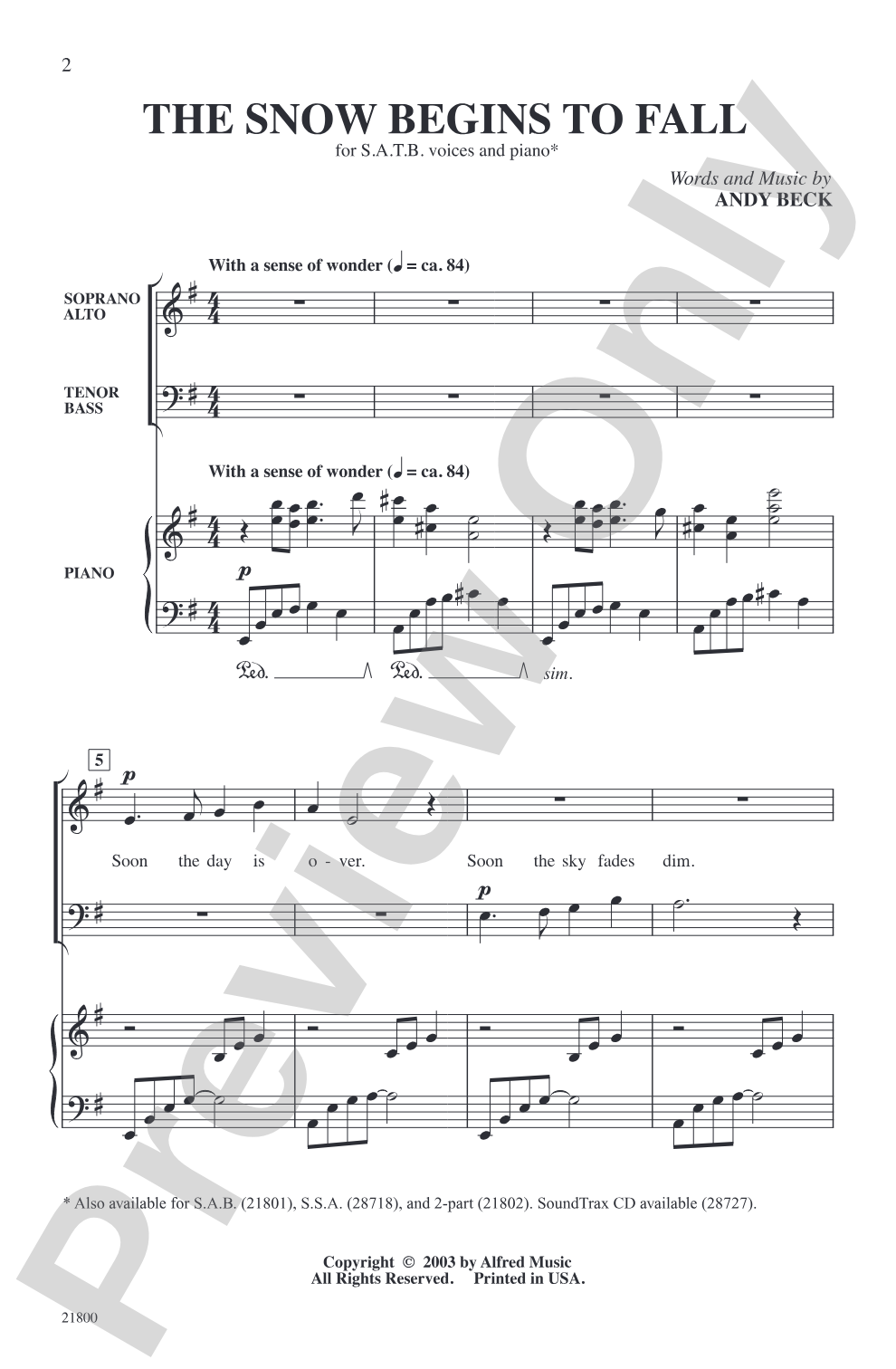
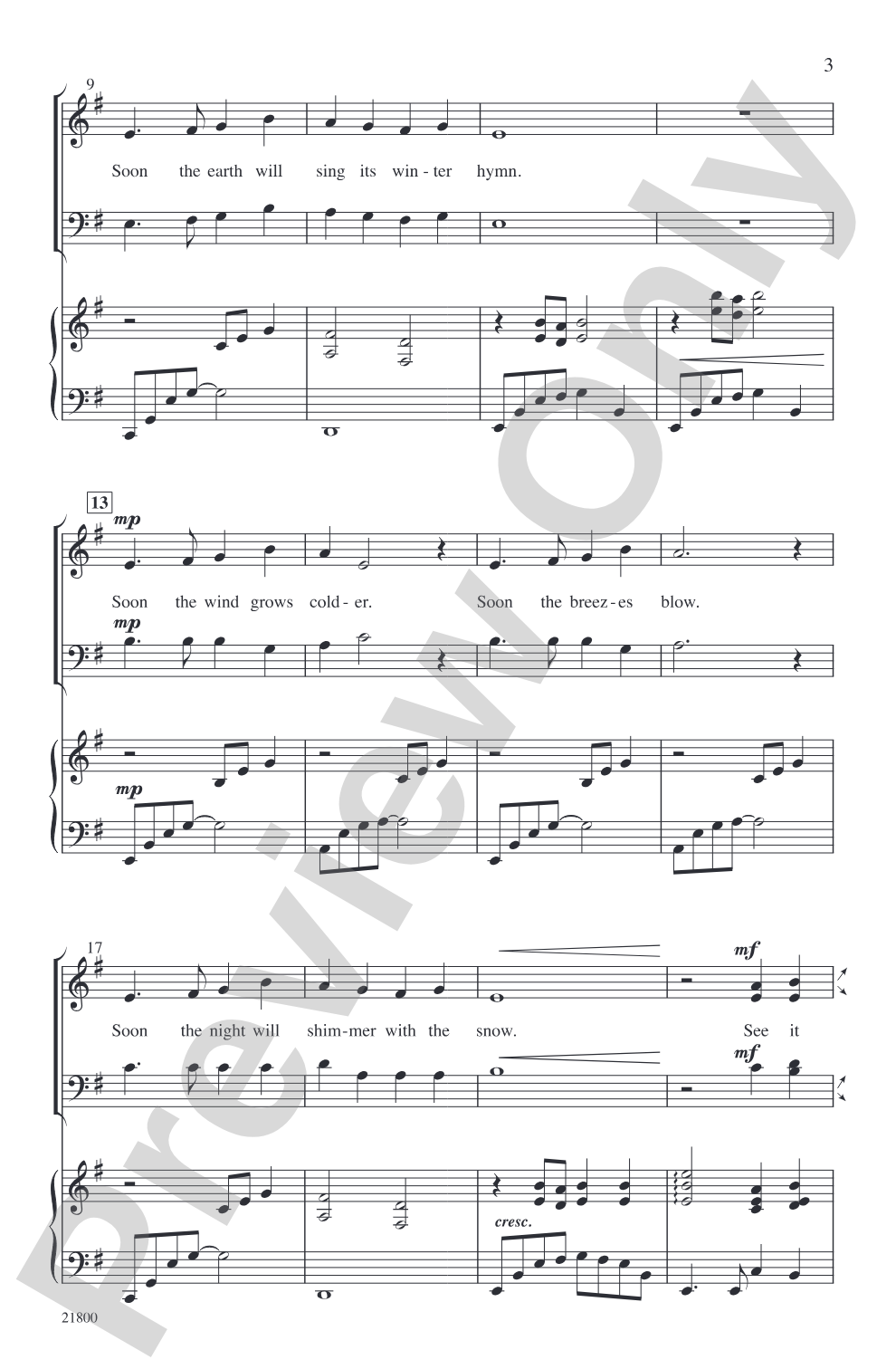
You can't miss the vivid text painting as the floating vocal parts layer one upon another in the rich sequential refrain. You can almost feel the chill of a winter wind as the haunting opening theme is combined with a chromatically descending counter melody. It's classic choral writing with a contemporary flair. Logical, comfortable singing in all four voicings makes it easy for your choir to sing a sophisticated, secular choral work this winter.


The Snow Begins to Fall: SATB Choral Octavo isn't in MakeMusic Cloud just yet...but it could be. Let us know you'd like to see it, and you'll help shape what comes next. In the meantime, start a free trial and dive into thousands of interactive titles your students can play along with today.
Request This Title
Tell us you want it.
Start Your Free Trial
Explore everything that's ready to play right now.
Sample Audio
1
Audio File
--:--
0:00
0:00
Sample Video
No sample videos found.
Additional Details
Series:
Alfred Choral Designs
Publisher:
Alfred Music
Page Count:
12
SKU:
00-PO-0007634
More about this title
About the Composer: Andy Beck

Andy Beck directs choral publications at Alfred Music and has established himself as one of the most widely performed choral composers of his generation, with more than 450 works in active repertoires across schools, churches, and concert halls worldwide. His output spans secular anthems, vocal warm-up resources, sight-singing curricula, and children's musicals, all grounded in his training at Ithaca College and Northwest Missouri State University.
Beyond his publishing work, Beck maintains an active career as a guest conductor, adjudicator, and clinician across the United States and internationally. He has served as both commissioned composer and guest conductor for honor choirs and all-state groups, particularly throughout the Southeast. A tenor himself, he performs regularly with the North Carolina Master Chorale Chamber Choir and brings decades of practical singing experience to his compositions, having worked as a studio singer since 1992.
Why we love this
Beck writes with genuine understanding of what works in rehearsal. The text painting here is sophisticated without requiring extended vocal ranges or rhythmic complexity, which means your singers can focus on the artistry rather than wrestling with the notes. Winter programming often demands accessibility without sacrifice, and this piece delivers both.
What to expect
The opening evokes winter's quiet arrival with a haunting quality that feels almost ethereal; as voices enter in sequence, the texture builds into something richer and more substantial without losing that sense of cold air moving around the singers. The chromatic descent gives the piece an introspective, contemporary edge that distinguishes it from traditional holiday fare.
Who it's for
This octavo works for developing and accomplished choirs seeking substantial seasonal repertoire that avoids clichéd winter programming. It suits ensembles with secure SATB balance and singers who have moved beyond basic music reading but may not yet be ready for advanced chromatic harmony and complex text painting without guidance.
How to get the most out of it
- Shape the chromatically descending counter melody with a clear sense of direction; resist the temptation to let it fall flat or lag behind the main melodic line.
- Balance the layered vocal parts carefully during the sequential refrain by asking the section that enters first to pull back slightly as new voices stack on top.
- Emphasize the text painting through dynamic contrast between the haunting opening and the richer refrain material; these moments are where the piece's contemporary sensibility shines.
- Use the recorded accompaniment in early rehearsals to establish pitch centers clearly, particularly through the chromatic passages where intonation requires extra attention.
How to use it
Place this in a winter concert as a sophisticated standalone piece that can anchor a secular set or bridge between more traditional and contemporary choral works. Its 12-page length makes it substantial enough to justify programming but compact enough to pair easily with contrasting repertoire.
Skills your students will build
- Text painting through dynamic shaping and voice balance
- Singing chromatic lines with secure intonation
- Entering at appropriate dynamic levels within layered vocal textures
- Reading SATB voicings with comfort across an extended passage