
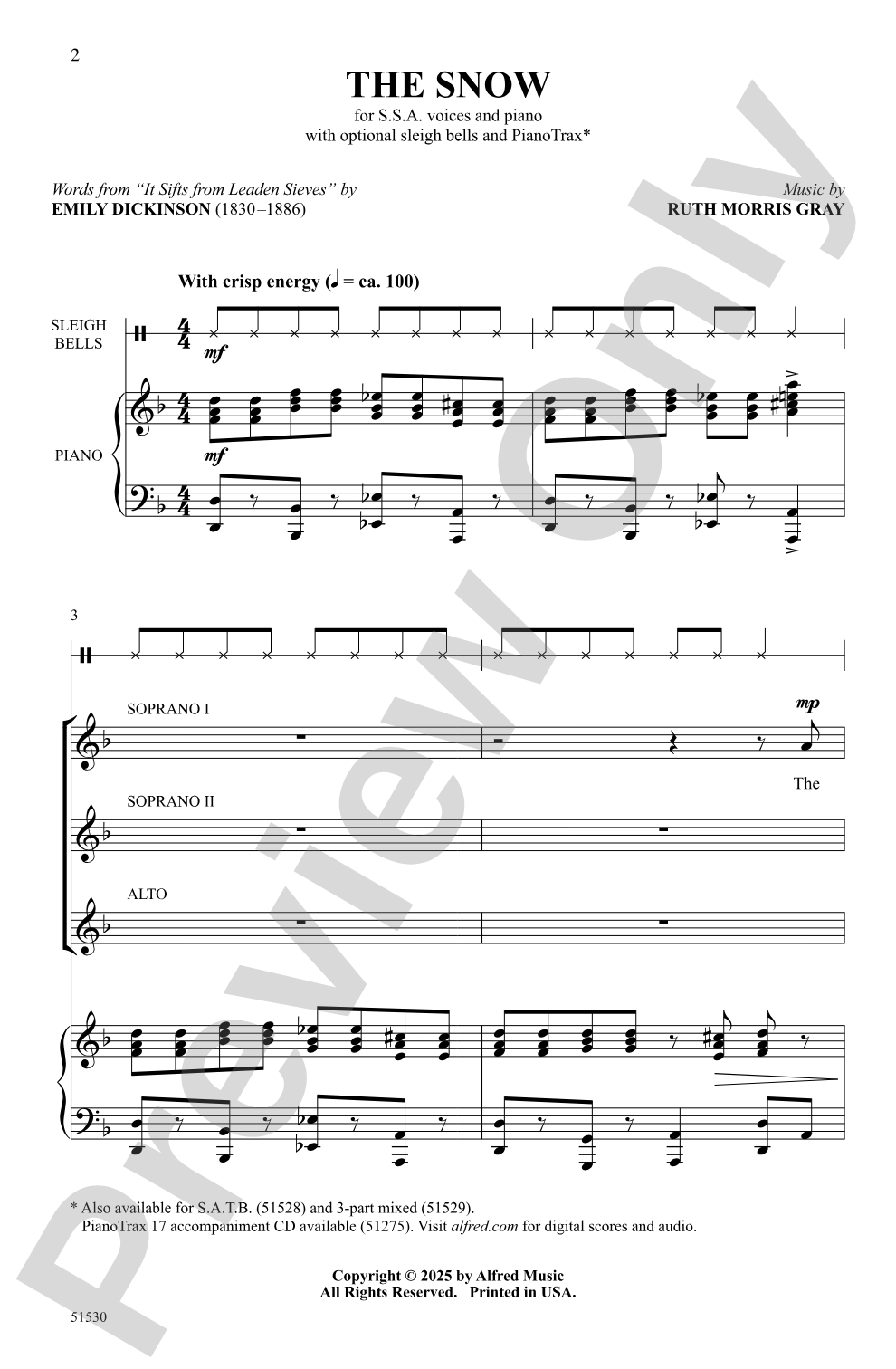

The Snow: SSA Choral Octavo
Words by Emily Dickinson, music by Ruth Morris Gray
Item: 00-PO-0007508
$2.30
Minimum order quantity: 20 copies
Pickup currently not available
Description
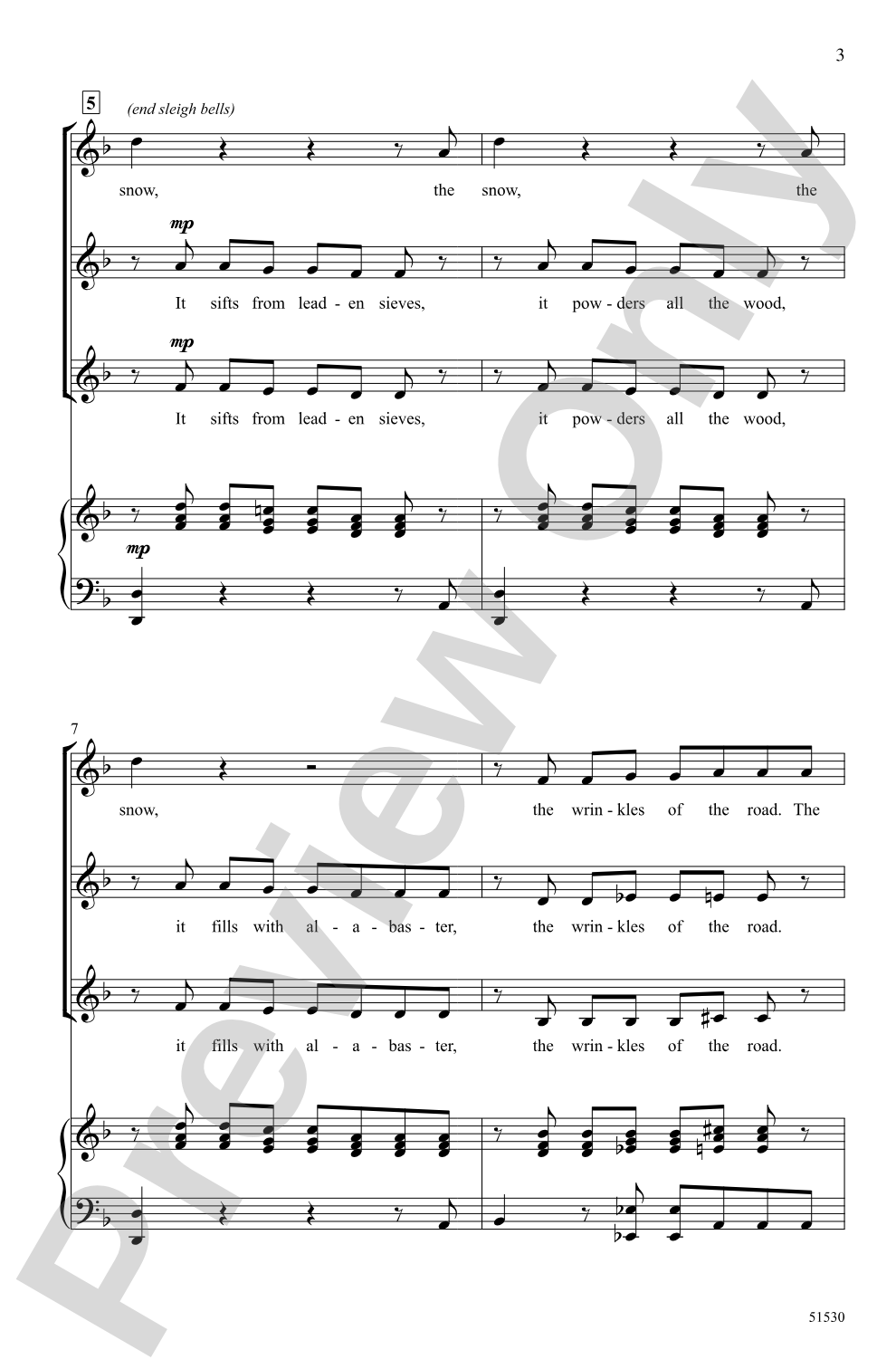
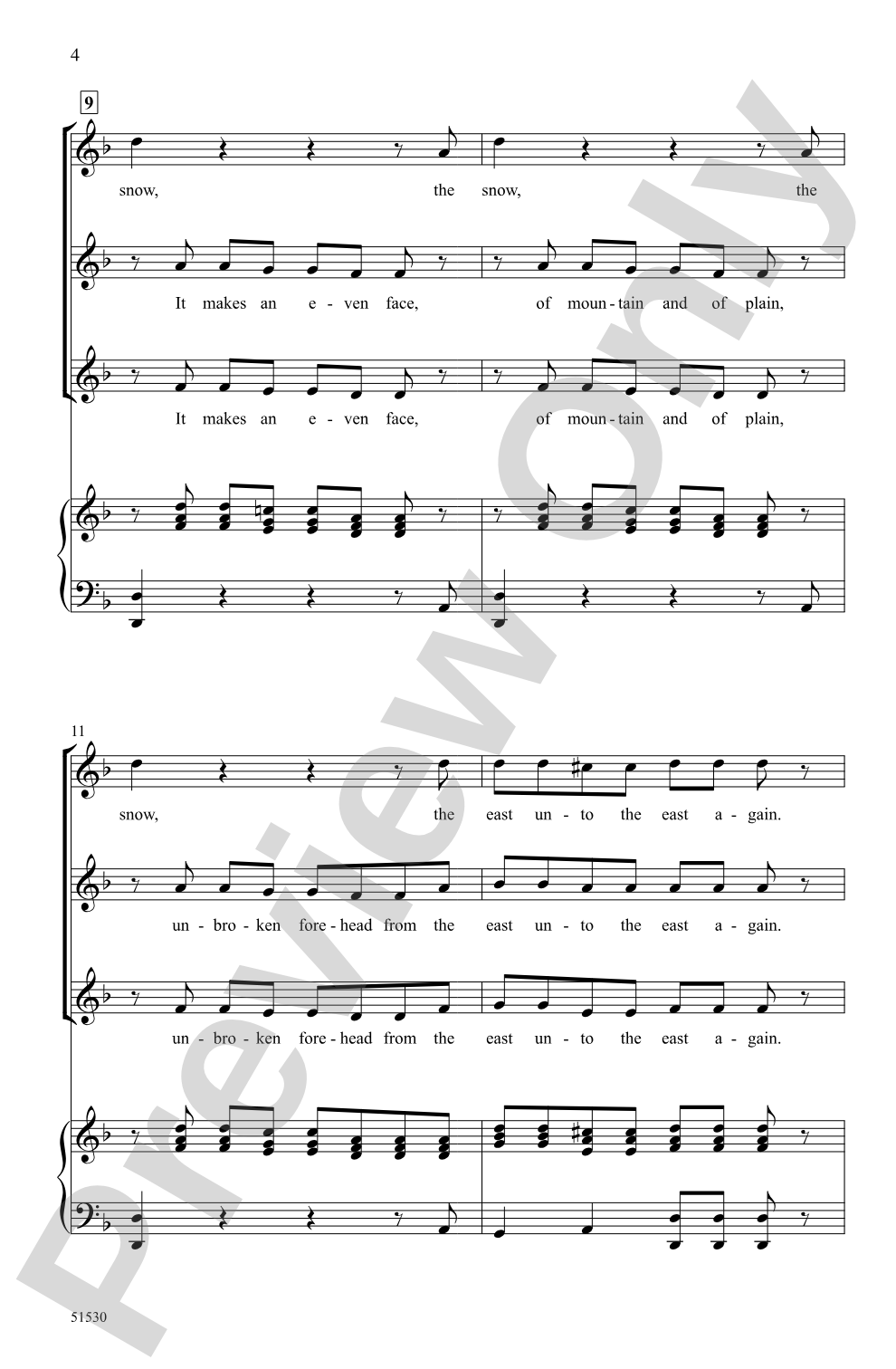
Crisp eighth-note figures and steady sleigh bells create the feeling of a jaunty sleigh ride while contrasting legato sections evoke the chill of blowing snow. Sopranos exclaim the title over and over as others interject with words from Emily Dickinson's wintertime poem. Some repetition makes for ease of learning, but the unexpected harmonic progression keeps things fresh.


The Snow: SSA Choral Octavo isn't in MakeMusic Cloud just yet...but it could be. Let us know you'd like to see it, and you'll help shape what comes next. In the meantime, start a free trial and dive into thousands of interactive titles your students can play along with today.
Request This Title
Tell us you want it.
Start Your Free Trial
Explore everything that's ready to play right now.
Sample Audio
1
Audio File
--:--
0:00
0:00
Sample Video
Additional Details
Series:
Alfred Choral Designs
Publisher:
Alfred Music
Page Count:
12
SKU:
00-PO-0007508
More about this title
About the Composer: Ruth Morris Gray

Ruth Morris Gray has directed choirs at Rosemead High School since 2004, where she also teaches piano. She holds a Bachelor of Music in Piano Performance and Composition from Biola University and a Master of Arts in Music Composition from UC Santa Barbara, complemented by a California Single Subject Music Credential from Cal State Northridge.
With over 100 published choral compositions to her name, Gray brings deep classroom experience to her writing. Her work balances accessibility with harmonic sophistication, a philosophy shaped by years of working directly with student singers. Outside the music studio, she enjoys travel, reading, and cycling with her husband, Douglas.
Why we love this
Gray's setting captures winter in two distinct musical colors: the driving energy of sleigh bells and crisp rhythmic figures against introspective legato passages. The repetition of the title makes it immediately singable for your SSA ensemble, while unexpected harmonic choices prevent the piece from ever feeling predictable. The Dickinson text adds literary weight without requiring programming notes.
What to expect
The piece captures the kinetic joy of winter movement alongside the stillness of falling snow. Jagged rhythmic energy gives way to hushed, sustained textures that feel like catching your breath in cold air, then the motion returns. You get the full sensory experience of a winter day compressed into minutes of singing.
Who it's for
SSA choirs looking for a concert piece with genuine character and textual substance. High school and select middle school ensembles will find the writing accessible without talking down to them; the harmonic surprises reward singers who listen closely to each other.
How to get the most out of it
- Keep the eighth-note figures light and articulate; resist the urge to slow down on repetitions of the title, as the forward momentum sells the sleigh ride imagery.
- Balance the recorded accompaniment so that the sleigh bell figuration sits behind the vocals rather than on top. This lets your singers control the driving rhythm of the piece.
- Shape the legato sections with a gentle, floating tone that contrasts sharply with the rhythmic vitality elsewhere. This dynamic shift is what makes the poem's imagery land.
- Consider a subtle ritardando into the final statement of the title to suggest the sleigh coming to a gentle stop.
How to use it
Pair this with other seasonal repertoire in a December concert, or use it as a winter anchor in a mixed program of contemporary American choral writing. The literary text connects well with thematic concerts exploring nature, American poetry, or climate and environment.
Skills your students will build
- Singing rhythmically independent parts while maintaining group unity
- Contrasting articulation styles (crisp staccato versus sustained legato)
- Navigating unexpected harmonic progressions by ear
- Balancing blend in SSA voicing while keeping solos on the title phrase clear
- Responding to recorded accompaniment as a rehearsal and performance tool