
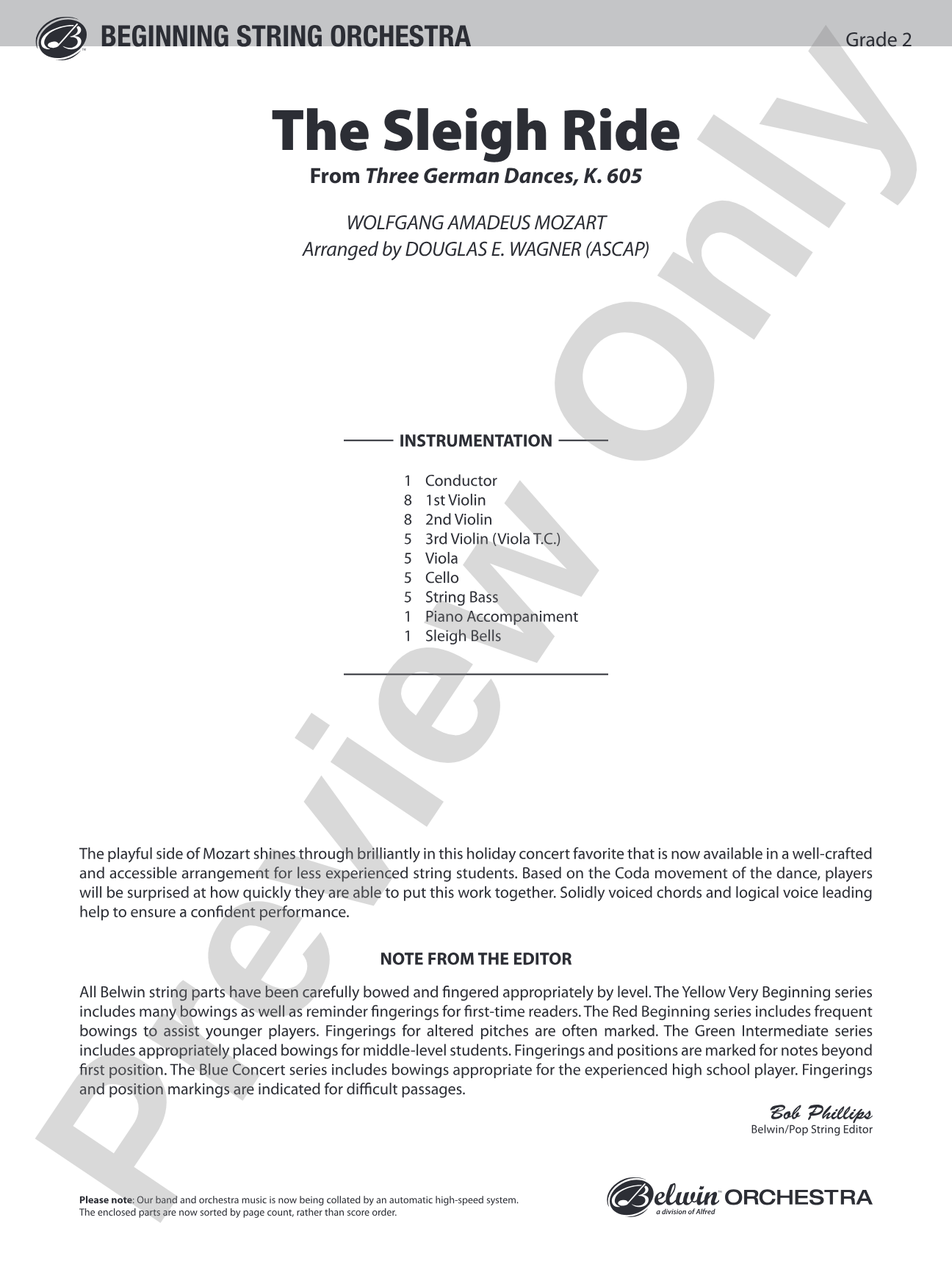
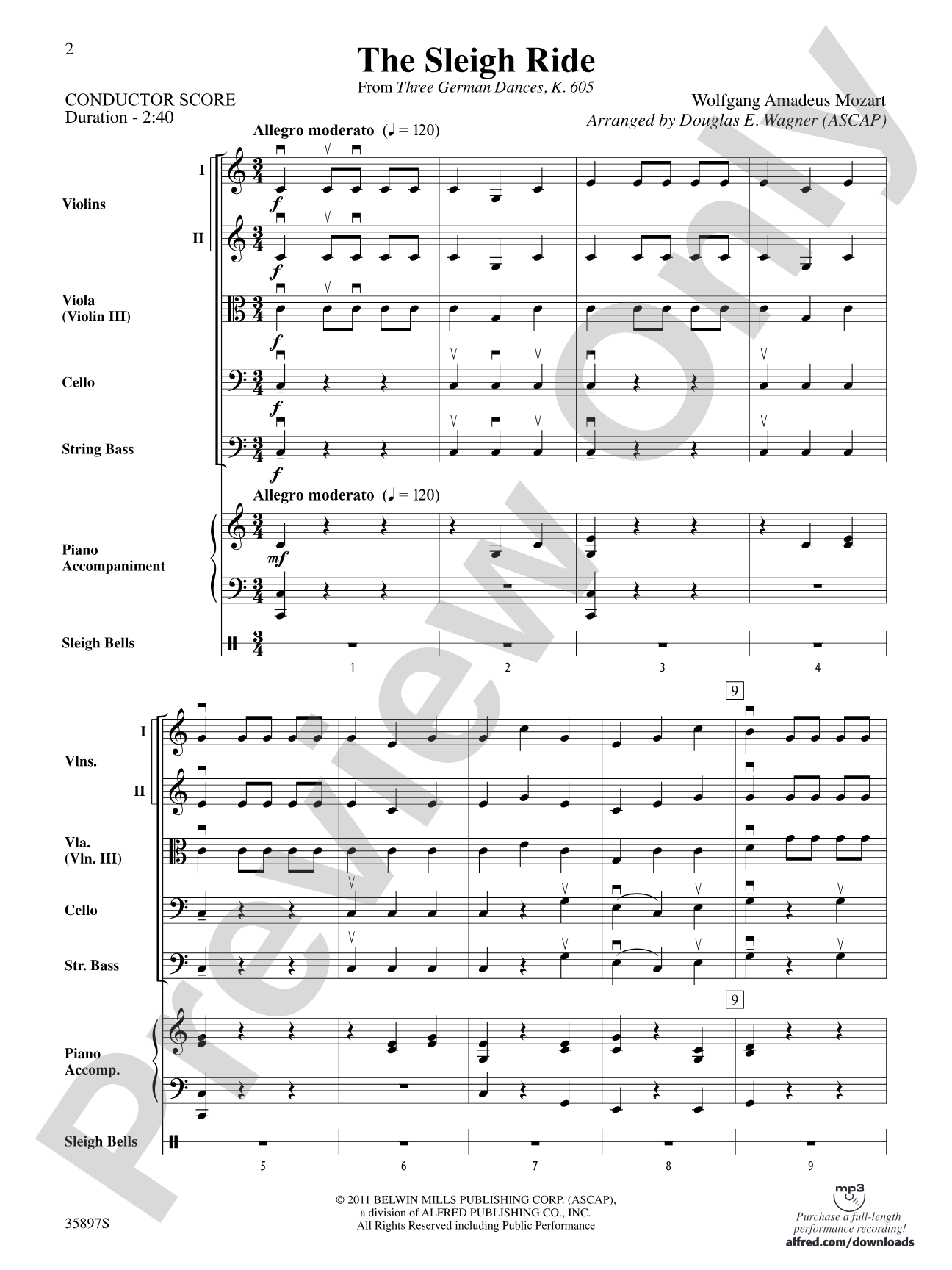
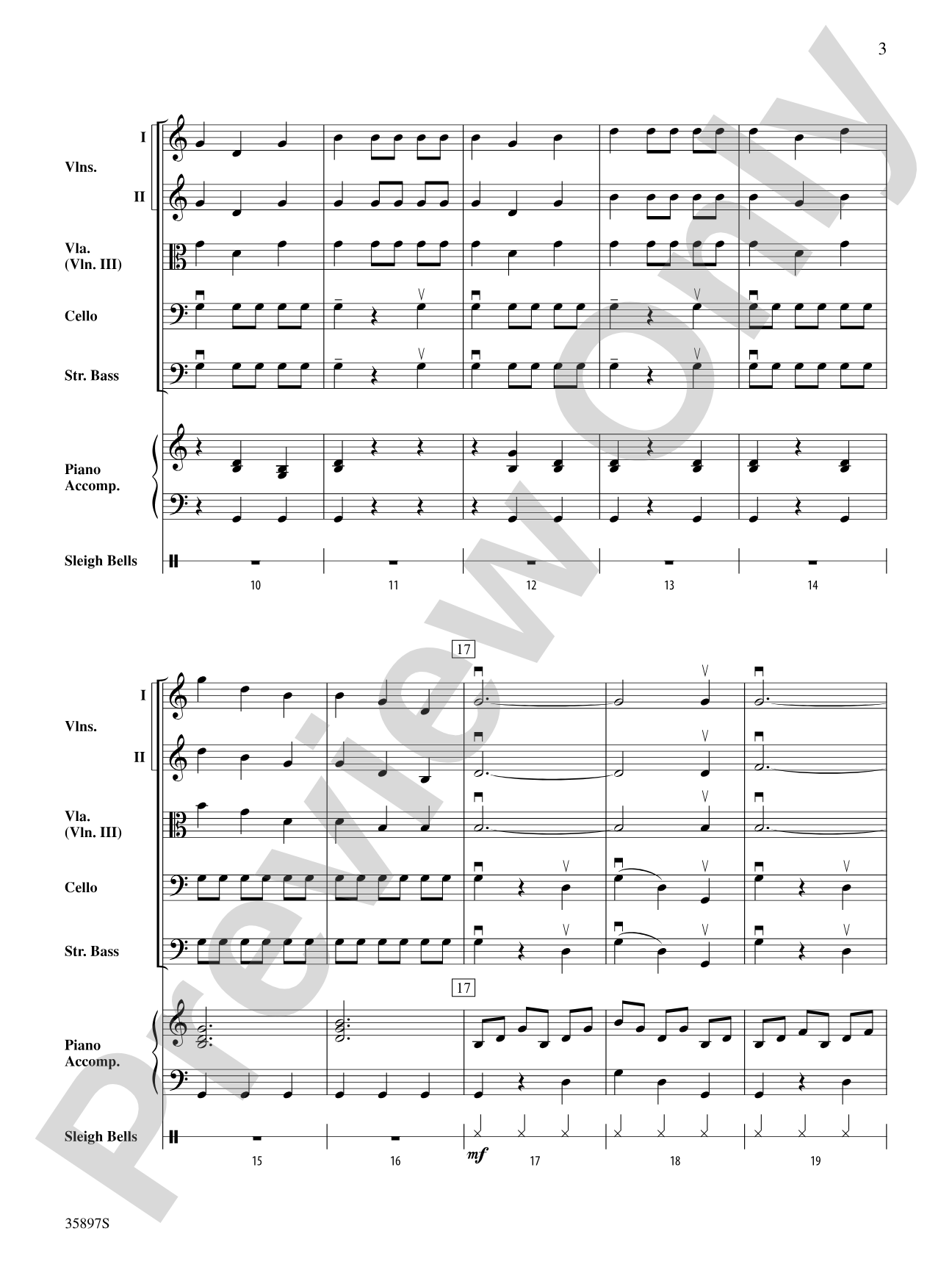
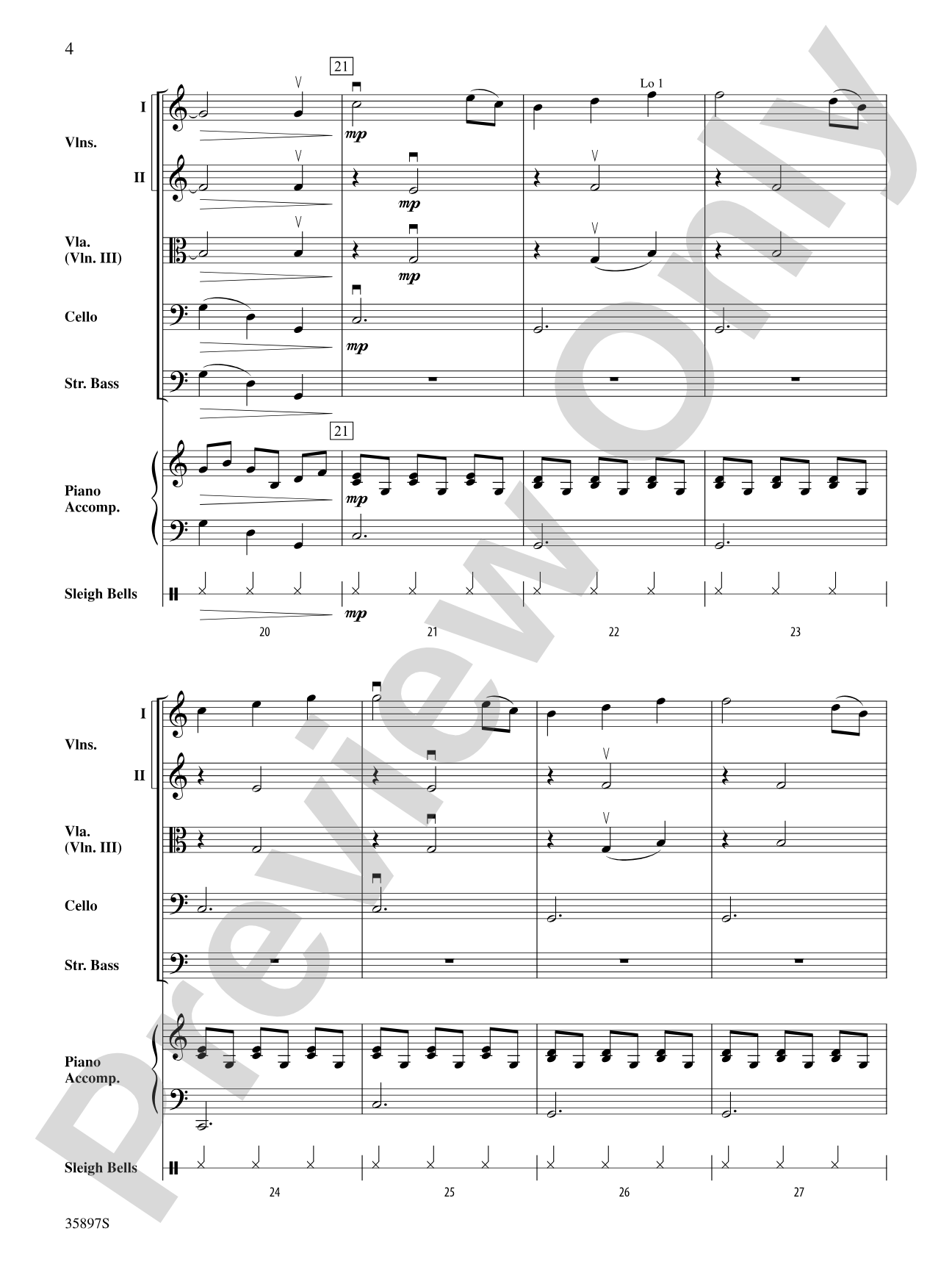
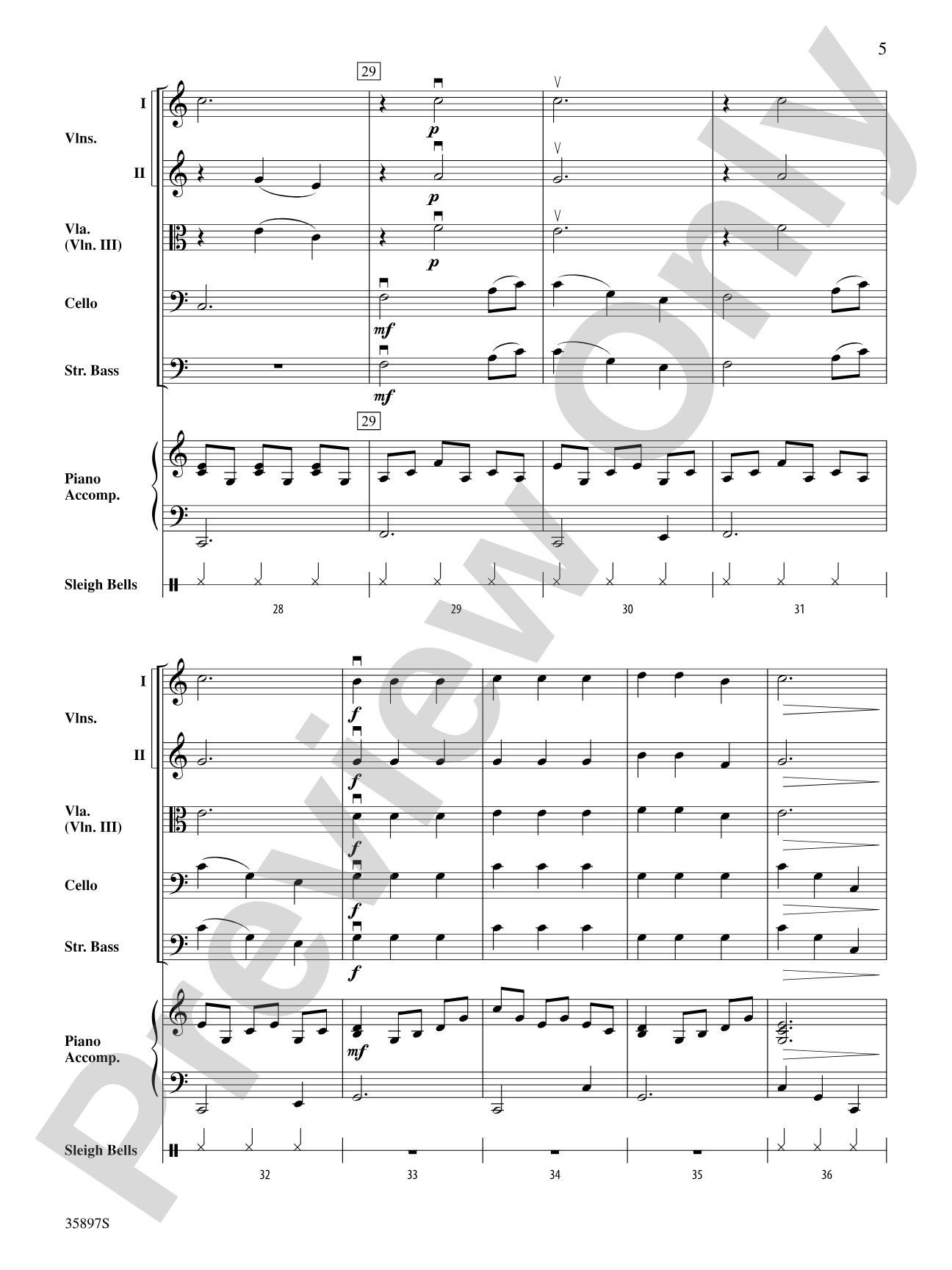
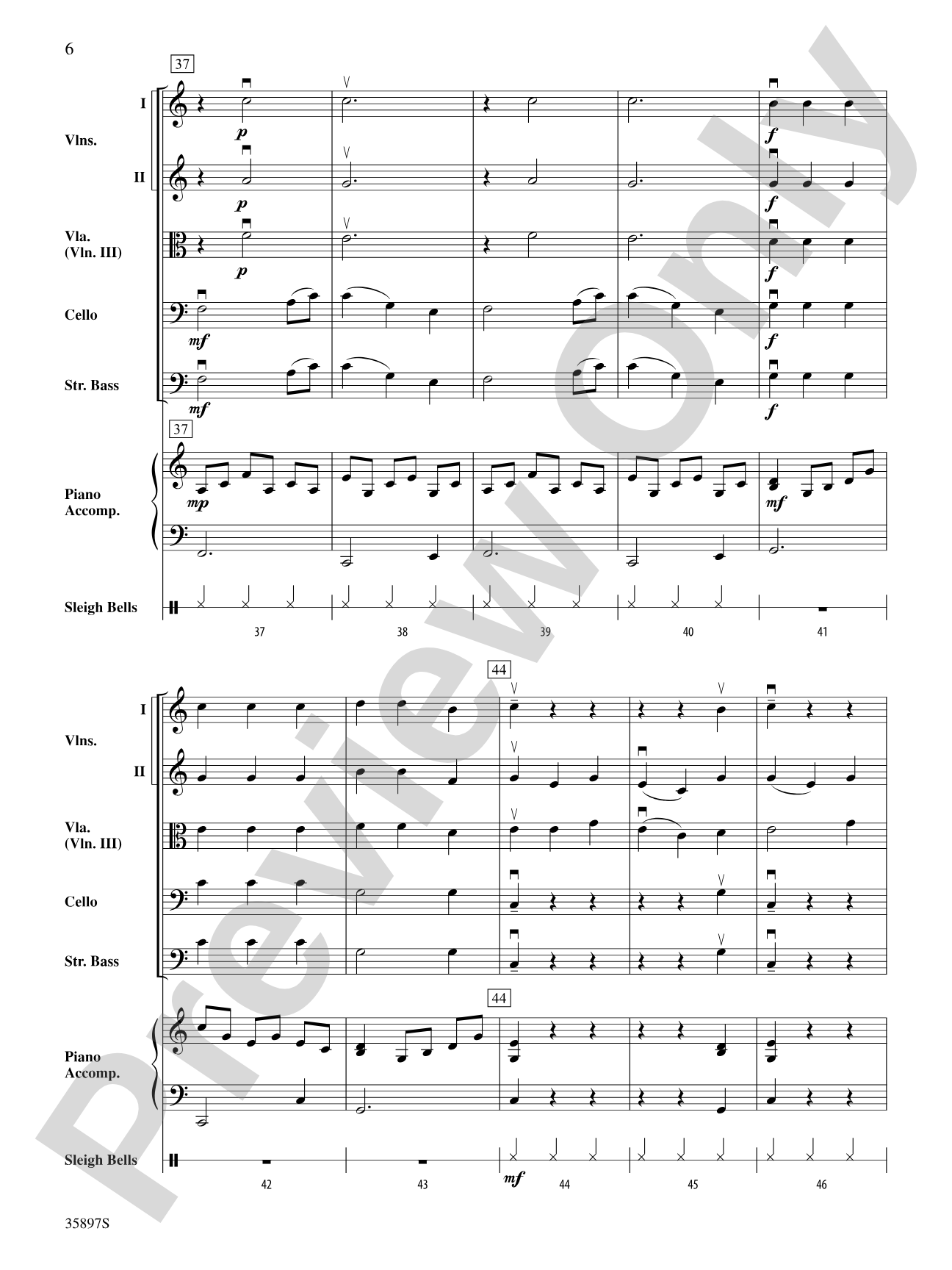
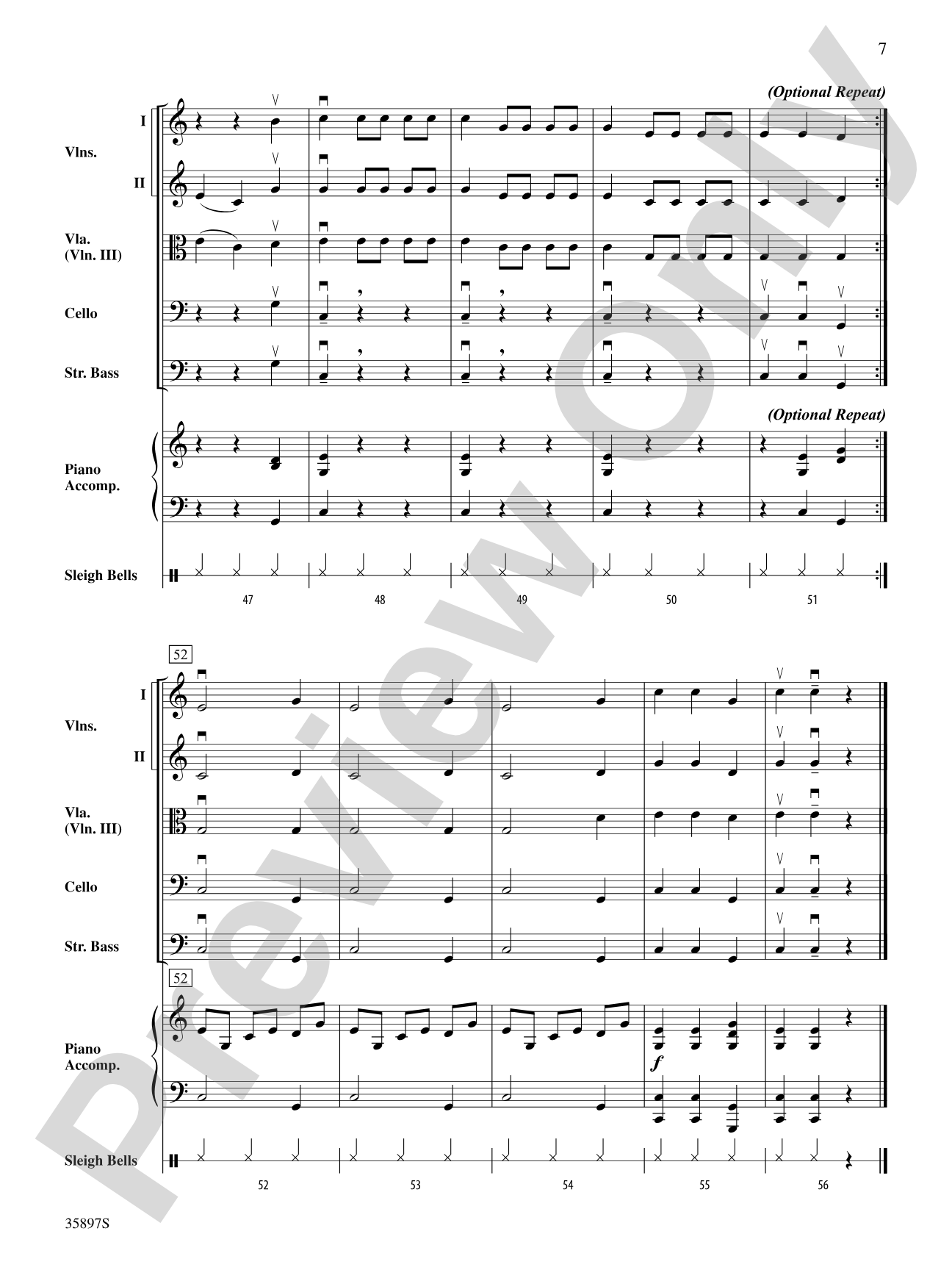


The Sleigh Ride (from Three German Dances, K. 605): String Orchestra Conductor Score & Parts
By Wolfgang Amadeus Mozart / arr. Douglas E. Wagner
Grade: 2
Item: 00-PK-0004693

$46.00
Pickup currently not available
Buy Extra Parts (Digital PDF Download)
Parts Added to Cart!
Description
The playful side of Mozart shines through brilliantly in this holiday concert favorite that is now available in a well-crafted and accessible arrangement for less experienced string students. Based on the Coda movement of the dance, players will be surprised at how quickly they are able to put this work together. Solidly voiced chords and logical voice leading help to ensure a confident performance.


Don't just read it, hear it, play along with it, and watch your students grow with it. In MakeMusic Cloud, The Sleigh Ride (from Three German Dances, K. 605): String Orchestra Conductor Score & Parts comes alive with professional accompaniment, adjustable tempo, and built-in practice tools that turn solo practice into real progress.
Open in the Player
Jump straight in and assign it today.
Start Your Free Trial
Open this title and explore the full library in minutes.
Sample Audio
1
Audio File
--:--
0:00
0:00
Sample Video
No sample videos found.
Additional Details
Series:
Belwin Beginning String Orchestra
Publisher:
Alfred Music
Page Count:
78
SKU:
00-PK-0004693
Instrumentation:
strings w/ vln 3, pno acc, sleigh bells
More about this title
About the Composer: Wolfgang Amadeus Mozart
Wolfgang Amadeus Mozart (1756-1791) composed across every genre of his era with an output that remains unmatched in breadth and invention. His mastery of melody, harmonic sophistication, and formal clarity established the Classical foundation that shaped all music that followed. For string educators, Mozart's works offer elegant models of transparent orchestration and balanced part-writing that teach students how musical ideas move logically through an ensemble.
Mozart wrote three German dances late in his life, and the sleigh ride section continues to captivate audiences through its infectious rhythmic energy and straightforward harmonic language. His ability to sustain interest through simple materials and clear phrasing makes his music exceptionally teachable at all levels.
Why we love this
This arrangement captures the genuine charm of Mozart without overwhelming younger players. The transparent texture and logical voice leading let students hear exactly how the music works, and the familiar holiday context gives them immediate motivation to engage with a legitimate masterwork. You'll spend rehearsal time on music-making, not deciphering complexity.
What to expect
The music races forward with cheerful energy, evoking the rush of motion across snow-covered landscape. Playful rhythmic figures and transparent voicing create a sense of delight that feels both genuine and accessible, capturing Mozart's gift for writing music that sounds effortless even when it's carefully crafted.
Who it's for
String orchestras at the Grade 2 level will find this arrangement perfectly calibrated to their reading ability and technical range. Beginning students gain confidence working with a composer of Mozart's stature while building fundamental ensemble skills. Directors seeking authentic holiday repertoire that doesn't compromise musical substance will return to this year after year.
How to get the most out of it
- Establish a steady, energetic tempo from the opening. The sleigh bells should articulate the beat clearly, helping the ensemble lock into the galloping character without rushing.
- Balance the melody across your violin sections so it projects warmly. Mozart's strength lies in the beauty of the line, not in dramatic dynamic gestures.
- Shape the phrasing in two or four-measure units rather than playing straight through. This mirrors the dance form and helps students hear the architecture of the piece.
- Encourage precise rhythmic unison in the parts that double the melody. Clarity here creates the sparkle that makes the Sleigh Ride memorable.
How to use it
Program this as an opener to your winter concert or place it mid-program to reset audience energy. It pairs naturally with other holiday selections while standing as a legitimate Classical moment in your concert arc. The modest instrumentation and straightforward appeal also make it suitable for school assemblies or community performances beyond the formal concert.
Skills your students will build
- Transparent voice leading and part independence within a homophonic texture
- Rhythmic precision in quick note passages and syncopated rhythmic figures
- Phrasing and shaping across two and four-measure melodic units
- Ensemble balance and blend when doubling melodic lines
- Reading three-staff string parts with optional third violin and piano accompaniment