
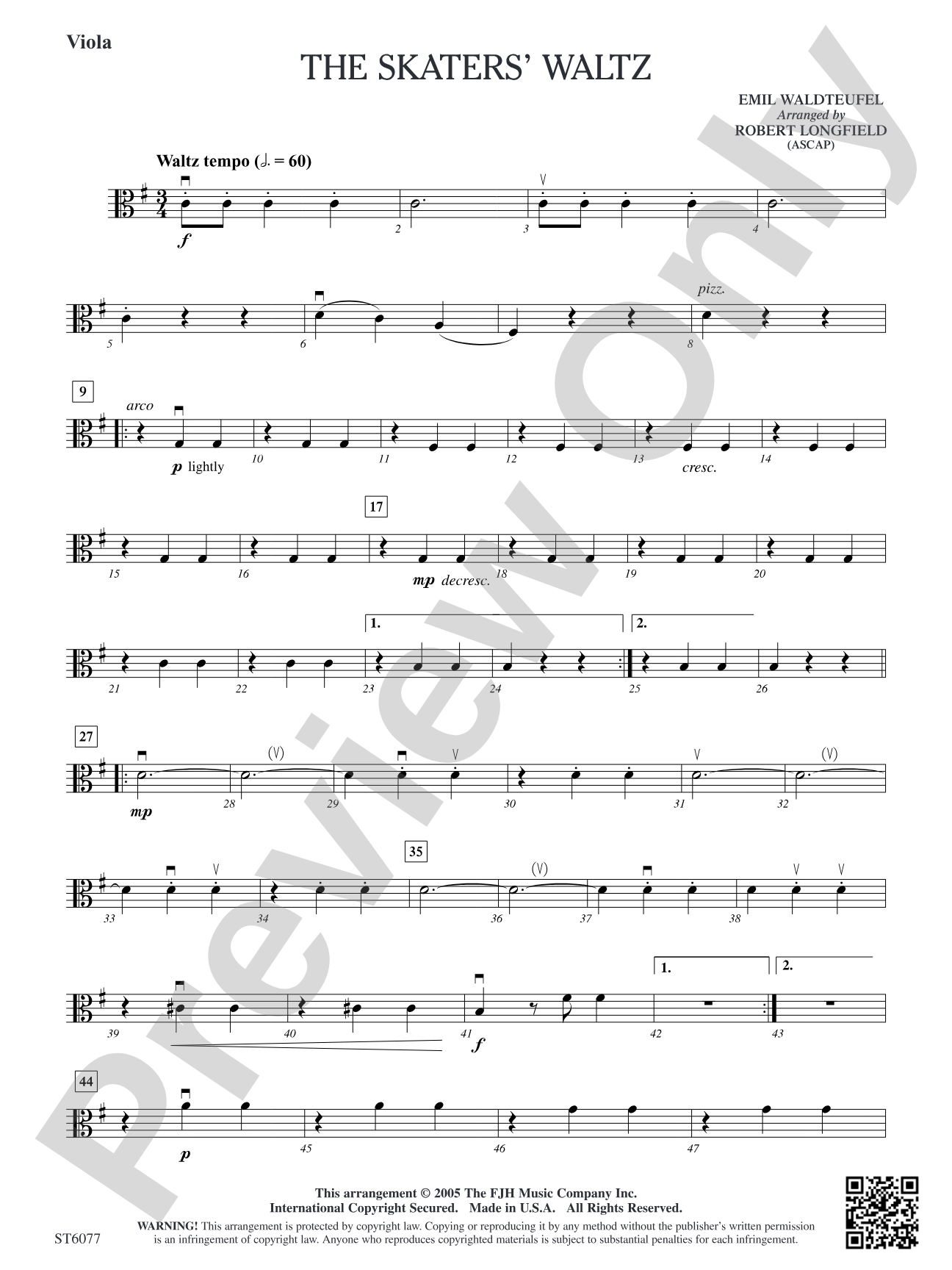

The Skaters' Waltz: Viola
By Emil Waldteufel / arr. Robert Longfield
Grade: 2.5
Item: 98-PC-DST6077_VA1
$7.00
Pickup currently not available
Description
Add this classical masterpiece to your next winter concert. Robert Longfield has gone to great lengths to make this very accessible to developing musicians while retaining all the character of the original version. Your audience will be able to imagine the smooth, graceful strides of the skaters in the flowing, legato melodies of this popular waltz. An excellent choice, especially for directors looking for classical music appropriate for a winter concert!


The Skaters' Waltz: Viola isn't in MakeMusic Cloud just yet...but it could be. Let us know you'd like to see it, and you'll help shape what comes next. In the meantime, start a free trial and dive into thousands of interactive titles your students can play along with today.
Request This Title
Tell us you want it.
Start Your Free Trial
Explore everything that's ready to play right now.
Sample Audio
1
Audio File
--:--
0:00
0:00
Sample Video
No sample videos found.
Additional Details
Series:
FJH Developing Strings
Publisher:
The FJH Music Company, Inc.
SKU:
98-PC-DST6077_VA1
More about this title
About the Composer: Emil Waldteufel
Emil Waldteufel (1837-1915) was an Alsatian composer and conductor who became one of the most celebrated waltz composers of the 19th century. His gift for memorable melody and elegant orchestration earned him the nickname "the Strauss of France," and he composed over 250 works during a prolific career that spanned five decades.
Waldteufel's waltzes remain staples of light classical and pops programming because they balance accessibility with genuine sophistication. "The Skaters' Waltz," written in 1882, showcases his hallmark style: a flowing, lyrical main theme with memorable counter-melodies and orchestration that invites every section to shine. Directors value his work because audiences recognize these pieces immediately, yet the writing never feels trivial.
Why we love this
Longfield's adaptation opens this beloved waltz to younger orchestras without sacrificing the elegance that makes it concert-worthy. The Grade 2.5 scoring preserves the iconic gliding character while keeping technical demands reasonable, so your developing string players can actually listen to each other and shape phrases instead of managing technical overload. It's a genuine crowd-pleaser that gives your musicians real success with repertoire they'll recognize and remember.
What to expect
The waltz unfolds like watching skaters glide across a frozen pond: smooth, graceful, and rhythmically unhurried. Longfield's orchestration keeps the texture transparent enough that you hear the gentle rise and fall of each melodic line, while the legato string writing creates the flowing, almost frictionless quality that gave this piece its enduring appeal.
Who it's for
This score and parts set is designed for developing string orchestras (Grade 2.5) working toward their first winter concert or looking for accessible classical repertoire that actually engages an audience. Music directors seeking pieces that build musicianship through phrase shaping and legato playing will find this especially valuable. The Festival/Contest designation makes it suitable for adjudication as well.
How to get the most out of it
- Shape the primary melody with a gentle lean on the first beat of each measure; resist the urge to emphasize; think of the skaters' weight shifting fluidly across ice rather than a marching pulse
- Balance the counter-melodies in the inner voices carefully; they deserve to sing as much as the violins, and they're what give the waltz its sophisticated orchestral character
- Maintain consistent vibrato width throughout the legato passages; inconsistent vibrato in unison or octave doublings will blur the smoothness you're after
- Take time in sectional rehearsals to lock the string parts rhythmically so that the three-beat waltz feel locks in; even small rhythmic unevenness will flatten the piece
How to use it
This works perfectly as a centerpiece for a winter or holiday concert, positioning it alongside other classical-period pieces or as a bridge into a lighter pops section. You can also program it earlier in the year as a confidence builder for developing orchestras; the piece rewards careful listening and phrase work without demanding technical fireworks, making it an ideal choice for building ensemble cohesion before tackling more demanding repertoire.
Skills your students will build
- Playing sustained legato lines with consistent tone and vibrato
- Balancing melody and accompaniment across an orchestral texture
- Subdividing and maintaining the waltz meter (3/4) at a comfortable tempo
- Listening to counter-melodies and supporting parts in an ensemble context
- Shaping phrases with rubato and dynamic shape rather than literal tempo changes