
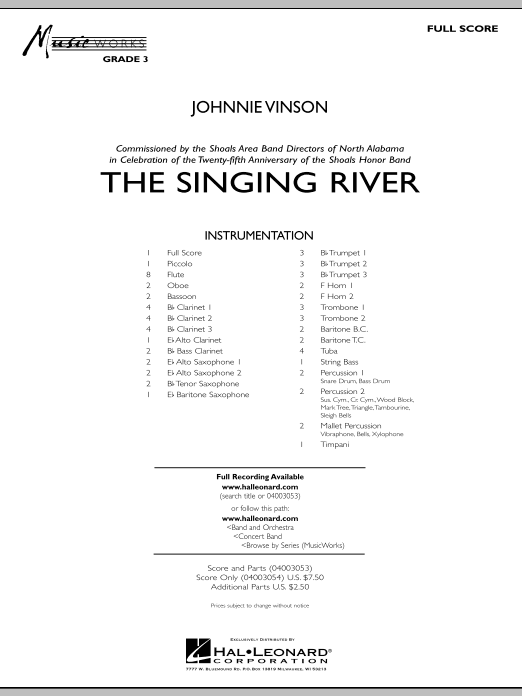

The Singing River: Concert Band Conductor Score & Parts
By Johnnie Vinson
Grade: 3
Item: 35-PK00180204
$65.00
Pickup currently not available
Buy Extra Parts (Digital PDF Download)
Parts Added to Cart!
Description
In the Shoals region of northwest Alabama, the Tennessee River is often referred to as "the singing river," a term originating with the Yuchi tribe of Native Americans. Commissioned by the Shoals Area Band Directors Association, Johnnie Vinson has created an effective work for band that focuses on the river's relationship to life in this area both past and present. A primary "river theme" is stated from which a series of variants creates a fascinating and appealing musical tapestry. Dur: 5:40


Discover MakeMusic Cloud: thousands of interactive titles your students can play along with today.
Sample Audio
No sample audio found.
Sample Video
No sample videos found.
Additional Details
Publisher:
Hal Leonard
SKU:
35-PK00180204
More about this title
About the Composer: Johnnie Vinson
Johnnie Vinson is a prolific composer and arranger whose works for concert band have become fixtures in festivals and concert halls across the United States. His compositional voice blends accessibility with musical substance, creating pieces that engage both performers and audiences while remaining teachable at their designated levels.
Vinson has a particular gift for narrative composition. His works often draw inspiration from regional history, cultural heritage, and the natural world, transforming these sources into music that feels both personal and universal. The Singing River exemplifies this approach, transforming a cultural legend into a work that honors its origins while speaking clearly to contemporary musicians.
Why we love this
Vinson grounds this piece in a genuine cultural story rather than a generic concept, and that specificity gives the music real character. The primary river theme provides strong cohesion while its variants keep the piece fresh and engaging throughout, offering young musicians something substantial to interpret without overwhelming them with complexity.
What to expect
The music evokes the Tennessee River itself: flowing and contemplative, with moments of gentle urgency. You hear the landscape in the orchestration, and there's a reflective quality to the harmonic language that suggests both the river's historical importance and its ongoing presence in the region's identity.
Who it's for
Grade 3 bands looking for repertoire with substance and cultural connection. Directors who want their students to engage with music that has a real story behind it will find this piece particularly rewarding.
How to get the most out of it
- Build the primary river theme with clean articulation in the opening woodwind statement. This motif carries the entire work, so establishing it clearly sets up everything that follows.
- Track the theme's appearances across different instrumental families and textures. Each variation asks something slightly different from your ensemble, and acknowledging these shifts in color helps the music unfold logically.
- The 5:40 duration means pacing matters. Resist the urge to push through; let the musical ideas breathe and allow the variants to register as distinct statements rather than quick variations.
- Pay attention to balance in the thematic statements. When the theme moves between sections, ensure it projects clearly without drowning surrounding accompaniment.
How to use it
This works beautifully as a standalone concert piece or as part of a program exploring American regional music and Native American heritage. At Grade 3, it's accessible enough for early in the season but musically substantial enough to anchor a spring concert.
Skills your students will build
- Recognizing and tracking thematic material across varying instrumental textures
- Sustaining musical phrases with consistent tone quality
- Balancing melodic and harmonic voices within ensemble sections
- Responding to subtle changes in orchestration and color