

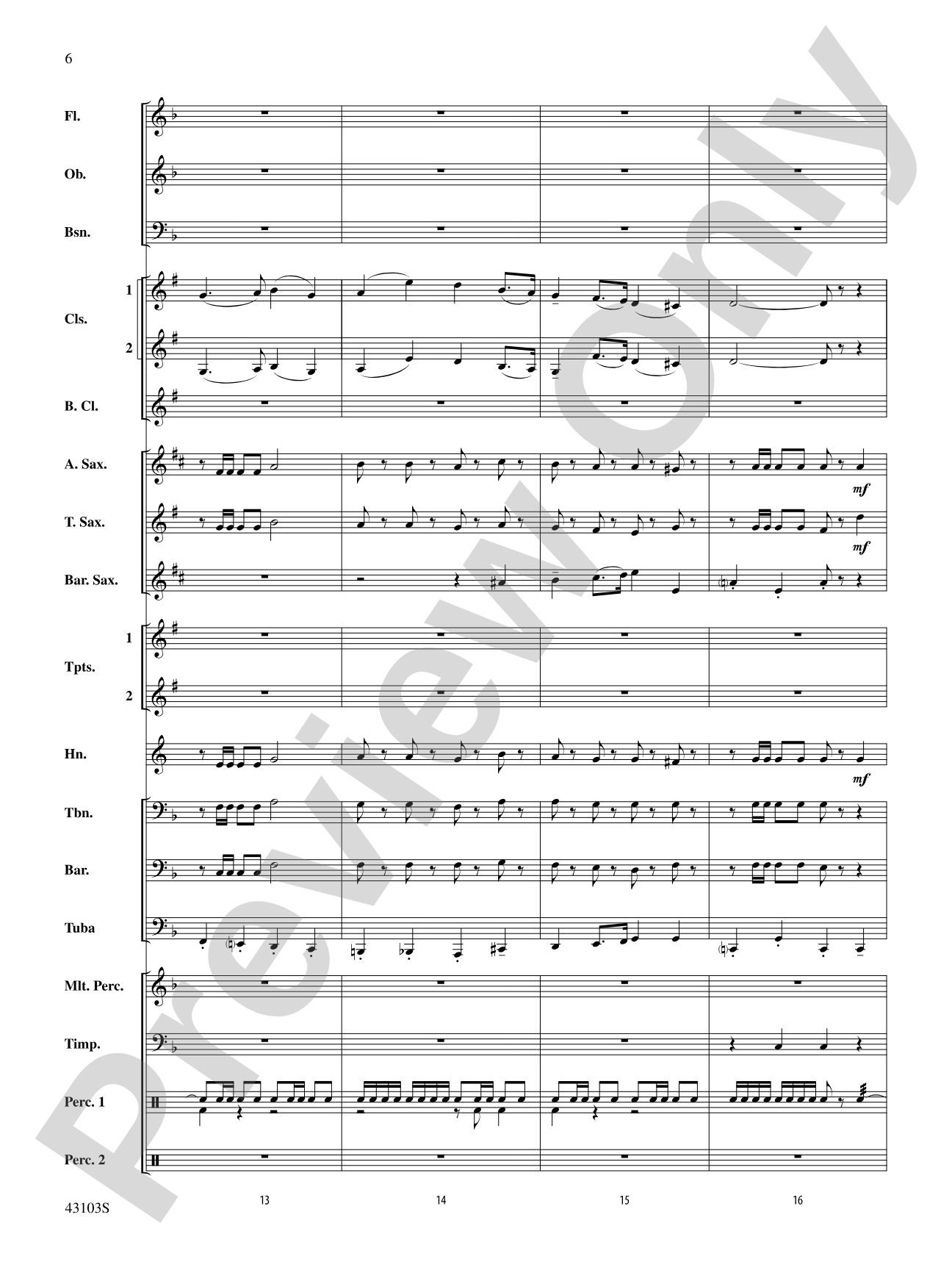
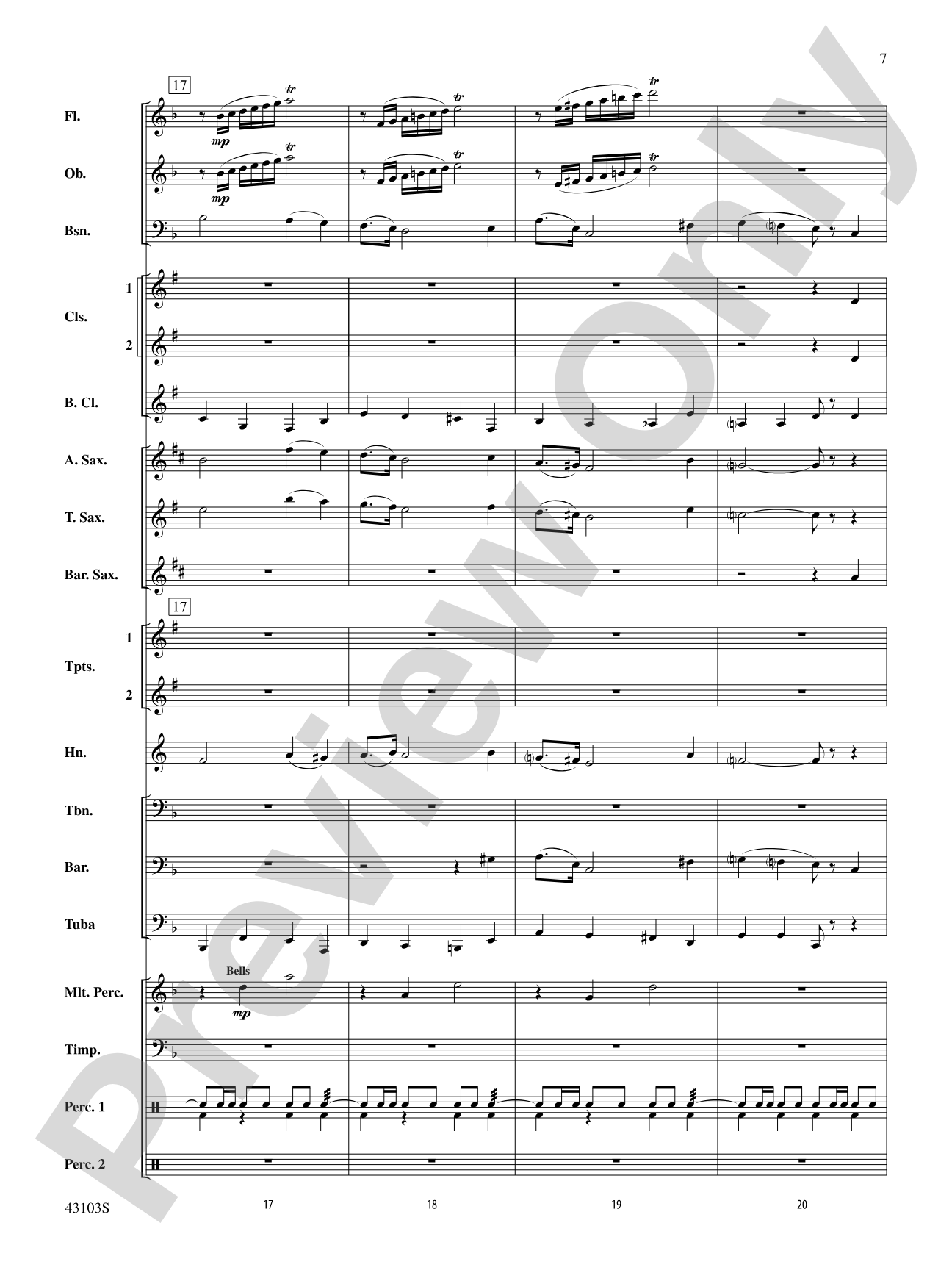
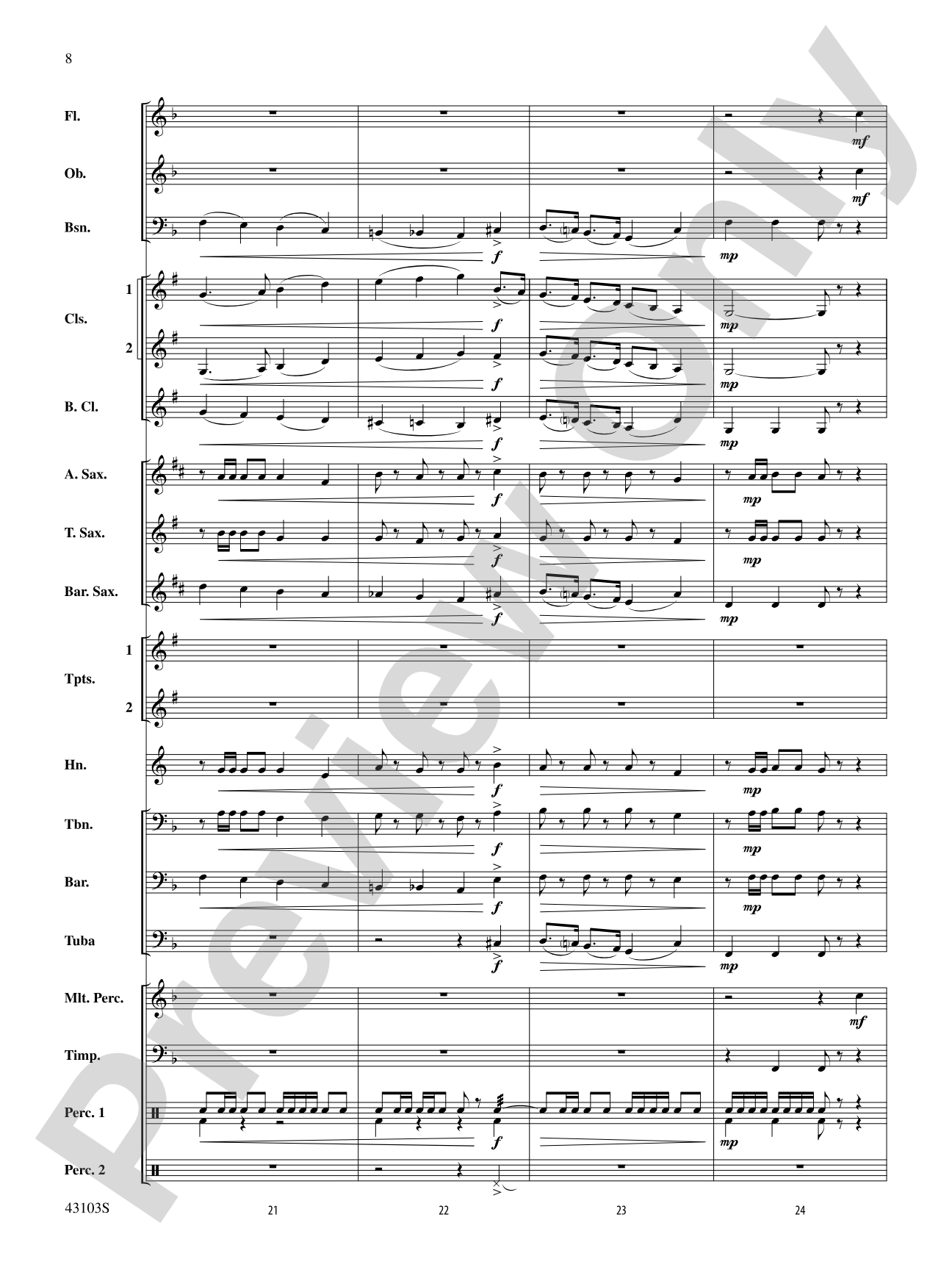
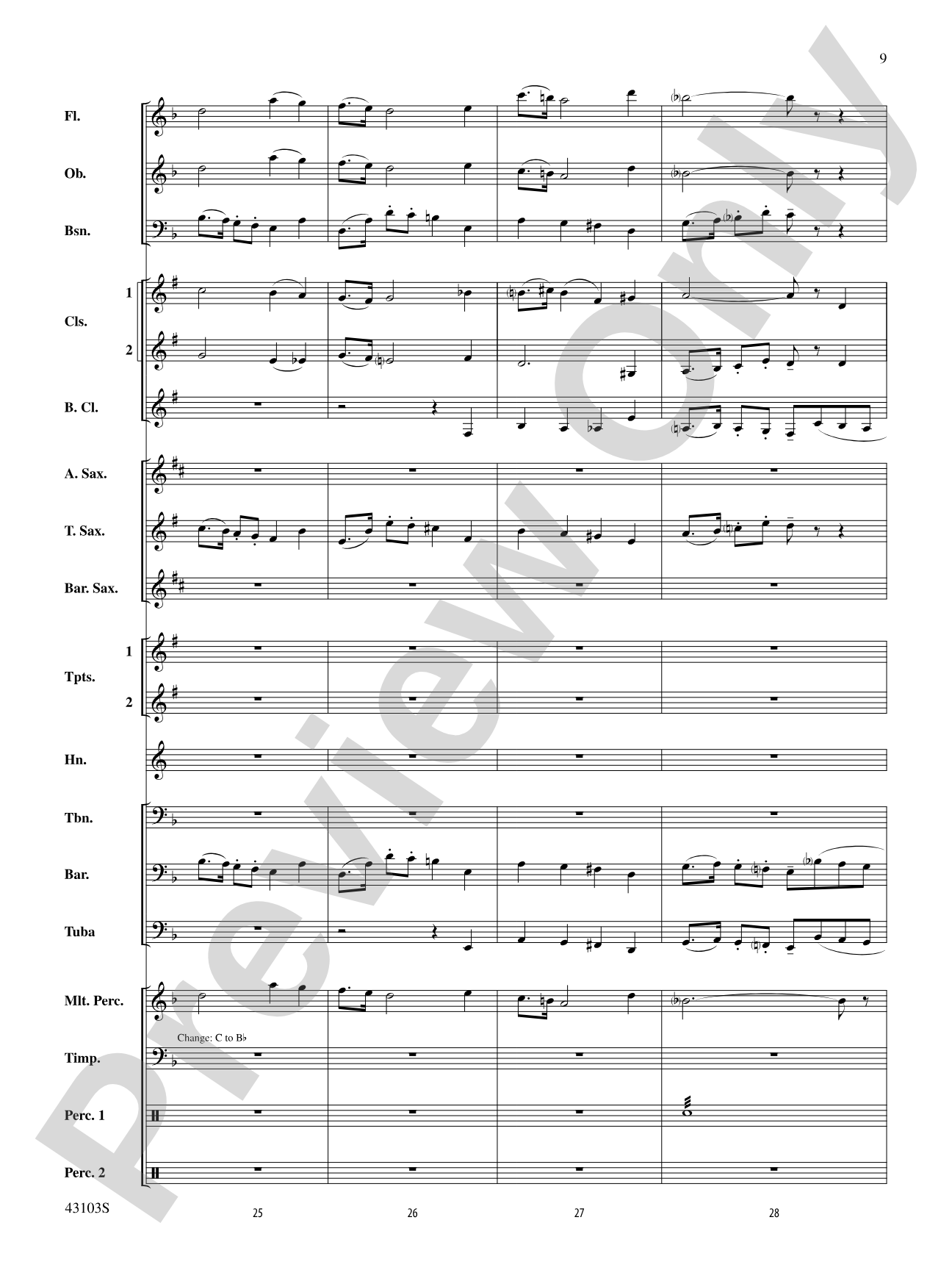
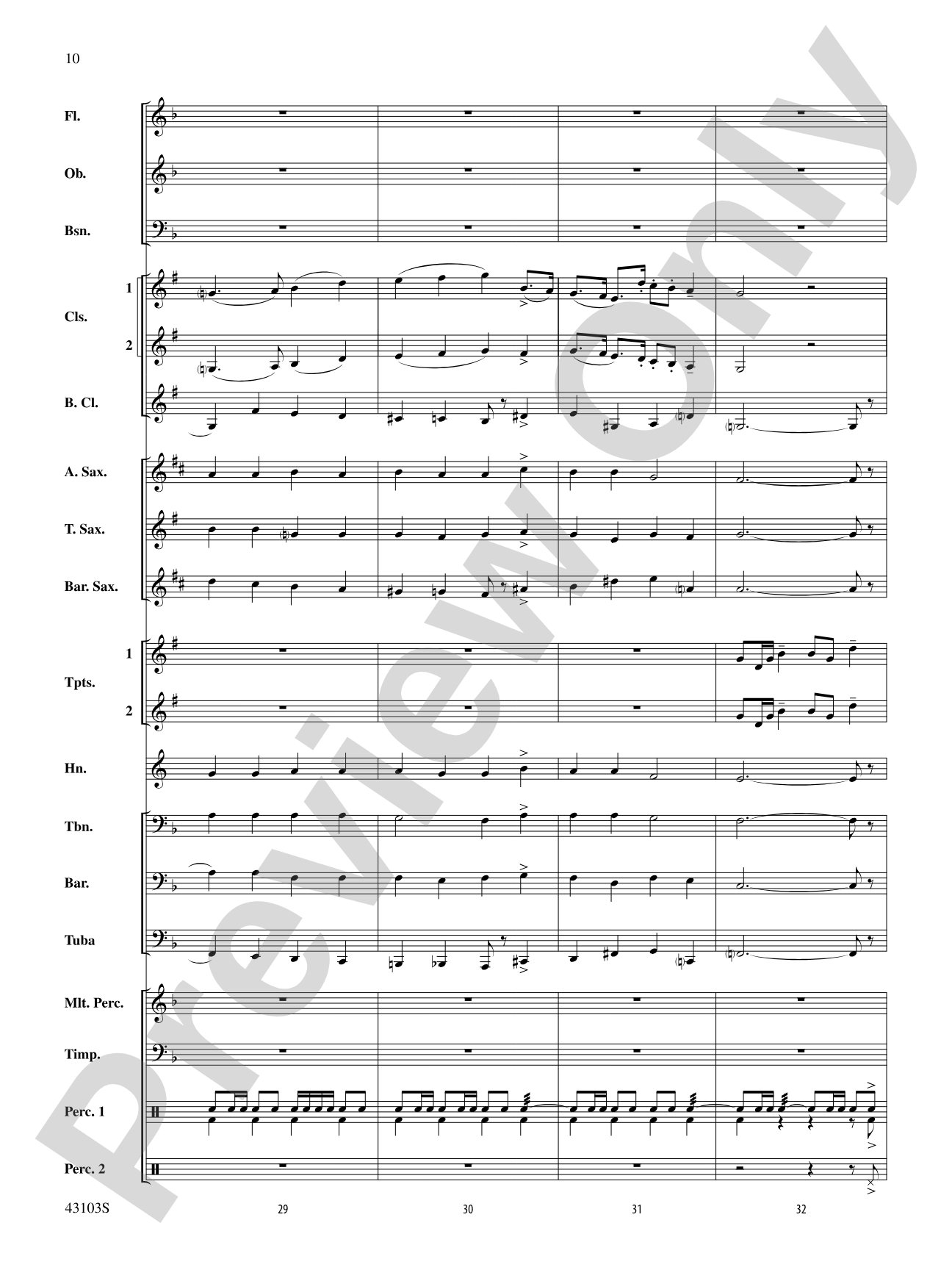
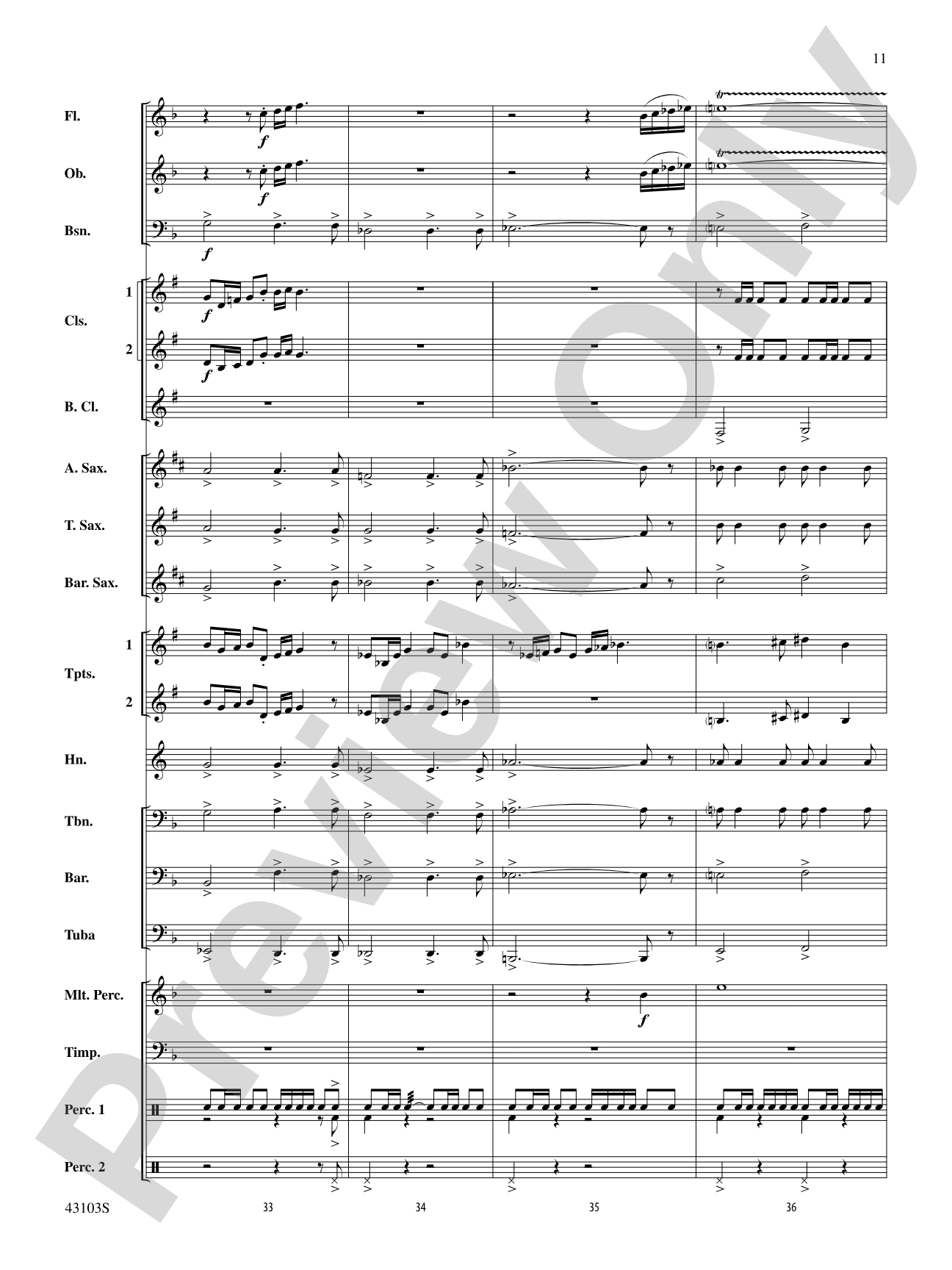
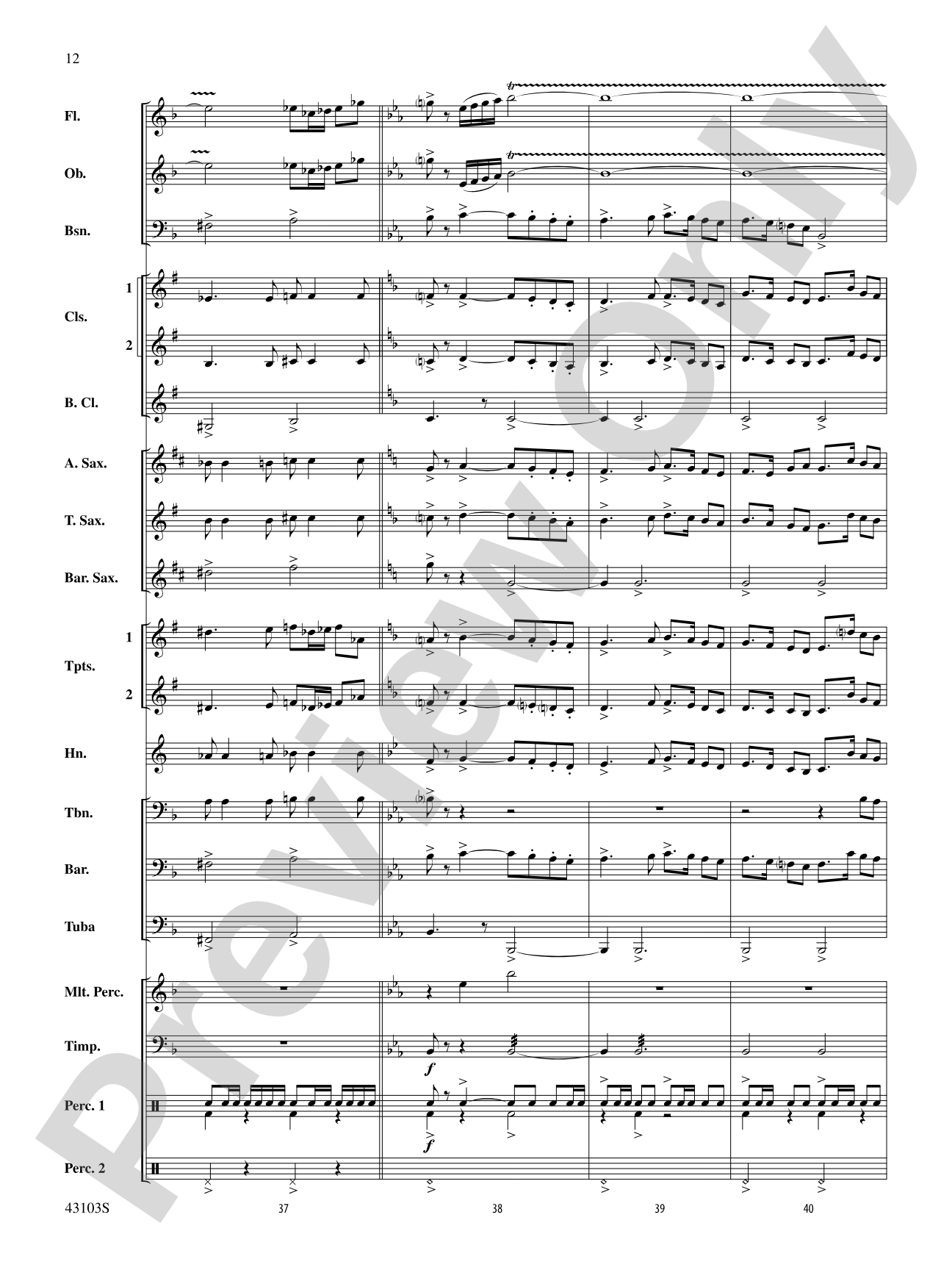
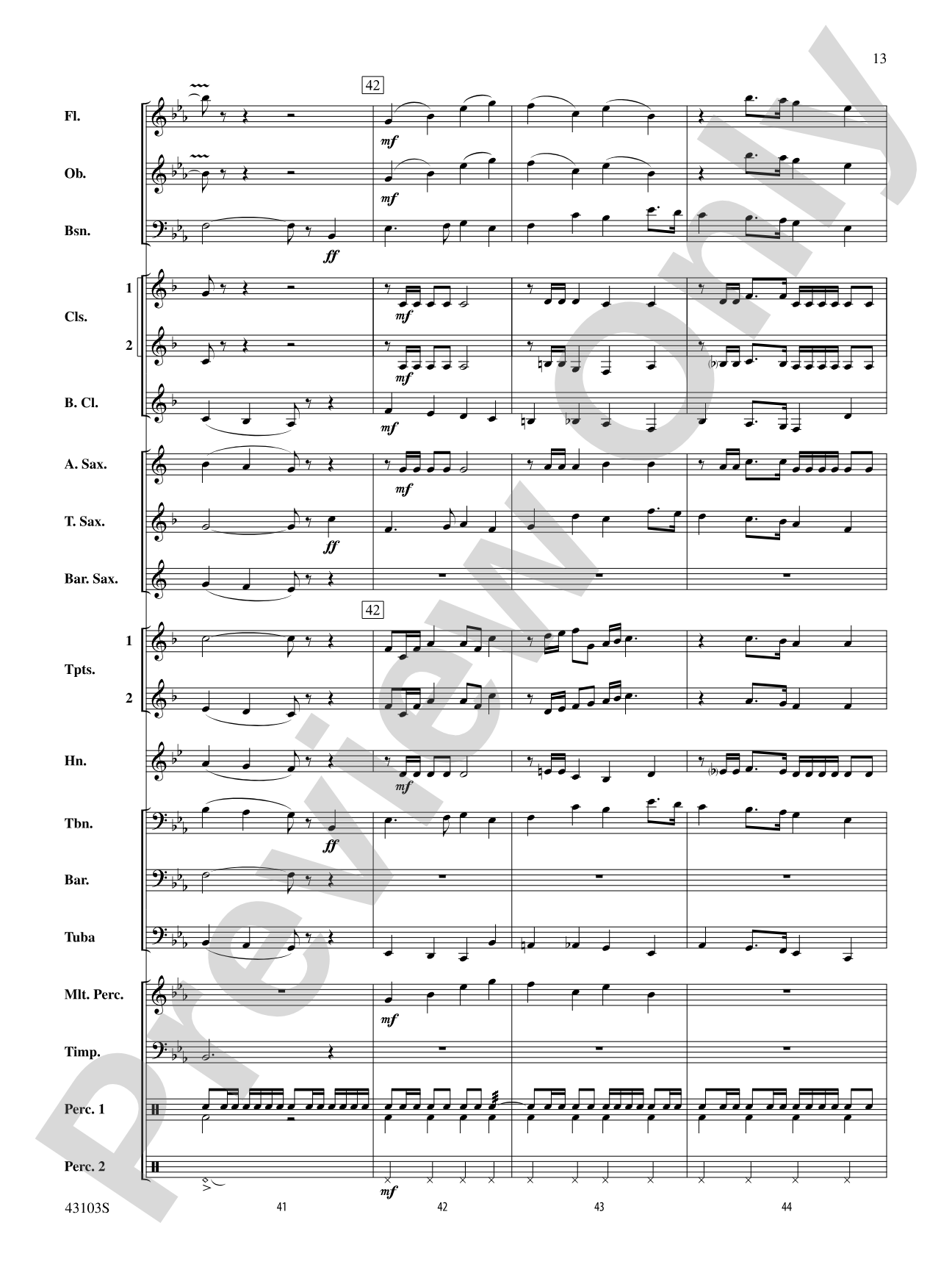
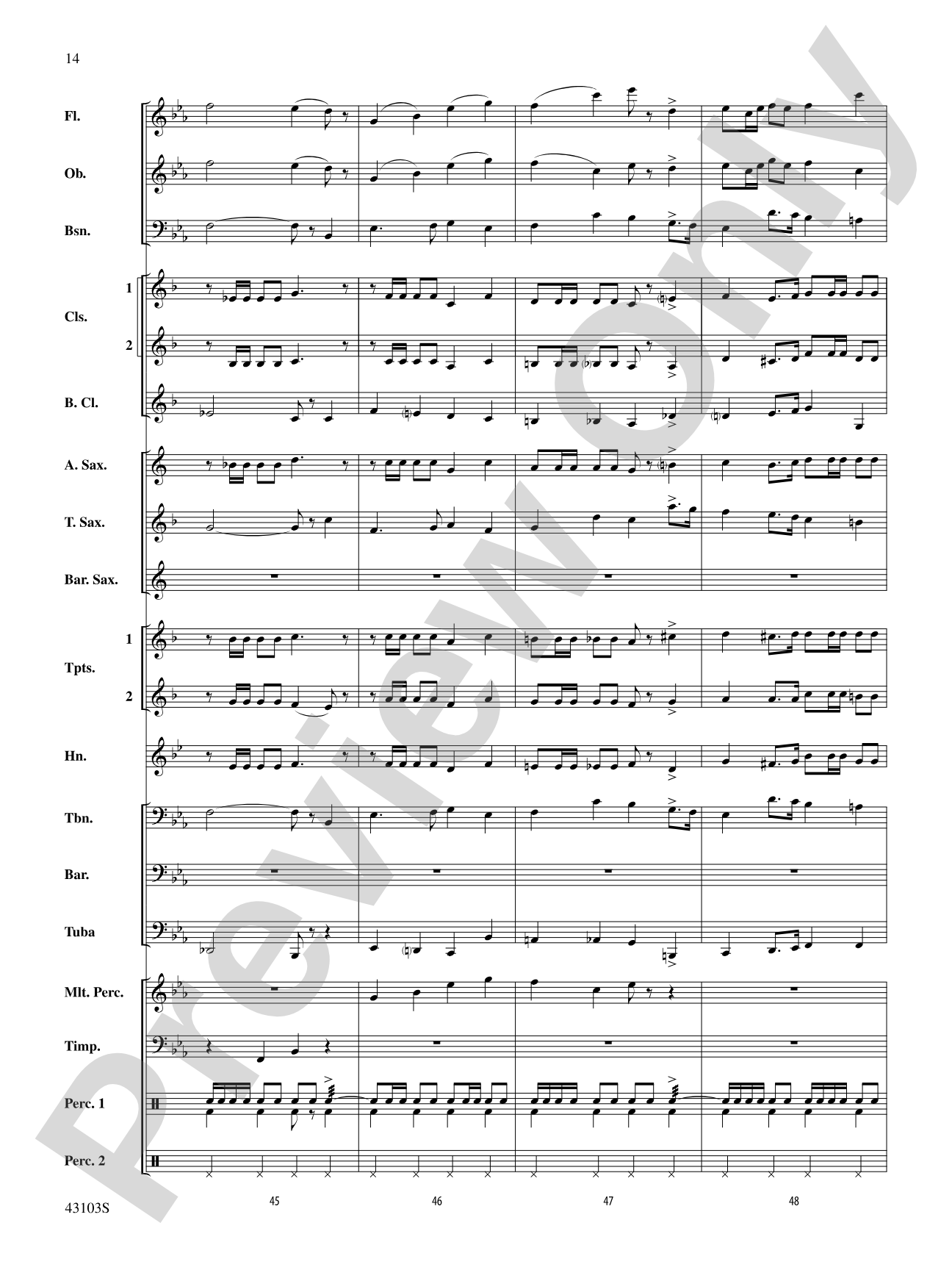
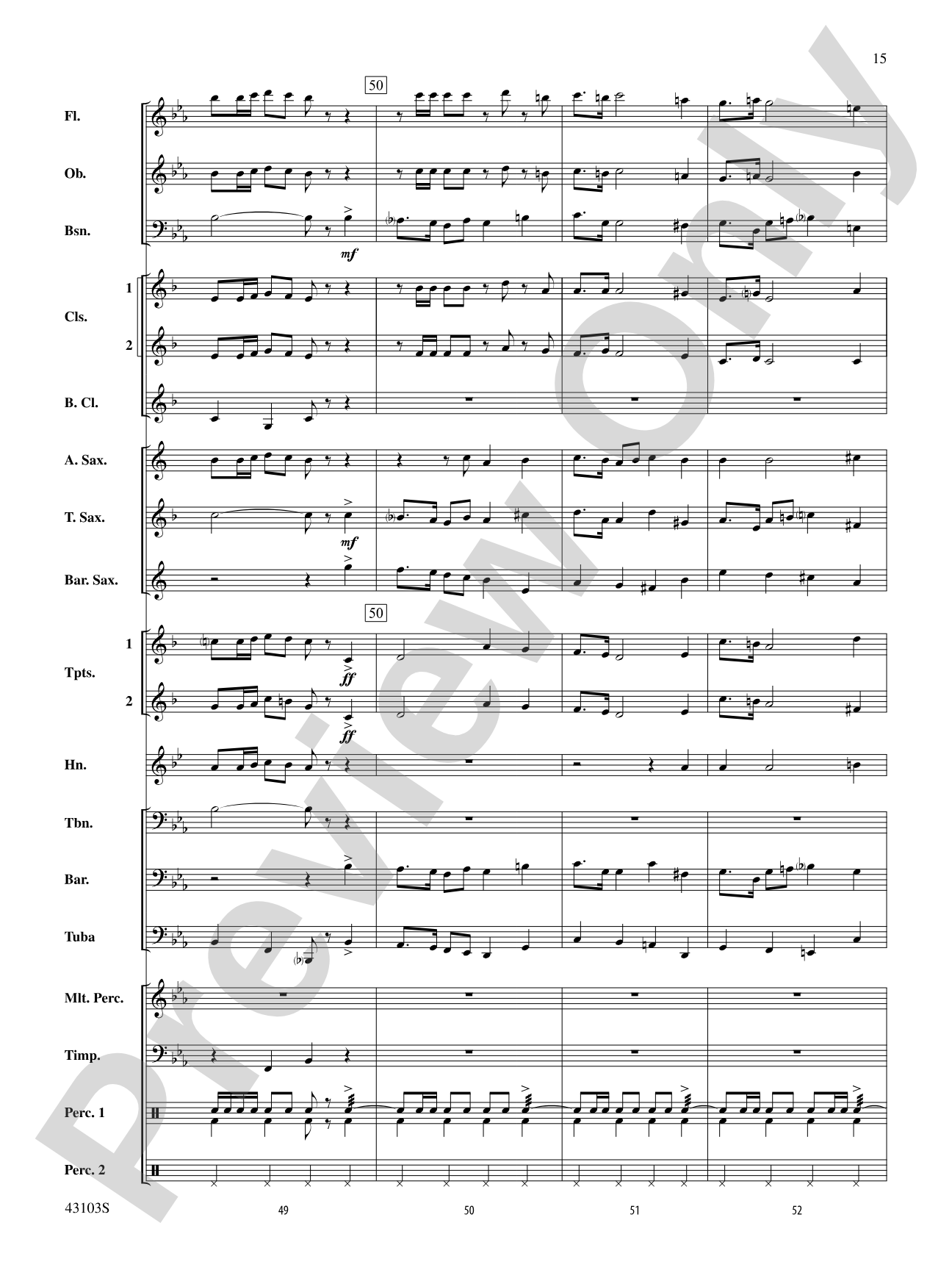
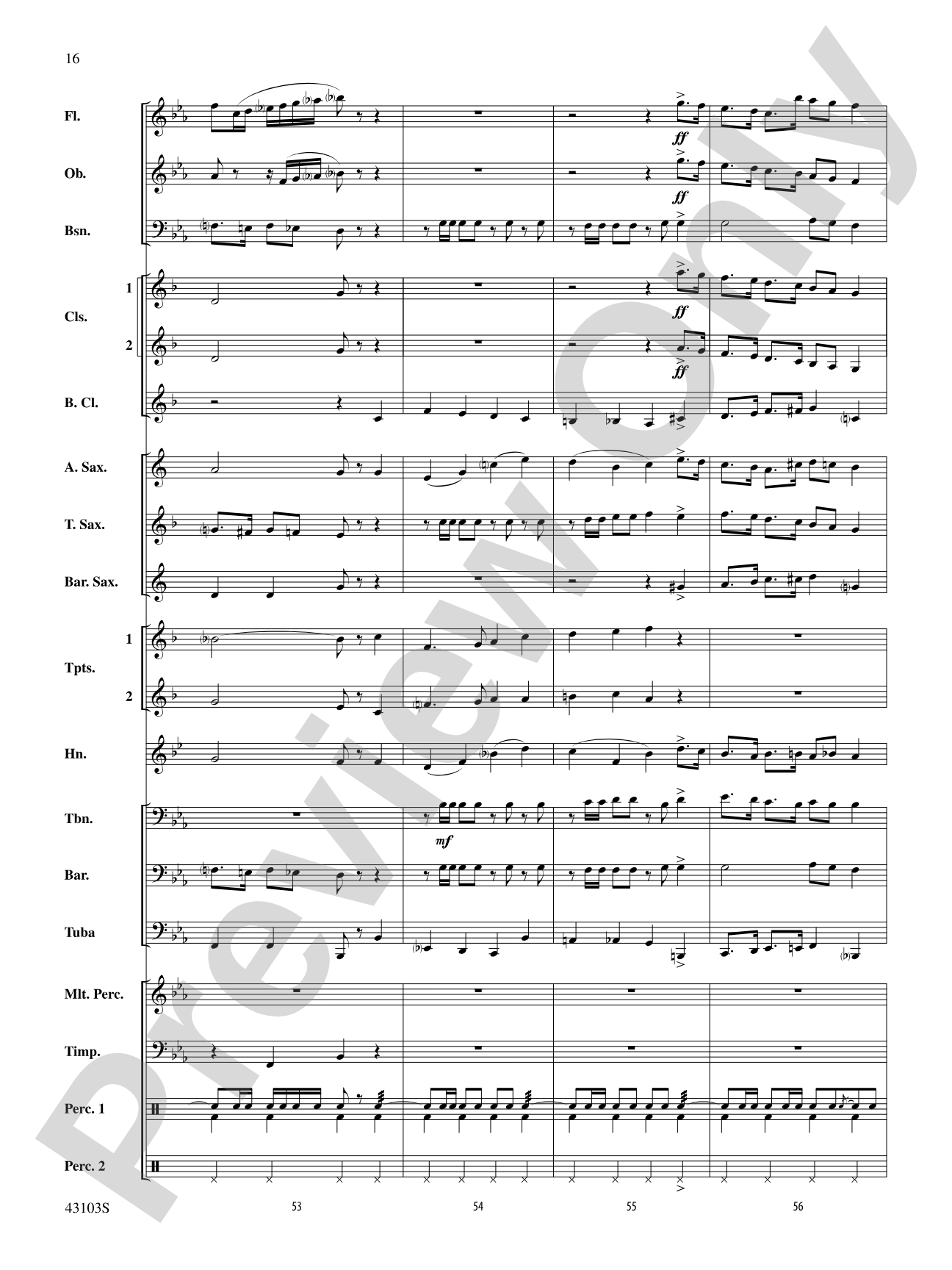
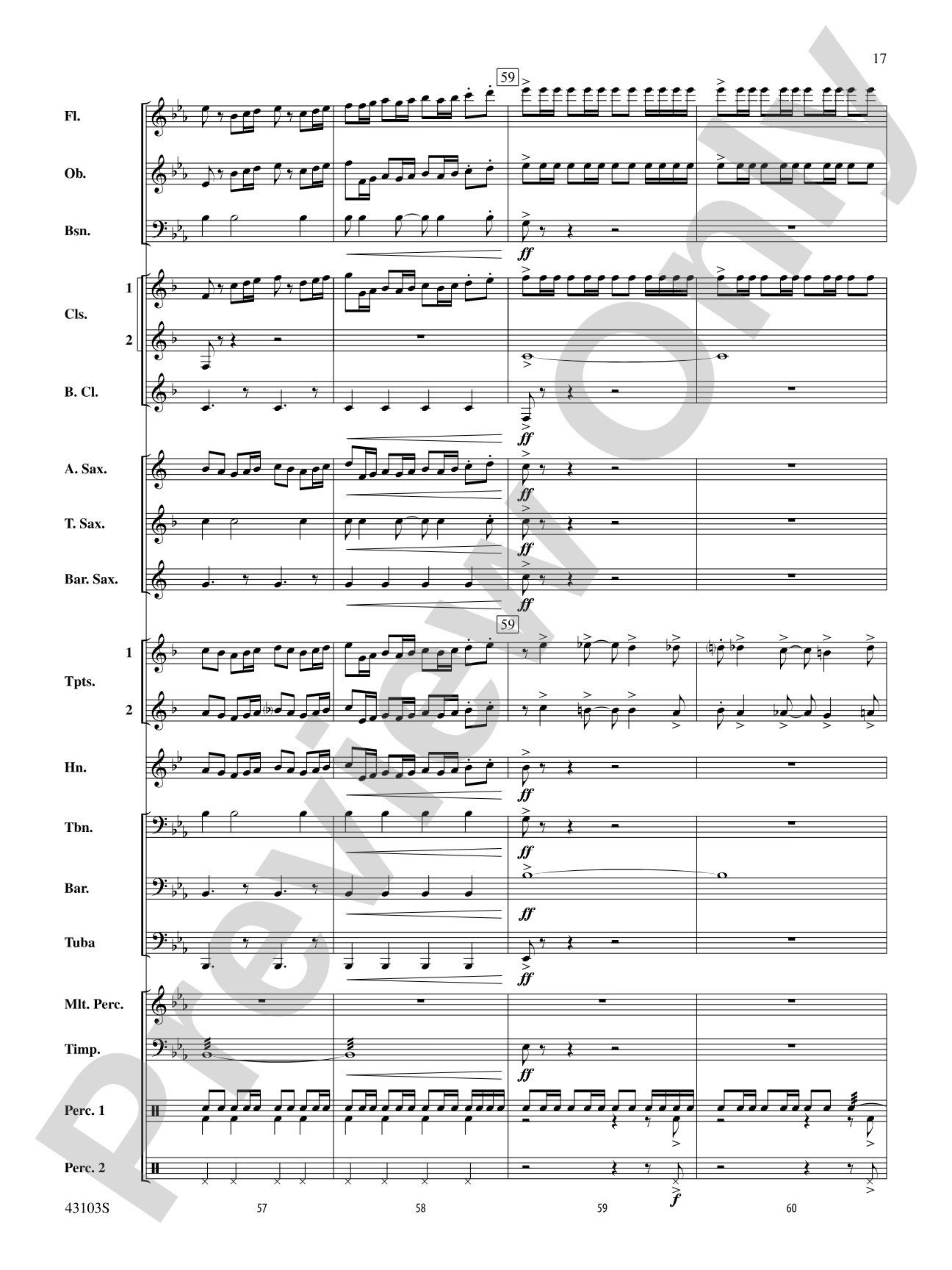
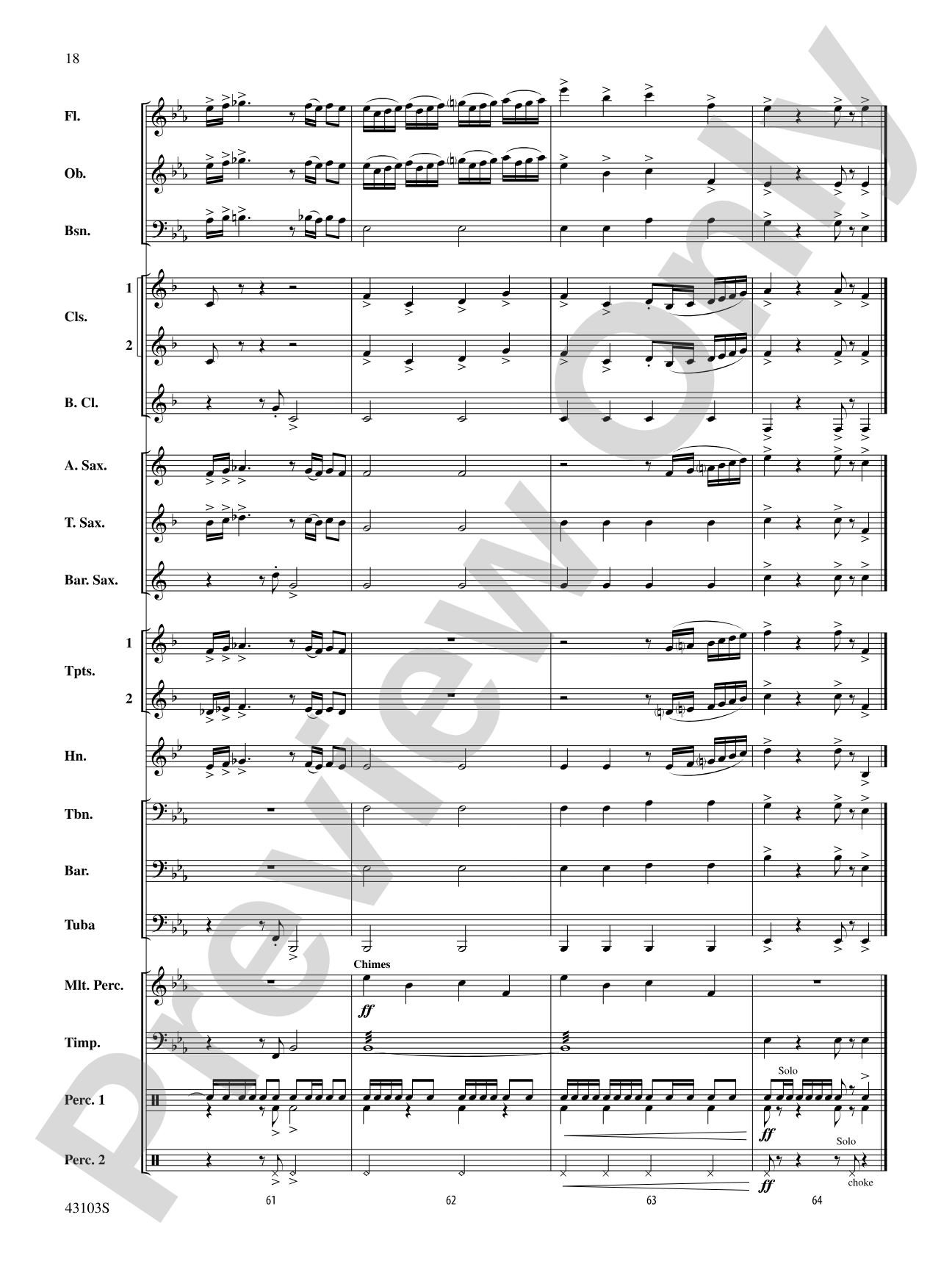

The Silver Quill: Score
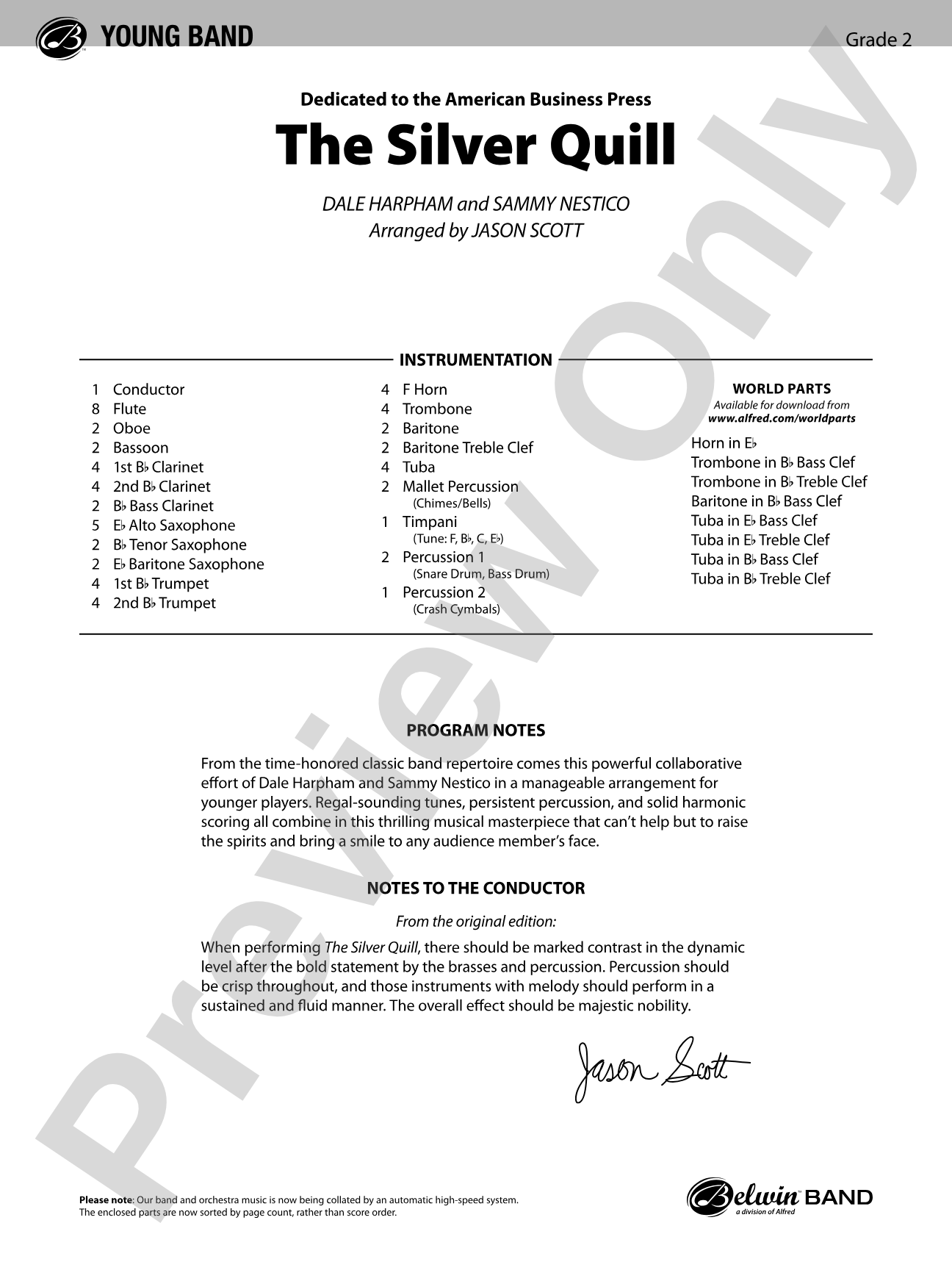
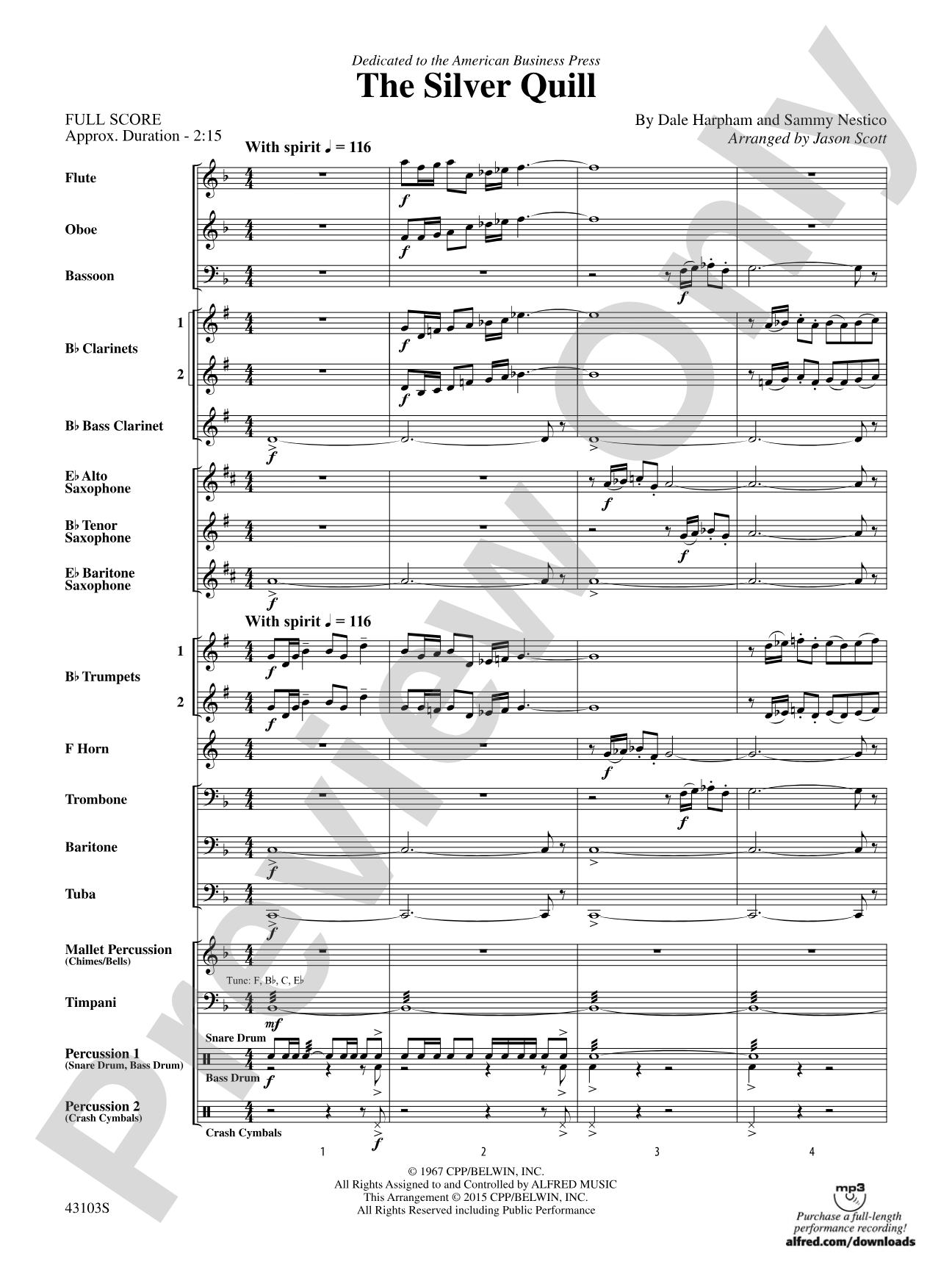
Dedicated to the American Business Press
By Dale Harpham and Sammy Nestico / arr. Jason Scott
Grade: 2 (Easy)
Item: 00-PR-0005038
$10.00
Pickup currently not available
Description
From the time-honored classic band repertoire, comes this powerful collaborative effort of Dale Harpham and Sammy Nestico, in a manageable arrangement of this cherished march for younger players. With regal-sounding tunes, persistent percussion, and solid harmonic scoring---this thrilling musical masterpiece can't help but to raise the spirits and bring a smile to any audience member's face. (2:15)


Don't just read it, hear it, play along with it, and watch your students grow with it. In MakeMusic Cloud, The Silver Quill: Score comes alive with professional accompaniment, adjustable tempo, and built-in practice tools that turn solo practice into real progress.
Open in the Player
Jump straight in and assign it today.
Start Your Free Trial
Open this title and explore the full library in minutes.
Sample Audio
1
Audio File
--:--
0:00
0:00
Sample Video
No sample videos found.
Additional Details
Series:
Pop Young Band
Publisher:
Alfred Music
Page Count:
180
SKU:
00-PR-0005038
More about this title
About the Composer: Dale Harphan
Dale Harphan is a respected composer and arranger whose work has become a staple in the concert band repertoire, particularly in educational settings. His compositions balance accessibility with musical substance, creating pieces that challenge young musicians while remaining genuinely enjoyable to perform and hear.
Why we love this
Harphan and Nestico's collaboration here captures the pageantry and forward momentum of a great march without asking your ensemble to overextend technically. The arrangement by Jason Scott respects the Grade 2 ability level while maintaining the regal character that makes this piece rewarding to conduct and satisfying for audiences to experience.
What to expect
Stately and spirited, with the ceremonial weight of a classic march paired with a straightforward joy that lifts the room. The persistent percussion and solid harmonic framework create momentum and dignity without pretense.
Who it's for
Grade 2 concert bands seeking a march with genuine musical substance and audience appeal. This arrangement works equally well for developing musicians building fundamental march performance skills and for established bands looking for a reliable concert or festival selection.
How to get the most out of it
- Shape the melodic lines with clear phrase breathing; the regal quality depends on singers' control of long tones and confident dynamic shaping across sections.
- Keep the percussion parts energetic and precise, especially the persistent rhythmic figures that drive the piece forward. They anchor the harmonic progression and deserve definition.
- Balance the harmonic scoring carefully in rehearsal. Young bands often spotlight the melody and underplay the supporting voices, which dilutes the richness of Harphan's writing.
- Lock in a steady tempo from the downbeat and hold it. Marches survive or falter based on rhythmic confidence, not interpretive flexibility.
How to use it
Program this on a concert devoted to the march tradition, or use it as an opener that sets a confident, uplifting tone. It also fits well in contest/festival settings where you want a selection that showcases ensemble control and musicianship within achievable technical boundaries.
Skills your students will build
- Sustaining long tones with consistent intonation across phrase lengths
- Responding to conductor gesture and maintaining ensemble unity at a steady tempo
- Executing dotted rhythmic figures characteristic of march style
- Balancing melodic prominence with supporting harmonic voices
- Precision in rhythmic coordination, especially with the percussion section