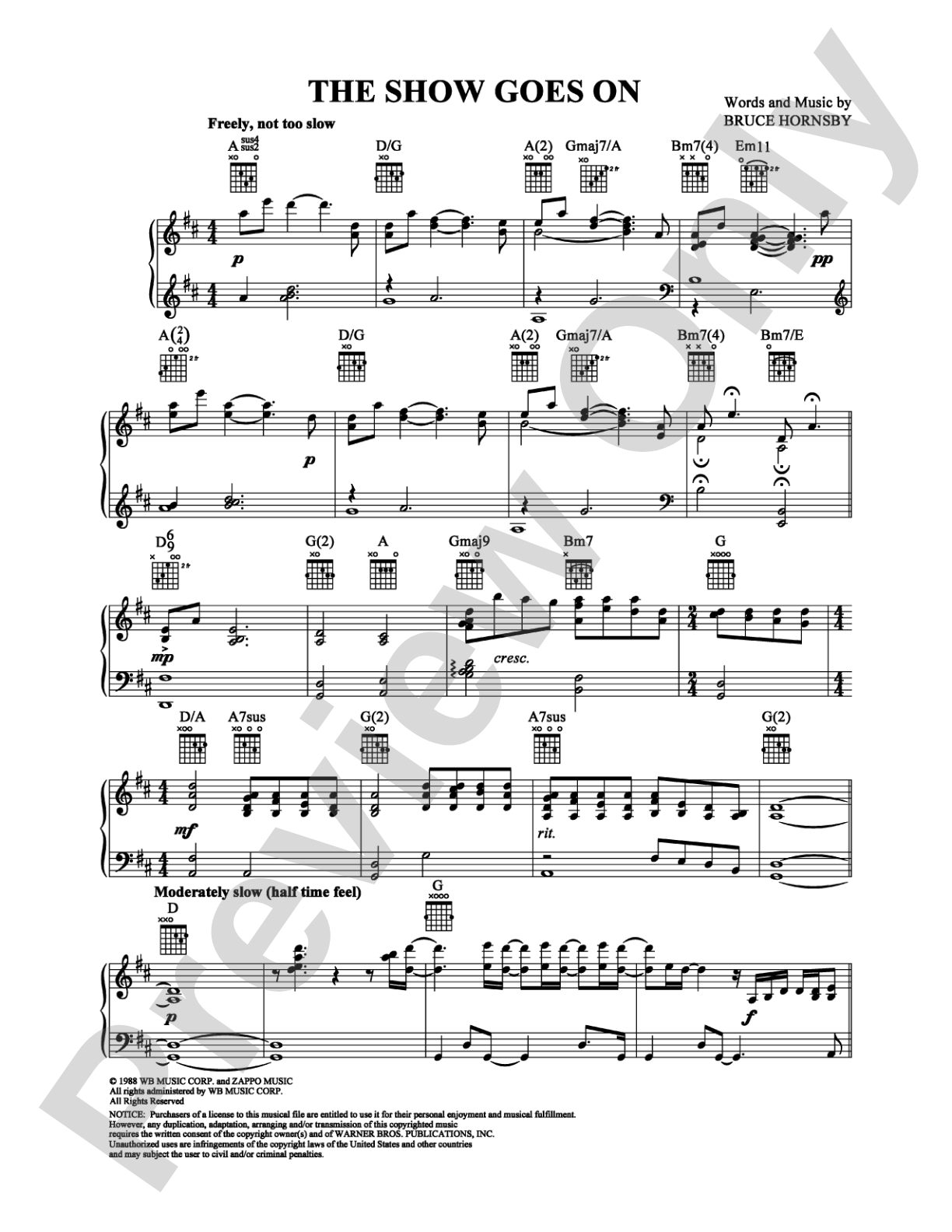
The Show Goes On: Piano/Vocal/Chords Digital Sheet Music

The Show Goes On: Piano/Vocal/Chords Digital Sheet Music

Bruce Hornsby

Item: 00-PS-0003144

Digital Download
$2.95
Description

The Show Goes On: Piano/Vocal/Chords Digital Sheet Music isn't in MakeMusic Cloud just yet...but it could be. Let us know you'd like to see it, and you'll help shape what comes next. In the meantime, start a free trial and dive into thousands of interactive titles your students can play along with today.

Sample Audio
No sample audio found.
Sample Video
Additional Details
SKU: 00-PS-0003144

More about this title

About the Artist: Bruce Hornsby

Bruce Hornsby is a classically trained pianist and singer-songwriter who built his career on the intersection of rock, pop, and jazz idioms. His work is defined by sophisticated harmonic sensibilities, intricate keyboard arrangements, and deeply personal lyrical content that resonates across adult contemporary audiences.

Why we love this

Hornsby's compositions demand real pianistic skill while remaining accessible to intermediate players who can handle jazz-influenced voicings. The song's architecture rewards careful attention to dynamic shaping and the interplay between vocal melody and keyboard accompaniment, making it ideal for singers and pianists working on contemporary material with harmonic depth.

What to expect

The song unfolds with quiet determination and understated optimism, driven by Hornsby's characteristic blend of rock energy and piano-centered sophistication. There's a resilient quality to the music—straightforward in its message yet complex in its harmonic landscape, making each performance feel both intimate and substantial.

Who it's for

Pianists and vocalists tackling contemporary popular music with harmonic sophistication will find rich material here. Solo performers and collaborative duos looking for repertoire that showcases both technical ability and emotional maturity will connect with this piece.

How to get the most out of it

  • Balance the piano voicings to support the vocal line without overwhelming it; the chords often contain subtle inner voices that deserve clarity.
  • Approach the tempo with flexibility in mind. Allow the melody to breathe, particularly in moments where the vocal phrasing extends beyond strict rhythmic boundaries.
  • Listen for dynamic contrast between verses and chorus. The arrangement gains impact when quieter passages precede fuller, more energetic sections.
  • Pay attention to the interplay between hands on the keyboard. Left-hand comping patterns should support rather than compete with the melody line.

How to use it

This works exceptionally well in recitals featuring contemporary songwriters or in showcases celebrating piano-vocal repertoire. The piece also serves advanced high school and college-level ensembles when programming a set that bridges classical training with modern popular music.

Skills your students will build

  • Reading and interpreting jazz-influenced chord voicings
  • Coordinating complex piano accompaniment with vocal phrasing
  • Shaping dynamics across longer phrases without losing structural clarity
  • Managing rhythmic flexibility while maintaining ensemble cohesion (when performed with accompanist)

You May Also Like