The Shortest Day Of The Year (from The Boys From Syracuse) Sheet Music Preview

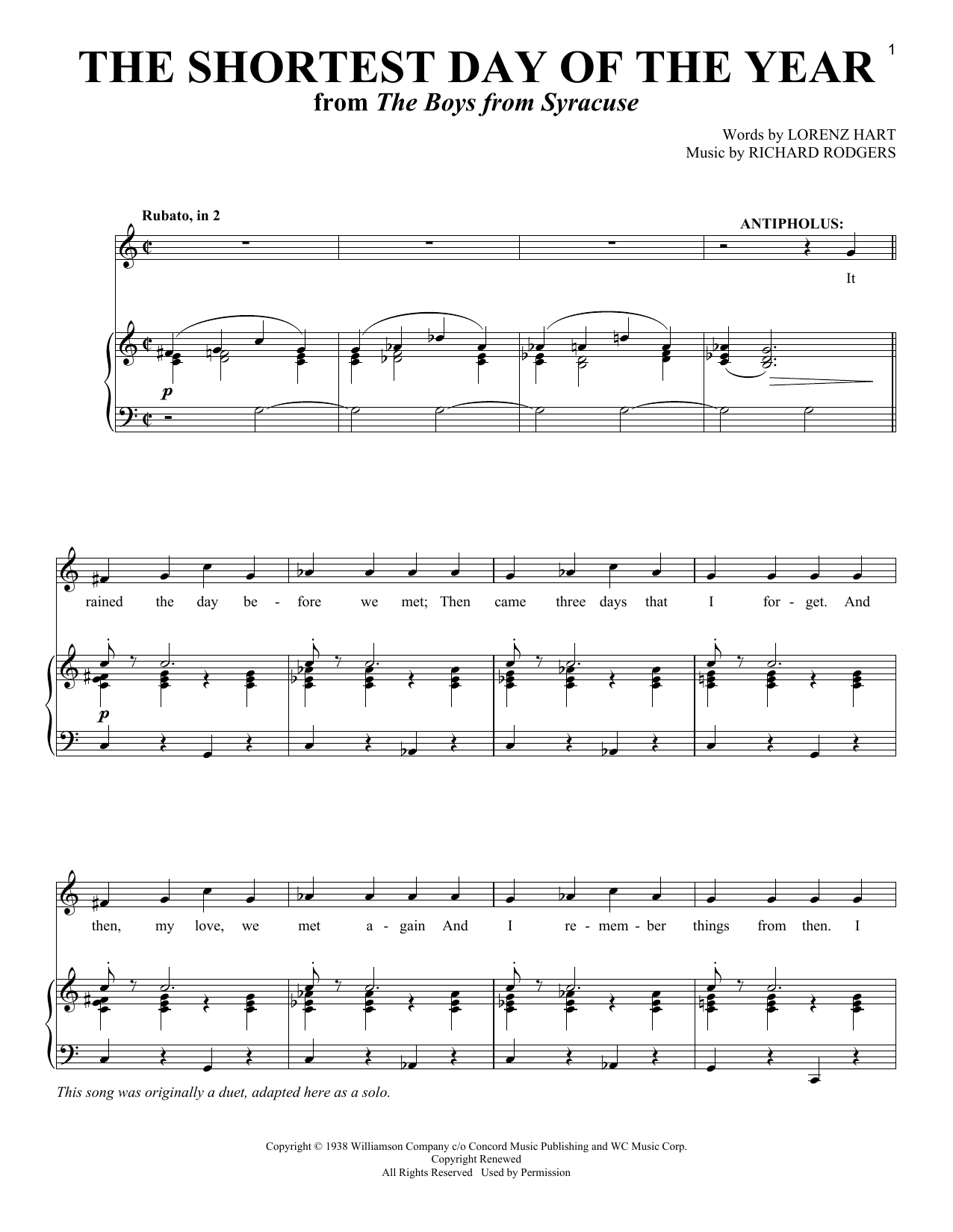
The Shortest Day Of The Year (from The Boys From Syracuse): Piano Vocal

Item: 35-DS01829326

Digital Download
$5.99
Description

The Shortest Day Of The Year (from The Boys From Syracuse): Piano Vocal isn't in MakeMusic Cloud just yet...but it could be. Let us know you'd like to see it, and you'll help shape what comes next. In the meantime, start a free trial and dive into thousands of interactive titles your students can play along with today.

Sample Audio
No sample audio found.
Sample Video
Additional Details
Publisher: Hal Leonard
Page Count: 4
SKU: 35-DS01829326

More about this title

About the Creator: Rodgers and Hart

Rodgers and Hart created some of Broadway's most durable and inventive scores during the 1930s. Richard Rodgers composed melodies of unusual sophistication and harmonic subtlety, while Lorenz Hart supplied lyrics that crackled with wit, internal rhymes, and genuine emotional depth. The Boys from Syracuse (1938) represents their work at peak ingenuity: a musical adaptation of The Comedy of Errors that allowed them to build extended musical sequences and character songs that still sound fresh decades later.

Hart's lyrics for this number move with comic precision, matching the text-setting to the show's farcical energy. Rodgers supported the humor with a melodic line that sits naturally in the tenor range, offering performers a chance to navigate a song that's simultaneously clever and genuinely singable.

Why we love this

This song captures the particular magic of 1930s Broadway humor: the lyrics land their jokes without stopping the musical momentum, and the melody stays conversational even as the harmonic language moves in unexpected directions. For tenor singers, it's a gift—the range sits comfortably, but the material demands real attention to character and comic timing, which means rehearsals feel like they're unlocking something about the score rather than just drilling mechanics.

What to expect

The song crackles with urbane humor and rapid-fire observations. There's an almost patter-song quality to sections of the text, yet underneath runs a genuine melodic charm that keeps the number from feeling purely comedic. It's sophisticated without being arch.

Who it's for

Tenor soloists comfortable with character-driven material and legible diction. This works equally well for a cabaret evening or as a specialty solo in a larger concert program featuring American musical theater.

How to get the most out of it

  • Lean into the text. Hart's rhyme scheme and syllable placement are deliberate; honor the lyric's rhythm before forcing it into the melodic line.
  • Use the piano part as a character voice. The accompaniment carries wit of its own, so the soloist and accompanist must stay locked in tempo and phrasing to let the comedy breathe.
  • Find the character's perspective. This song works best when the tenor commits to a specific point of view, whether self-aware, oblivious, or something in between.

How to use it

Pair this with other short character songs or novelty numbers to build a cabaret set, or use it as a palate cleanser in a larger concert. The four-page format makes it efficient to rehearse, and it's distinctive enough to stand out on any program that leans toward musical theater.

Skills your students will build

  • Comic timing and rhythmic precision in lyric delivery
  • Sustaining character through a rapid-fire text setting
  • Collaborating with an accompanist to maintain ensemble cohesion in an up-tempo number
  • Executing clear diction at moderate to quick tempos

You May Also Like