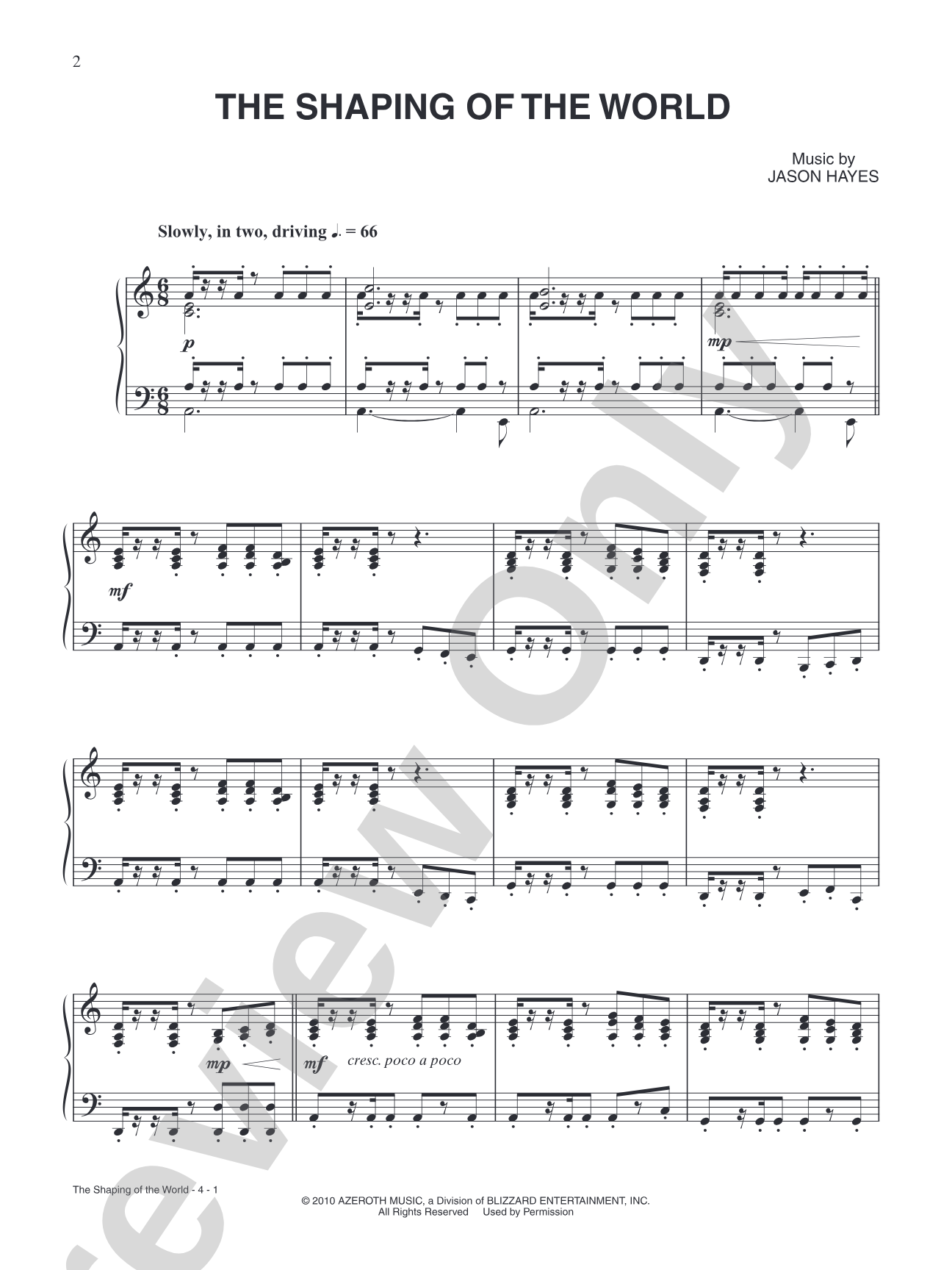
The Shaping of the World (from "World of Warcraft") Sheet Music Preview

The Shaping of the World (from "World of Warcraft"): Piano

Music by Jason Hayes

Item: 00-XS-0000104

Digital Download
$3.99
Description
Alfred Music is proud to present officially licensed, collectible sheet music and songbooks from the soundtrack of Blizzard Entertainment's World of Warcraft, the world's most popular massive multiplayer online role-playing video game. This arrangement of "Shaping of the World" captures the dramatic intensity of the original recording for pianists of all ages to enjoy.

The Shaping of the World (from "World of Warcraft"): Piano isn't in MakeMusic Cloud just yet...but it could be. Let us know you'd like to see it, and you'll help shape what comes next. In the meantime, start a free trial and dive into thousands of interactive titles your students can play along with today.

Sample Audio
No sample audio found.
Sample Video
Additional Details
Series: Original Sheet Music Edition
Publisher: Alfred Music
Page Count: 6
SKU: 00-XS-0000104

More about this title

About the Composer: Jason Hayes

Jason Hayes is the principal composer for World of Warcraft, having crafted the game's iconic soundscapes since its 2004 launch. His work has become synonymous with the epic fantasy world, blending orchestral grandeur with thematic precision to underscore moments of triumph, mystery, and conflict across the game's expansive landscape.

Why we love this

This arrangement translates one of Warcraft's most recognizable themes into an idiomatically written piano piece that respects both the original's dramatic arc and the instrument's capabilities. The 6-page score offers pianists a substantial solo that rewards musicality without requiring virtuosic technique, making it equally engaging for students discovering film and game music composition and for teachers seeking contemporary repertoire that connects with their students' lived experience.

What to expect

The piece unfolds with the gravitas of an orchestral overture compressed into the intimate medium of solo piano. Sweeping melodic gestures and rich harmonic movement create moments of awe and grandeur, while quieter passages allow for introspection and repose, capturing the vast and consequential world from which it originates.

Who it's for

This arrangement works for intermediate to advanced pianists seeking contemporary material with narrative depth and visual cinematic appeal. It also serves ensemble directors and studio teachers looking for accessible transcriptions of well-known media that motivate student engagement with classical forms and orchestration concepts.

How to get the most out of it

  • Shape the opening phrases with restraint; the drama builds through accumulation of texture, not immediate intensity. Let silence and space carry as much weight as the notes themselves.
  • Pay close attention to dynamic markings and tempo shifts. They articulate the architecture of the piece and prevent the arrangement from feeling like a single sustained swell.
  • Balance the left hand carefully when it carries harmonic weight. The right hand's melody should dominate, but the supporting sonority underneath must remain clear and defined.
  • Resist the urge to rush during faster passages. Rhythmic precision and evenness of touch will enhance the sense of forward momentum far more effectively than increased tempo.

How to use it

This works well as a concert opener that immediately signals a shift toward contemporary and multimedia-influenced composition, or as a bridge piece connecting classical and popular idioms within a single recital. It also functions effectively as a teaching tool for discussing how orchestral writing translates to the keyboard, making it valuable for music theory and composition classes exploring arrangement and orchestration.

Skills your students will build

  • Pedal control and harmonic resonance management
  • Phrasing across extended melodic lines
  • Balancing multiple textural layers in both hands simultaneously
  • Interpreting dramatic dynamic and tempo markings
  • Understanding orchestration concepts through keyboard transcription

You May Also Like