
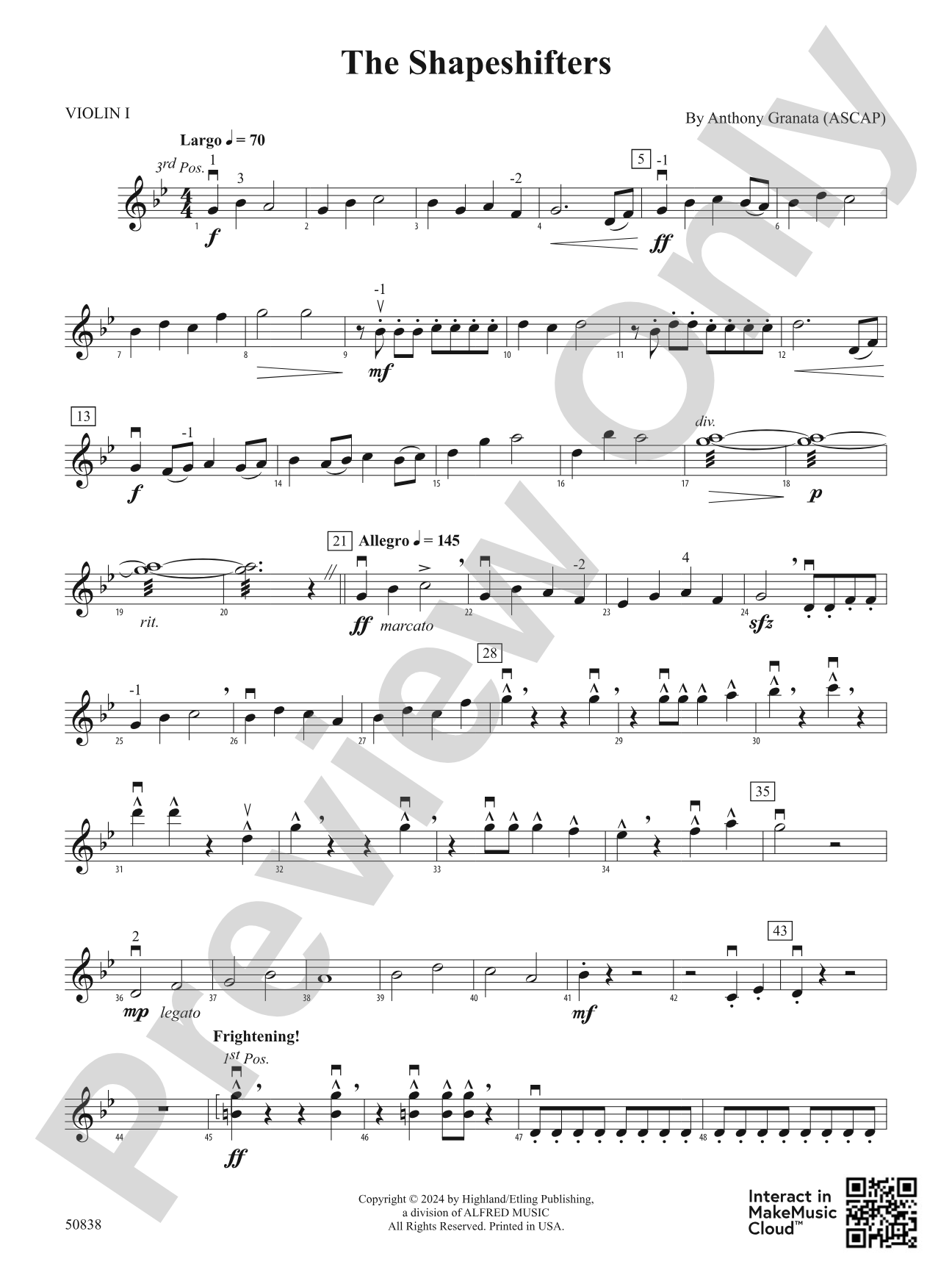

The Shapeshifters: 1st Violin
By Anthony Granata
Grade: 3
Item: 00-PC-0019285_VN1
$3.00
Pickup currently not available
Description
The Shapeshifters, by Anthony Granata, is a challenging and engaging programmatic work for advancing orchestras. A shapeshifter, or a mythological being able to change physical form, is a perfect analogy for what is required from your student musicians. If you're teaching a unit on shifting, then ALL your sections (yes, 2nd violins, too!) can practice shifting into third position. This programmatic work tells the story of the misunderstood but frightening shapeshifters who, at first, seem both beautiful and harmless (the "Largo" section) but suddenly transform into frightening creatures (the "Allegro" section). Inspired by the beautiful and harmonically dissonant works of Ives, Bartók, and Stravinsky, take your students on an epic journey in this fantasy-inspired work. Set in the key of G minor, students will be exposed to the piece's demanding technical requirements while encountering beautiful harmonic suspensions and frighteningly dissonant and abrupt chords. Concluding with an overlay of both the "Largo" and "Allegro" themes, this piece is sure to engage orchestras and please audiences! (3:45)


Don't just read it, hear it, play along with it, and watch your students grow with it. In MakeMusic Cloud, The Shapeshifters: 1st Violin comes alive with professional accompaniment, adjustable tempo, and built-in practice tools that turn solo practice into real progress.
Open in the Player
Jump straight in and assign it today.
Start Your Free Trial
Open this title and explore the full library in minutes.
Sample Audio
1
Audio File
--:--
0:00
0:00
Sample Video
Additional Details
Series:
Highland/Etling String Orchestra
Publisher:
Alfred Music
SKU:
00-PC-0019285_VN1
More about this title
About the Composer: Anthony Granata
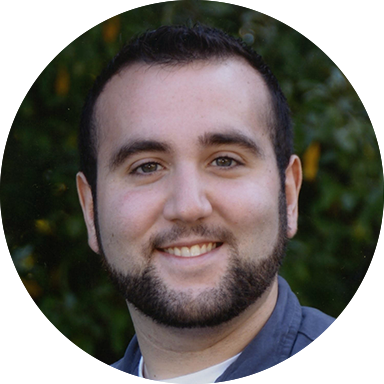
Anthony Granata teaches middle school orchestra in Westport, Connecticut, and composes music specifically designed to address the technical challenges his student musicians face. He earned his degree from Western Connecticut State University and has worked across multiple grade levels and ensemble settings, from beginning band to elementary chorus to high school orchestra.
Granata began composing as a young musician and credits his own experience in the Norwalk public school music program with shaping his advocacy for robust orchestra curricula. A skilled violist who performs regularly, he returned to composition after focusing on his teaching career, channeling his classroom experience into pieces that teach demanding concepts while engaging young players musically.
Why we love this
This piece solves a real pedagogical need: it gives every section meaningful work on shifting, not just the first violins. The programmatic framing transforms a technical study into narrative storytelling, keeping students invested in the musical journey while their hands develop control in third position. The harmonic language draws from twentieth-century masters without overwhelming Grade 3 players, creating something both intellectually engaging and genuinely fun to perform.
What to expect
The work opens with lyrical beauty and harmonic ambiguity that recalls Ives and Bartók, lulling listeners into false security. Then it shatters. The sudden transformation into the "Allegro" jolts you with jarring chords and frenetic energy, capturing that moment when something lovely reveals its frightening nature. The finale braids both worlds together, creating a haunting resolution that leaves audiences unsettled and impressed.
Who it's for
Advanced Grade 3 string orchestras ready to tackle shifts, dissonance, and programmatic sophistication. This piece demands secure third position work across all sections and asks musicians to think narratively about their playing, making it ideal for ensembles that have mastered foundational technique and are ready for the next conceptual leap.
How to get the most out of it
- Shape the "Largo" section with the kind of careful dynamic control that makes the harmonic suspensions resonate; these gorgeous moments are the contrast your audience needs before the chaos arrives.
- When the "Allegro" erupts, commit fully to the dissonance and abruptness. Don't smooth it out or apologize for the ugly chords; they're the whole point of the shapeshifter's transformation.
- In the final overlay of both themes, clarity matters more than blend. Make sure each section's melodic line cuts through so the program's conclusion doesn't collapse into mud.
- Use the recorded accompaniment to lock your tempo transitions, especially the sudden shift from "Largo" to "Allegro." Your students need that external anchor.
How to use it
Program this as a festival or contest selection where its technical demands and programmatic appeal will stand out among safer Grade 3 choices. It also works beautifully as the anchor piece in a concert that explores twentieth-century compositional thinking, paired with accessible works by Bartók or Stravinsky that share similar harmonic language.
Skills your students will build
- Shifting securely into third position across all string parts
- Reading and performing dissonant harmonic intervals with confidence
- Responding to dramatic tempo and character changes within a single piece
- Balancing melody and accompaniment in complex textures
- Interpreting programmatic content through musical choices