
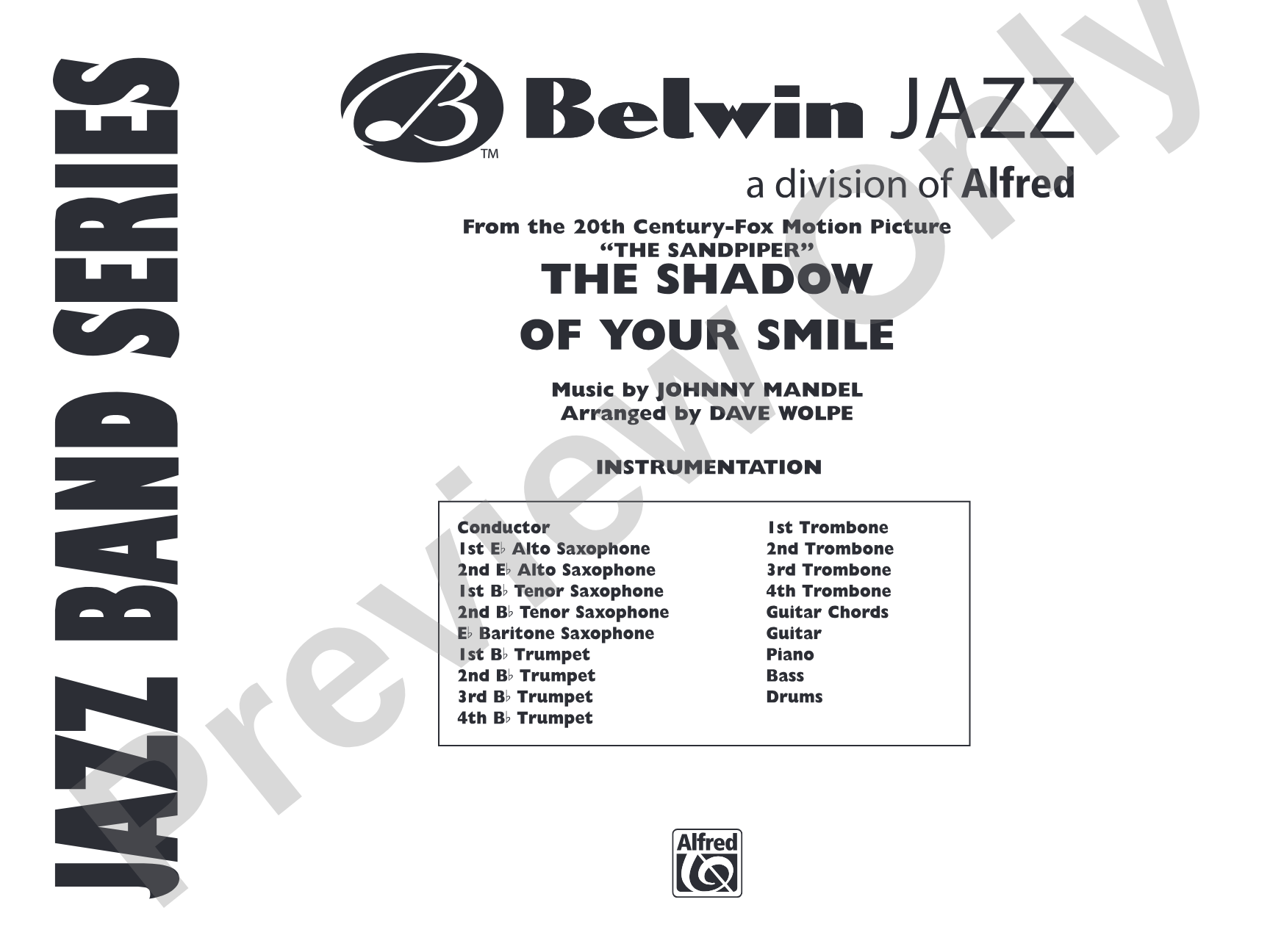
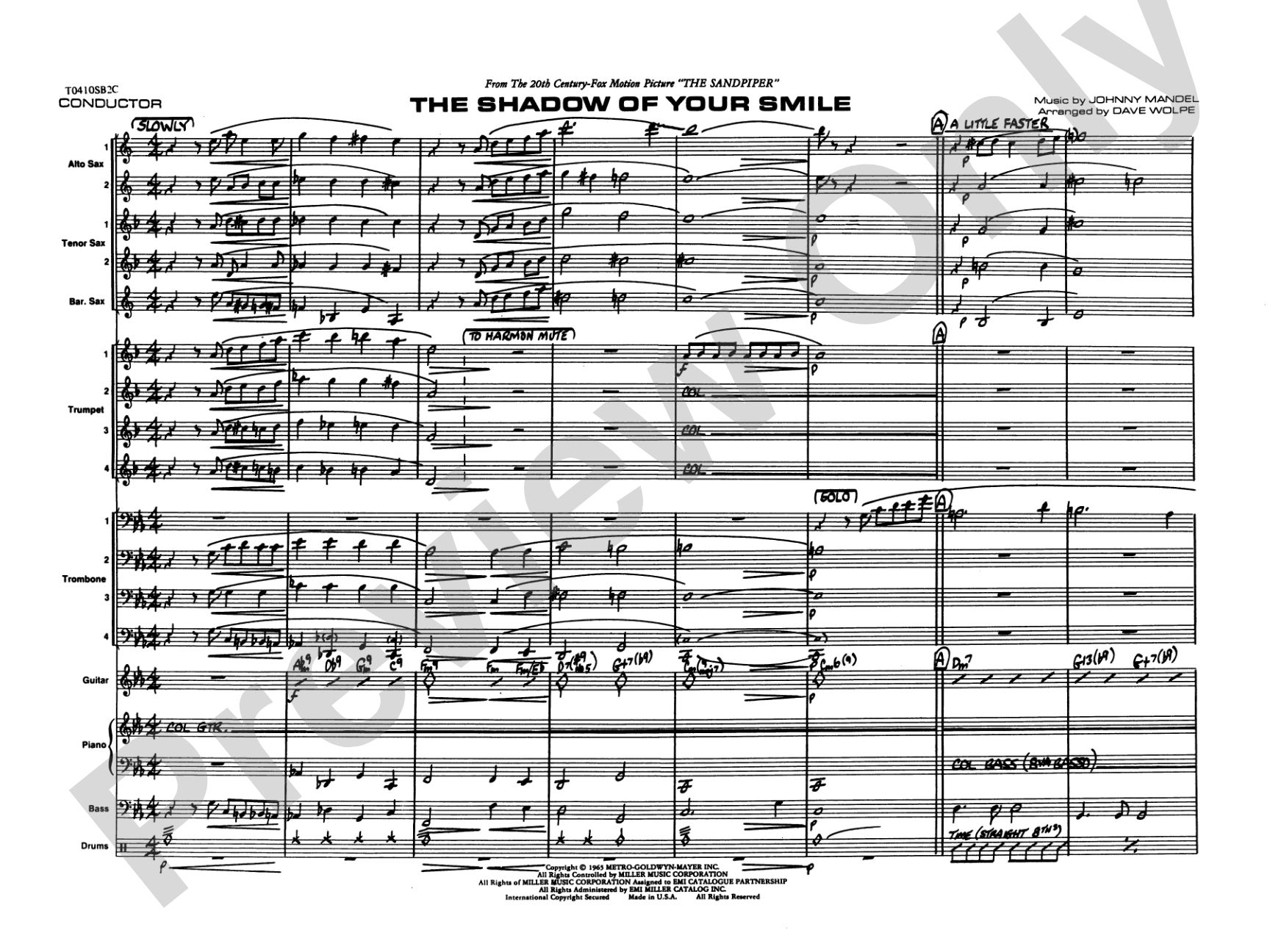
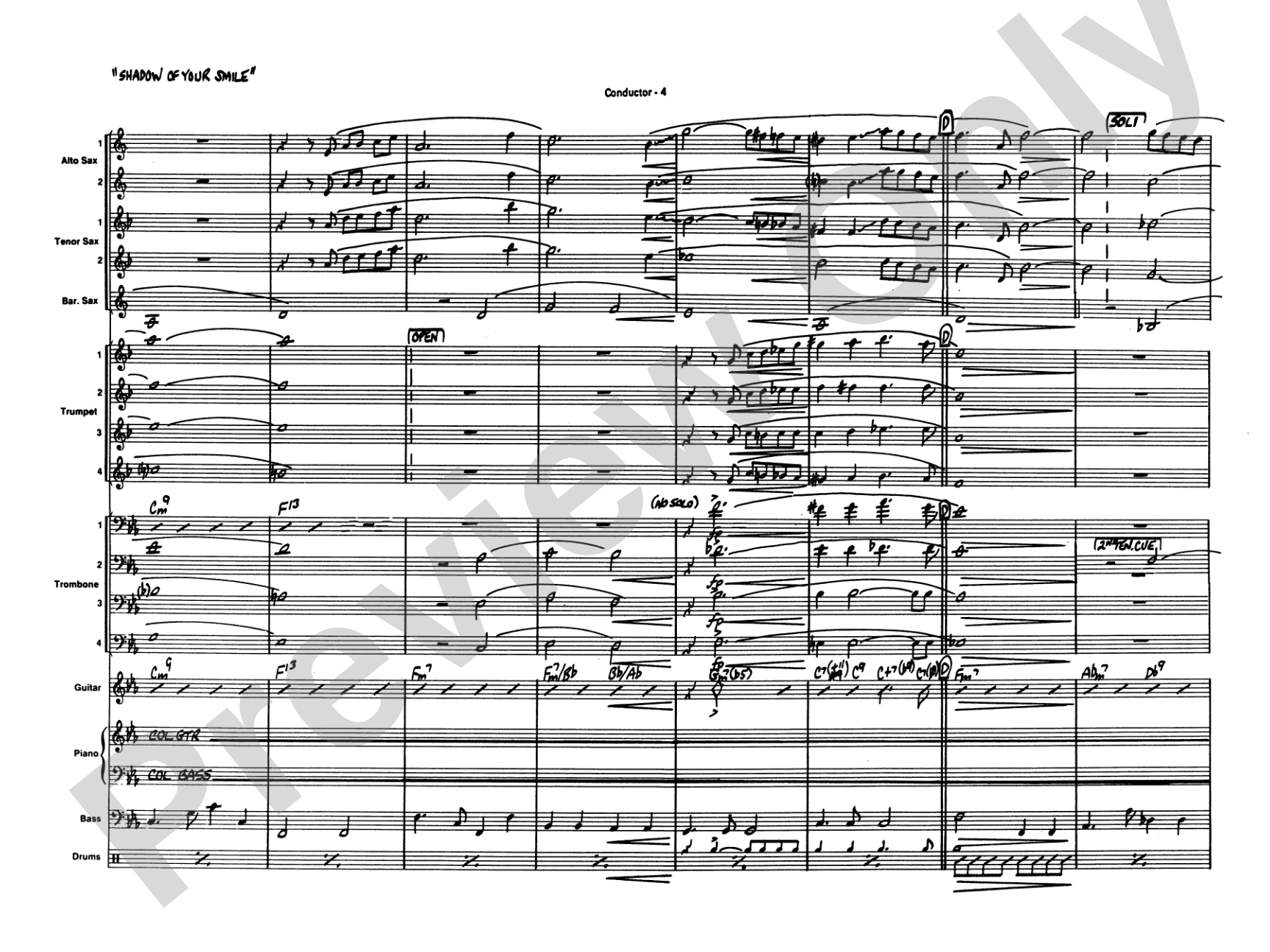
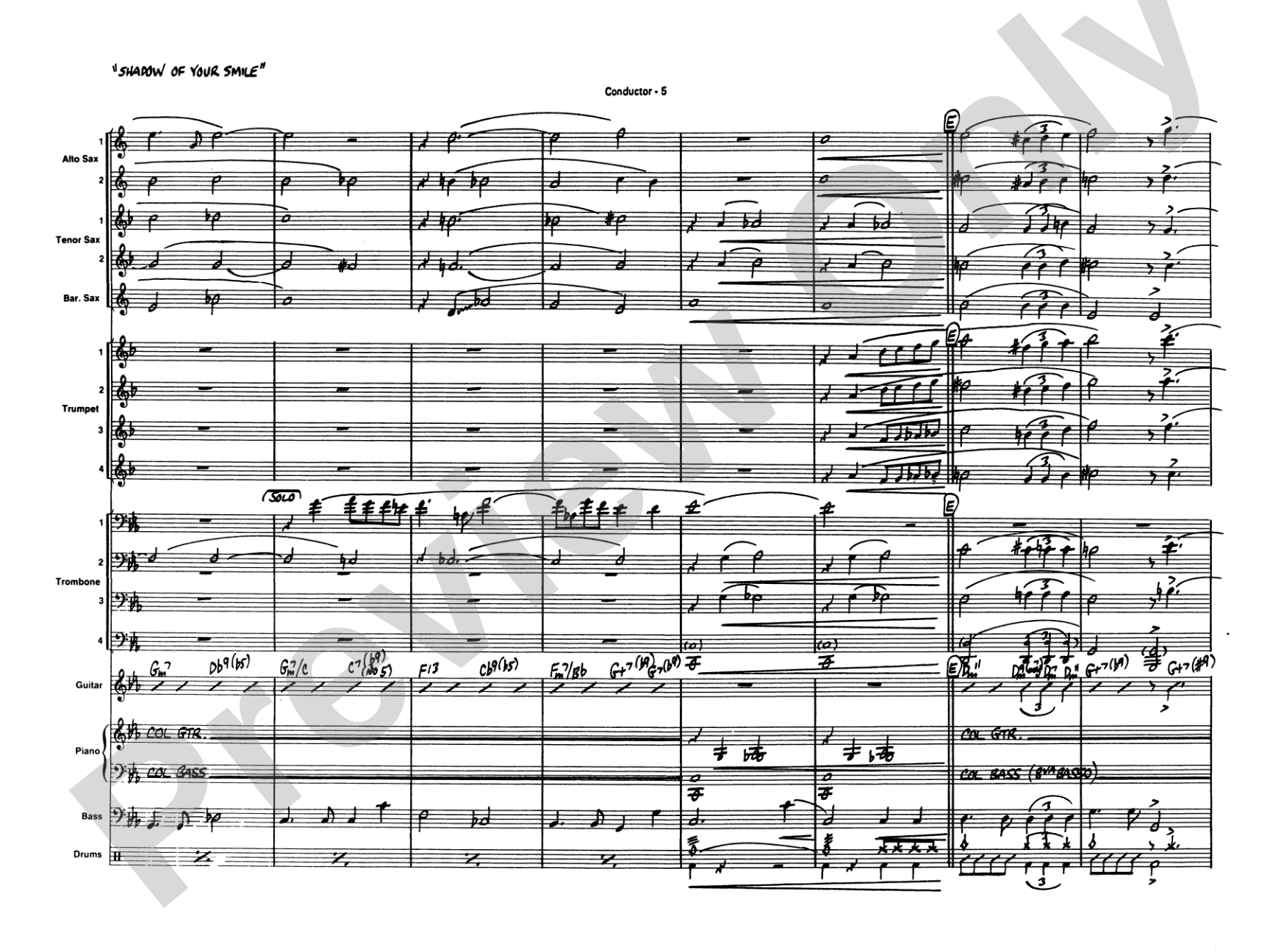
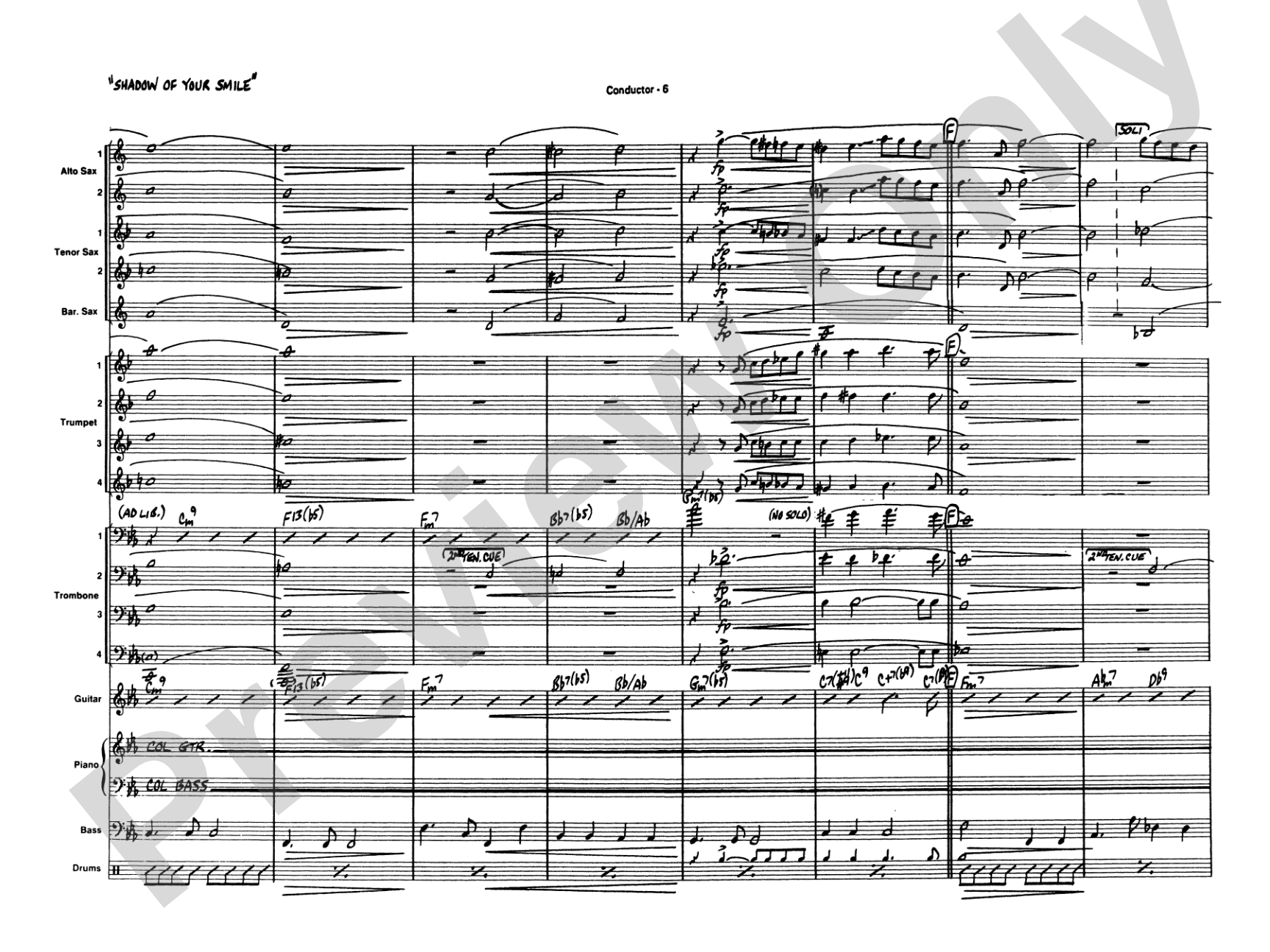
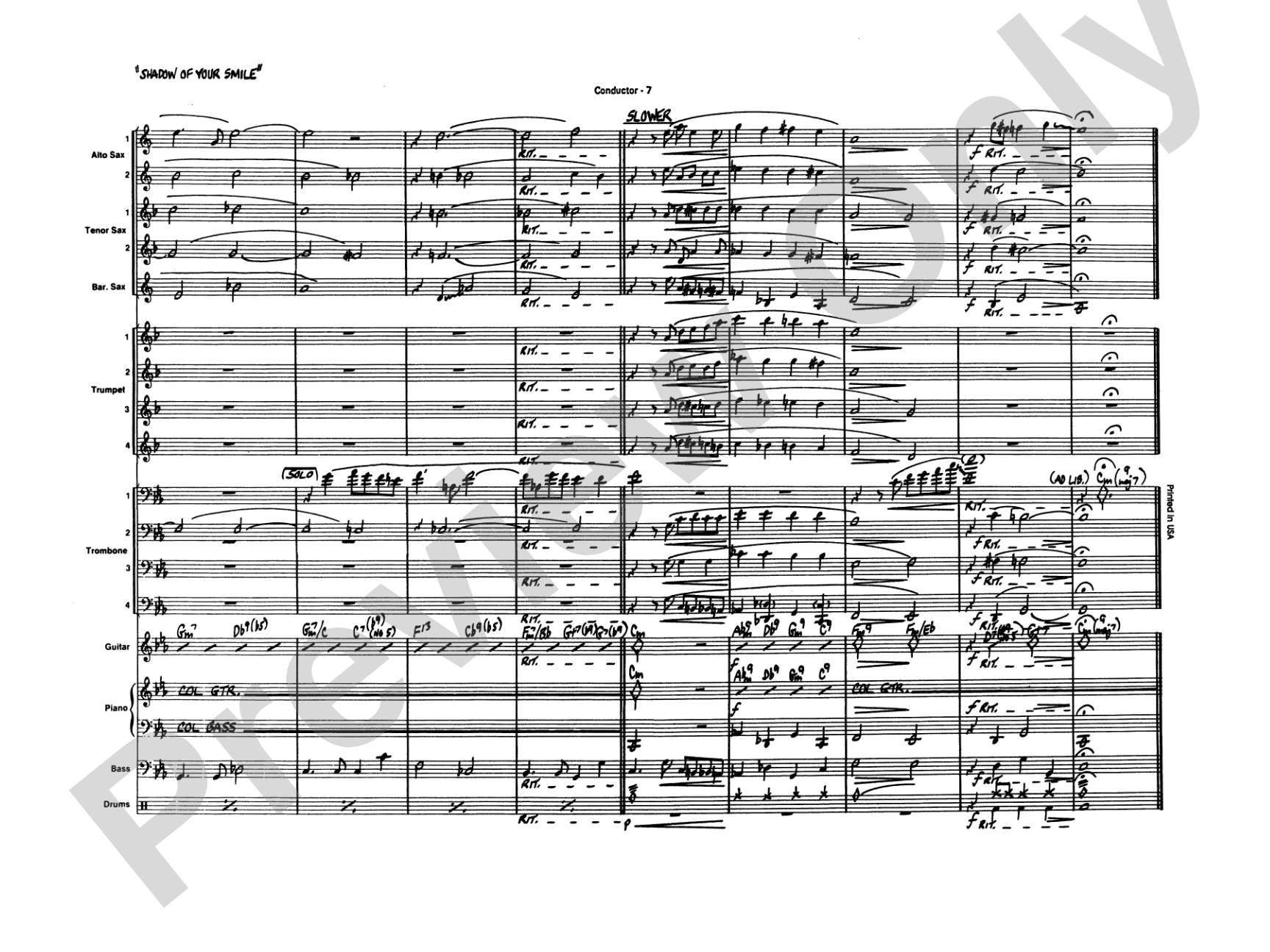

The Shadow of Your Smile (from The Sandpiper): Jazz Ensemble Conductor Score & Parts
By Johnny Mandel / arr. Dave Wolpe
Grade: 4 (Medium Advanced / Difficult)
Item: 00-PK-0002646

$52.00
Pickup currently not available
Buy Extra Parts (Digital PDF Download)
Parts Added to Cart!
Description
Feature your trombone soloist in this expressive arrangement of this outstanding melody. This one will bring big rewards for both players and listeners.


Don't just read it, hear it, play along with it, and watch your students grow with it. In MakeMusic Cloud, The Shadow of Your Smile (from The Sandpiper): Jazz Ensemble Conductor Score & Parts comes alive with professional accompaniment, adjustable tempo, and built-in practice tools that turn solo practice into real progress.
Open in the Player
Jump straight in and assign it today.
Start Your Free Trial
Open this title and explore the full library in minutes.
Sample Audio
No sample audio found.
Sample Video
No sample videos found.
Additional Details
Series:
Premier Jazz Series
Publisher:
Alfred Music
Page Count:
80
SKU:
00-PK-0002646
More about this title
About the Composer: Johnny Mandel
Johnny Mandel (1925-2024) composed some of the most elegant and lyrical melodies in American popular music. His gift for songwriting—often in collaboration with lyricists like Paul Francis Webster—resulted in standards that have become touchstones for jazz musicians and singers alike. Mandel's work in film scoring brought sophistication and harmonic depth to cinema; his arrangements and compositions reflect a deep understanding of orchestration and the human voice, whether sung or played on an instrument.
As both a composer and arranger, Mandel shaped the sound of mid-century American music. His melodies sing naturally over complex harmonies, creating pieces that reward careful listening and expressive interpretation. For jazz ensemble settings, his compositions offer the lyrical content that allows soloists to tell a story while maintaining the structural integrity that keeps large ensembles together.
Why we love this
This arrangement sits at the heart of what makes a jazz ensemble feature work: a melody so beautiful that it can carry an entire performance, and harmonic sophistication that respects both the trombone soloist and the ensemble supporting them. Dave Wolpe's orchestration balances transparency and color, giving the soloist room to breathe while keeping the ensemble engaged throughout. Audiences respond immediately to this piece because the song itself does the heavy lifting; your job as director is simply to let it sing.
What to expect
Wistful and introspective, yet grounded in swinging ensemble grooves. The melody carries a gentle melancholy that pairs beautifully with the warmth of the trombone voice. This is a piece that asks for maturity in both conception and execution, creating a moment of genuine reflection within a concert program.
Who it's for
Jazz ensemble directors looking for a feature that showcases a strong trombone soloist while maintaining musicality across the entire group. This piece works for ensembles with solid fundamentals and a trombone player who can handle lyrical, sustained playing with confidence and control.
How to get the most out of it
- Treat the trombone solo as a vocalist would approach the melody. Phrasing, dynamic shape, and rubato matter more here than mechanical accuracy. Give your soloist permission to own the shape of the line.
- The ensemble parts require precision in the background, especially during the solo section. Clarity of articulation and balance will highlight rather than compete with the trombone.
- Pay attention to harmonic voice leading in the accompaniment figures. Smooth, connected ensemble playing creates the lush backdrop this melody deserves.
- Allow the piece to breathe at phrase endings. Rushing slightly or pushing through natural pauses flattens the emotional arc.
How to use it
Program this as a centerpiece of a jazz concert, ideally in the second half where audiences are settled and ready to listen deeply. It provides a welcome change of pace from up-tempo swingers and showcases the sophistication of your ensemble's musicianship. Consider pairing it with contrasting selections to highlight the range of your group.
Skills your students will build
- Lyrical phrasing and dynamic shaping in solo passages
- Accompaniment sensitivity and harmonic listening
- Sustained tone control and breath management on trombone
- Ensemble balance and transparency in supporting figures
- Interpretation of jazz rubato and expressive timing