
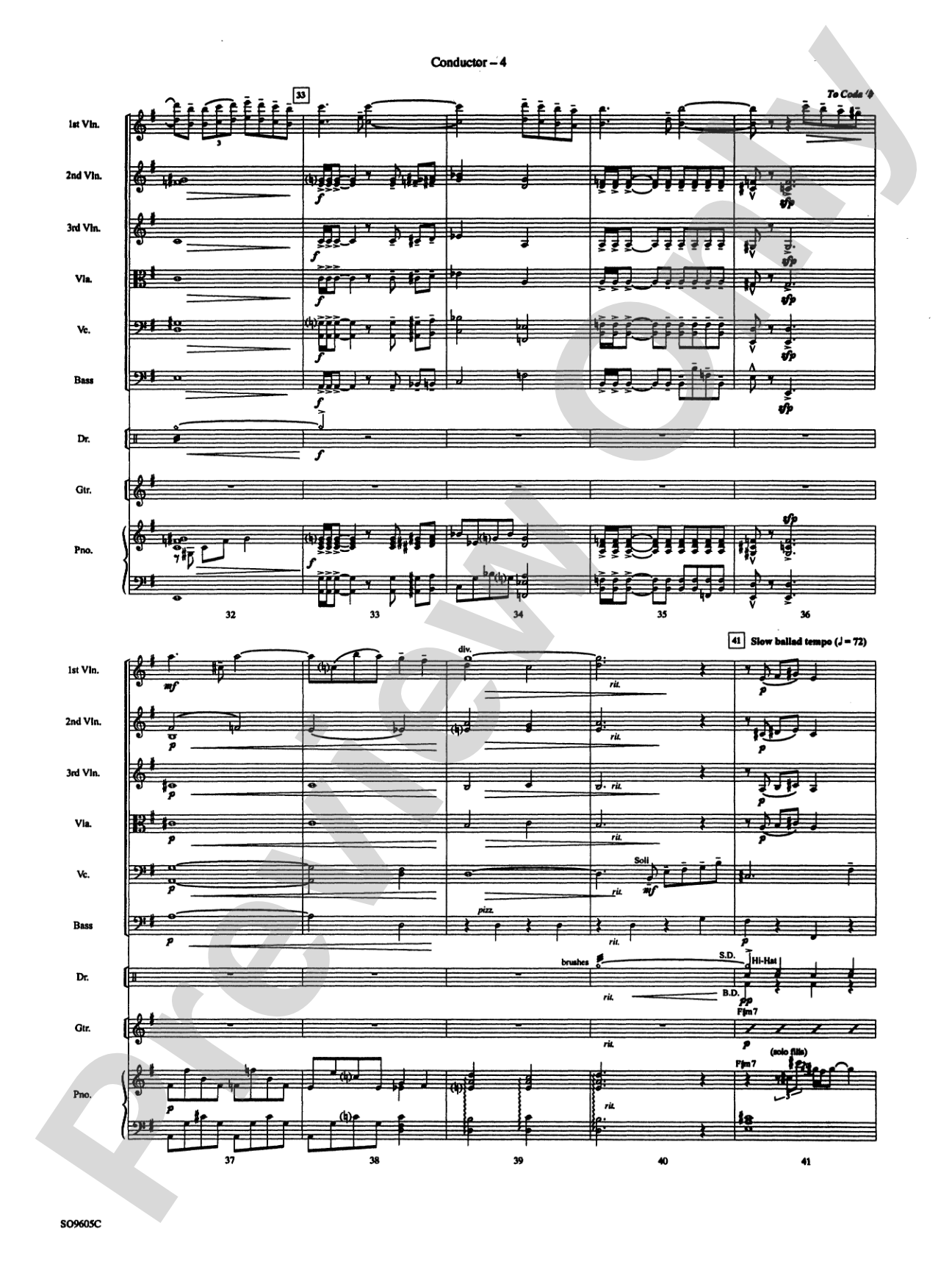
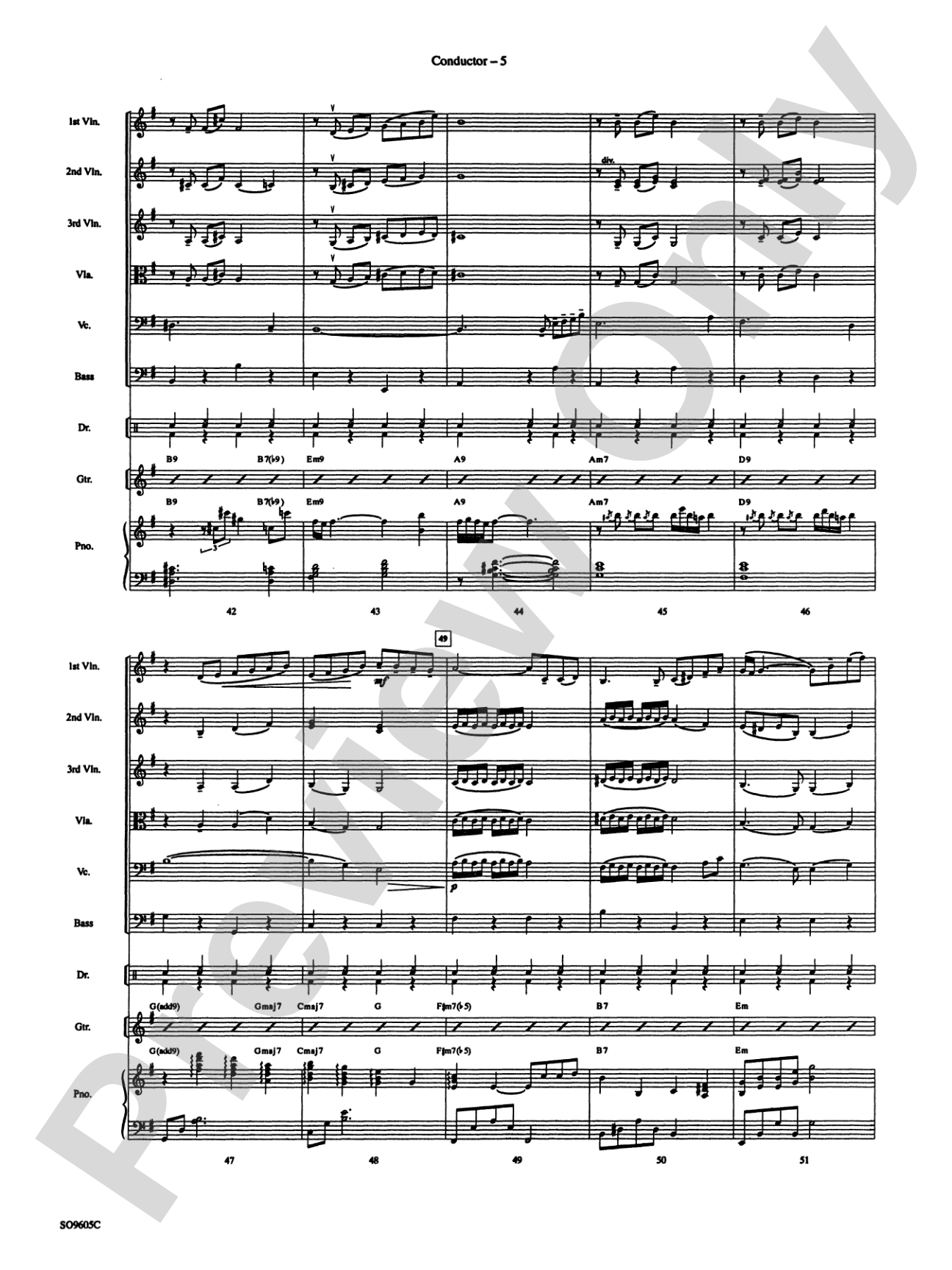
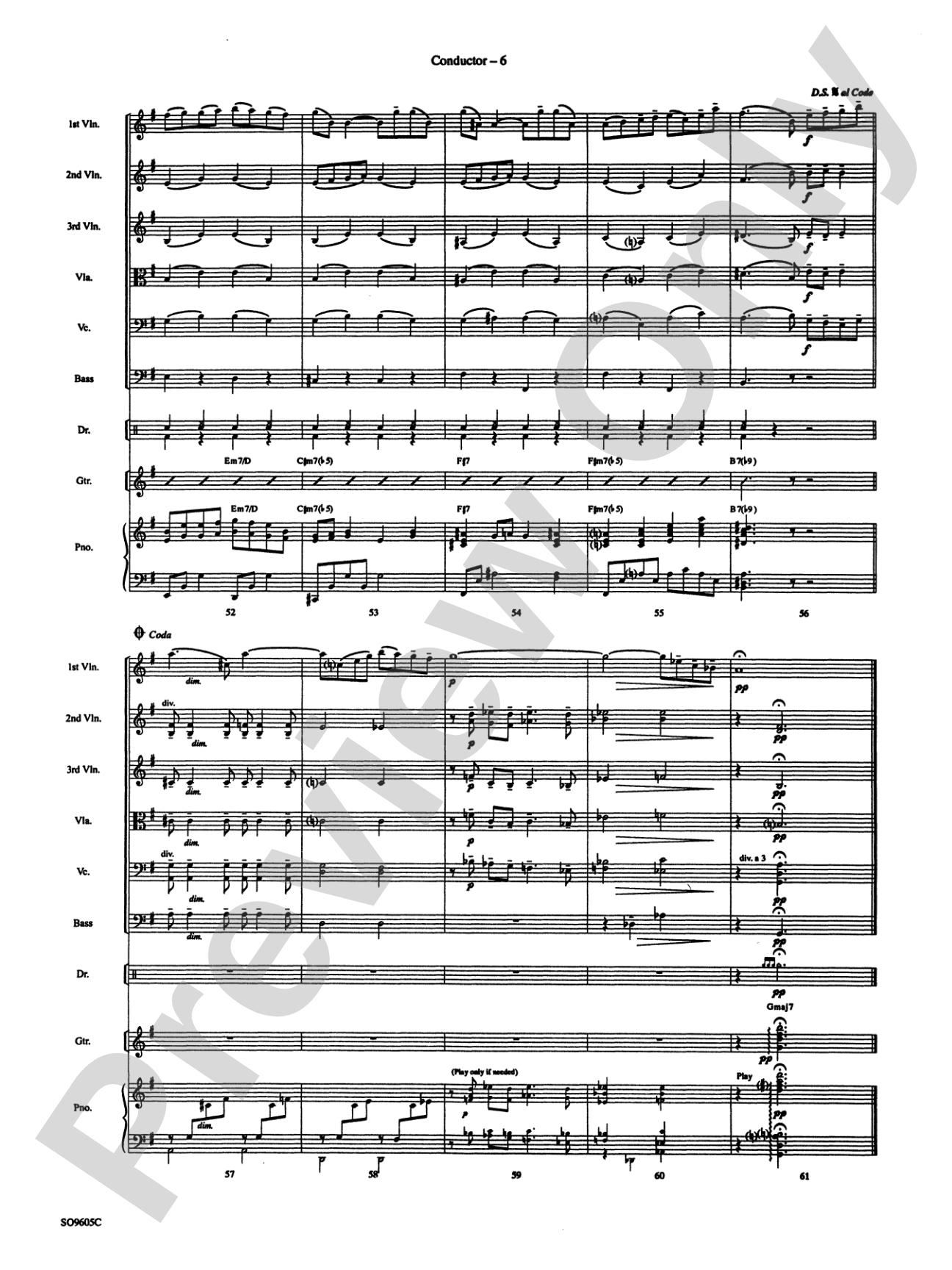


The Shadow of Your Smile (from The Sandpiper): String Orchestra Conductor Score & Parts
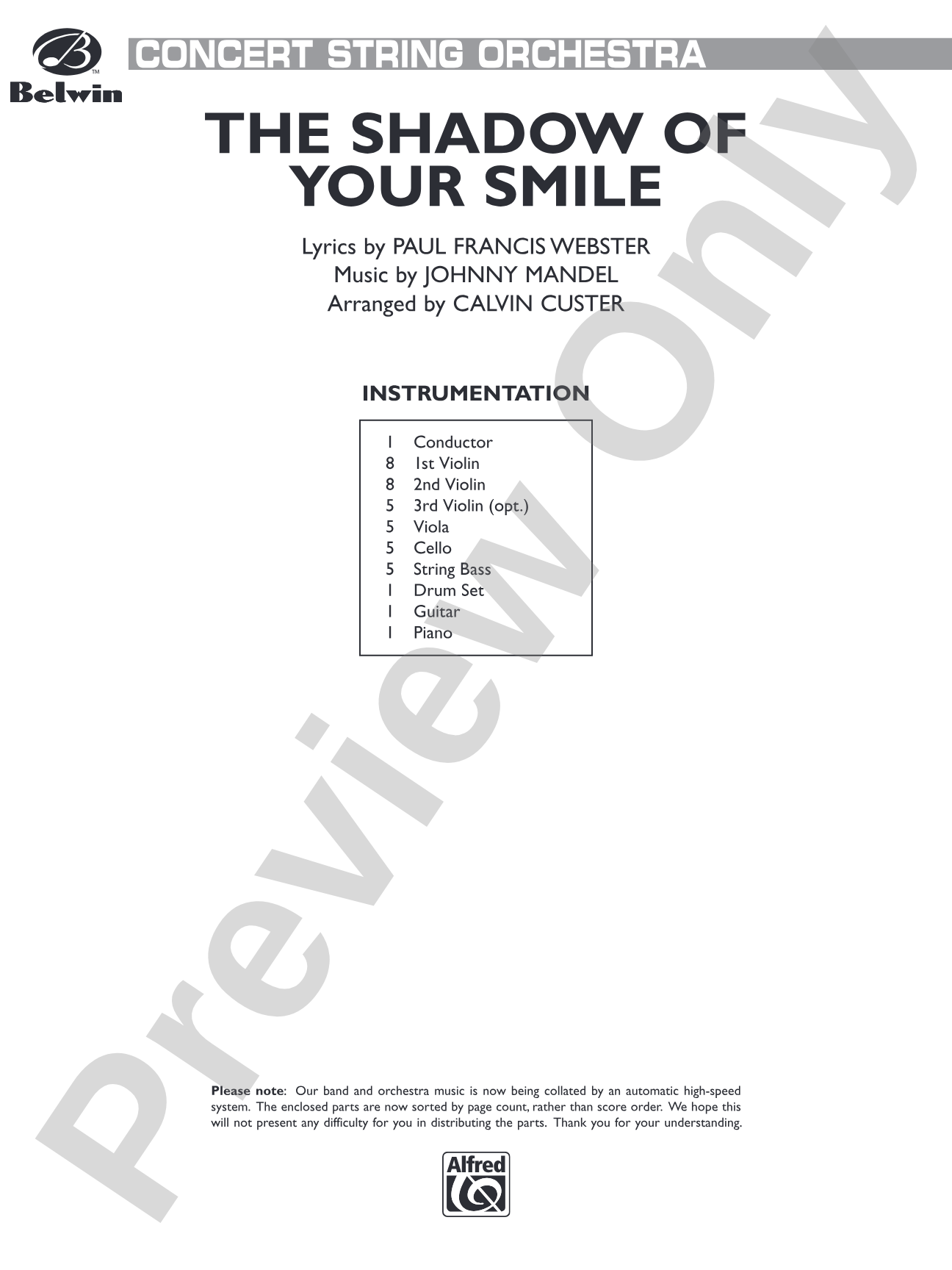
Lyrics by Paul Francis Webster, music by Johnny Mandel / arr. Calvin Custer
Grade: 3.5
Item: 00-PK-0002619

$60.00
One moment…
Description
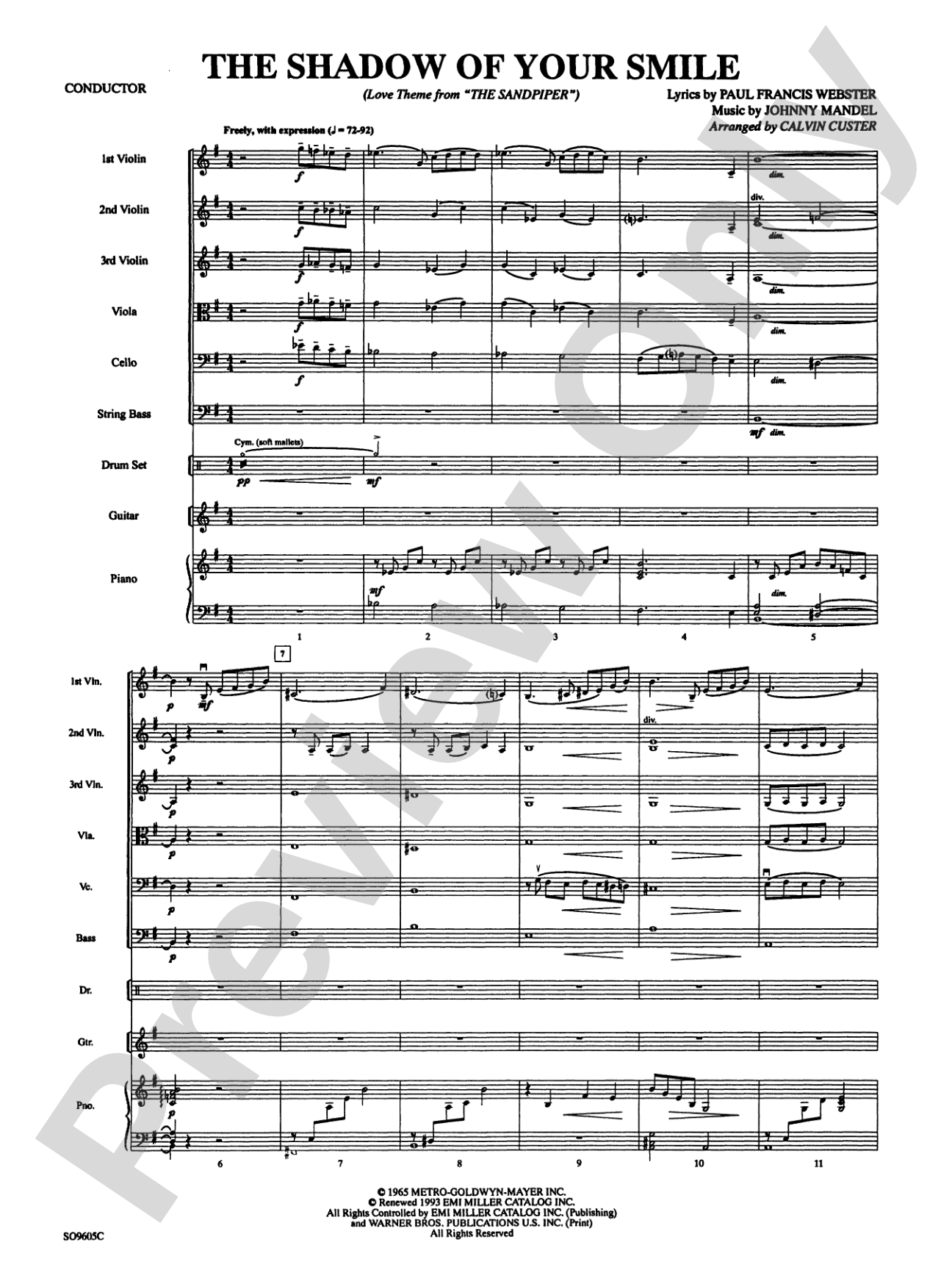
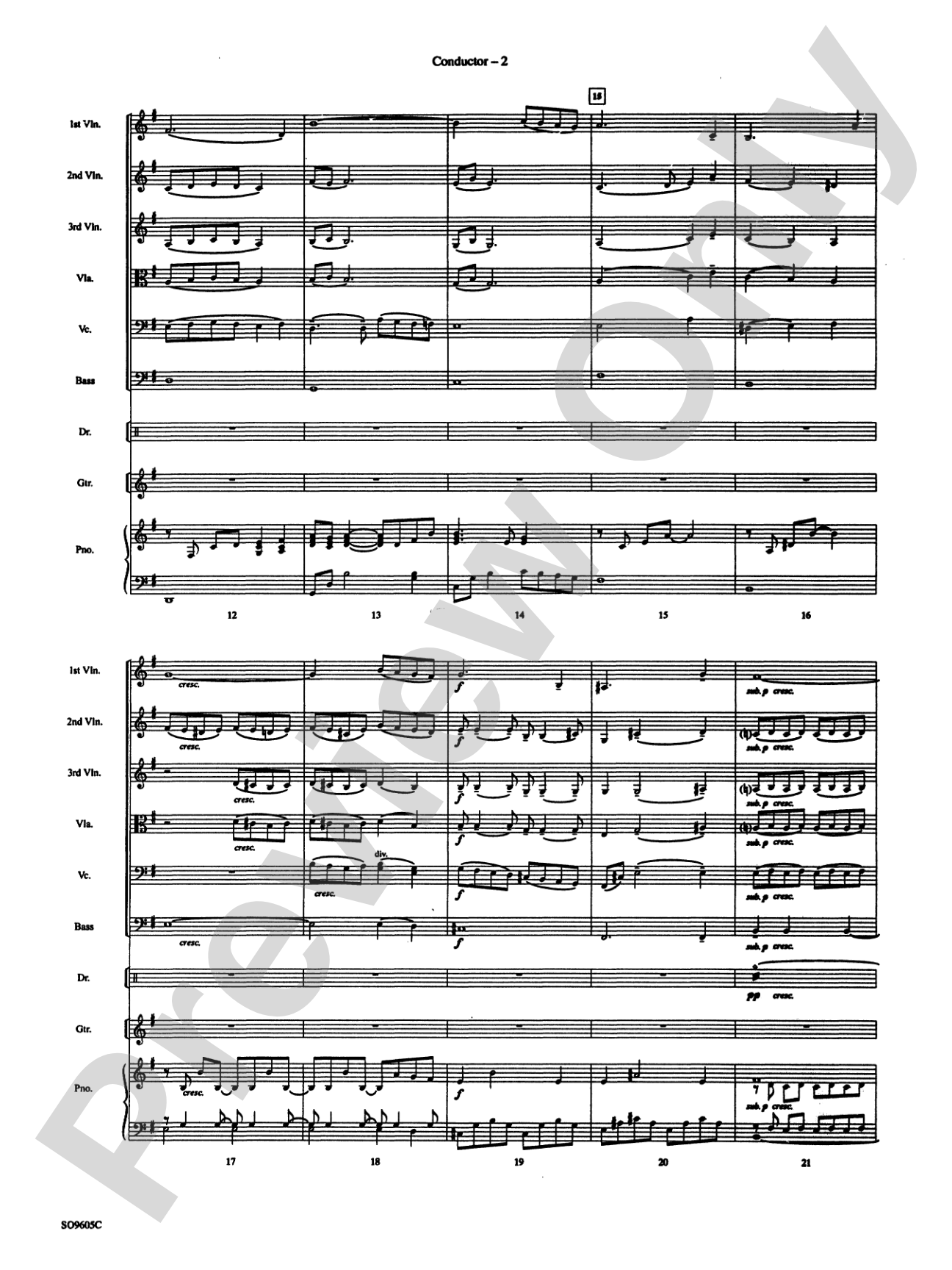
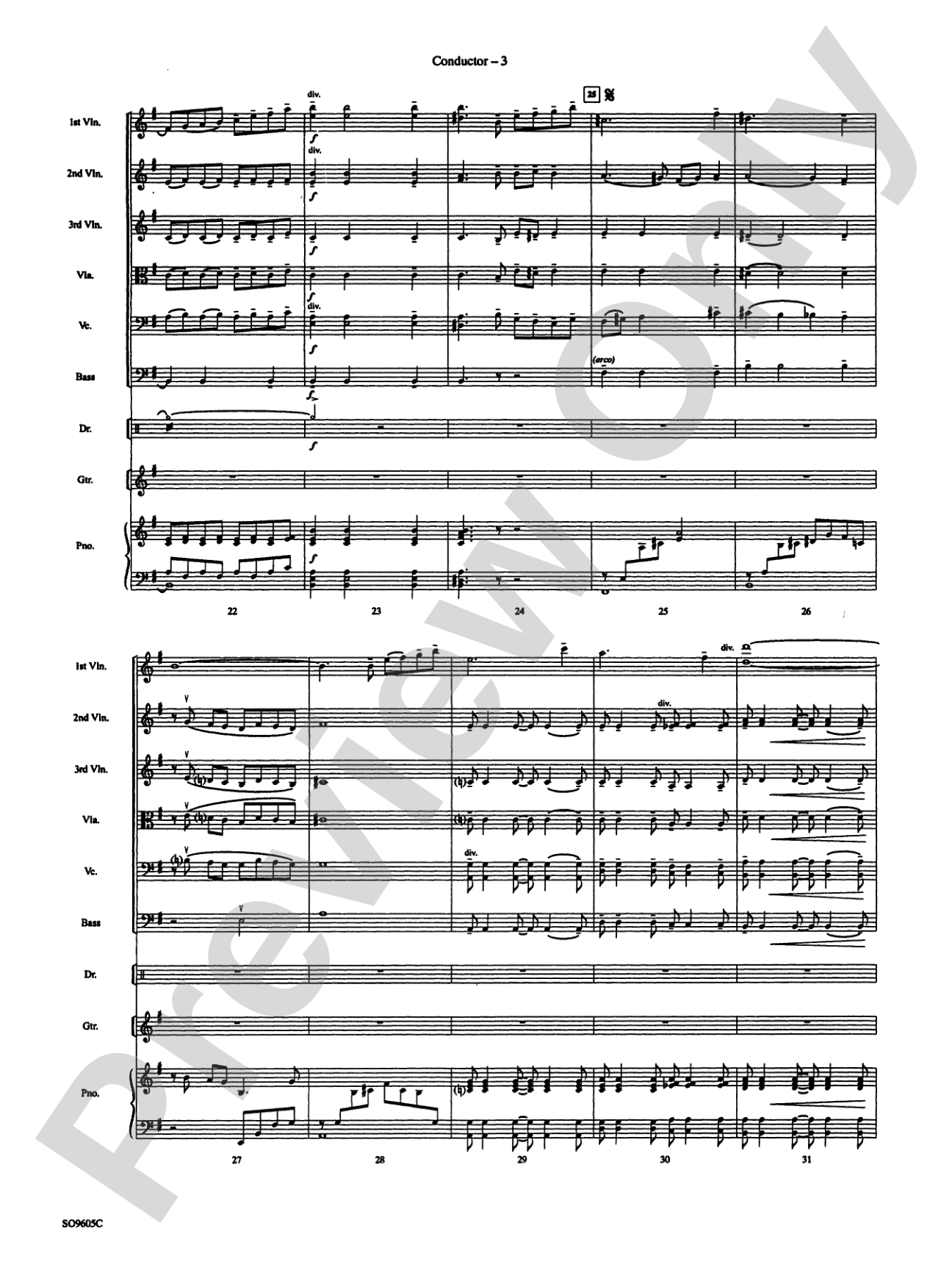
A beautiful ballad that stands head and shoulders above the rest. Writers Webster and Mandel, in a highly creative period, brought this deliciously languid composition to the world. Calvin Custer adds his charismatic scoring for musicians and audiences to enjoy at every rehearsal and performance. (4:10)


Don't just read it, hear it, play along with it, and watch your students grow with it. In MakeMusic Cloud, The Shadow of Your Smile (from The Sandpiper): String Orchestra Conductor Score & Parts comes alive with professional accompaniment, adjustable tempo, and built-in practice tools that turn solo practice into real progress.
Open in the Player
Jump straight in and assign it today.
Start Your Free Trial
Open this title and explore the full library in minutes.
Sample Audio
1
Audio File
--:--
0:00
0:00
Sample Video
No sample videos found.
Additional Details
Series:
Pop Concert String Orchestra
Publisher:
Alfred Music
Page Count:
88
SKU:
00-PK-0002619
More about this title
About the Composer: Johnny Mandel
Johnny Mandel (1925-2024) was a composer and arranger whose career spanned seven decades of film, television, and jazz. He earned an Academy Award nomination for "The Shadow of Your Smile" and became known for his gift for writing lyrical, emotionally direct melodies that serve both popular and concert settings. His arrangements and compositions for strings set a standard for accessibility and musicality that continues to influence orchestrators writing for student ensembles.
Why we love this
Calvin Custer's arrangement captures the song's aching simplicity while giving string players genuinely satisfying material to perform. The orchestration balances technical clarity with emotional depth, making it engaging for audiences who know the tune and rewarding for musicians who discover the sophistication in the inner parts. At Grade 3.5, it sits in that sweet spot where students feel they're playing something substantial, not a simplification.
What to expect
A nostalgic, unhurried meditation on loss and beauty. The melody unfolds with the patience of a jazz standard, supported by warm harmonic layers that let each section contribute to the emotional arc. There's nothing rushed here; every bar invites the listener to dwell in the moment.
Who it's for
String orchestras at the Grade 3-4 level that want to program popular song literature with genuine musical substance. Directors seeking contest or festival repertoire that appeals to audiences and students alike will find a piece that requires ensemble maturity without demanding virtuosity.
How to get the most out of it
- Shape the main melody with a singing vibrato that mirrors a vocalist's phrasing; let the accompaniment figures breathe around it rather than doubling every note weight.
- Balance the second violins and violas carefully during the accompaniment passages so they support the line without crowding it.
- Allow rubato in the opening phrase to establish the ballad's languid quality before settling into a steady tempo.
- Clarify articulations in the rhythm section; determine whether pizzicato or light detaché accompaniment serves the arrangement's intent at your chosen tempo.
How to use it
Program this alongside other film-song arrangements or period pop repertoire in a concert that celebrates the Great American Songbook for young orchestras. Its moderate length and approachable difficulty make it an ideal opener or closer for a chamber-style concert, and its contest/festival designation suggests it fits well in competitive contexts where lyrical maturity is valued.
Skills your students will build
- Sustaining long melodic lines with consistent tone and expression
- Balancing accompaniment textures so they support without dominating
- Shaping phrases in ballad tempo with rubato and controlled vibrato
- Reading and executing articulations that define harmonic color in string accompaniment