

The Shadow of Your Smile (from The Sandpiper): Jazz Ensemble Conductor Score & Parts
Music by Johnny Mandel, lyrics by Paul Francis Webster / arr. Roy Phillippe
Grade: 2 (Medium Easy)
Item: 00-PK-0002480

$48.00
One moment…
Description
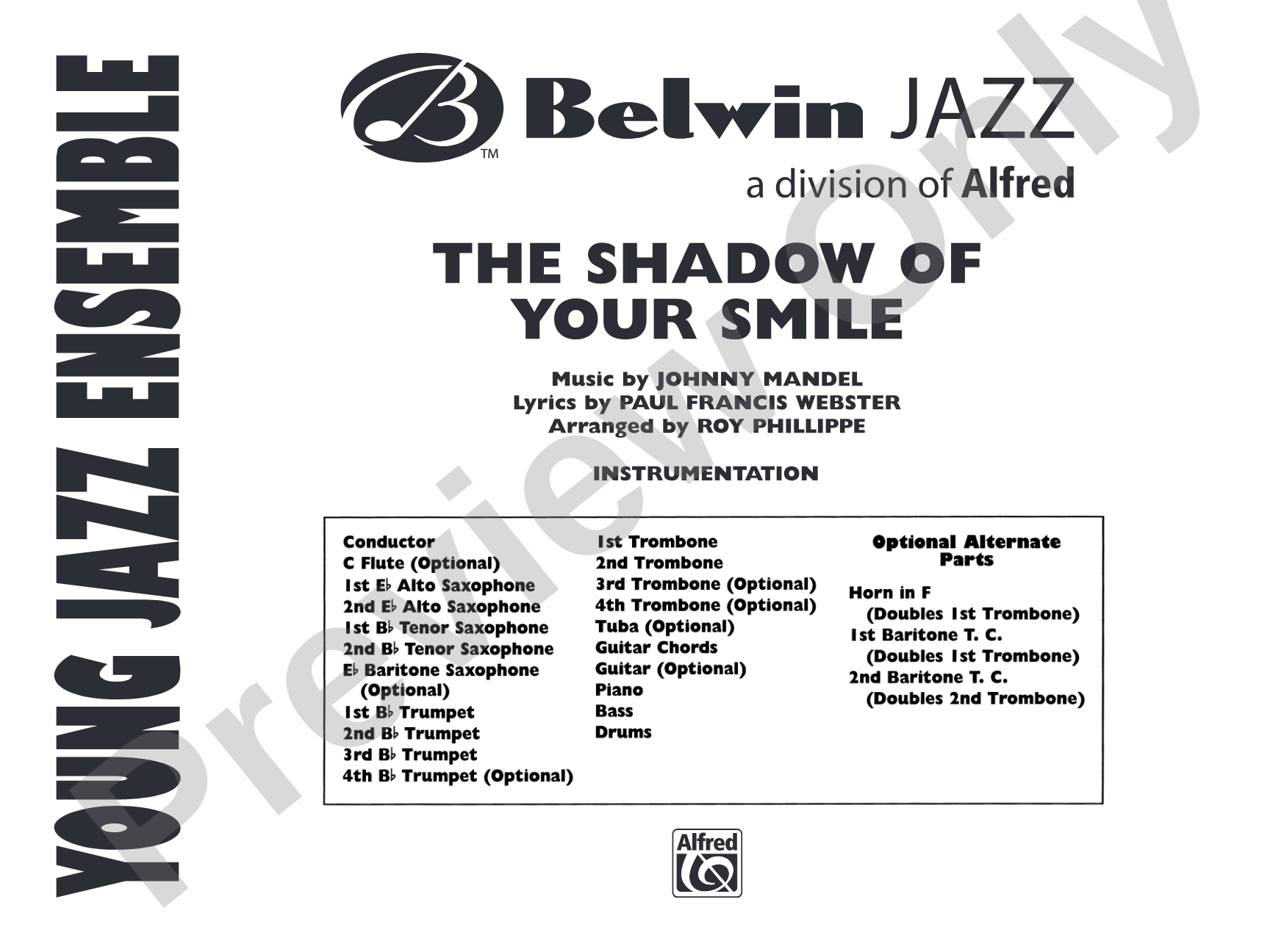
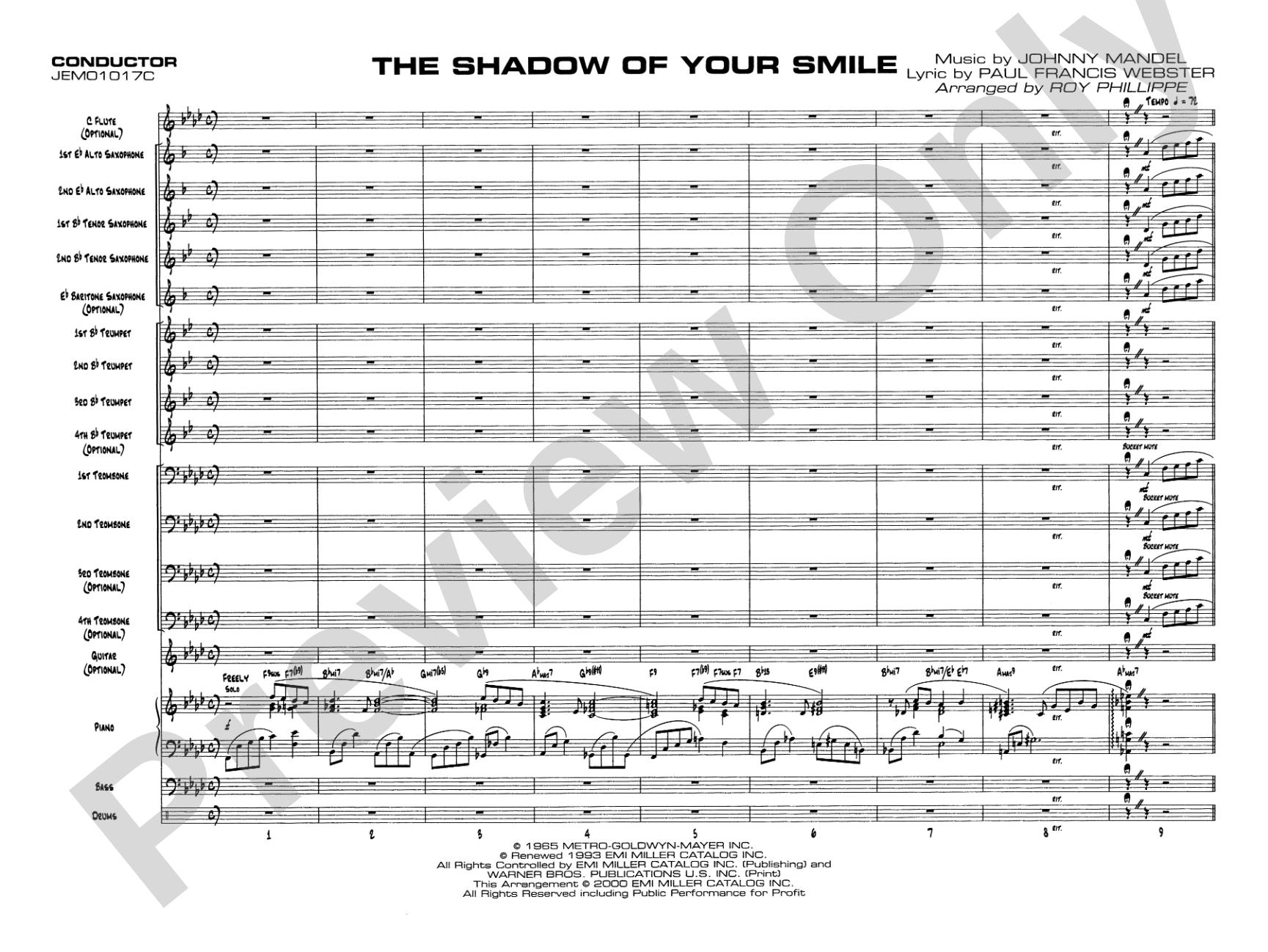
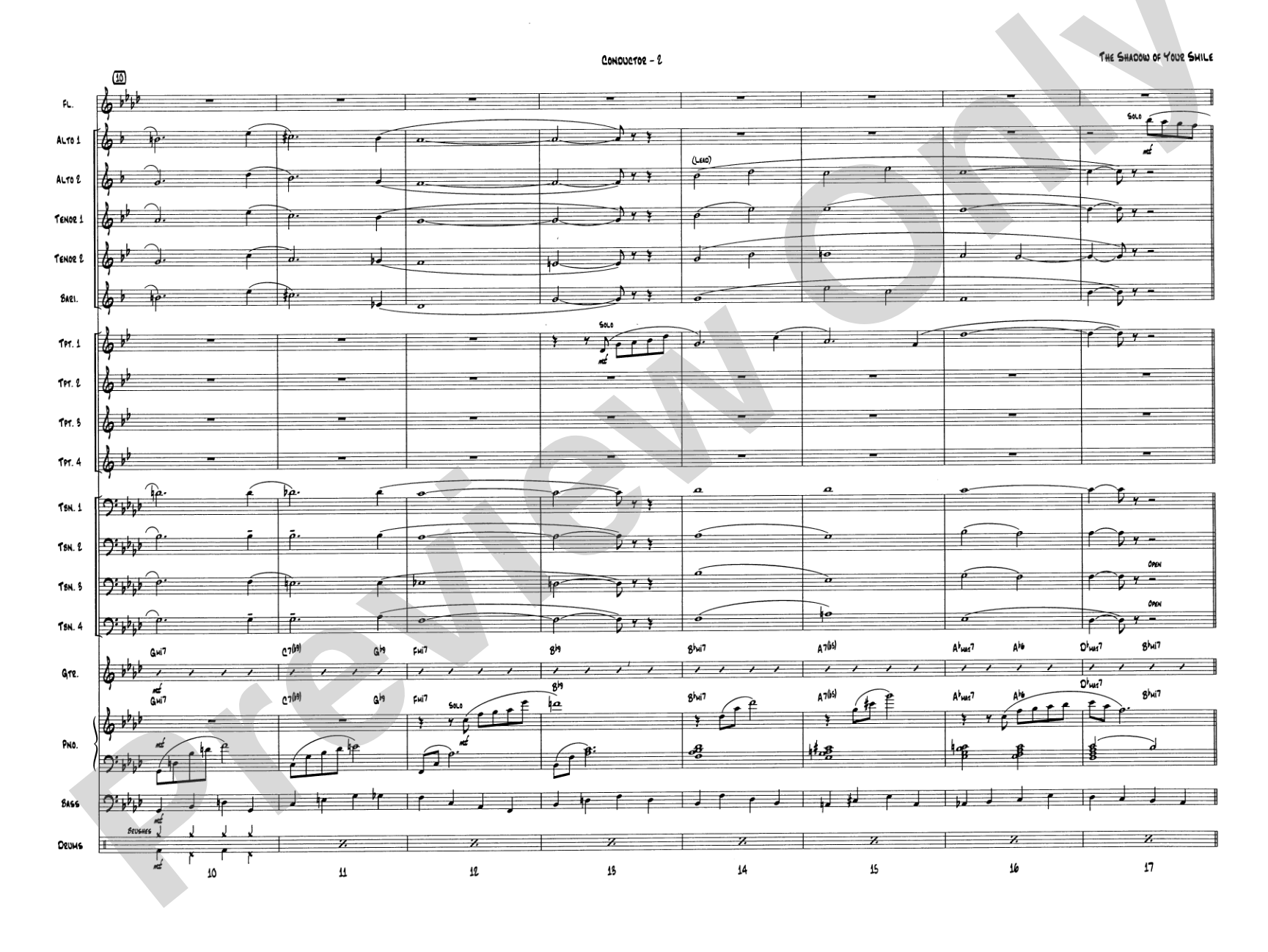
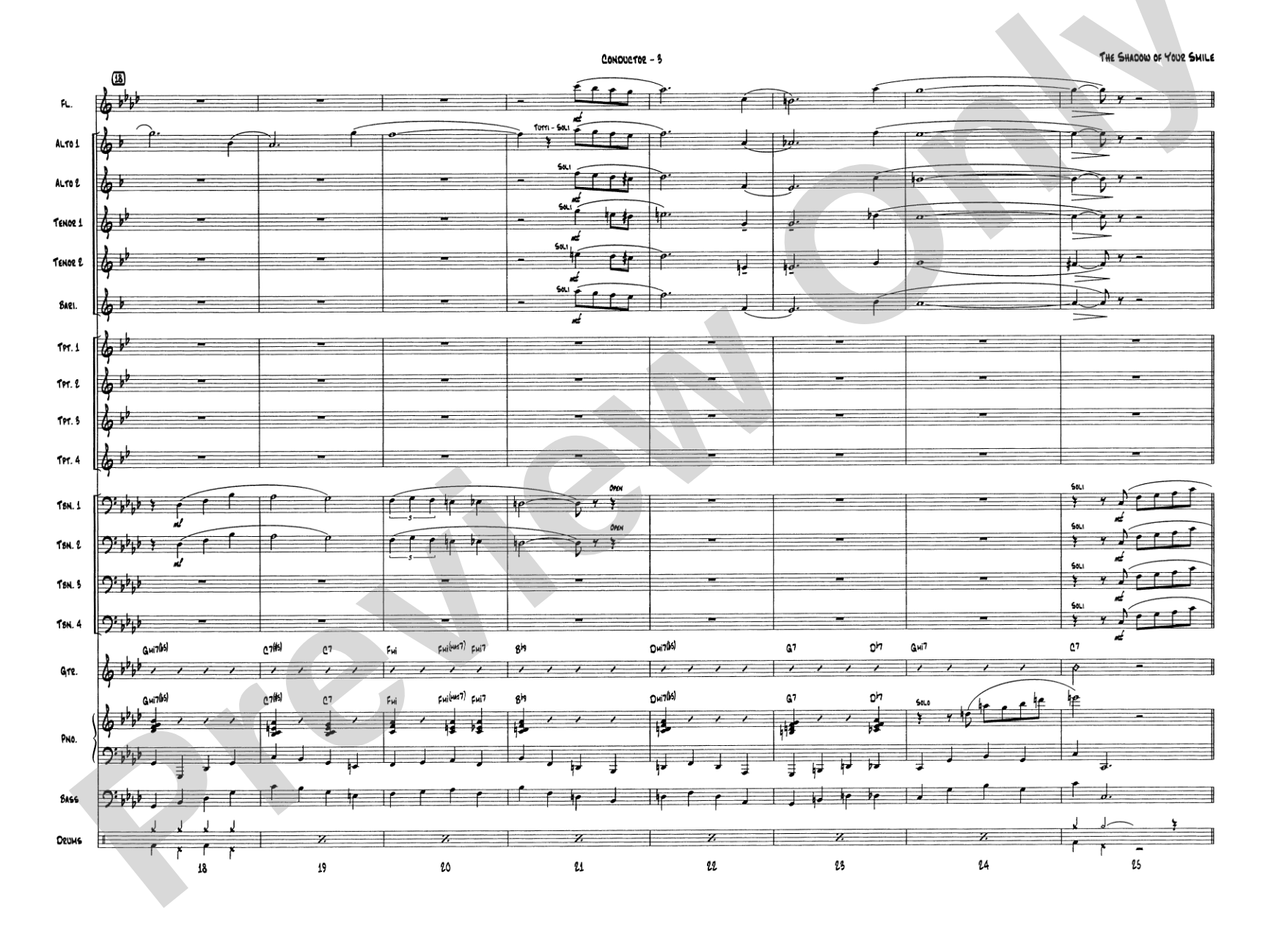
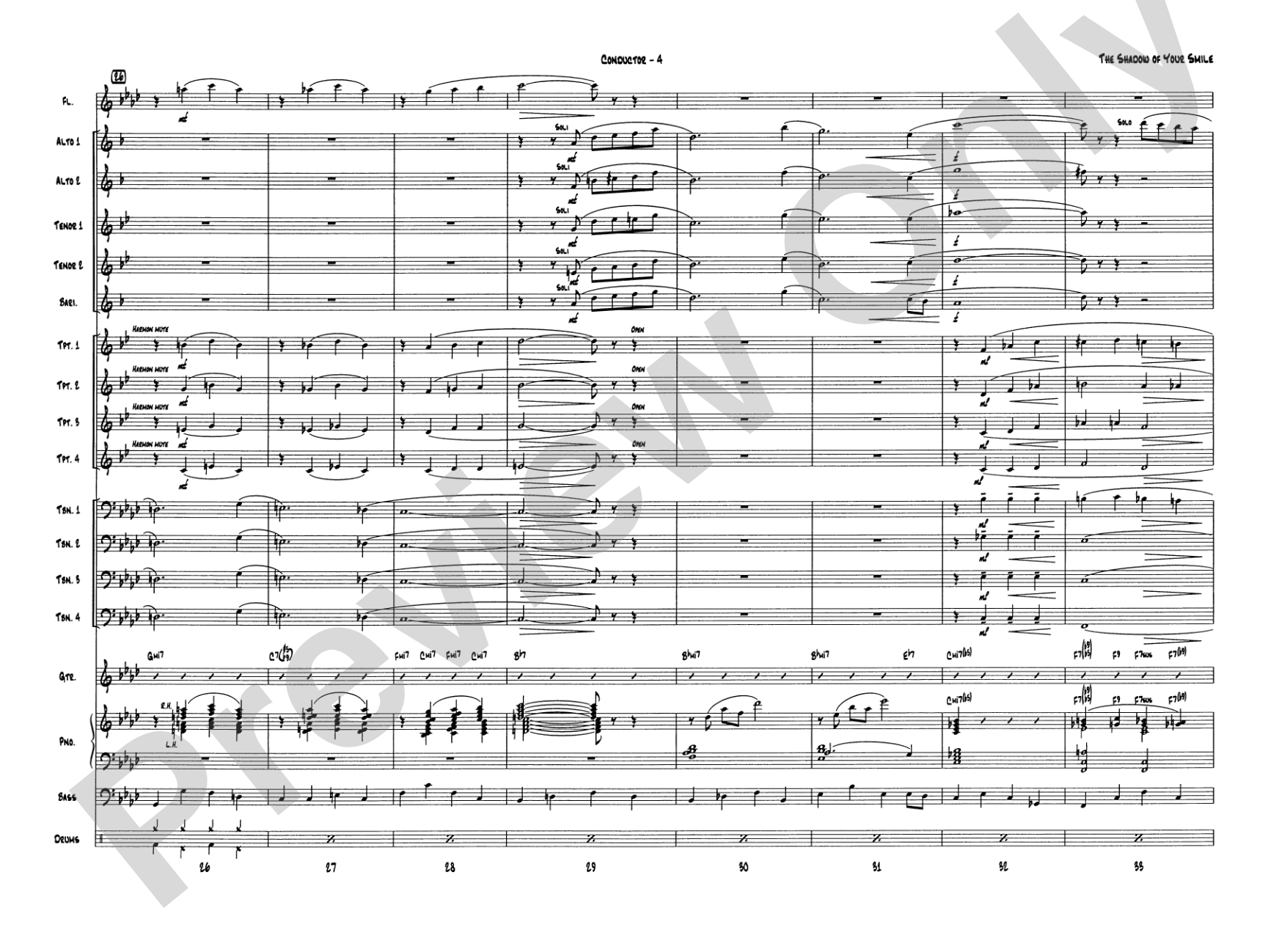
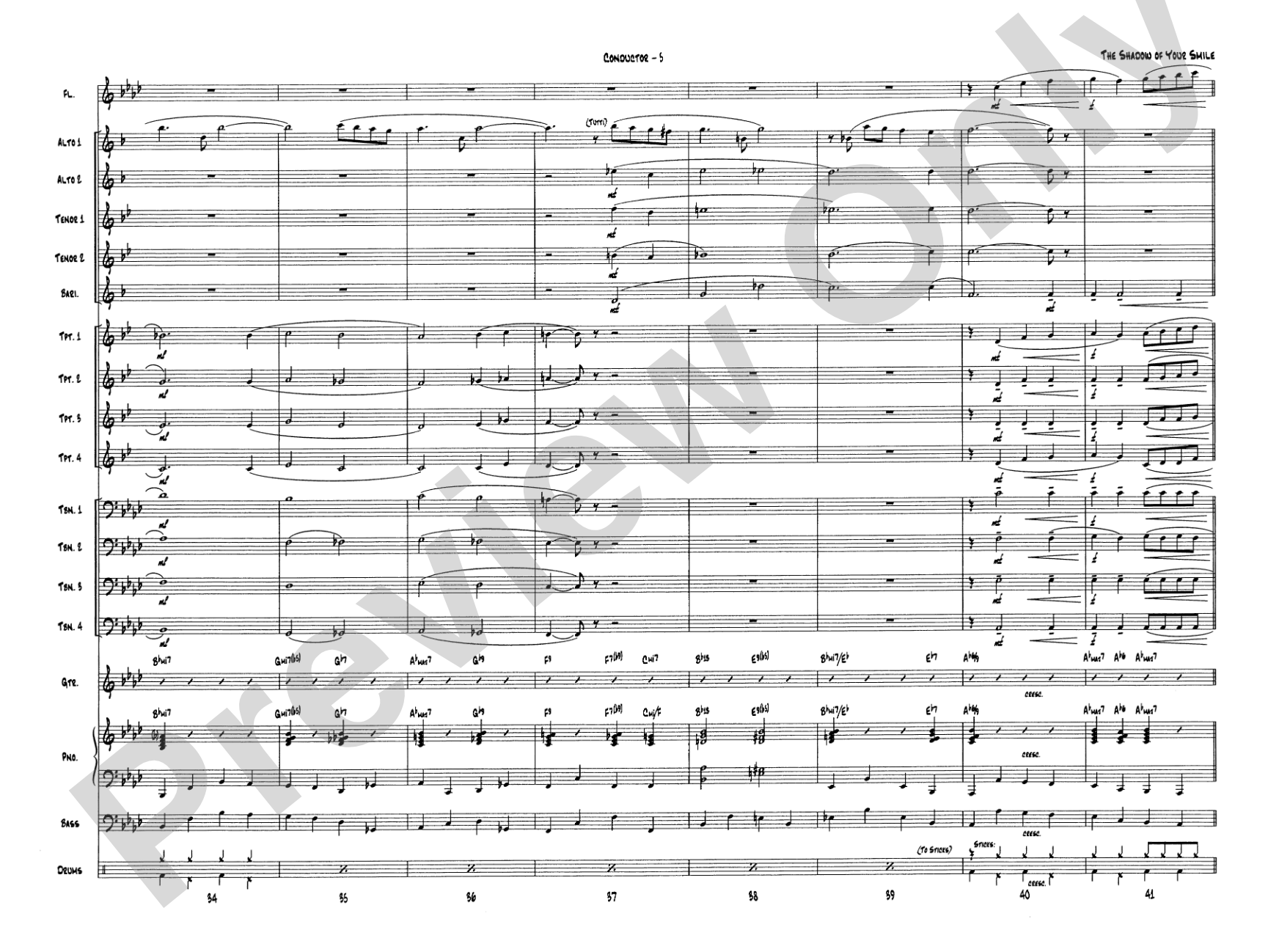
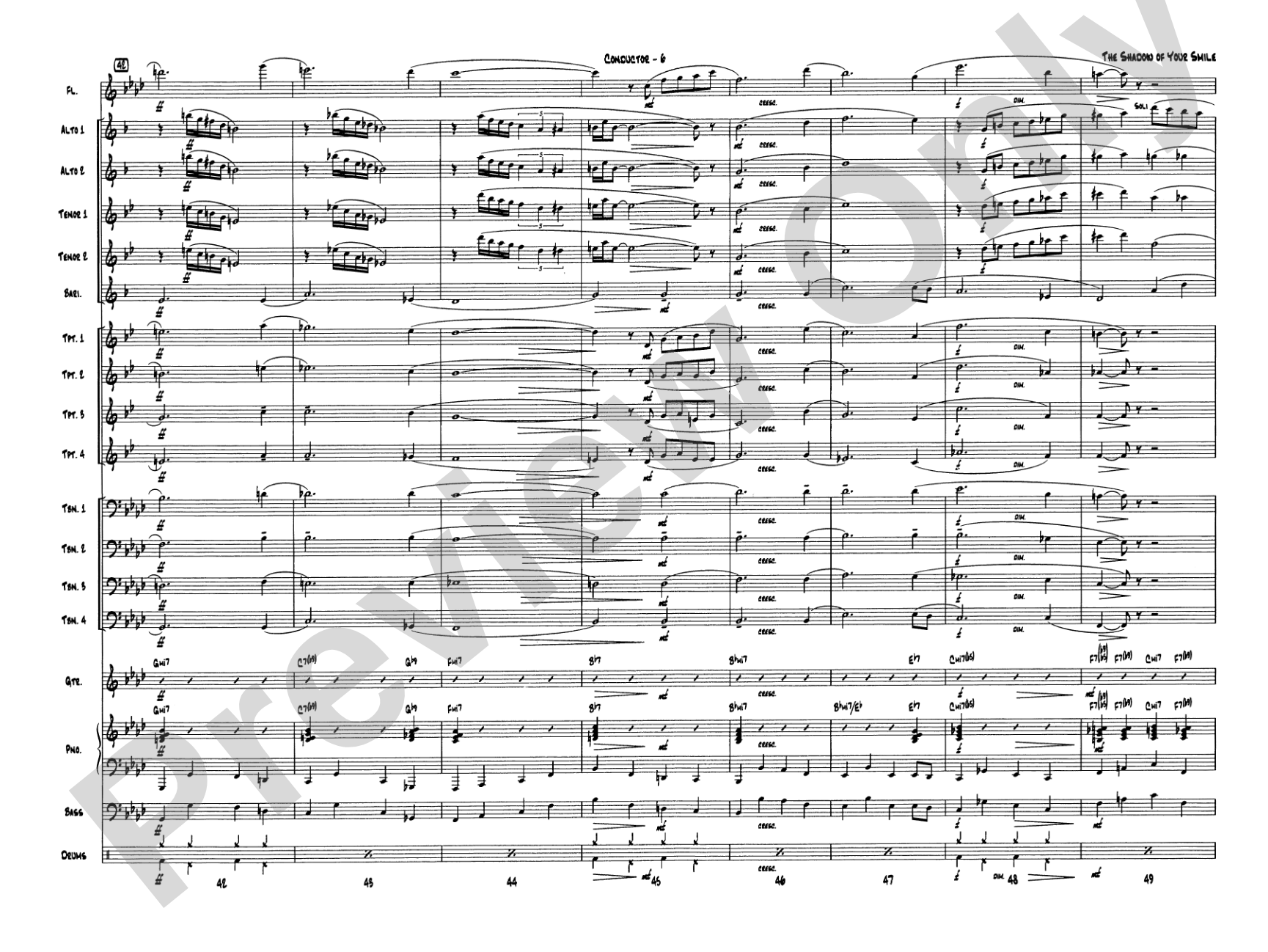
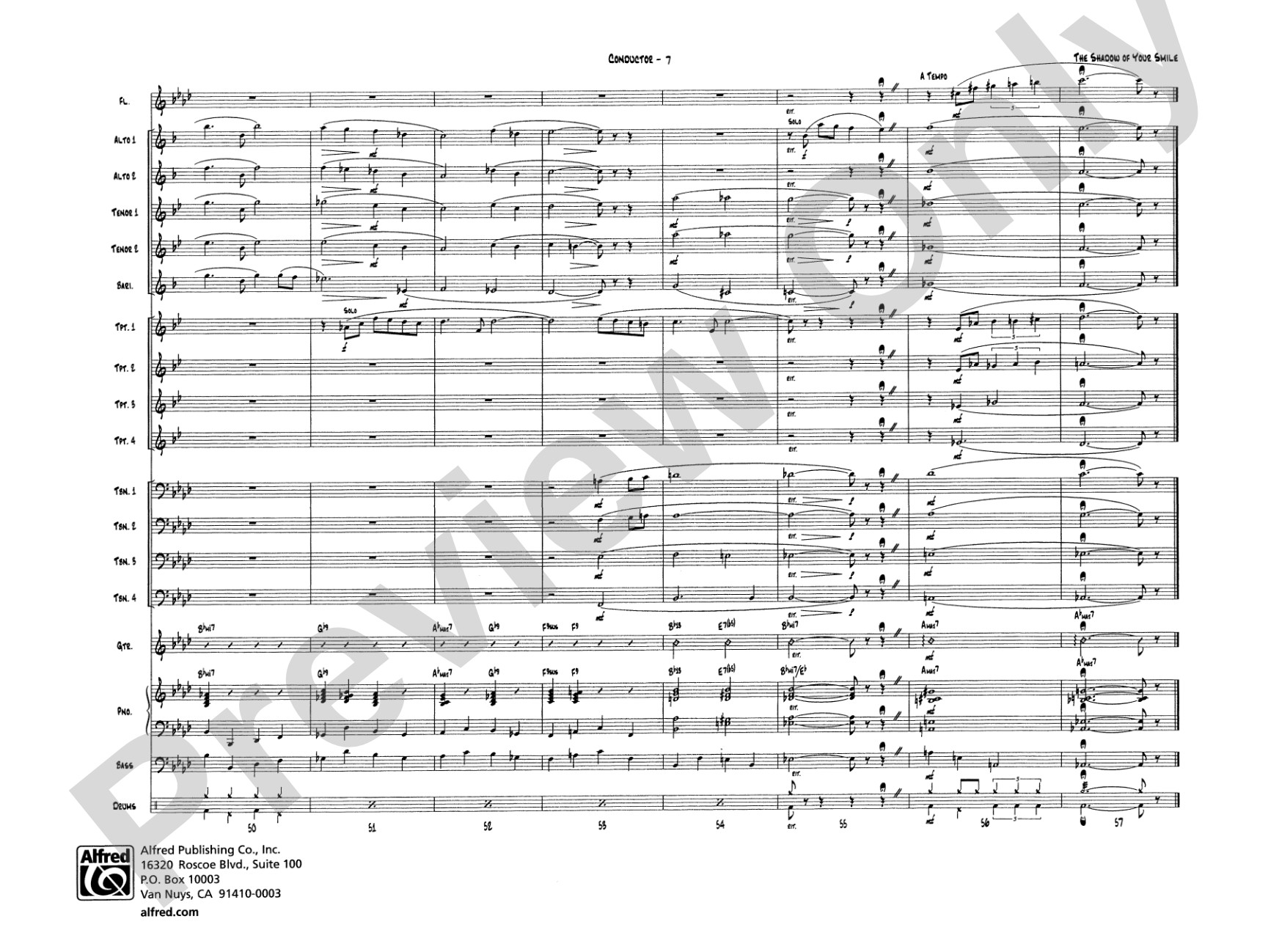
Here is a classic that is already considered a standard from the next generation of American composers. Johnny Mandel wrote this gorgeous melody that is hauntingly beautiful, and Roy Phillippe arranged it for the younger band to feature the piano, alto sax, and trumpet. Flexible instrumentation and optional parts are included, along with some rich section harmonies, trumpets in harmon mute for musical color, and a powerful ensemble sound that will make your band sound terrific. Roy Phillippe is a superb writer who delivers the right stuff. You'll enjoy this fine chart.


Don't just read it, hear it, play along with it, and watch your students grow with it. In MakeMusic Cloud, The Shadow of Your Smile (from The Sandpiper): Jazz Ensemble Conductor Score & Parts comes alive with professional accompaniment, adjustable tempo, and built-in practice tools that turn solo practice into real progress.
Open in the Player
Jump straight in and assign it today.
Start Your Free Trial
Open this title and explore the full library in minutes.
Sample Audio
1
Audio File
--:--
0:00
0:00
Sample Video
No sample videos found.
Additional Details
Series:
Young Jazz Ensemble
Publisher:
Alfred Music
Page Count:
54
SKU:
00-PK-0002480
More about this title
About the Composer: Johnny Mandel
Johnny Mandel (1925-2020) composed some of the most enduring melodies in American popular music and film. His gift for crafting singable, emotionally direct lines that sit naturally across voices and instruments made him a favorite among both jazz musicians and arrangers. "The Shadow of Your Smile" exemplifies his approach: a melody that sounds simple but contains surprising harmonic sophistication, composed for the 1965 film "The Sandpiper" and recorded memorably by artists across every genre from Ella Fitzgerald to Bill Evans.
Why we love this
This arrangement respects what makes Mandel's melody so special while giving your younger ensemble a vehicle that sounds genuinely sophisticated. Roy Phillippe's scoring trusts the tune, features accessible soloists (piano, alto sax, trumpet), and builds genuine band color through section writing and harmon mutes rather than overcomplication. Your students will feel the difference between playing a "young band piece" and playing a real standard.
What to expect
Wistful and cinematic, with an intimate quality that doesn't depend on volume or spectacle. The melody unfolds gently, supported by warm harmonies and colored by muted brass; the overall effect is sophisticated without being dark. Your ensemble will feel the restraint and elegance of the original while your students experience what it means to serve a memorable tune.
Who it's for
Grade 2 jazz ensembles ready to move beyond simple head-and-rhythm charts into arrangements with genuine harmonic and textural interest. This works especially well for programs balancing developmental repertoire with repertoire that sounds polished enough for festival programming or concerts.
How to get the most out of it
- Balance the piano's role carefully in rehearsal. The piano drives the harmonic framework, so lock its comping with the rhythm section first, then layer in the horns once that pocket is secure.
- Shape the melody through its contour rather than mechanically hitting each note. Mandel's line has narrative arc; let the ensemble breathe and phrase together as if singing the tune.
- Experiment with the harmon mute articulation on the trumpet sections. Those muted moments create specific tonal color that defines the arrangement's character; clarity matters as much as blend here.
- Use the optional and flexible parts to your instrumentation's advantage. Doubling on written parts strengthens weaker sections without requiring rewrites.
How to use it
Program this as a bridge between your up-tempo jazz selections and any ballad features. It works beautifully on festival programs where you need something both accessible and genuinely engaging; the arrangement's maturity pairs well alongside either classic big band standards or contemporary jazz compositions. Consider it for a winter or spring concert where the mood suits something reflective.
Skills your students will build
- Comping vocabulary and rhythm section cohesion (piano, bass, drums)
- Balancing solo lines against ensemble background
- Phrasing and shaping melody through context and harmony rather than individual note emphasis
- Harmon mute technique and tonal color production
- Reading flexible instrumentation and adapting to ensemble needs