The Secret Laboratory: 2nd Percussion Sheet Music Preview

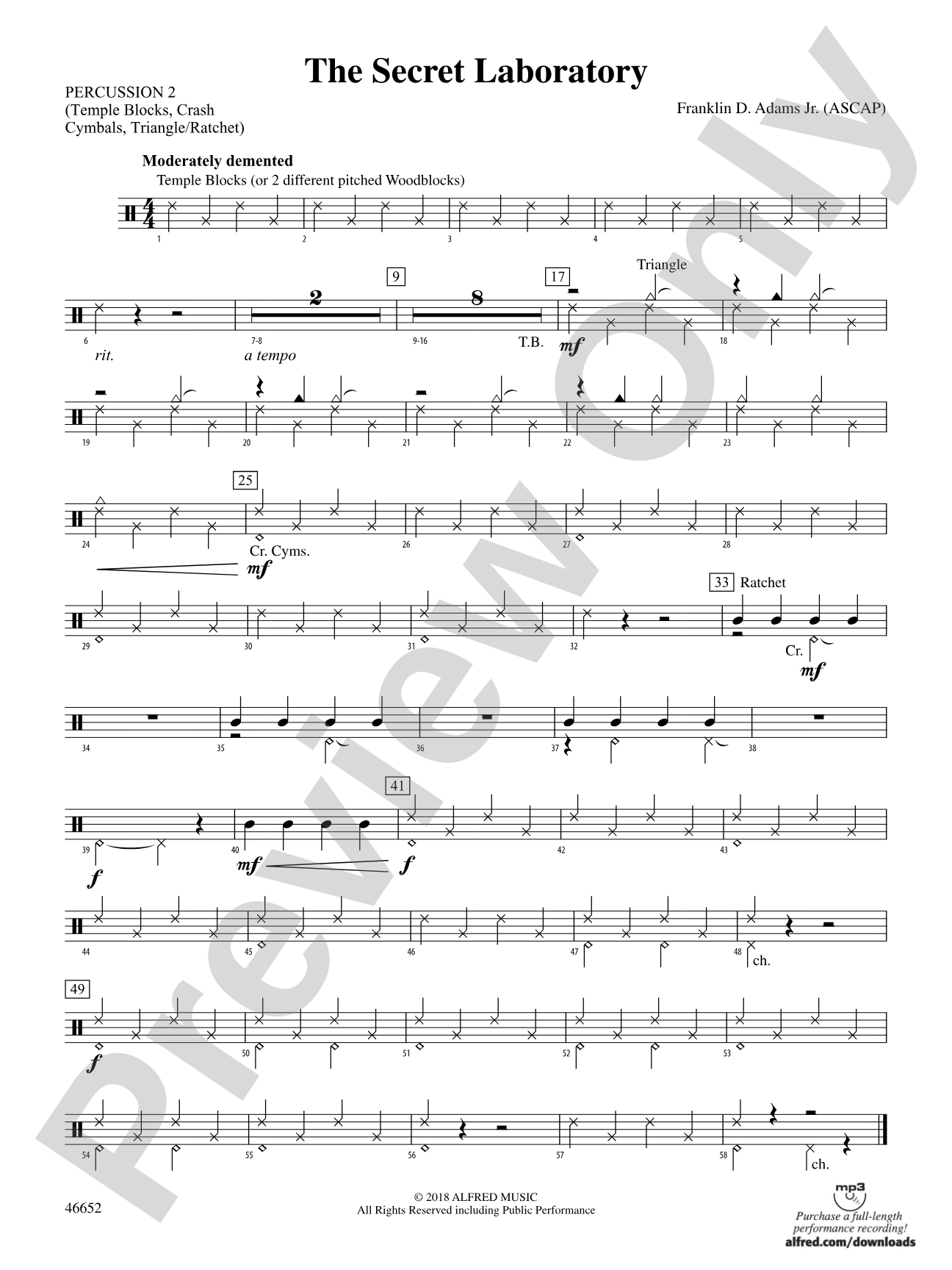
The Secret Laboratory: 2nd Percussion

By Franklin D. Adams, Jr.

Grade: 1.5 (Easy)

Item: 00-PC-0018082_PC2

Digital Download
$3.00
Description
Late one stormy night in a dusty old mansion, a mad scientist is hard at work in his hidden laboratory. The moments tick by as he waits for just the right opportunity to harness the power of the lightning storm . . . Explore the mysteries of The Secret Laboratory!

Don't just read it, hear it, play along with it, and watch your students grow with it. In MakeMusic Cloud, The Secret Laboratory: 2nd Percussion comes alive with professional accompaniment, adjustable tempo, and built-in practice tools that turn solo practice into real progress.

Sample Audio
0:00
0:00
Sample Video
Additional Details
Series: Alfred Debut Series
Publisher: Alfred Music
Page Count: 124
SKU: 00-PC-0018082_PC2

More about this title

About the Composer: Franklin D. Adams

Franklin D. Adams

Franklin D. Adams brings two and a half decades of classroom experience to his composing, having taught band in public schools, parochial settings, and through MusicAlliance, his co-founded organization serving private and parochial programs across Northeast Ohio. His work in the classroom directly informs his writing; he composes with the developing musician in mind, creating pieces that engage young players while building foundational skills.

Adams holds a B.A. in music education from Anderson University and maintains active memberships in the National Association for Music Education, the Ohio Music Education Association, and ASCAP. Throughout his career, he has earned recognition including the Principal's Commendation Award and Teacher of the Year honors. His published works appear with Alfred Music Publishing and C. Alan Publications.

Why we love this

This piece captures the charm of a novelty concept while maintaining musical substance at Grade 1.5, so your ensemble gets genuine fun without sacrificing teachable moments. The stormy laboratory setting gives you a natural story arc that holds young players' attention and creates natural dynamics and pacing without needing to over-explain the music. Franklin Adams writes for real school bands with real rehearsal time, so the orchestration works and the parts sit comfortably in developing ranges.

What to expect

A theatrical journey through an eccentric scientist's domain unfolds with atmospheric tension, playful character moments, and the electricity of a brewing storm. The music shifts between mysterious and mischievous, keeping players and audiences engaged in the unfolding drama without overwhelming less experienced musicians.

Who it's for

Beginning to early intermediate concert bands with players who benefit from narrative-driven music and pieces that reward crisp ensemble work. This suite works equally well for directors seeking something lighter after a heavier programmatic work or as a first concert experience for young ensembles.

How to get the most out of it

  • Establish the mood in your first rehearsal by reading the program notes aloud and asking students to picture the scene; this gives them a dramatic anchor for their interpretation before you tackle individual sections.
  • Shape the tension of the storm through careful control of tempo and dynamic layering rather than rushing. Even young players can sustain character when they understand what they're portraying.
  • Balance the melodic passages against the accompaniment textures so the main character of each moment comes through clearly.

How to use it

Open a concert with this piece to set an imaginative tone and energize your audience immediately, or use it as a palate cleanser between more serious works. The novelty elements and accessibility make it ideal for family concert programming or performances where you want to showcase your ensemble's musicality without extreme technical demands.

Skills your students will build

  • Sustaining dynamic shapes across full phrases
  • Balancing independent parts within an ensemble texture
  • Responding to conductorial cues for sudden character changes
  • Controlling articulation to support narrative and musical intent
  • Reading moderately complex ensemble scores

You May Also Like