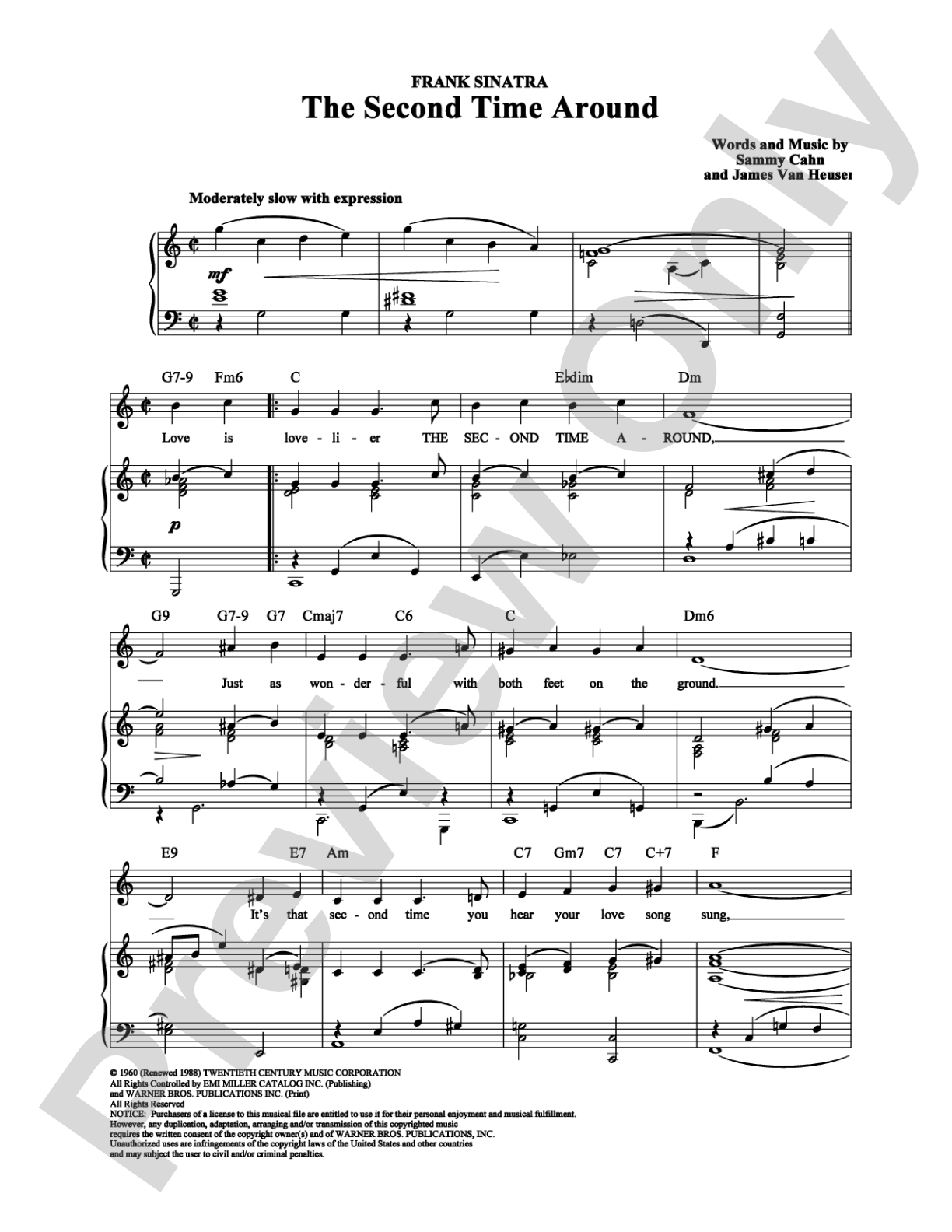
The Second Time Around: Piano/Vocal/Chords Digital Sheet Music

The Second Time Around: Piano/Vocal/Chords Digital Sheet Music

Bing Crosby, Frank Sinatra, James Van Heusen

Item: 00-PS-0009842

Digital Download
$3.99
Description

The Second Time Around: Piano/Vocal/Chords Digital Sheet Music isn't in MakeMusic Cloud just yet...but it could be. Let us know you'd like to see it, and you'll help shape what comes next. In the meantime, start a free trial and dive into thousands of interactive titles your students can play along with today.

Sample Audio
No sample audio found.
Sample Video
Additional Details
SKU: 00-PS-0009842

More about this title

About the Artist: Bing Crosby

Bing Crosby's influence on American popular music spans decades, from his early work with dance bands through his solo career and film appearances. His warm baritone and relaxed phrasing became the standard by which crooners were measured, shaping how generations of singers approached standards and jazz-influenced vocal techniques.

As an educator's resource, Crosby's recordings and arrangements offer a masterclass in lyrical legit singing, dynamic control, and how to inhabit a melody with conversational ease rather than operatic weight. His interpretations remain touchstones for understanding mid-20th-century American song style.

Why we love this

This standard sits in that perfect sweet spot where singers find genuine interpretive freedom without fighting the harmonic language. The melody's gentle contour and the chord progression's elegant simplicity mean accompanists can support vocalists through subtle dynamic shape rather than showy figuration, and singers can focus on the lyrical storytelling that makes this song endure across different generations and styles.

What to expect

The song unfolds with intimate warmth, the kind of gentle reflection that doesn't demand attention but rewards it completely. Its harmonic journey feels inevitable rather than surprising, allowing singer and pianist to focus entirely on how the melody shapes the lyric and how the accompaniment can enhance that connection without competing for the listener's ear.

Who it's for

Vocalists developing their interpretation of American standards, pianists building repertoire for cabaret or jazz-inflected pops shows, and music theater students learning to balance simplicity with emotional depth. This sheet music works equally well for private voice students polishing technique and for accompanists strengthening their ability to support a soloist's phrasing.

How to get the most out of it

  • Listen to both the Crosby and Sinatra versions before rehearsing, noting how each artist shapes the phrasing differently while honoring the same melodic line; your interpretation doesn't need to match either, but their choices illuminate what the tune can express.
  • Keep the piano voicings conversational rather than lush; this song rewards clarity and space in the accompaniment, letting the vocal line breathe and the lyric land.
  • Test the key against your voice's passaggio before committing to a key change; the standard keys may sit too high or low for your range, and transposing even a half step can transform the song's emotional accessibility.
  • Resist speeding up through the bridge; the harmonic movement and lyrical content benefit from breath and time, which ironically makes the song feel more relaxed rather than dragging.

How to use it

Pair this with other Rodgers and Hart standards for a focused evening on Great American Songbook writing, or use it as a compelling palate cleanser in a program mixing styles, where its understated elegance contrasts with higher-energy numbers. For a jazz or cabaret-focused recital, it anchors the program with a universally recognized touchstone while still allowing personal interpretation.

Skills your students will build

  • Sustaining legit vocal tone across a full phrase without forcing
  • Navigating extended harmonic progressions with secure intonation
  • Balancing rubato with a steady piano accompaniment
  • Shaping a simple, elegant melody through lyrical intent rather than vocal ornamentation
  • Reading and voicing jazz-influenced chord symbols while supporting a vocalist's interpretive choices

You May Also Like