The Second Time Around: Organ Digital Sheet Music

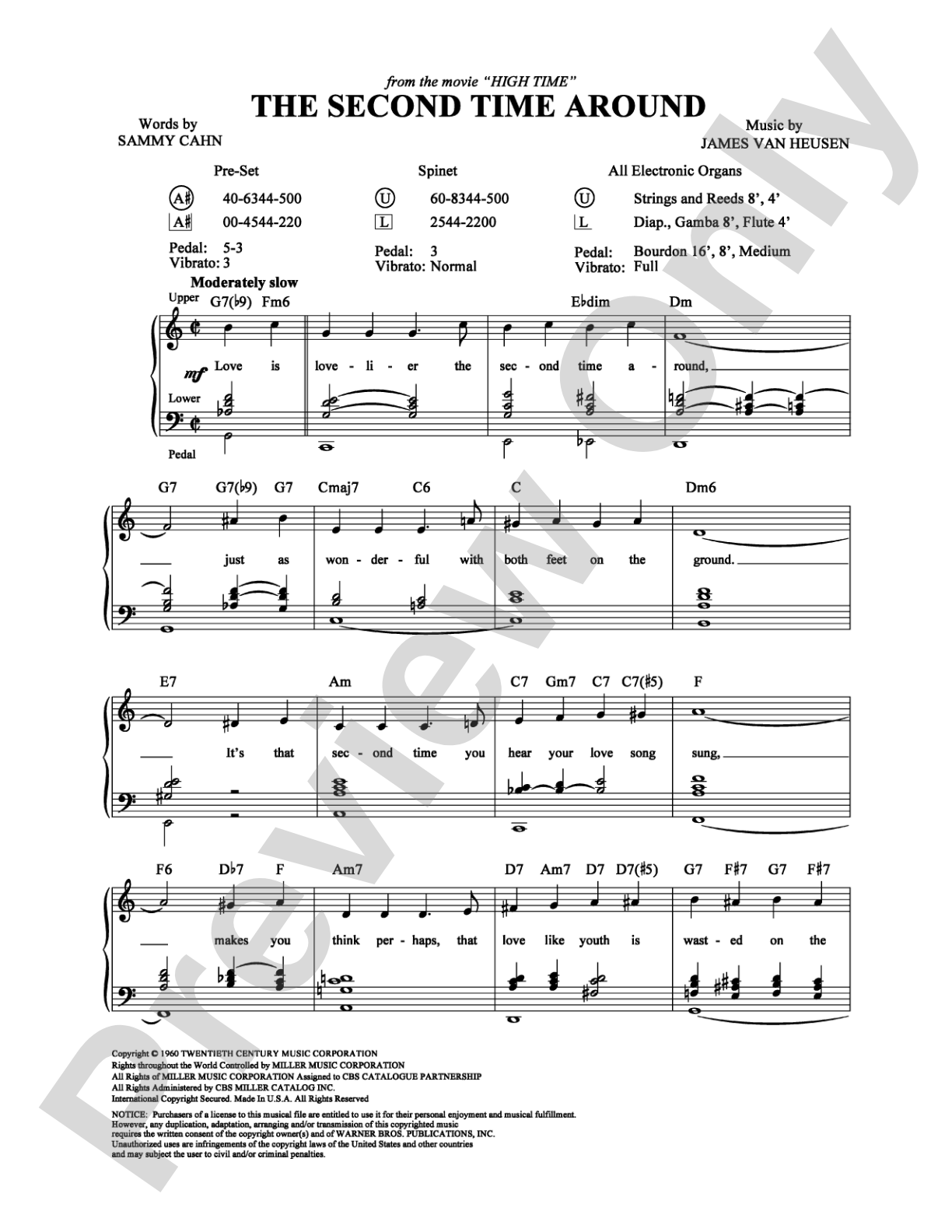
The Second Time Around: Organ Digital Sheet Music

Bing Crosby, Frank Sinatra, James Van Heusen

Item: 00-PS-0009841

Digital Download
$3.99
Description

The Second Time Around: Organ Digital Sheet Music isn't in MakeMusic Cloud just yet...but it could be. Let us know you'd like to see it, and you'll help shape what comes next. In the meantime, start a free trial and dive into thousands of interactive titles your students can play along with today.

Sample Audio
No sample audio found.
Sample Video
Additional Details
SKU: 00-PS-0009841

More about this title

About the Artist: Bing Crosby

Bing Crosby (1903-1977) was an American singer and actor whose smooth baritone and innovative phrasing shaped popular music across five decades. His interpretations of standards became the gold standard for jazz-influenced popular singing, and his recordings remain essential listening for anyone studying vocal interpretation and swing phrasing in the American songbook.

Why we love this

This arrangement captures one of the most elegant songs from the Great American Songbook in a setting that lets organists explore the harmonic richness underneath Crosby's legendary interpretation. The standard's sophisticated chord changes and conversational melody create rewarding opportunities for both solo performance and as background music for vocal recitals or jazz ensembles.

What to expect

Nostalgic and sophisticated, this piece embodies the warmth and unhurried elegance of 1950s popular music. The melody unfolds with the ease of conversation, supported by harmonies that invite exploration and re-harmonization.

Who it's for

Organists comfortable with jazz standards and chord changes will find rewarding interpretive space here. This works equally well for concert organists exploring the American songbook and for jazz organists building their standards repertoire.

How to get the most out of it

  • Shape the melody with the tempo flexibility that defines this standard; the best interpretations breathe rather than lock rigidly into time.
  • Let the organ's registration do the work of dynamics. Shift between softer and fuller stops to create contrast across the form rather than relying solely on manual control.
  • Balance the walking bass line with the melody so the underlying harmonic movement supports rather than overpowers the tune.

How to use it

Program this alongside other standards for a jazz-influenced recital, or use it as an elegant interlude during a concert that mixes genres. It also serves beautifully as a solo organ recital opener that sets a lyrical, accessible tone.

Skills your students will build

  • Interpreting jazz swing phrasing on organ
  • Navigating extended and altered chords in standards
  • Balancing melody, harmony, and bass line across the manuals
  • Using registration strategically for dynamic and textural shaping

You May Also Like