
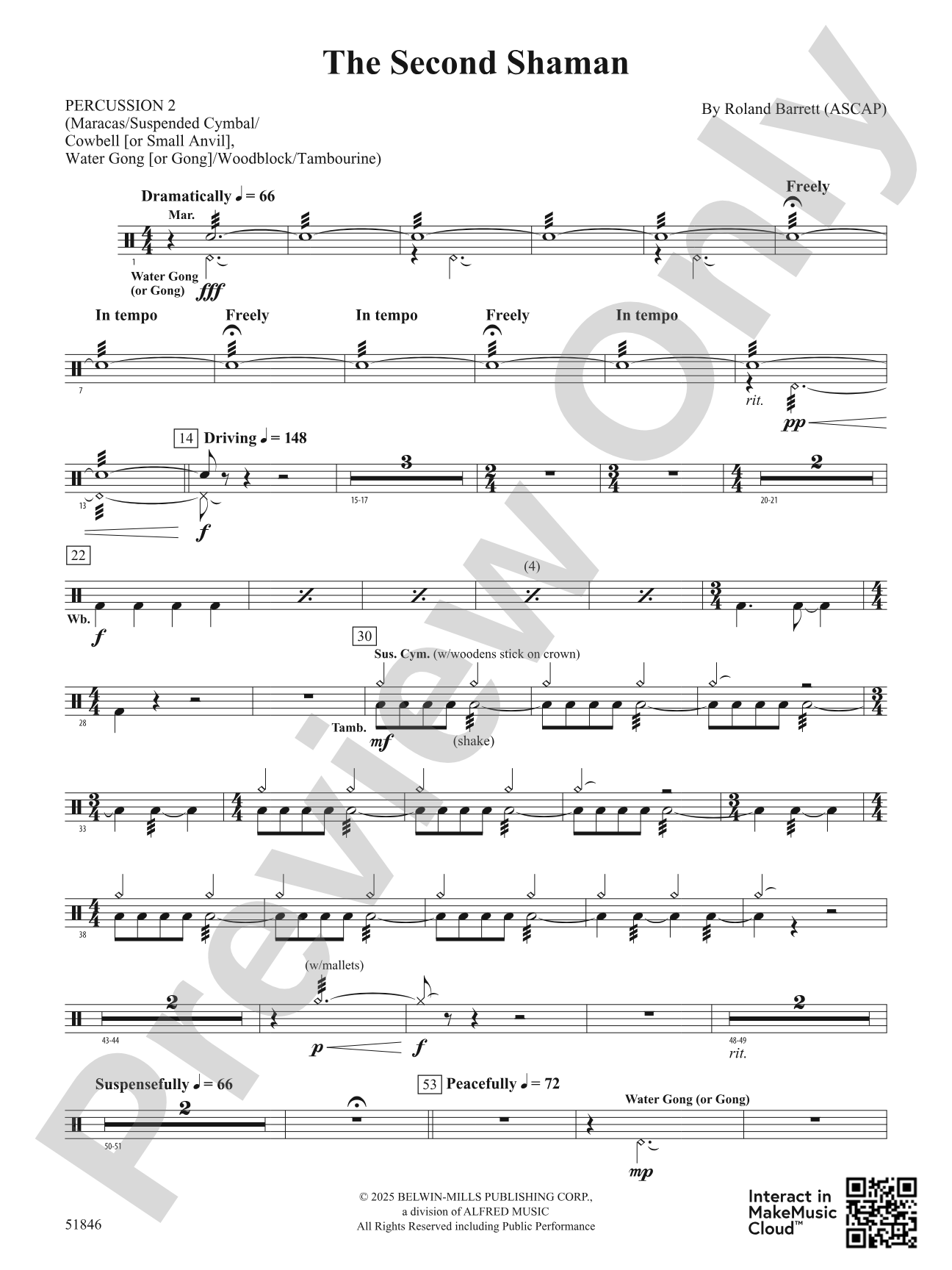

The Second Shaman: 2nd Percussion
By Roland Barrett
Grade: 3
Item: 00-PC-0019530_PC2
$3.00
Pickup currently not available
Description
Opening with a dramatic combination of solo trumpet and powerfully emphatic percussion statements, The Second Shaman features a driving A section, a beautifully lyrical middle section, and a thrilling and affirming closing passage, complete with a climactic return of the introduction's powerful percussion declarations. Written by veteran composer Roland Barrett, this educational and entertaining piece offers wonderful teaching opportunities for your ensemble. (5:30)


Don't just read it, hear it, play along with it, and watch your students grow with it. In MakeMusic Cloud, The Second Shaman: 2nd Percussion comes alive with professional accompaniment, adjustable tempo, and built-in practice tools that turn solo practice into real progress.
Open in the Player
Jump straight in and assign it today.
Start Your Free Trial
Open this title and explore the full library in minutes.
Sample Audio
1
Audio File
--:--
0:00
0:00
Sample Video
Additional Details
Series:
Belwin Concert Band
Publisher:
Alfred Music
SKU:
00-PC-0019530_PC2
More about this title
About the Composer: Roland Barrett

Roland Barrett has been composing and arranging for concert and marching ensembles for over two decades. As a faculty member at the University of Oklahoma since 2001, he teaches music theory and composition with particular expertise in 20th-century techniques, while continuing to serve as musical arranger for the Pride of Oklahoma marching band.
With more than two hundred published works to his name, Barrett's compositions have earned performances by the Dallas Wind Symphony, numerous All-State honor bands, and recognition at major venues including the Midwest Band & Orchestra Convention and the International Trumpet Guild. His work has been broadcast on National Public Radio, and he is a multiple recipient of the ASCAP Plus award.
Why we love this
Barrett crafts this piece with real dramatic architecture: the opening trumpet-and-percussion hook is immediately memorable and engaging, the lyrical middle section gives your ensemble a chance to sing and build musicality, and the climactic return rewards both players and audience. At Grade 3, it balances accessibility with genuine musical substance, making it an excellent choice for developing bands that want to sound polished at festival.
What to expect
The Second Shaman opens with arresting, primal energy: a solo trumpet call punctuated by emphatic percussion strikes that command attention. The middle section retreats into something introspective and beautiful, almost meditative, before the opening motifs return with accumulated power and affirming intensity, as though the opening call has been answered.
Who it's for
Grade 3 concert bands seeking programmatic repertoire with immediate appeal and solid educational value. This piece works well for ensembles developing confidence in sectional balance and ensemble listening, particularly those preparing for festival or concert performance.
How to get the most out of it
- Establish the solo trumpet line with clarity and projection in the opening; let the percussion frame it with sharp, deliberate attacks rather than rushing the rhythmic pulse.
- Shape the lyrical middle section with a full, supported tone across the ensemble. This is where the band demonstrates its musical maturity, so encourage players to listen inward and balance carefully.
- Build momentum gradually through the final section. The return to the opening material gains power through accumulation, not immediate volume; let the climax arrive naturally as layers stack.
How to use it
Position this as a concert or festival opener to grab attention, or program it in the second half to provide a dynamic, high-energy moment that shifts the mood. Its five-and-a-half-minute duration and programmatic arc make it work well alongside lighter character pieces or as a contrast to slower, lyrical selections.
Skills your students will build
- Executing clean articulations in rapid percussion passages
- Balancing solo and ensemble sounds in a feature-and-support texture
- Sustaining even tone and intonation in lyrical, singing passages
- Building climactic intensity through controlled dynamic progression
- Responding to programmatic intent and musical narrative in performance