The Scientist Sheet Music Preview

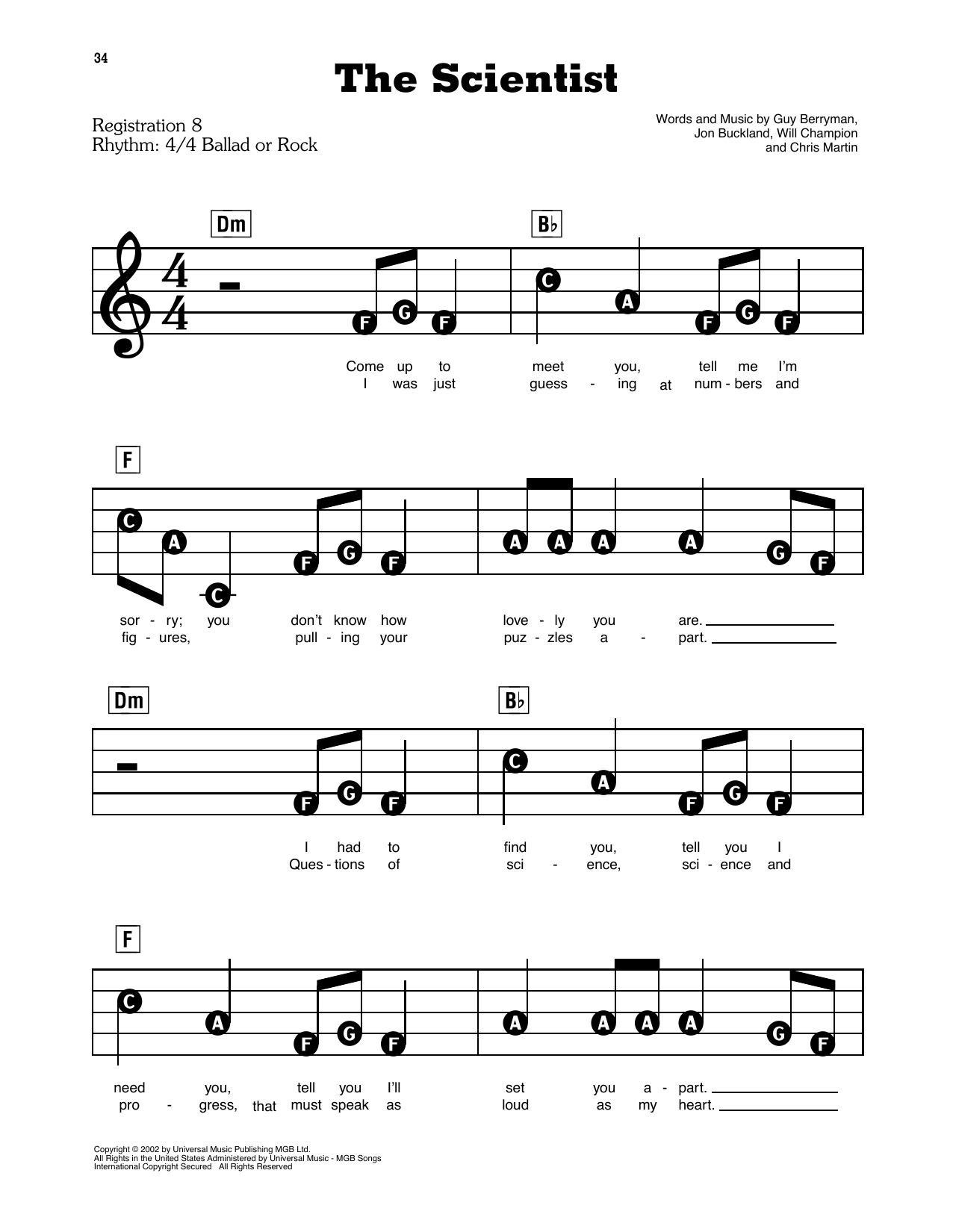
The Scientist: E-Z Play Today

As performed by Coldplay

Item: 35-DS00505095

Digital Download
$4.99
Description

The Scientist: E-Z Play Today isn't in MakeMusic Cloud just yet...but it could be. Let us know you'd like to see it, and you'll help shape what comes next. In the meantime, start a free trial and dive into thousands of interactive titles your students can play along with today.

Sample Audio
No sample audio found.
Sample Video
Additional Details
Publisher: Hal Leonard
Page Count: 5
SKU: 35-DS00505095

More about this title

About the Artist: Coldplay

Coldplay emerged from London in the late 1990s as one of the defining bands of their generation, known for crafting emotionally resonant pop rock with sophisticated harmonic language. Their music draws from art rock, alternative rock, and contemporary pop influences, making their catalog a rich resource for pianists exploring how modern songwriting balances accessibility with musical depth.

Why we love this

The Scientist works beautifully as a gateway into contemporary songwriting for students who need accessibility without sacrificing musical interest. The piano arrangement preserves the song's haunting melodic line and hypnotic rhythmic foundation, giving students a piece that sounds polished and rewarding in just five pages.

What to expect

The piece carries a hypnotic, introspective quality. Built on a simple but infectious piano pattern, it unfolds with restraint and builds emotional weight through repetition rather than bombast. There's an aching quality to the melody that lingers long after the final note.

Who it's for

This arrangement serves intermediate piano students who want to connect with contemporary music and teachers seeking repertoire that bridges classical and pop worlds. It's equally valuable for students working on rhythmic independence and those building confidence with more modern harmonic language.

How to get the most out of it

  • Maintain the steady rhythmic pulse throughout; this song's power comes from its metronomic consistency, so resist the temptation to rush or drag emotionally.
  • Shape the melody with careful dynamic control rather than dramatic leaps. The emotional arc builds through subtle crescendos and diminuendos, not through volume extremes.
  • Pay attention to the accompaniment pattern in the left hand. Its repetitive nature is intentional and meditative, so lock it in early and keep it locked.

How to use it

Pair this with contemporary classical composers or modern art rock arrangements to show how today's songwriters use the same tools as their classical predecessors. It works particularly well in a recital showcasing how different genres approach melody, harmony, and form.

Skills your students will build

  • Maintaining rhythmic independence between hands over extended ostinato patterns
  • Shaping lyrical melody with dynamic control and phrasing rather than tempo changes
  • Interpreting modern popular music through a classical piano lens
  • Balancing accompaniment texture so it supports rather than overwhelms the melodic line

You May Also Like