
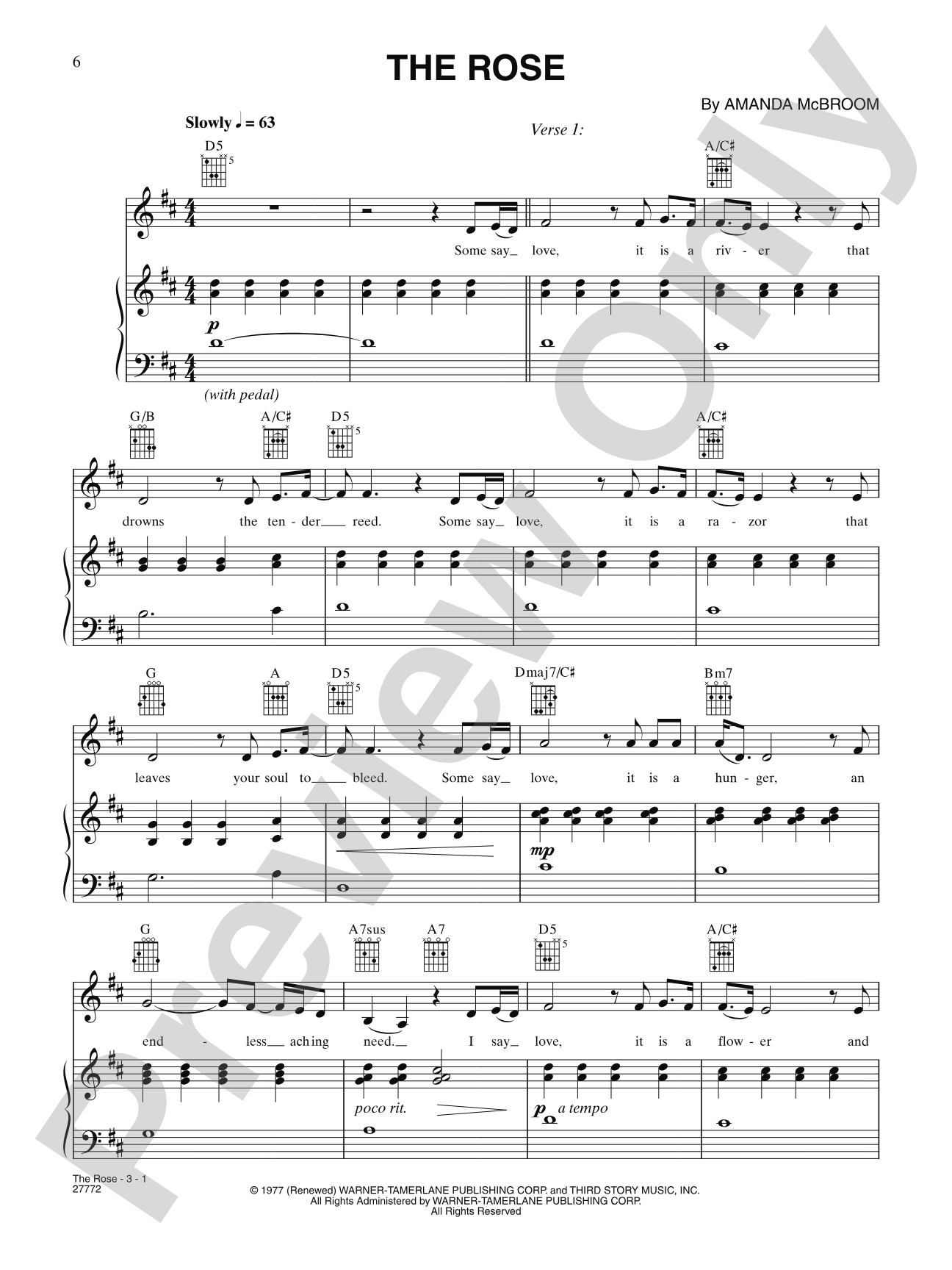

The Rose: Piano/Vocal/Chords
Bianca Ryan
Item: 00-PSP-000229
$4.99
One moment…
Description
Since winning the debut season of NBC's America's Got Talent in 2006, young songstress Bianca Ryan has taken the world by storm with her big, powerful voice. Alfred is pleased to publish the album-matching folio to her debut CD, Bianca Ryan. The songbook provides lyrics, melody lines, and chord changes, with professionally arranged piano accompaniments to the album's entire song list, which encompasses some of the most popular songs of all time! Not just a keepsake for Bianca Ryan fans, this folio is an extremely useful songbook every singer should own.
Titles: The Rose * Awake * I Believe I Can Fly * Pray for a Better Day * Dream in Color * I Wish That * And I Am Telling You I'm Not Going * Superstar * I Will * Pure and Simple * You Light Up My Life * Why Couldn't It Be Christmas Every Day?


Titles: The Rose * Awake * I Believe I Can Fly * Pray for a Better Day * Dream in Color * I Wish That * And I Am Telling You I'm Not Going * Superstar * I Will * Pure and Simple * You Light Up My Life * Why Couldn't It Be Christmas Every Day?
The Rose: Piano/Vocal/Chords isn't in MakeMusic Cloud just yet...but it could be. Let us know you'd like to see it, and you'll help shape what comes next. In the meantime, start a free trial and dive into thousands of interactive titles your students can play along with today.
Request This Title
Tell us you want it.
Start Your Free Trial
Explore everything that's ready to play right now.
Sample Audio
No sample audio found.
Sample Video
No sample videos found.
Additional Details
Publisher:
Alfred Music
Page Count:
76
SKU:
00-PSP-000229
More about this title
About the Artist: Bianca Ryan
Bianca Ryan burst onto the national stage in 2006 when she won the inaugural season of NBC's America's Got Talent at just ten years old, becoming the show's youngest-ever champion. Her powerful soprano and mature interpretive gifts immediately set her apart, earning her a recording contract and launching a career rooted in both contemporary pop standards and theatrical repertoire. Ryan's success demonstrated that young singers with technical skill and emotional depth could command attention on major platforms, inspiring a generation of young vocalists to pursue classical crossover and popular song.
Why we love this
This folio captures an album that became a cultural touchstone for young singers, drawing directly from songs that build vocal confidence and musicality. The collection mixes contemporary pop with theatrical standards, giving singers multiple genres to explore within a single, cohesive package. Each arrangement supports both confident performers and those still developing their range and interpretive instincts.
What to expect
The collection spans emotional territory from introspective ballads like The Rose to empowering anthems like I Believe I Can Fly, each arrangement supporting vocalists to sing with clarity and intention. The piano writing is warm and supportive without overwhelming the voice, creating space for both technical display and genuine emotional connection. Songs feel immediately familiar yet fresh, inviting singers to bring their own voice to material already beloved by listeners.
Who it's for
This book serves singers of intermediate to advanced ability who want accessible yet vocally rewarding material rooted in contemporary pop and musical theatre. It works equally well for solo recital singers preparing a diverse program, ensemble singers building confidence on recognizable material, or young vocalists inspired by Ryan's own trajectory.
How to get the most out of it
- Study the piano accompaniments closely before rehearsing; they anchor the melodic phrasing and often suggest where to breathe or shape phrases.
- Experiment with the chord voicings to understand the harmonic movement beneath the melody, which deepens your musical communication with an accompanist.
- Listen to how Bianca Ryan interprets each song, then make deliberate choices about where you'll follow her phrasing and where you'll develop your own interpretation.
- Mark dynamic and tempo indications in the sheet music before your first full run-through to avoid surprises during performance.
How to use it
Build a solo recital around a subset of these songs, pairing them with classical standards or art songs for contrast and depth. Use individual selections as rewards for students who've mastered foundational technique, offering them material that sounds accomplished while remaining accessible. Include these in a pop or musical theatre showcase, mixing them with other contemporary styles to create a cohesive program.
Skills your students will build
- Interpreting lead sheets with melody, lyrics, and chord symbols
- Collaborating with a pianist using standard notation and harmonic roadmaps
- Singing across multiple genres (pop, musical theatre, inspirational) in a single session
- Sustaining emotional expression through longer phrases while managing breath control
- Understanding how piano accompaniments support and shape vocal phrasing